Living Off the Grid: The Complete Guide to Energy, Water, Food, and Independence

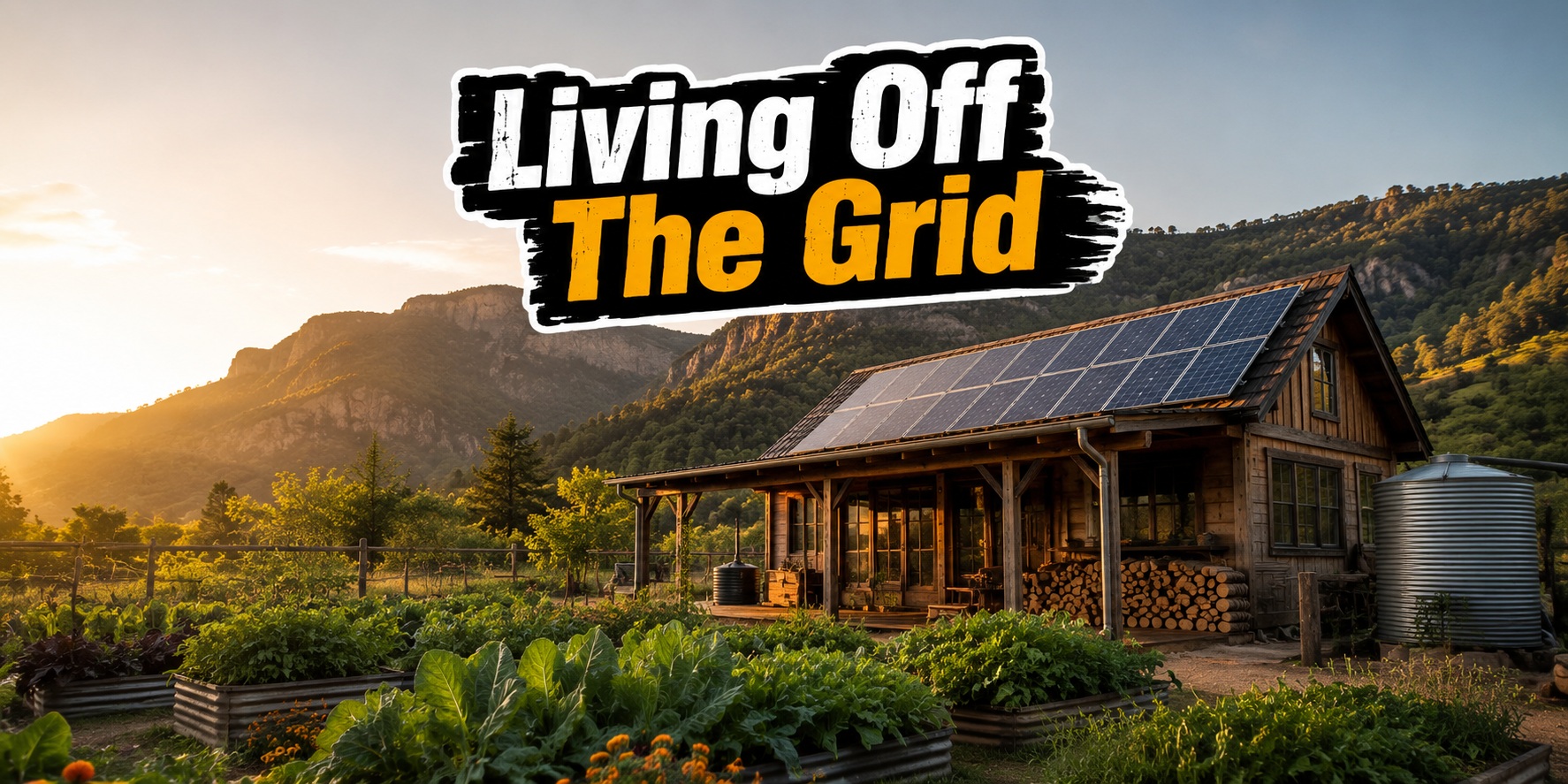

The power grid goes down more often than the people who run it want to admit. Extreme weather events, infrastructure failures, cyberattacks, and supply chain disruptions have all demonstrated in recent years that the utilities most Americans depend on for heat, light, water, and communication are less reliable than advertised. The households that felt those outages least were the ones that had already reduced or eliminated their dependence on public infrastructure.
Living off the grid is not a fringe movement or a lifestyle aesthetic. It is a practical approach to self-reliance that addresses one of the most fundamental vulnerabilities in modern life: the assumption that the systems you depend on will always work. This guide covers everything involved in building a genuine off-grid setup, from power generation and water supply to food production, waste management, and the legal considerations that most people overlook until they are already committed.
Whether you are planning a complete off-grid homestead, adding resilience to a suburban property, or building out a rural retreat as a backup, the systems and principles covered here apply. Start where your situation allows and build from there.
What Living Off the Grid Actually Means
The term gets used loosely. For some people it means having solar panels and a rainwater tank. For others it means a fully self-sufficient property with no utility connections of any kind. Both are legitimate positions on a spectrum, and where you land on that spectrum depends on your land, your budget, your climate, and your goals.
A useful working definition: living off the grid means meeting your household’s basic needs for power, water, heat, and food through systems you own and control, without dependence on public utility infrastructure. You may still have internet service, use a cell phone, buy some groceries, and participate in the broader economy. Off-grid living is about infrastructure independence, not total isolation.
According to the U.S. Energy Information Administration, approximately 1.7% of American households currently use off-grid or self-generation as their primary electricity source, a number that has grown steadily as solar panel costs have fallen and grid reliability concerns have increased. The practical and economic case for off-grid living has never been stronger than it is right now.
Step One: Choosing and Assessing Your Land
Every off-grid system is constrained by the land it sits on. Before committing to any infrastructure investment, understand what your land can and cannot support.
Solar access
A south-facing slope with no tree canopy obstruction between 9 a.m. and 3 p.m. is the ideal solar site in the northern hemisphere. Shade from trees, hills, or neighboring structures during peak sun hours can reduce solar output by 20 to 50 percent, which fundamentally affects how much panel capacity you need and how much battery storage is required to cover low-production periods. Use a solar pathfinder tool or a free app like Sun Surveyor to assess your specific site before purchasing panels.
Related: Solar Panels for Off-Grid Living: How to Build a System That Actually Works
Water availability
Identify your water sources before everything else. A property with a year-round creek, a drillable aquifer, or reliable annual rainfall above 20 inches is fundamentally different from a dry southwestern property where water must be hauled or collected from minimal precipitation. Water is the single most important off-grid resource and the one most people underestimate the complexity of.
Related: Why Water Purification Tablets Will Matter More Than Ammo When SHTF
Soil quality and growing season
If food production is part of your off-grid plan, get a soil test before you buy. The USDA Natural Resources Conservation Service provides free Web Soil Survey access that shows soil type, drainage characteristics, and agricultural capability rating for any parcel in the United States. A property with deep, well-drained loam in zone 6 supports a fundamentally different food production operation than compacted clay in zone 3.
Related: DIY Herbal Spy Kits: Plants That Could Mask Your Scent or Help You Blend In
Legal and zoning considerations
This is the step most people skip and the one that causes the most expensive problems. Zoning laws, building codes, health department regulations, and deed restrictions vary enormously by county and can prohibit or severely restrict composting toilets, rainwater collection, livestock, off-grid dwellings, and even the size of structures you can build. Research the following before purchasing land:
- County zoning designation and permitted uses
- Whether rainwater harvesting is legal and if a permit is required. Several states restrict or regulate rainwater collection
- Septic requirements: many counties require a conventional septic system regardless of what alternative waste management system you prefer
- Minimum habitable structure requirements: some counties require any dwelling to be connected to public water or sewer
- HOA or deed restrictions if purchasing existing property
Call the county planning and zoning office directly and ask specific questions before you commit. The answers will either confirm your plan or save you from an expensive mistake.
Power: Building Your Off-Grid Energy System
Power generation is typically the first off-grid system people tackle, and solar photovoltaic is the dominant technology for good reason: it is reliable, the cost has dropped dramatically over the past decade, and it requires minimal maintenance once installed.
Calculating your power needs
Before buying a single panel or battery, calculate your actual daily power consumption. List every electrical device you use, its wattage, and the average hours per day it runs. Multiply wattage by hours to get watt-hours per day for each device. Sum the total. This number is your daily consumption baseline and determines everything about system sizing.
A typical American household uses around 30 kilowatt-hours per day. An efficient off-grid household, after replacing inefficient appliances and eliminating unnecessary loads, typically operates on 3 to 8 kilowatt-hours per day. The difference is not deprivation. It is LED lighting instead of incandescent, a propane refrigerator instead of a standard electric model, and not running a 5,000-watt electric dryer when a clothesline works for free.
Solar panels
Modern monocrystalline solar panels convert 20 to 23 percent of incoming solar radiation into electricity under standard test conditions. Real-world output is lower due to heat, dust, suboptimal angle, and seasonal variation. A commonly used planning figure is that one kilowatt of installed panel capacity produces 3 to 5 kilowatt-hours per day depending on your location and season.
For a household consuming 5 kilowatt-hours per day, a 2 to 3 kilowatt panel array (roughly 6 to 10 standard 300-watt panels) provides the baseline generation. Size up by 25 to 50 percent to account for weather days, panel degradation over time, and future load additions.
Related: Off Grid Solar System – The Prepper’s Complete Power Independence Guide
Battery storage
Battery storage is what makes solar practical for 24-hour power. Without storage, you have power when the sun shines and nothing at night or on cloudy days. The standard sizing target is two to three days of autonomy: enough stored capacity to run your household for two to three days without any solar input.
Lithium iron phosphate (LiFePO4) batteries are the current standard for off-grid storage. They have a usable depth of discharge of 80 to 95 percent, a cycle life of 3,000 to 6,000 cycles, and no maintenance requirements beyond keeping them in an appropriate temperature range. Lead-acid batteries cost less upfront but have shorter lifespans, lower usable capacity, and require regular maintenance. Over a ten-year period, lithium is typically the lower total cost option.
Charge controllers and inverters
A MPPT (maximum power point tracking) charge controller manages the flow of power from panels to batteries, optimizing efficiency across varying light conditions. A quality MPPT controller captures 25 to 30 percent more energy than a basic PWM controller and is worth the additional cost for any system above 400 watts.
An inverter converts DC battery power to the 120V AC power that standard household appliances use. For off-grid systems, a pure sine wave inverter is required for sensitive electronics, variable speed motors, and most modern appliances. Modified sine wave inverters are cheaper but cause problems with certain loads and are not recommended for a primary household system.
Backup generation
Even a well-sized solar system needs a backup generator for extended cloudy periods, high winter loads, or charging during an emergency. A propane or gasoline generator sized at 30 to 50 percent of your inverter capacity is a standard off-grid backup configuration. Propane is preferred for long-term storage because it does not degrade the way gasoline does. A 500-gallon propane tank filled annually provides both generator fuel and a propane supply for cooking, heating, and refrigeration.
Related: The Complete Guide to Finding the Best Generator for Home Use
Wind and micro-hydro
Wind turbines are a useful complement to solar in windy locations, particularly because wind often blows more consistently in winter when solar production drops. A small wind turbine rated at 400 to 1,000 watts can meaningfully supplement a solar array in areas with average wind speeds above 10 mph. Micro-hydro is the most reliable renewable energy source available if you have a year-round stream with sufficient head and flow: a system that produces even 200 watts continuously generates more usable energy per day than a 2-kilowatt solar array in a cloudy northern climate.
Water: Your Most Critical Off-Grid System
Water is the system most people underplan and the one that fails with the most serious consequences. An off-grid property without a reliable water supply is not a functional homestead. It is a campsite.
Wells
A drilled well with a submersible pump is the most reliable water source for most off-grid properties in areas with accessible groundwater. Drilling costs vary widely by depth and geology, typically running from $15 to $30 per foot for the drill itself plus casing, pump, and electrical connections. A hand pump installed alongside or instead of an electric submersible pump provides backup access when power is unavailable, which is a standard off-grid resilience measure.
Well water should be tested annually for bacteria, nitrates, and any contaminants relevant to your local geology. The EPA’s Safe Drinking Water Hotline provides guidance on private well testing and treatment requirements. Well water quality is your responsibility entirely when you are off-grid; no municipal treatment system is working upstream of your tap.
Spring development
A gravity-fed spring is the most energy-efficient water source available. If your land has a reliable spring above your dwelling elevation, a developed spring box, a buried collection tank, and a gravity-fed pipe system can provide water with no pumping energy required. Spring development requires careful construction to exclude surface water contamination and wildlife access, and the flow rate must be measured across all seasons including late summer drought conditions before you plan a system around it.
Rainwater harvesting
Rainwater collection from rooftops is a viable primary or supplemental water source in areas with sufficient and well-distributed annual rainfall. A standard calculation: one inch of rain falling on 1,000 square feet of roof yields approximately 620 gallons of collectible water after accounting for losses. A 2,000-square-foot roof in an area that receives 40 inches of annual rainfall can theoretically yield over 49,000 gallons per year, enough for a household of two to three people using 50 gallons per person per day.
First-flush diverters, which divert the initial dirty runoff from each rain event before it enters the storage tank, are essential for potable rainwater systems. Collected rainwater requires filtration and disinfection before drinking: a sediment pre-filter, a carbon block filter, and UV disinfection or chemical treatment at minimum.
Related: How to Install a Rainwater Collection System
Water storage
Regardless of your source, store a meaningful volume of water on your property. A minimum of 1,000 gallons of stored capacity provides buffer against source failure, drought, pump problems, or contamination events. Polyethylene cisterns, buried concrete tanks, and above-ground food-grade IBC totes are all used in off-grid systems. Underground storage maintains more consistent temperature and is protected from freezing but costs more to install.
Related: Can Water Expire?
Water treatment
Every off-grid water source requires some level of treatment. A basic multi-stage system for well or spring water includes a sediment filter (5 micron or finer), a carbon block filter for taste and chemical reduction, and a UV sterilizer for bacterial and viral disinfection. For rainwater or surface water sources, add a 0.2-micron ceramic or hollow fiber filter upstream of the UV stage. Test your water quarterly and after any flooding, equipment maintenance, or source disturbance.
Heating and Cooling Without the Grid
Wood heat
A properly sized and installed wood stove or masonry heater is the most reliable off-grid heat source in timber-available areas. Wood is a renewable fuel you can produce from your own land, store indefinitely, and use without any infrastructure dependency. A high-efficiency certified wood stove (EPA-certified models achieve 70 to 80 percent efficiency) in a well-insulated home can heat a substantial living space on 3 to 5 cords of wood per heating season in most northern climates.
The U.S. Forest Service recommends sourcing firewood locally to avoid transporting invasive insects and pathogens. Cut, split, and stack wood at least six months before burning; fully seasoned hardwood with moisture content below 20 percent burns significantly cleaner and produces more heat per cord than green wood.
Propane and other fuels
Propane is the most practical backup and supplemental heat fuel for off-grid properties. It can be stored in large quantities, has an indefinite shelf life, burns cleanly, and is compatible with high-efficiency forced air furnaces, radiant heating systems, and on-demand water heaters. A 500 to 1,000 gallon buried propane tank filled once or twice per year provides significant heating backup and fuel for cooking and refrigeration.
Related: How To Choose A Propane Generator For House Use
Passive solar design
If you are building new, passive solar design reduces heating loads dramatically without any mechanical system. South-facing glass with proper overhang sizing admits low winter sun and blocks high summer sun. Thermal mass inside the building envelope, concrete floors, stone walls, or a water wall, absorbs heat during the day and releases it at night. A well-designed passive solar home in zone 5 can reduce heating energy requirements by 40 to 70 percent compared to a standard construction home of the same size.
Cooling
Cooling is where off-grid design differs most sharply from conventional construction. Air conditioning is the largest single electrical load in most American homes and is essentially incompatible with a modest off-grid power system. The off-grid solutions are strategic shade from deciduous trees and roof overhangs, cross-ventilation from window placement that creates airflow paths through the building, underground earth tubes that pre-cool incoming ventilation air using stable ground temperature, and whole-house fans that pull cool night air through the structure. In extreme heat climates, an evaporative cooler uses a fraction of the electricity of a compressor-based air conditioner and can be run from a modest solar system.
Food Production: Feeding Yourself from Your Land
Food production is the most labor-intensive and most rewarding aspect of off-grid living. It is also the one most people overestimate their ability to achieve quickly. A realistic food production plan starts with what you can actually grow and preserve given your land, climate, and skill level, not with what you wish you could produce.
The kitchen garden
A well-managed kitchen garden of 1,000 to 2,000 square feet can supply a significant portion of fresh vegetables for a household of two to four people through the growing season, and with proper preservation, through much of the winter. Raised beds, intensive spacing, and succession planting maximize production from limited space. High-calorie, high-yield crops deserve priority in any serious food production garden: potatoes, sweet potatoes, winter squash, dried beans, and corn produce more calories per square foot than salad greens and herbs, which are pleasant but not filling.
Preservation
Growing food is half the equation. Preserving it through winter is the other half. Water bath canning, pressure canning, lacto-fermentation, dehydration, and root cellaring are the foundational preservation methods that every serious off-grid household needs to master. The National Center for Home Food Preservation at the University of Georgia is the definitive free resource for tested canning and preservation guidelines.
Related: Canning Supplies: The Ultimate Guide for Preppers
Livestock
Chickens are the most practical entry-level livestock for off-grid food production. A flock of 10 to 15 laying hens provides a household with most of its egg needs year-round and produces a significant meat supply when culled. They eat table scraps, garden waste, and forage, reducing or eliminating the need for purchased feed when managed on pasture. Rabbits are the most space-efficient meat animal: a small rabbitry of two does and one buck produces 80 to 100 pounds of dressed meat per year from a fraction of the space and feed required by larger livestock.
Goats, pigs, and cattle require substantially more infrastructure, feed, and management skill but provide dairy production, large-scale meat processing, and draft or land-clearing capacity at scales that chickens and rabbits cannot. Build livestock infrastructure that matches your actual management capacity, not your aspirational maximum.
Hunting and foraging
In many rural off-grid locations, hunting and foraging supplement cultivated food production meaningfully. A white-tailed deer in the freezer in November represents 50 to 75 pounds of lean protein that costs the price of a hunting license and a few days of time. Wild edibles including berries, mushrooms, nuts, and greens extend the seasonal harvest and provide nutritional diversity beyond what a kitchen garden typically produces. Develop these skills before you need them.
Related: 7 Foraging Mistakes That Might Get You Killed
Waste Management Off the Grid
Composting toilets
A composting toilet processes human waste aerobically, producing a humus-like end product that can be safely used in non-food garden areas after completing the composting cycle. Self-contained composting toilets require no water, no septic system, and no connection to any public infrastructure. They are legal in most jurisdictions but some states and counties require permits or have specific installation requirements. Research your local regulations before purchasing.
Related: DIY SHTF Toilet
Greywater systems
Greywater, the wastewater from sinks, showers, and laundry (not toilets), can be treated and reused for subsurface irrigation in most climates. A simple greywater system uses a mulch basin or branched drain system to disperse water through tree and shrub root zones, returning water to the landscape rather than sending it to a septic system or municipal sewer. Greywater regulation varies significantly by state; Arizona, California, and New Mexico have relatively permissive frameworks while other states require permits or prohibit greywater reuse entirely.
Composting and waste reduction
An off-grid household produces minimal landfill waste when managed thoughtfully. Kitchen scraps feed compost piles or livestock. Cardboard, paper, and clean wood waste feed the compost pile or wood stove. Glass and metal are stored and taken to recycling on supply runs. The goal is a material flow cycle where as little as possible leaves the property as waste and as little as possible arrives as purchased inputs.
Communications and Connectivity
Living off the grid does not require giving up communications. Most off-grid households maintain internet and phone service through one or more of the following:
- Starlink satellite internet: the most significant change in rural connectivity in decades. Starlink provides broadband speeds (50 to 200 Mbps download) at most locations in the continental United States and Canada with no need for cell towers or cable infrastructure. The hardware requires about 100 watts of power, which is manageable on a well-sized solar system
- Cell boosters: a directional antenna and signal amplifier can pull usable cell signal from towers up to 30 miles away in open terrain. Wilson Electronics and weBoost produce systems widely used in rural off-grid setups
- Ham radio: a licensed amateur radio operator can communicate regionally and globally without any infrastructure dependency. A Technician class license requires passing a 35-question exam and provides access to repeater networks across the country
- GMRS and MURS radios: no-license or simple-license options for local communication within a property or between nearby households
Financial Planning for Off-Grid Living
Off-grid living requires significant upfront capital investment but typically reduces ongoing living costs substantially once the systems are in place. A realistic budget framework for a basic but complete off-grid setup:
- Land: highly variable by region. Rural land with water access and suitable solar exposure ranges from $1,000 to $10,000+ per acre depending on location
- Dwelling: a modest owner-built timber frame or straw bale home can be completed for $50,000 to $150,000 in materials. A contractor-built conventional home on a rural lot runs $200,000 to $400,000+
- Solar and battery system: a complete 3 to 5 kilowatt solar array with battery storage and inverter runs $15,000 to $35,000 installed. DIY installation can reduce this by 30 to 40 percent
- Well drilling: $10,000 to $25,000 depending on depth and geology
- Septic system or composting toilet: $3,000 to $15,000 depending on system type and local requirements
- Garden infrastructure, greenhouse, root cellar: $2,000 to $10,000
- Initial livestock setup: $1,000 to $5,000
Total capital investment for a complete off-grid setup with modest dwelling ranges from $100,000 to $300,000 for most builds. Ongoing annual costs drop dramatically compared to grid-connected suburban living: no utility bills, minimal property taxes on rural land, and a food budget that decreases as production increases.
The Transition: Getting There from Here
Most people who live off the grid did not get there in a single move. They built toward it over years while maintaining their existing income and living situation. A practical transition sequence:
- Year one: reduce consumption, eliminate debt, build cash reserves, research land in target areas
- Year two: purchase land if not already owned, install basic power and water systems, begin food production at small scale
- Year three: build or move into primary dwelling, expand production systems, develop skills through practice rather than just study
- Year four and beyond: refine systems based on actual performance, reduce purchased inputs, achieve increasing food self-sufficiency
The people who succeed at off-grid living are not the ones who planned most perfectly. They are the ones who started, learned from failure, and adjusted. Every off-grid system has a learning curve and every homestead produces unexpected problems in its first few seasons. Build in margin, maintain income until systems are proven, and do not cut yourself off from support networks before you are ready.
Common Mistakes to Avoid
- Undersizing the water system: water is always the binding constraint. Build more storage and redundancy than you think you need
- Overestimating food production in year one: plan on producing 20 to 30 percent of your food in the first year and being genuinely self-sufficient in food by year three to five at earliest
- Ignoring legal requirements: a composting toilet installed without permits in the wrong jurisdiction, a dwelling built without a required septic connection, or rainwater collection in a state that restricts it can result in fines, forced remediation, or forced connection to public utilities
- Burning out: off-grid living is more physically demanding than grid-connected living, especially in the early years when systems are being built and refined. Pace yourself and build rest into the schedule
- Isolation: the romanticized vision of total self-sufficiency can shade into dangerous isolation. Maintain relationships, community connections, and mutual aid networks. The most resilient off-grid operations are not lone households but loosely connected communities of neighboring families who share skills, equipment, and labor
- Undercapitalizing: trying to build an off-grid system on a shoestring budget typically results in systems that fail at the worst moments. Invest in quality components for the critical systems: power, water, and heat
Final Thoughts
Living off the grid is one of the most concrete expressions of the self-reliance principles that preparedness is built on. It replaces dependency with capability across the most fundamental categories of survival: power, water, heat, and food.
It is not easy, and it is not cheap to build properly. But it is achievable, and the people doing it are not exceptional in any way except that they decided to start. The skills are learnable. The technology has never been more accessible or more affordable. The only question is whether the infrastructure independence that comes with it is worth the investment to you.
For most people who take it seriously and build it methodically, the answer turns out to be yes.
One thing becomes obvious very quickly when you study real off-grid living: the people who succeed are the ones who already know how to produce food, store water, generate power, and build practical systems with their own hands. Independence is not just about owning land. It is about having the skills to make that land work for you when modern systems fail.
That is exactly why resources like Self-Sufficient Backyard have become so valuable for people moving toward greater resilience and self-reliance. It is packed with practical, step-by-step guidance for building productive backyard systems, growing more of your own food, improving water security, and creating a property that can support your family even during disruptions.
Whether you are starting with a suburban backyard or planning a full off-grid homestead, learning these skills now is far easier than trying to figure them out during a crisis. If you want to build real-world self-sufficiency one project at a time, Self-Sufficient Backyard is one of the best places to start.
You may also like:
 Don’t Forget To Join Our WhatsApp Community For Valuable Survival Knowledge You Will Not Find Anywhere Else!
5 Ingenious Ways To Refrigerate Your Food Without Electricity (VIDEO)
How to Make Your Own Semi-Automatic Off the Grid Washing Machine (No Electricity)
Best Prepper Books To Read NOW!
Home Survival Essentials
Read the full article here