Depression Era Chocolate Cake: The Recipe That Fed Families When Nothing Else Could

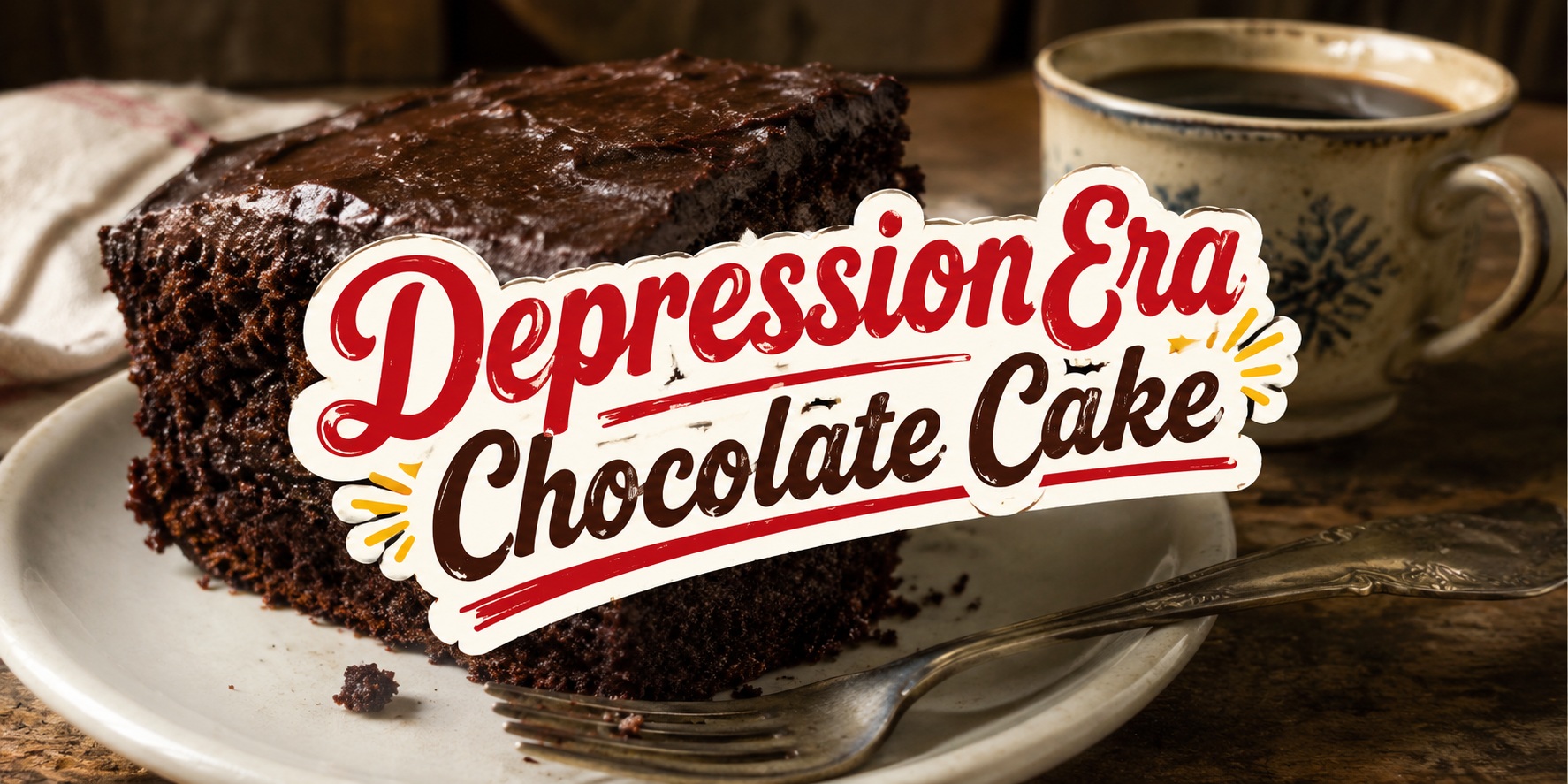

In the 1930s, American families were baking chocolate cake with no eggs, no butter, and no milk. Not because they preferred it that way. Because they had nothing else.
The Great Depression forced a generation of home cooks to become chemists. When the standard ingredients for baking disappeared from the household budget, women across the country figured out what could replace them, what role each ingredient actually played in the chemistry of a cake, and how to achieve a similar result with what they had on hand. The recipe that emerged from that period has survived for nearly a century because it turns out that the limitations they were working around produced something that genuinely works: a deeply chocolatey, moist, surprisingly rich cake made entirely from pantry staples.
This recipe goes by several names: Wacky Cake, Crazy Cake, War Cake, and most accurately, Depression Cake. It requires no refrigerated ingredients, no specialized equipment, and no baking experience. For preppers, it is not just a piece of food history. It is a functional baking capability that works when conventional baking does not.
The History: Why This Cake Exists
The Great Depression began with the stock market crash of October 1929 and extended through most of the 1930s. At its peak in 1933, unemployment reached approximately 25 percent of the American workforce according to the Federal Reserve History project. Families that had been solidly middle class found themselves managing households on a fraction of their previous income, rationing every expenditure and improvising constantly.
Butter, eggs, and fresh milk were among the first casualties of a constrained food budget. Butter was expensive. Eggs were expensive. Fresh milk spoiled and required refrigeration that not all households had. Baking, which relied on all three, seemed like it might become impossible at the income levels millions of American families were operating at during the worst years of the Depression.
It did not become impossible because American home cooks would not let it. The Depression era chocolate cake was born from the practical problem-solving of women who understood that baking provided more than nutrition. It provided normalcy, comfort, and the psychological signal to children and households under severe stress that things were not entirely lost. A chocolate cake on the table meant that life continued, that the household was functioning, and that not everything had been taken away.
The recipe they developed replaced eggs with the leavening power of baking soda and vinegar reacting to produce carbon dioxide, which lifts the batter. It replaced butter with vegetable oil, which was cheaper, shelf-stable, and did not require refrigeration. It replaced fresh milk with water. And it discovered that cocoa powder, baking soda, and an acidic component together produce a result that in some ways surpasses what conventional chocolate cake achieves with its more expensive ingredients.
The same base recipe was adapted again during World War II when rationing created similar ingredient scarcity for different reasons. By the time rationing ended, the recipe had been in continuous use for fifteen years and was embedded in the household knowledge of a generation of American cooks. Many people who grew up in the 1930s and 1940s considered it simply the normal way to make chocolate cake.
Why This Recipe Matters for Preppers
The Depression era chocolate cake is not just an interesting piece of culinary history. It is a demonstration of a principle that preparedness is built on: the ability to produce meaningful outputs from reduced inputs.
A standard chocolate cake recipe requires eggs (which require refrigeration and have a short shelf life), butter (same), and fresh milk (same). In any scenario involving extended power loss, supply chain disruption, or significantly reduced access to grocery stores, all three of those ingredients become difficult or impossible to source. The Depression era cake requires none of them. Every ingredient it uses is shelf-stable, inexpensive, available in bulk, and usable across dozens of other recipes in a crisis pantry.
There is also the psychological dimension. As anyone who has managed people through stressful situations knows, morale matters. Food that is merely caloric is not the same as food that is recognizable, enjoyable, and comforting. The ability to produce something that tastes like a real dessert from pantry staples, without power-dependent equipment, during a period of extended stress is not a trivial capability. It is part of what makes a household functional rather than merely surviving.
Finally, this recipe works on a wood stove as reliably as it works in a conventional oven. The chemistry does not change. The baking time and temperature management require more attention, but the result is the same. A household with this recipe, a fire, and a cast iron pan can produce chocolate cake under conditions that would make conventional baking impossible.
The Full Recipe
Ingredients
- 1 and 1/2 cups all-purpose flour
- 1 cup granulated sugar
- 3 tablespoons unsweetened cocoa powder
- 1 teaspoon baking soda
- 1/2 teaspoon salt
- 1 teaspoon white vinegar
- 1 teaspoon vanilla extract
- 5 tablespoons vegetable oil or any neutral cooking oil
- 1 cup cold water
That is everything. Nine ingredients, every one of them shelf-stable and available in bulk. No refrigerated items. No specialty products.
Equipment
- One 8-inch or 9-inch square baking pan, or an equivalently sized round pan or cast iron skillet
- A fork or whisk for mixing
- Measuring cups and spoons
- Oven at 350 degrees Fahrenheit, or equivalent on a wood stove
Instructions
- Preheat your oven to 350 degrees Fahrenheit. Do not grease the pan. This recipe is baked and served directly from the pan it is mixed in, which is one of its practical advantages: one fewer dish to wash.
- Combine the flour, sugar, cocoa powder, baking soda, and salt directly in the ungreased baking pan. Use a fork to mix the dry ingredients thoroughly until there are no visible streaks of any single ingredient. Take your time here. Uneven dry mixing produces uneven results.
- Make three wells in the dry mixture using the back of your spoon or your finger. One should be larger, two should be smaller.
- Pour the vinegar into the first small well. Pour the vanilla into the second small well. Pour the vegetable oil into the large well.
- Pour the cold water over everything.
- Mix with the fork until just combined and no dry flour streaks remain. Work quickly and do not overmix. A few small lumps are fine. What you are avoiding is developing the gluten by mixing too vigorously, which produces a dense, tough result.
- Bake at 350 degrees Fahrenheit for 30 to 35 minutes. The cake is done when a toothpick inserted in the center comes out clean and the top springs back lightly when pressed. The edges will be pulling slightly away from the pan.
- Cool in the pan for at least fifteen minutes before serving. The cake is excellent slightly warm, at room temperature, or the next day when the flavors have deepened.
The Chemistry: Why It Works Without Eggs or Butter
Understanding why this recipe works makes it easier to troubleshoot when conditions are not ideal and helps you understand what can be substituted and what cannot.
What vinegar is doing
Vinegar is the key to making this recipe work without eggs. When baking soda, which is alkaline, contacts an acidic ingredient, a rapid chemical reaction produces carbon dioxide gas. That gas, trapped in the batter, creates the bubbles that lift the cake as it bakes. The combination of baking soda and vinegar creates the same leavening action that eggs partially provide in conventional cake baking, as well as contributing to the lift that butter’s fat structure creates when creamed.
The vinegar flavor completely disappears during baking. There is no vinegar taste in the finished cake. If you are skeptical about this, bake one and taste it. The acidity is neutralized entirely by the alkaline baking soda in the reaction.
What oil is doing
Oil replaces butter as the fat in this recipe. Fat in cake batter coats flour proteins and limits gluten development, producing a tender crumb. It also carries flavor, contributes to moisture retention, and creates the characteristic richness of a baked dessert. Vegetable oil does all of these things. It does not provide the emulsifying function that creamed butter provides in conventional cakes, which is why the mixing technique for this recipe is deliberately minimal: you are not building structure through creaming, you are relying entirely on the baking soda reaction for lift.
The oil is also why this cake stays moist for several days after baking. Oil-based cakes have better moisture retention than butter-based ones because oil remains liquid at room temperature while butter solidifies, which means oil-based cakes do not go stale as quickly.
What cocoa is doing
Cocoa powder in this recipe serves double duty. It provides chocolate flavor obviously, but it is also slightly acidic, which contributes to the activation of the baking soda alongside the vinegar. The combination of baking soda with two acidic components, the vinegar and the cocoa, creates a particularly reliable and vigorous leavening reaction that is one of the reasons this recipe is more forgiving than it should be by conventional baking standards.
Variations and Adaptations
Adjusting chocolate intensity
The original recipe calls for three tablespoons of cocoa powder, which produces a moderately chocolatey result. Increase to four or five tablespoons for a deeper, more intense chocolate flavor. Dark cocoa powder or Dutch-processed cocoa produces a richer color and a more mellow chocolate note; natural cocoa produces a brighter, slightly fruity chocolate flavor. Both work. The Dutch-processed variety will produce a slightly less vigorous leavening reaction because it is less acidic, so add an additional quarter teaspoon of vinegar if using it.
Sweetness adjustments
One cup of sugar produces a moderately sweet cake. Reduce to three-quarters of a cup for a less sweet result that lets the chocolate flavor forward. Increase to one and a quarter cups if you prefer a sweeter dessert. Brown sugar can replace some or all of the white sugar for a deeper, molasses-inflected flavor that pairs well with the chocolate.
Coffee enhancement
Replace the cup of cold water with a cup of cold black coffee. Coffee deepens and amplifies chocolate flavor through a mechanism that food scientists have studied but not fully explained. The result is a noticeably more complex and intense chocolate flavor without any perceptible coffee taste in the finished cake. This is one of the best flavor improvements available to this recipe and uses an ingredient that is likely already in your pantry.
Spice additions
A half teaspoon of cinnamon and a pinch of cayenne added to the dry ingredients creates a Mexican chocolate flavor profile. One teaspoon of espresso powder deepens the chocolate without adding coffee flavor. A quarter teaspoon of cardamom creates an unusual and excellent result. All of these spice additions are appropriate for a crisis pantry: they are shelf-stable, inexpensive, and provide significant flavor impact at small doses.
The eggless chocolate frosting
If you want to frost this cake without eggs, butter, or milk, the Depression era solution is a simple cocoa glaze: combine one cup of powdered sugar, three tablespoons of cocoa powder, and enough hot water to reach a pourable consistency, typically three to four tablespoons. Add a pinch of salt and a drop of vanilla if available. Pour over the cooled cake. It sets to a thin, glossy finish within twenty minutes. It is not buttercream but it is good and it requires nothing that is not on the shelf-stable ingredient list.
Wood Stove Baking Instructions
This recipe was originally made on wood and coal stoves, and it adapts well to that environment with a few management adjustments.
- Establish a steady coal bed before beginning. You want consistent radiant heat, not active flame directly under the oven or baking surface. Coals produce more even heat than flames
- A cast iron skillet with a tight-fitting lid creates an effective Dutch oven environment on a wood stove. Preheat the skillet before adding batter
- If using a wood stove oven box, rotate the pan halfway through baking to compensate for uneven heat distribution
- Begin checking for doneness at 25 minutes. Wood stove temperatures vary and the cake can finish faster or slower than the conventional oven time
- A properly done cake will smell strongly of chocolate and pull away from the pan edges. The toothpick test works the same way: clean means done
Storing the Cake
One of the practical advantages of this recipe is storage duration. Because it contains no eggs, butter, or fresh milk, the cake does not spoil as quickly as conventional baked goods.
- At room temperature below 70 degrees Fahrenheit, covered with a cloth or inverted bowl, the unfrosted cake keeps well for four to five days
- In warmer conditions above 75 degrees Fahrenheit, consume within two to three days
- The cake freezes well. Cut into squares, wrap individually in wax paper or aluminum foil, and freeze for up to three months. Thaw at room temperature for one to two hours
- A frosted cake with the cocoa glaze keeps at room temperature for two to three days. The glaze forms a protective surface layer that actually extends the shelf life of the top of the cake somewhat
Stocking the Pantry for This Recipe
Every ingredient in this recipe is a genuine pantry staple with uses far beyond this single application. Stocking them in appropriate quantities for an extended emergency supply means you always have the capability to bake this cake:
- All-purpose flour: store in sealed food-grade buckets with oxygen absorbers for a three to five year shelf life. A 25-pound bucket provides enough flour for many batches
- Granulated sugar: indefinite shelf life in sealed airtight containers. Store in five to ten pound quantities at minimum
- Unsweetened cocoa powder: sealed airtight, two to three year shelf life. A one-pound canister provides enough for a significant number of cakes
- Baking soda: replace annually for reliable leavening performance. Inexpensive enough to keep several boxes on hand
- White vinegar: indefinite shelf life. A gallon jug is inexpensive and has dozens of uses beyond baking
- Vanilla extract: three to four year shelf life in a sealed dark bottle. Imitation vanilla has a similar shelf life and is significantly cheaper
- Vegetable oil or shortening: one to two year shelf life for oil, two to four years for shortening in a sealed can. Coconut oil has a two to five year shelf life and works excellently in this recipe
- Salt: indefinite shelf life
The Forgotten Foods That Helped People Survive Hard Times
The Depression generation understood something modern society has largely forgotten: survival is not just about calories. It is about shelf-stable foods that last, nourish, comfort, and can be made even when fresh ingredients disappear.
That same principle is why so many traditional long-lasting foods vanished from modern kitchens. Not because they stopped working, but because convenience replaced self-reliance.
Inside The Lost Superfoods, you’ll discover over 126 forgotten survival foods and preservation methods once used during wars, economic collapse, and long winters without refrigeration. Foods designed to last for months or even years while still providing real nutrition and morale when supplies run low.
From hardtack and pemmican to root-cellar staples, preserved meats, survival breads, and old-world storage techniques, this is the kind of knowledge families once considered essential.
If you enjoyed learning how Depression-era families baked chocolate cake from pantry staples alone, you’ll love this collection of forgotten food wisdom.
👉 Discover The Lost Superfoods here!
What the Depression Generation Understood That We Have Forgotten
The people who developed and used this recipe were not making a virtue out of necessity in the way that phrase is sometimes used to mean accepting a diminished result. They were solving an engineering problem. The constraints they faced forced them to understand the actual function of each ingredient in a way that cooks who always had everything they needed never had to.
The result was not a compromise. It was a discovery. Wacky Cake made with oil and vinegar stays moist longer than many butter-based cakes. It is easier to mix. It is more forgiving of technique errors. It requires no specialized equipment. It scales easily. And it produces a chocolate cake that people who eat it without knowing the history describe as genuinely good, not just adequate given the circumstances.
That is the lesson that runs through the best Depression era cooking. Scarcity, applied to a sufficiently creative mind, sometimes produces better solutions than abundance. Not always. But often enough that the recipes from that period are worth knowing, practicing, and keeping in your rotation not just as emergency capability but as everyday cooking.
The Depression generation did not think of this cake as a survival food. They thought of it as chocolate cake. That is the right frame for it.
You may also like:

$5 Depression-Era Recipes
Break Free from the Water Grid with Just $270 and One Hour of Your Time (Video)
Mock Apple Pie Recipe
Dutch Oven Recipes Cowboys Survived On
Cherokee Food – Ancient Survival Foods, Preservation Methods, and Foraging Skills You Need to Know
Read the full article here