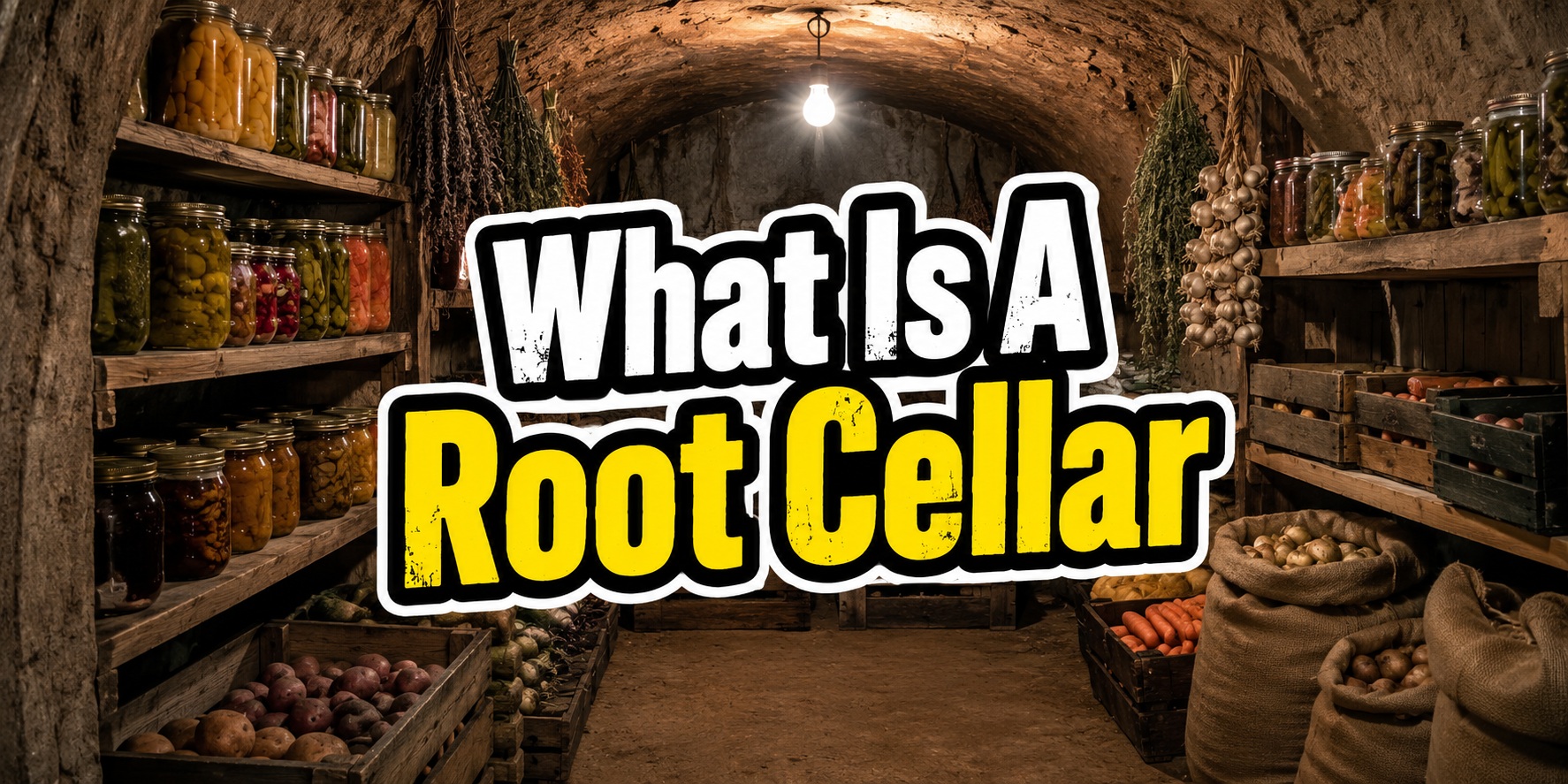

A root cellar is an underground or partially underground storage space that uses the natural insulating properties of the earth to maintain cool, stable temperatures year-round. No electricity. No refrigeration. No mechanical systems of any kind. Just the thermal mass of the ground itself, which stays at a consistent temperature regardless of what is happening above it, keeping food cold enough to inhibit bacterial growth and spoilage without freezing it into unusability.
This is not a primitive or obsolete technology. It is one of the most reliable and energy-independent food preservation systems ever developed, and it has been used continuously since at least the early agricultural period. Every culture that lived through winters stored food underground. Root cellars were a standard feature of American homesteads from colonial settlement through World War II, at which point widespread electrification made refrigeration available and root cellars gradually fell out of common use.
For preppers, the root cellar represents something that a refrigerator and a chest freezer do not: a food storage system that does not depend on the grid. When the power goes out for three days, your refrigerator becomes a liability. When it goes out for three months, a well-stocked root cellar is the difference between eating and not eating. Understanding what a root cellar is, how it works, what it can store, and how to build one is foundational preparedness knowledge that most people in the modern era have simply never needed until they do.
How a Root Cellar Works: The Science
The principle behind root cellar function is straightforward. Soil temperature below the frost line, which in most of the continental United States ranges from two to eight feet below the surface depending on latitude and climate zone, remains at a relatively constant 45 to 55 degrees Fahrenheit year-round. This temperature is cold enough to significantly slow the biological processes that cause food to spoil, including bacterial growth, enzymatic breakdown, and mold development, while remaining above freezing, which would damage many of the vegetables and fruits that benefit most from root cellar storage.
The University of Minnesota Extension describes the ideal root cellar temperature range as 32 to 40 degrees Fahrenheit for most vegetables, achieved by managing ventilation to bring in cold outside air in fall and winter while the surrounding soil provides insulation against temperature extremes. The specific temperature in a well-designed root cellar is not solely a product of soil temperature but a managed balance between earth insulation and controlled airflow.
Humidity management is the second critical variable. Most root vegetables, including carrots, beets, potatoes, and parsnips, store best at high humidity, between 90 and 95 percent, which prevents them from desiccating and going soft. Other items, including garlic, onions, and winter squash, require lower humidity and better air circulation. A properly designed root cellar addresses both categories through zoning and ventilation, storing high-humidity and low-humidity items in different areas with different airflow characteristics.
What a Root Cellar Can Store
The range of food that benefits from root cellar storage is broader than most people realize. The common image of a root cellar as a place to keep potatoes and carrots is accurate but incomplete. A well-managed root cellar can store a significant proportion of a household’s annual food supply through winter and into the following spring.
Root vegetables and tubers
Carrots, beets, turnips, parsnips, rutabagas, and potatoes are the classic root cellar crops and the ones that store most reliably. Properly cured potatoes in high-humidity conditions last four to six months in a good root cellar. Carrots packed in damp sand or sawdust last equally long and often improve in sweetness as starches convert to sugars in cold storage. Beets and turnips stored in similar conditions hold well through winter. The key for all root vegetables is curing before storage: allowing freshly harvested roots to rest in warm conditions for one to two weeks so that minor surface wounds heal and the skin toughens, which dramatically extends storage life.
Related: Dehydrated Vegetables Are One of the Smartest Survival Foods You Can Store
Winter squash and pumpkins
Unlike root vegetables, winter squash and pumpkins require a different environment: cooler than room temperature but warmer than a refrigerator, around 50 to 55 degrees Fahrenheit, with moderate humidity and good air circulation. Many root cellars run slightly too cold and too damp for optimal squash storage, making a cool corner of a basement or outbuilding a better choice for squash than the main root cellar space. Properly cured winter squash, including butternut, acorn, and hubbard varieties, stores for three to six months under good conditions.
Related: Cherokee Food – Ancient Survival Foods, Preservation Methods, and Foraging Skills You Need to Know
Cabbages and leafy vegetables
Whole heads of cabbage store surprisingly well in cold, moist root cellar conditions, lasting two to four months if stored with their outer leaves intact and with adequate spacing for air circulation. The strong odor they produce is the main practical limitation: most experienced root cellar users store cabbage as far from the entrance as possible and away from other odor-absorbing produce. Kale and other hardy greens can be kept in the root cellar for shorter periods, but they are generally better harvested from the garden as needed through winter in mild climates or preserved by other methods.
According to Penn State Extension, the most common root cellar storage failures involve either excessive temperature variation, caused by inadequate insulation or poorly managed ventilation, or excessive moisture, caused by water infiltration into the structure. Both conditions are preventable through correct construction and management.
Apples and pears
Apples are one of the most traditional root cellar crops and some heritage varieties were specifically bred for their storage qualities, lasting six months or more under optimal conditions. The critical management point with apples is ethylene gas: apples produce ethylene as they ripen, which accelerates ripening and sprouting in neighboring produce. Store apples separately from other root cellar contents, wrapped individually in newspaper if possible, and check regularly for any that are beginning to soften or rot, removing them immediately before the ethylene they release affects neighboring fruit.
Related: Amish Applesauce Cake Recipe – A Forgotten Homestead Staple Worth Knowing
Canned goods, fermented foods, and beverages
A root cellar is not limited to fresh produce. Home-canned goods, which require cool and stable temperatures to maximize shelf life, store excellently in root cellar conditions. The consistent cool temperature slows the degradation of both the food content and the seal integrity of the jars. Lacto-fermented vegetables including sauerkraut, kimchi, and fermented pickles require cold temperatures to slow fermentation after the active phase is complete, and a root cellar provides exactly the right environment. Beer, wine, and cider benefit from the same stable cool temperatures that wine cellars have exploited for centuries.
Related: Canning Supplies: The Ultimate Guide for Preppers
Types of Root Cellars
Root cellars come in several configurations depending on available terrain, soil conditions, climate, and construction resources. Understanding the options helps match the right design to your specific property.
Hillside or bank root cellar
Building into an existing hillside or slope is the most traditional and most thermally efficient root cellar design. The structure is excavated horizontally into the hillside, the back and sides are surrounded by earth on three sides, and only the front entrance face is exposed to outside air. The earth-covered roof and walls provide maximum thermal mass and insulation, and drainage is naturally facilitated by the slope. Hillside root cellars require the least additional insulation and are the easiest to maintain at consistent temperatures.
The limitation is that they require a hillside. Properties without significant grade change cannot use this design without substantial earthwork.
Freestanding buried root cellar
On flat properties, a root cellar can be constructed as a freestanding structure buried below grade. This involves excavating a pit, building the cellar structure within it using concrete block, poured concrete, or treated timber, and backfilling earth over the roof and against the walls to a depth sufficient for thermal insulation. The roof of the cellar is typically at or slightly above grade, with a insulated access hatch or stairway providing entry.
This design is more construction-intensive than a hillside cellar and requires careful attention to waterproofing and drainage to prevent water infiltration from above and below. A buried structure on a high water table site is particularly challenging and may require a French drain system around the perimeter.
Basement root cellar
For properties without suitable terrain or soil conditions for an earth-integrated root cellar, a basement corner can be converted into a functional root cellar at modest cost and without major excavation. The conversion involves insulating the two interior walls and the ceiling of a basement corner to separate it thermally from the heated interior of the house, while leaving the two exterior foundation walls uninsulated to allow them to absorb cold from the outside. Ventilation pipes through the foundation wall allow cold outside air to be drawn in and warm air to exhaust.
A basement root cellar is the most accessible option for most suburban and semi-rural households and can be built over a weekend for a few hundred dollars in materials. Its limitation is that basement temperatures in heated homes rarely reach the ideal 32 to 40 degrees Fahrenheit range unless the basement is naturally cold and the insulation work is thorough. It functions better in cold climates than in mild ones.
The USDA Agricultural Research Service has documented that properly constructed underground storage maintains temperatures within a 5 to 10 degree range throughout the year in most temperate climates, compared to the 40 to 50 degree seasonal swings experienced at surface level. This thermal stability is the fundamental advantage of any below-grade food storage.
Trash can or barrel root cellar
A scaled-down root cellar for small-property homesteaders or apartment preppers with outdoor access can be constructed from a large galvanized metal trash can or food-grade barrel buried in the ground. Dig a hole slightly larger than the container, place the container with a few inches of gravel beneath for drainage, and backfill with soil to the lid level. Cover the lid with a layer of straw or insulation and then a waterproof cover. A buried trash can maintains temperatures close to the soil temperature at that depth and can store a meaningful quantity of root vegetables for a single household through winter.
How to Build a Root Cellar: Core Principles
Regardless of design type, all functional root cellars are built around the same set of principles. Getting these right determines whether the structure performs as intended or fails.
Site selection
Choose a site on the north or east side of a building or hill to minimize direct sun exposure, which would warm the structure. Avoid low-lying areas where water collects. The site should have natural drainage or allow for the installation of drainage systems. Proximity to the house matters for practical use: a root cellar you have to walk two hundred yards to in bad weather gets visited less often, and less frequent monitoring means more spoiled produce.
Insulation and thermal mass
The walls and roof of the structure need sufficient soil coverage to buffer temperature extremes. A minimum of two feet of earth over the roof provides meaningful insulation in most climates. Three to four feet is better in cold northern climates where winter temperatures stay well below zero. Walls need similar coverage or, in the case of poured concrete or concrete block construction, sufficient mass in the material itself to moderate temperature swings.
Ventilation
Ventilation is the primary tool for temperature management in a root cellar. A two-pipe system works best: an intake pipe that draws cold outside air in near floor level, and an exhaust pipe that allows warm air to exit at ceiling level. The intake and exhaust should be positioned on opposite walls to create cross-flow. Both pipes require covers or dampers to allow airflow to be restricted in very cold weather when temperatures threaten to drop below freezing inside the cellar, and in warm weather when outside air would warm rather than cool the interior.
Moisture management
The floor of a root cellar should be either bare earth, which naturally provides humidity through evaporation, or gravel over a drainage layer, which prevents standing water while allowing some moisture exchange. A concrete floor with no drainage provision creates a waterproofing problem and tends to produce either too-dry or standing-water conditions. Interior humidity can be increased by placing containers of damp sand or gravel on the floor, and decreased by improving ventilation or adding containers of calcium chloride, which absorbs moisture from the air.
Related: How to Keep Moisture and Pests Away from Your Food Stockpile
Shelving and organization
Wooden shelving on all available walls maximizes storage capacity. Leave at least two to three inches of space between the shelf and the exterior wall to allow air circulation. Organize by storage requirement: high-humidity items like root vegetables go in bins on lower shelves or in sand-filled crates on the floor. Items requiring lower humidity like onions, garlic, and dried herbs go on upper shelves with better air circulation. Canned goods and fermented products can go anywhere that is consistently cool and accessible.
Managing a Root Cellar Through the Seasons
Late summer and fall: loading the cellar
The weeks between the end of the growing season and the onset of consistent cold are the critical loading window. Harvest root vegetables after the first light frost, which improves sweetness in many crops, but before hard freezes that damage tissue. Cure all items that require it before storage. Load the cellar in layers of organized abundance, with the longest-storing items at the back and items you will access frequently near the entrance. Check that ventilation is functioning correctly and that no water infiltration occurred over the summer.
Winter: monitoring and management
Check the root cellar at least once per week during winter. Remove any produce showing signs of rot immediately, as one soft apple or molding carrot contaminates neighboring items rapidly. Monitor temperature with a min-max thermometer and adjust ventilation as needed to maintain the target range. Very cold spells may require closing ventilation dampers almost completely to prevent freezing. Mild spells in winter may require opening ventilation fully to bring in cold air. The goal is consistent temperature, not a single setting that is never adjusted.
Spring: clearing and cleaning
As outside temperatures warm past the point where ventilation can maintain cold interior temperatures, the root cellar’s effective season ends. Use remaining stores before they begin to deteriorate in warming conditions. Once cleared, clean the cellar thoroughly, removing all organic debris that could harbor mold or pests. Allow it to air out and dry through summer with ventilation pipes open, and inspect for any structural issues, water damage, or pest entry points that need to be addressed before the next loading season.
Root Cellars as Preparedness Infrastructure
For preppers specifically, a root cellar provides something that no amount of freeze-dried food or canned goods can fully replace: the ability to store large quantities of fresh, nutrient-dense, homegrown food without any ongoing energy cost or supply chain dependency.
A well-stocked root cellar going into winter can hold hundreds of pounds of produce grown on your own land: enough potatoes, carrots, beets, cabbage, winter squash, and apples to provide meaningful caloric and nutritional contribution to a household’s diet for four to six months. Alongside a comprehensive canning operation, a root cellar can provide the bulk of a household’s vegetable nutrition through winter without a single trip to a grocery store.
The National Center for Home Food Preservation at the University of Georgia notes that root cellaring is one of the oldest and most energy-efficient food preservation methods available and recommends it as a complement to canning and freezing rather than a replacement. The combination of all three methods creates the most resilient and complete home food storage system possible.
There is also the structural resilience argument. A root cellar is a physical feature of the property that persists regardless of what happens to the grid, to supply chains, or to the economy. It cannot be recalled, discontinued, or rendered unavailable by events outside your control. Once built and stocked, it performs its function as long as the earth itself maintains its temperature, which is to say indefinitely.
Common Root Cellar Mistakes to Avoid
- Storing ethylene-producing fruits (apples, pears) near ethylene-sensitive vegetables (potatoes, carrots): apples cause potatoes to sprout prematurely and carrots to become bitter. Always store fruit separately
- Inadequate ventilation: the most common root cellar failure. Without controlled airflow, temperatures either stay too warm in fall or drop below freezing in hard winter. Install a two-pipe ventilation system from the start
- Skipping the curing step: storing freshly harvested potatoes, sweet potatoes, and winter squash without curing dramatically reduces storage life. Curing allows minor surface wounds to heal and the skin to harden
- Poor drainage: a root cellar that collects water is useless and damaging. Address drainage in the site selection and construction phase rather than trying to fix it after the fact
- Overloading with items that have different storage requirements: mixing onions and garlic with carrots in the same humid conditions causes the alliums to rot. Organize by humidity and temperature requirement from the start
- Infrequent monitoring: a root cellar needs weekly attention during storage season. One rotting item that goes unnoticed can compromise an entire shelf of neighboring produce within days
The Amish Never Stopped Using Root Cellars
Long before refrigeration, the Amish preserved enormous amounts of food through winter using root cellars, spring houses, canning rooms, smokehouses, and other low-tech systems that worked without electricity. And unlike most modern households, many Amish communities never abandoned those methods.
That matters today more than ever.
Because a root cellar is not just a place to store potatoes. It is part of an entire self-reliant system built around food security, preservation, off-grid living, and surviving hard times without depending on fragile supply chains.
The Amish Ways reveals many of the forgotten techniques Amish families still use to preserve food, store harvests, protect supplies, manage homesteads, and stay resilient during shortages and economic instability.
If you want to learn the practical old-world skills modern society abandoned, this is one of the best preparedness resources available today!
Final Thoughts
A root cellar is not a primitive leftover from a less sophisticated era of food management. It is a proven, energy-independent, low-cost food preservation system that has fed families through winter for thousands of years and continues to do so on farms and homesteads across North America.
For the prepper household, it represents something more specific: a food storage system that requires no electricity, no purchased inputs, and no supply chain to function. Once built, it works. Every year. Regardless of what the grid is doing.
If you grow food or plan to, building a root cellar is one of the highest-return investments you can make in your long-term self-sufficiency. It closes the loop between production and storage in a way that no other technology can fully replicate without power.
Build it before you need it. Stock it before winter. That is the whole plan.
You may also like:
 Don’t Forget To Join Our Prepper WhatsApp Community For More Useful Prepping Tips And Tricks
5 Ingenious Ways To Refrigerate Your Food Without Electricity (VIDEO)
What No One Told You About Your Root Cellar
How To Make A Mini Root Cellar In Your Backyard In Less Than Two Hours
Read the full article here