To Target Pythons, Florida Researchers Are GPS-Tracking Possums and Waiting Until They Get Eaten


As Burmese pythons continue to eat their way through the South Florida food web, wildlife biologists and researchers have come up with all sorts of ways to track down the giant snakes and slow their spread. They’ve used drones, thermal cameras, robotic bunnies, and even male “scout snakes” implanted with GPS devices that can lead them to breeding females. (These scouts have proven to be particularly effective in and around the Everglades.)
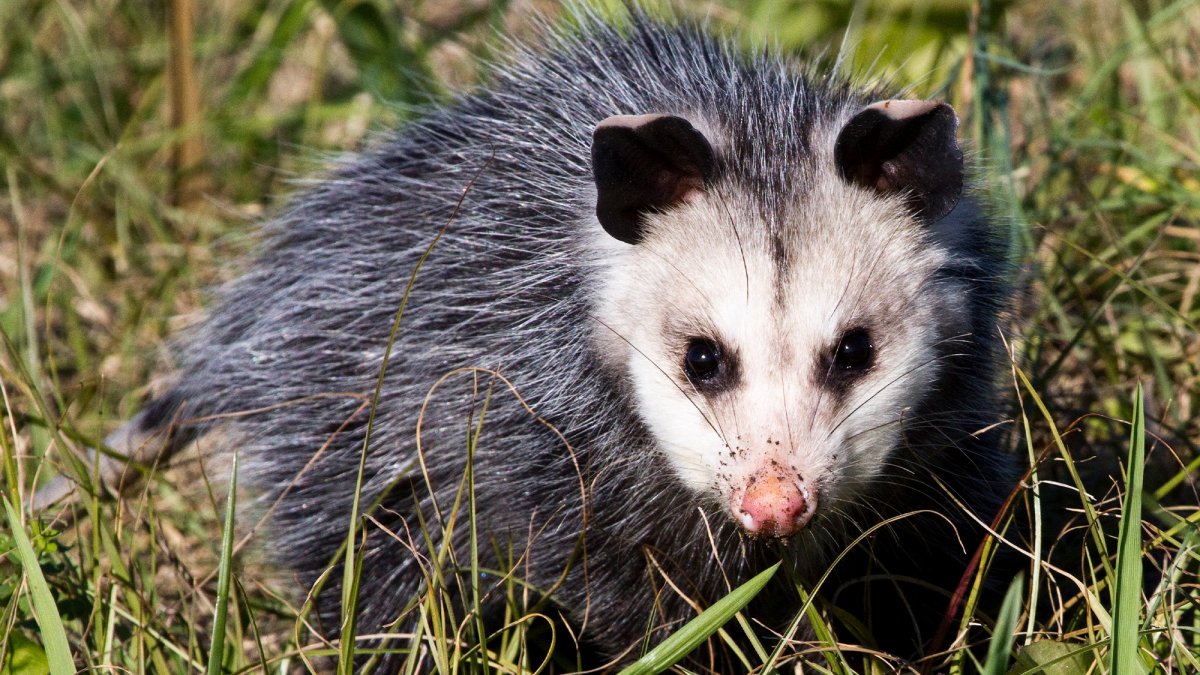
Now, biologists are working on a new tracking tool: one that has a pouch for young, a naked tail, and a propensity for playing dead.
The technique of possum-tracking is being developed at the Crocodile Lake National Wildlife Refuge near Key Largo, according to the South Florida Sun Sentinel. The idea took root in 2022, when Michael Cove, a biologist with the North Carolina Museum of Natural Sciences, was studying the movements of raccoons and possums in the refuge.
Cove and the refuge manager, Jeremy Dixon, kept getting mortality signals from the GPS-collared mammals. And when they’d go out into the refuge to recover the collars, they’d often find them inside the bellies of large pythons. After finding and euthanizing a few large snakes, they had an idea: Why not use GPS-collared critters as sacrificial python bait?
“We’re not putting these animals out there and in harm’s way,” Dixon told the Sentinel. “Harm’s way is there. We’re just documenting what is happening.”
This idea became more feasible as the GPS collars got cheaper, dropping from roughly $1,500 a collar to around $190 apiece. Cove and Dixon were able to secure grant funding from the South Florida Water Management District, which has its own python elimination program. They also brought in A.J. Sanjar, a graduate researcher from Southern Illinois University, as a third member of the research team.
Read Next: What It’s Like to Get Dragged Through a Florida Swamp by a 200-Pound Python
As they experimented with the idea, they quickly realized that possums were much easier to work with than raccoons. They’re also more plentiful on the refuge, where they can go deep into backwater swamps. Some of the collared possums have been eaten by snakes within two weeks of being released, and the team has removed at least 18 Burmese pythons so far. All of those pythons have been over 8 feet long, and the largest was around 13 feet, according to Dixon.
The team now has 32 GPS-collared possums out in the refuge, and they plan to have at least 40 animals collared by the peak of summer. Dixon explained that if funding wasn’t an issue, they’d have hundreds of collared possums in the field.
Read the full article here