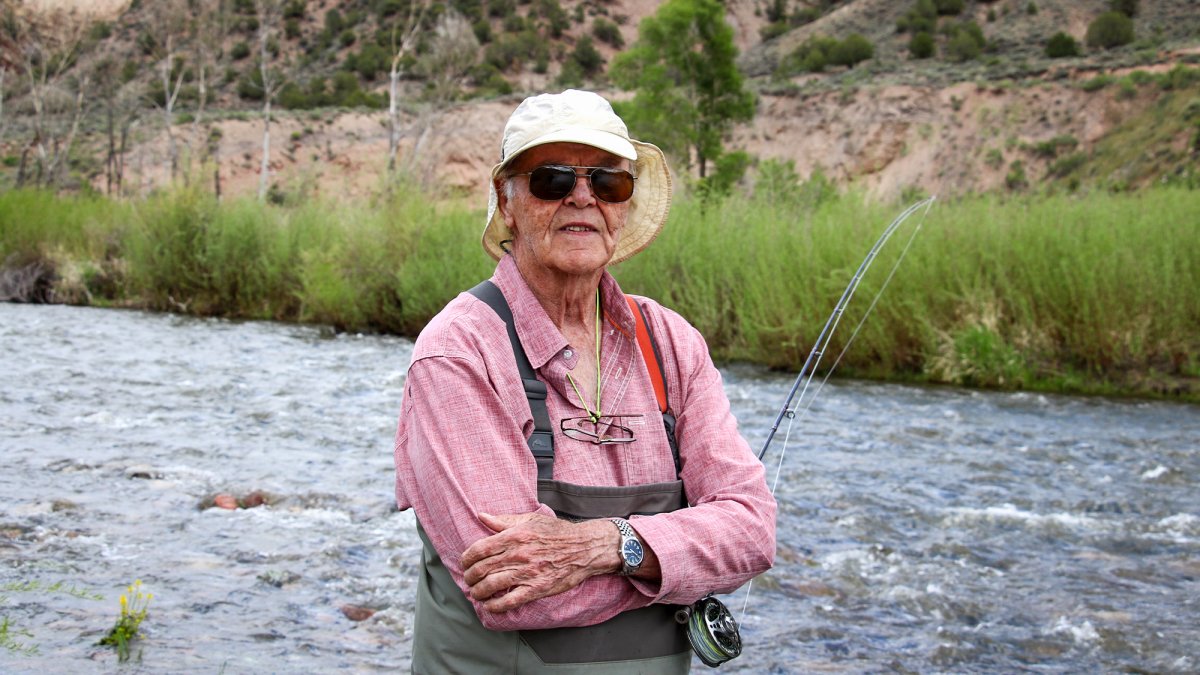

Roger Hill is an 84-year-old fly fisherman who has spent the last decade challenging Colorado’s murky and contorted stream access laws. Although Colorado is synonymous with river-based recreation, its restrictive interpretations of federal and state law have led to the assumption that none of the state’s major rivers are navigable — which allows private landowners to own the streambeds and keep the public out of them.
This legal interpretation makes Colorado an outlier in the West, and Hill calls the notion “preposterous.” So, in 2018, he filed a lawsuit and tried to challenge this interpretation in the courts. He was ultimately told by a State Supreme Court judge that he didn’t have standing to bring his case, which centered around public access on the Arkansas River.
“They said, ‘You don’t have a right to know the answer to that question,” Hill tells Outdoor Life. “You’re expected to obey the law. Ignorance of the law is no excuse …. But you are not allowed to ask what the law is.”
After that, Roger tried for a spell to get arrested for wading in a river. But law enforcement officers wouldn’t touch him. They knew that if he was charged with trespassing, he’d be able to go back to court and make his case that, under federal law, the public has a constitutional right to walk and wade in the state’s major rivers, like the Arkansas.
In this week’s episode of the Outdoor Life Podcast, I sit down with Roger Hill to talk about all the trouble he’s caused in his attempts to clarify Colorado’s stream access laws. We also cover Roger’s own personal connection to rivers, the idea of civil disobedience, and how his attempt to bring about change in the courts has sparked a renewed energy among Coloradans to reclaim the streambeds that are rightfully theirs.
Listen to The Outdoor Life Podcast on Spotify, Apple Podcasts, or wherever you get your podcasts. Love it? Like it? Want to help? Leave a five-star review where you listen to get The Outdoor Life Podcast in front of more people.
Full Transcript
Dac: Okay, Roger. I really appreciate you coming to hang out with me. We are here at kind of a cool old inn in Minturn, not far from the Eagle River. One of many great trout streams that wind through this state, which is really a destination for fly fishing, white water boating — river recreation is huge here in Colorado. It’s a big part of why a lot of us live here. But at the same time — and I don’t know if everybody knows this, who’s listening — there are some really restrictive and, at times, very murky laws around stream access. So, Roger. I guess one place to kick this off would be: What is it about Colorado stream access laws that are so unfriendly to fly fishermen like yourself. And how did we kind of get here? I guess that’s a good place to start.
Roger: Well, how we got here is through some incorrect court decisions. A notable one in 1912 a judge made a comment in dicta, which means it doesn’t count, that there are no navigable rivers in Colorado. And real estate brokers, real estate attorneys, people involved with land along rivers sold the notion that you can keep people out of the streams in Colorado. Based on [the idea] that there is no navigable water in Colorado. There were even sales brochures, etcetera. [Well] in places like Montana, where you can get into the water if it’s navigable water, as long as you don’t trespass. And quite literally, the public can be in navigable waters.
Dac: And this would be a good place,maybe, to let everyone know who isn’t fully aware, like, what the laws are today around wading up a river to fish, or floating down to fish.
Roger: What the laws are today, as interpreted by the sheriffs and the judges, is that the riparian landowner owns to the center of the river, or if he owns both sides all the way, the soil under the water. And you don’t have a right to be touching it. And that applies to fishermen, it applies to rafters. Everyone who wants to use it for recreation cannot be touching the bottom of the river in that interpretation. Now we know today that that decision has affected the real estate markets, and we know it’s incorrect. The reason we know it’s incorrect is that the U.S. Supreme Court has spoken fairly recently in the PPL Montana case as to who owns the bottom of a navigable river. And they have said how you must decide who gets to do what is based on a section by section evaluation of the river as to whether it is or is not navigable. Now, in Colorado, we have a substantial history of use of the Arkansas River, for example, for commerce. The Arkansas River provided the highway by which railroad ties got from Leadville, Colorado, all the way east to Great Bend, Kansas. More than a million of them floating all the way out there. Well, according to a [U.S.] Supreme Court decision, all it takes for a river to be navigable is for it to have been used in commerce. And the Arkansas River was certainly used in commerce. I can show you 70 newspaper articles that I found through maybe you’ll go blind and maybe you won’t search of old newspapers where the newspaper editor, writer, etcetera was talking about the latest tie drive coming through town or leaving the mountains. Or they had some problems here, and people up on top of the Royal Gorge banks don’t throw rocks down on the workers down there. That kind of thing. We know the Arkansas River is navigable … under the under the Daniel Ball decision.
Dac: Yeah. If it was capable of commerce at the time of statehood, it is a navigable waterway.
Roger: It is navigable forever. Forever.
Dac: Yeah. And that’s, and that’s federal. And I’m glad we’re getting into navigability, because this is sometimes where it gets a little bit confusing. Because we’ve got a federal — we just explained kind of the federal precedent. But there’s also, many states have created their own definition of navigability in order to settle this issue of which rivers are, you know, where the stream bed is public. You mentioned PPL Montana. Montana is kind of a gold standard in terms of river access. Idaho is another one, and I want to … I like how they do it. It’s kind of really two two different tests. They’ve got, I think, like a log test and a vessel test. So if the stream is capable of floating a log that’s six inches in diameter or larger, I believe, they consider it navigable. If it’s capable of floating a craft, you know, a regular boat for a good portion of the year, it’s considered navigable. Colorado just outright said, “We don’t have any navigable waterways.” So that’s what set up the situation that we’re in today.
Roger: And that is the interpretation of state law after the Emmert decision it was called, which sought to test that. Unfortunately, it wasn’t a good test, because the Emmerts, who were doing the floating to test is this navigable, stipulated that the Colorado River they were in was not navigable. So we have a court case that is used to say, “nothing is navigable.”
Dac: Yeah.
Roger: Preposterous.
Dac: Right? And that goes back now, like 50 years, almost. That was 70…
Roger: ‘78 or ‘79, yeah.
Dac: So we’re coming up on that, you know, 50 years. And this is where I want to, I want to get into you a little bit more, Roger. Because it’s one thing to sit here and complain about this and talk about how this is an unjust situation. But it’s another to do something, right? And to try to push for change. And that is where you have kind of…
Roger: Caused all the trouble.
Dac: Right. Yeah, for now, going on 15 years this is ongoing almost, again. So, you know, I want to get into the trouble that you’ve, you’ve caused. But I also want to understand some of your background and why this is so important to you, because I think there’s a lot of, a lot of people … You’re, you’re retired, correct?
Roger: Yes, have been for a long time.
Dac: Yeah, so you’ve been retired for a long time, you’ve been fishing here since the 60s?
Roger: Since ‘67, ‘68.
Dac: Yeah. I mean, you wrote the guidebook on fly fishing at the South Platte, which is one of the most famous and technical tailwaters we have. So I think a lot of people would be, would would be wondering … or people would be saying, “If I was retired and I had all this time, why wouldn’t I just go fish. I could go travel up to Montana. I could go, you know, book a trip somewhere else and get my fishing in. Or just, you know, take up a new hobby.” And I guess what I’m getting at is: Why is fly fishing, and especially on the rivers of Colorado, so important to you, and such an integral part of your life?
Roger: Well, like anything else you do in retirement, it’s because that’s what you want to do that day. Okay. But I have looked at water I have wanted to fish in modern times, I guess I will call it, since the Emmert decision, and the keep out no trespassing signs seem to be everywhere on the river these days. There’s very little public water now. Here’s the kicker. What is really popular in Colorado is fishing in those few places that really grow trout: the Roaring Fork, the Frying Pan, the Colorado, the Gunnison, the South Platte. And those waters pass through some beautiful ranch land that I don’t wish to disturb in any way. I just want to put my feet on the bottom. And according to federal law, I have every right to do that. We have the example of the Arkansas being used for commerce, and other rivers that are or were susceptible of being used are also navigable. Now, what that means is: Well, we didn’t need to float any logs down it that year, but if we had needed them, we could have done it. Or we haven’t needed to float any furs all the way to St. Louis, or whatever, in a few years, but if we had needed to do so, we could have done it, because the river has natural characteristics, flows, schedule of flows, things that will propel a canoe, you name it, that allow that and promote it. But not every place is equal in how it develops through commerce and the local economy.
Dac: Yeah.
Roger: So for example, there are not spots that I am aware of along the Colorado where anybody did any log drives. I also don’t see any towns that were built along the Colorado that needed lumber or a railroad to come through until much later. And they came through without having to follow the river. But the rivers themselves have the characteristics that they could have been used, and we have rivers that were used. Now, here is the kicker: We Americans pride ourselves and conduct ourselves in our social contract with each other according to the rule of law. And the rule of law says that the federal Constitution is superior in itself to any state law. Federal court decisions are superior to any state laws. Federal law means with the rule of law we get to conduct ourselves according to what that law says. And federal law says in navigable water you are on soils or on the water where you have a right to be for purposes of commerce, selling railroad ties down the river, if you will.
Dac: Yeah.
Roger: Navigation. Traveling from Leadville, Colorado, all the way to Great Bend, Kansas, in a boat if you want to. And fishery. We fishers have a special notation in the federal laws that conduct how we conduct ourselves amongst our fellow men. And we don’t interfere with the rights of people to enjoy those things that are guaranteed to us by federal court decisions.
Dac: So if I’m understanding it. We have a situation where we have a legal, a state legal system that is basically going against federal law,
Roger: It is, but it doesn’t know it. Because no one has ever put the two together and said, “Wait a minute, you can’t do this because of that.”
Dac: Yeah. Which is where you know, I think, you come in. I mentioned earlier that it’s a different thing to actually do something about it and implement change. So, getting back to you. I’m also curious if, you know, starting from the 60s to today. If stream access has gotten more restrictive, has it become more…
Roger: Much more so.
Dac: Okay, okay. Just as more people have moved here, and more development, and more money has come into the state.
Roger: Places where I used to park behind the river, I would now have to cut down a fence to park in that same spot. A fence with a sign on it saying, “You will be arrested if you trespass here.”
Dac: Yeah. Getting back to your personal relationship a little bit with some of these, some of these rivers. You mentioned, we were having dinner last night, and you said something that you know I think will resonate with a lot of people. It’s that we have these places, I think a lot of people have these places that are special to them that really sort of define who they are as a person. So what are a couple examples of those places here in Colorado that define Roger Hill.
Roger: Well. Let me give you the first example that comes to mind. On the Gunnison River. The Gunnison goes through a gorge that is very deep, 1000 feet deep. And there’s a wonderful fishery below the last dam in a chain of, I think it is three dams. When I was a much younger man, two buddies and I hiked down that 1000 feet to get to the river, then find a place where we could cross it and spend a day down there. It is magical. And on that day I caught 60 fish on one fly before I took that fly off and put it in my hat. One fly lasted for all that. I’ve never had a day like that before, or since. That is a magical day. There have been other times, particularly on the South Platte, where I have patted myself on the back and said, “Roger, you finally figured out what they were doing today, and you put on the right fly and caught some fish,” after two hours of scratching my head. That was magical.
Dac: Yeah.
Roger: Because, you know, it’s something I accomplished all by myself in one of the most beautiful places in the world. And it sticks in my memory. I think we, generally, everybody who has an outdoor bent to them, generally has a series of things that are special to them that they recall, and always they have an element of place to them. I remember special days in Yellowstone. I remember special days on little creeks in Colorado. I remember special days, gosh, in every state I’ve fished in. And I also remember getting skunked on what were not terribly special days. Those things happen, but they’re part of why you go, and they are part of what makes up the memory, that is, the chain of memories that constitutes your life as you mull over. Boy, that was fun.
Dac: Yeah, I love that. Would you include, kind of extending that, places on the Arkansas River. I know that is…
Roger: Absolutely. I’ve had some wonderful days down there.
Dac: Yeah. I mean, it’s a … brief segue from fishing. This is like the most heavily rafted river in the country. It is a destination place for river sports, and it’s a gold medal trout stream. We were talking about some of the hatches that you’ve, you know, seen throughout your life down there. And I ask about the Arkansas, because we keep going back to the Arkansas in terms of it being a navigable river, and we keep talking around this this decision that you made to act on this and to actually try to push for some sort of change some sort of clarity, some sort of compromise between private property rights and public access is I think the weird spot where we find ourselves in. So I want to get into your experience on the Arkansas. And maybe this evolved over time, but I know that around 2012 there was, let’s say, an incident that sort of brought rise to some things. So maybe just walk us through your history with the Arkansas and how that led you to really take action.
Roger: My son, from the time he was 13 years old, worked for fly shops in West Yellowstone. And from the time he was 16, he worked in fly shops in West Yellowstone in the summers. This was long before he went to law school. And he became friends with fly shop owners by tying flies for them, and passed that friendship on to me, you know. I enjoyed those people. It was fun. Still is.
And I had conversations with them as to what is different here. If I go out, drive down any highway that follows a river in Montana and see a spot I want to fish. If I can get to a bridge close to it, I can park my car in a state highway easement, get out and get in the river, not bother a soul, and even if that’s a little creek, I can do that. And I talked to those fly shop owners and other people I met there and said, “What is different about Montana from Colorado?” They said, “Roger, you need to study navigability. Navigability has been in the courts here, and it is an ongoing thing here, but it controls what can we do legally in keeping people out of particular sections of a river, and what can we not do.”
And in Montana, if you can get into a piece of water that is navigable without trespassing, you have a right to be in it. But Montana went even further than that and said the definition of navigability is up to the individual. Very, very different. If you can find a recreational use for it in Montana, and you can get in it without trespassing, you have a right to be there. That’s what I would hope would come to Colorado at some point. Well, I learned maybe you need to study navigability and you’ll have more places to fish, fond hope. So I did that.
And I studied, and I studied, and I studied, and realized that federal law says I have a right to be in a navigable river. And federal law tells me if the river was used for commerce, as the Arkansas was, that’s a navigable river. Two and two together say I have a right to be in that river if I can get in without trespassing, which I have sought to do. Now the riparian property owners don’t like that. It goes in conflict with Emmert and other Colorado court decisions, except no, it doesn’t. Because there has been nothing that has happened in Colorado courts that deals with the issue of navigability. No one has ever said a river is navigable in Colorado, I guess, except me and my lawyers.
Dac: This is getting into the lawsuit that you filed against the state, and so I want to circle back to this proof. But maybe walk us through what transpired in order to push to that lawsuit on the Arkansas.
Roger: Well. I had a problem with one particular riparian owner, husband and wife. They live up on a bluff above the Arkansas River, probably 50 feet elevation difference. I don’t know precisely. And as I was wading into that section, a woman appeared in her backyard, yelling, “This is private property. Get out of it.” I said, “No, ma’am, I have a right to be here.” “No, you don’t.”
This went back and forth through about three iterations. And she started picking up landscaping rocks that she had in her backyard that were the size of a softball, you know, four inches in diameter, probably three or four pounds, and throwing them off that bluff at me. Well, she’s not a Nolan Ryan. But if something comes off of 50 feet and falls for 50 feet, it’s going something over 40 miles an hour when it gets to the bottom. And I was on blood thinners at the time. If she had hit me in the head with one of those rocks, I would have died right there on the spot, probably 30 minutes later with a cranial bleed. But that’s what would have happened.
My buddy’s friend goes back to fishing. The landowner goes in the house, comes back with a .38 special pistol, fires two shots at him.
So I got out of her way. [I] came back again, two weeks later I think it was, and was fishing in the same area, and her husband came out and asked me to leave. And I said, “I have a right to be here.” And we discussed that back and forth for a few minutes, and he told me I was crazy to think I had a right to be there in quite specific terms. No doubt about what he meant. So I left.
Two years pass —and my buddies and I still fish there from time to time, but we’ve never had another confrontation — when one of my buddies and one of his old time friends from college or way back comes to town. And they go to fish in that same spot. And the husband of that couple comes out and said, “This is private land, get out” to the guest of my friend, my fishing buddy. And he says to the landowner, “You don’t own the river. I’m not leaving.”
Well this guy, you know, is pretty assertive. My buddy’s friend goes back to fishing. The landowner goes in the house, comes back with a .38 special pistol, fires two shots at him. Now a .38 special pistol has a barrel about two inches long on a good day. They’re not very accurate, and he was shooting a distance of probably 300 yards, something like that. [It] ricocheted off the water close to this friend of a friend, and the friend of a friend turned around and told him, “I’m going to put your ass in jail.” And he did. Okay. He got out of the water, called the sheriff. They went through all the sheriff’s interviews, and the truth of the matter was determined, as I think was mentioned in that Alice’s Restaurant song of years ago. We finally came to the truth of the matter that I put that envelope under that trash.
Dac: Yeah. And to put a timestamp on this. This was the rock chucking incident, let’s call it, would have been around 2012, 2014. Okay, right. So law enforcement gets involved, your friend of a friend calls the sheriff. It becomes a whole…
Roger: Yep. Well, the sheriff charges him, not a serious enough charge in my estimation, but he still was charged. And at his sentencing, the judge told the landowner, “This is not the wild west anymore. You do not just shoot at someone that you think is on your land, particularly someone who’s wearing waders, carrying a fly rod, and obviously has no intention of being there to harm you or your property in any way.” Well, he spent 30 nights in jail for that, and from what I read on the internet, he ultimately lost his job as an appraiser for Fremont County … I cannot give you any verification of that fact. It’s just something I read in an outdoor river running forum from someone who said he knew them. Is it true or not? I don’t know. But I think it is.
Dac: Yeah.
Roger: So that led to the first lawsuit. Where do you want to go from here?
Dac: Yeah. Explain the lawsuit. You know, you find a legal expert, Mark…
Roger: Mark Squillace. And he had a friend, Alex Hood, and they wanted to do a lawsuit on this matter. Both of them enjoy doing appellate law and do it very well. And I think they are the preeminent lawyers, certainly in Colorado, of this issue of public access to rivers.
Dac: Yeah. And I’ve read some of Mark’s, some of Mark’s stuff, and he’s … This is clearly something that he knows his stuff about. I mean. And he also cares about this. Like he’s a river runner himself, he’s a fly fisherman, so it seemed like, you know, when you approached him, it was like, “Let’s, let’s do this.”
Roger: Well, he said I want to talk to my friend who is looking for an appellate thing to do, and he talked to his friend Alex Hood, and they decided, yes, we will do that. And they filed a lawsuit for us in federal court. Well, the 11th amendment to the Constitution says you can’t, you the citizen, can’t just sue the state you’re in, or any other state. I can’t sue the state of Ohio over anything. And I also can’t sue the state of Colorado without the permission of the state of Colorado.
Dac: Interesting.
Roger: Now the state of Colorado could have given me permission to do that, and in fact should have joined me in doing that, just to protect its citizens. But no, the choice was, we don’t want to upset settled expectations. We’ve got a lot of riparian landowners who think they own the bottom of the river, the bottom of the river under navigable waters. They’re wrong about that. Well, anyway, we filed our suit in federal court. The state brought up this 11th Amendment issue, we can’t sue Colorado. They wouldn’t join us, so we dismissed our suit in federal court, refiled it in state court. The state then joined the landowners in opposing us in state court and demanded that the suit be removed to federal court because it is a federal issue. Well, we’re right back where we started.
Dac: Yeah.
Roger: So what happened in that trip to federal court? Federal court decided, “No, it’s not our bailiwick. This is a Colorado issue. It belongs in Colorado state court.” So it went back to Colorado state court, and we litigated that into the appeals court after we lost in district court. Well, the appeals court said that if at the time of statehood the Arkansas River was navigable, then the Warsawa opponents do not own the bottom…
Dac: Right. This is the landowners who were throwing rocks and fired…
Roger: Yep, and fired the shots, what have you. They do not own the bottom of the river, and Hill would have a right to be there. Well, that upset the state attorney general, who has designs on becoming governor. I’m sure that brought worries about how do I fund my campaign for governor. And the state then filed a special appeal to the Colorado Supreme Court, saying you can’t allow this, and they did not allow this, reaching the conclusion that I do not have standing to file this lawsuit. Because in filing the lawsuit and presenting evidence, I would have to determine who owns the bottom, and that I do not have standing to do, because I am asking the court for a quiet title ruling. And in Colorado law, someone who does not claim an ownership interest in land has no right to file a lawsuit asking the court to say who owns it. So I was overruled on that.
Now the court could have also followed another law, which is the declaratory judgment law, black letter law in Colorado that says if you are involved in a dispute, a lawsuit with someone else, and it is, let’s say, a serious matter for which you have rightful concerns about your safety and things of that nature, you can ask the court to elaborate on what is the law that will be brought forth to decide the issue when your number comes up. Baskin-Robbins system. When your number comes up, and you go to court on this issue. Well, we had two conflicting laws. The Supreme Court could have gone with either one. They went with the one that says, no Hill, you don’t have standing so nobody has to make a decision. That’s where we are today.
Dac: That’s where we are today. And it is important to, I’m glad you brought up the Attorney General, because that is, I mean, from the very beginning it seems the Attorney General was saying, “No, we can’t have this, we can’t have this happening. We can’t have this go to court.”
Roger: Everything he was doing in pleadings was along the lines of, “We have settled expectations. You know, these people think they own it. We can’t change that. God think of the upheaval. There’s nothing to be done. We will just live with what is there. But, if there is to be a change, it’s got to come out of the legislature.” Well, the legislature has tried on three occasions to straighten out issues of who gets to be where on a river, and they have failed every time. They can’t get together on that issue. Power, money override what the legislature is trying to do.
Dac: Yeah, yeah.
Roger: So we’ve gotten nowhere on it. But my attitude is we don’t have to get anywhere. We have the federal law to rely on, which, by the Supremacy Clause of the Constitution, says that federal law is the supreme law of the land, and all judges will be bound thereby. Judges, you know, even the old-time justice of the peace in West Texas somewhere has to be bound by federal law if he’s making a decision on anything. If federal law applies to that case, the judge will apply federal law to that case.
Dac: And going back to this whole thing, I’ve got even more questions about kind of what all transpired during this time. Because this was a lengthy process, right?
Roger: Oh yeah. We’re talking five years in the court.
Dac: Yeah. We keep going back to federal law, we keep going back to navigability. The appeals court saying, “Hey, if we can have some proof that the Arkansas River was navigable, you’ve got a case.” So, we’ve talked a little bit about this. But I want to, you know, kind of highlight this. Because from my perspective, this is kind of one of the more frustrating things in learning about this whole legal rigamarole that you went through, is that you didn’t just kind of do some Google searches on your own and try to make a case. Like, you had a historian, a professor, I believe …
Roger: An eminent historian,
Dac: …do a complete, I mean, go back from the time of fur trappers all the way to the time the railroads were built, and show example after example, article after article, evidence, photos of the Arkansas being used for commerce. But that was never seen in the, in the courtroom, that was…
Roger: It has never come into public view. If you want to see it, I will send it to you.
Dac: Yeah. And I have. And it’s … I encourage people to check this out. I can find a way to link this into a story. Because, yeah, I mean, it is so clearly navigable, not to mention, you know, in that, in that traditional federal sense. But you know, just the sheer amount of boats that come down that river today.
Roger: Well, go there in, let’s say, mid late July. Stand in one spot, and count rafts that go by for an hour. Probably be 10, maybe 20. Okay, you’re standing in one spot for an hour.
Dac: Yeah. So that, that to me is where it really gets … yeah, again, frustrating. Because we have what seems like a very incoherent and sort of murky legal situation, and then we have a legal system that has been unwilling to try to clarify that, you know. And after all the pushing you did, after all the energy you put into this, they say, “Well, you don’t have standing, you don’t have any right to sue to make this decision. We’re not gonna, we’re not going to let this even be discussed.”
Roger: Let me make that crystal clear. The Supreme Court said, “You want to ask, what is the law? What is the law regarding access to rivers, possibly navigable, in Colorado?” They said, “You don’t have a right to know the answer to that question. You’re expected to obey the law. Ignorance of law is no excuse. Citizens are expected to obey the law. But you are not allowed to ask what is the law.” Who do you ask if not the Supreme Court? Who would know? You cannot go into a law office in Colorado and find a lawyer who can tell you what that law is, because he doesn’t know. It has never been litigated. But we have ample evidence of what it will be when it comes through a court looking at the evidence.
Dac: Right. So, with that litigation route, just kind of, you know, you getting stonewalled. You mentioned this taking years. And I want to bring up something that we discussed either last night or the other day when we met. And you, you, kind of, I forget how you put it, but it was basically that they, you know, you’re an elderly gentleman, and it was kind of like they’re just, gonna wait me out.
Roger: Yeah. When we first filed our lawsuit, the first sentence was Roger Hill is a … I don’t remember how old I was there, but an old dude fly fishing. I think they looked at the age we quoted, I think 71 maybe. I don’t know. And [they] thought, well, we can just stall this. Every opportunity to stall we will stall. Ask for a two month extension, what have you. Waiting for him to die. He will surely die. And then we won’t have to decide. Well, I fooled ‘em. I didn’t die. But they fooled me. I didn’t get in court either.
Dac: Yeah. And when you were unable to get into court, this kicked off kind of an interesting time in your activism around this. Which is where, if I understand this correctly, after this decision came down, it was like, “Well, I guess I need to get arrested.”
Roger: Yes. We decided that was the way to get into court, because if I’m arrested for trespass, that is criminal in nature. Anytime you’re in court charged with something criminal in nature, you have the right to introduce any evidence pointing to your innocence. And if I could get arrested, I would point to this 70- or 80-page report we put together, and say this points to my evidence. I have a right to be there. And I don’t see how a court could look at that and disagree. I just don’t see the possibility of that. But, when we organize to say, “let’s go get arrested,” I would be the one to get arrested, and that’s not a minor matter, by the way. A lot of people could not do that. A lot of people who have interest in it — for example, another lawyer wouldn’t dare do that, for fear of losing his law license over, you know, a criminal conviction.
Convict me of trespass? Okay, you’re gonna put me in jail. Go ahead. I’ll bond out. Okay. I don’t have anything to lose. Okay. I’ve got pro bono attorneys. What else do I need? And pro bono, very good attorneys. Well, anyway. We organize this quasi civil disobedience. We’re not being disobedient to any law, but only to settled expectations. And we go back to the Arkansas with a film crew that’s making a movie about the whole issue of access to waters in Colorado. It’s very good.
Dac: Common waters is the name. I encourage people to check that out to get a cool overview of what we’re talking about here.
Roger: Yeah. It gives you a cool overview of that. And we told the sheriff we’re coming down there and we are going to fish and we did. We went down there and we fished, spent the night there and the night before, got up the next day, had breakfast. And one other person and I got in the river and we fished. Now, we told the sheriff we’re coming to do that and he said, “Well, you know, trespass is not our bailiwick. We don’t do that … That is handled by the Division of Wildlife, now called Colorado Parks and Wildlife.”
Dac: Yeah.
Roger: And all I can say to that is, you know, those guys stock wolves and they stock trout. Okay. They’re not coming to arrest me.
Dac: Yeah.
Roger: Because that’s not their thing. So, the sheriff won’t arrest me. I don’t get into court. There is not a judge who’s going to look at my evidence. So, how do I get a judge to hear it? You know, I don’t know.
Dac: Yeah. And so, have you continued on that quest to be arrested?
Roger: I have not tried it lately. And that is a function of, I think the bastards were right. I didn’t die, but I got old. And I am no longer as strong as I was 10 years ago to wade in fast water, particularly in fast water on truly slick rocks. Even my son won’t go fishing with me now because he knows I’m going to fall and break an arm or something like that and it’ll ruin his day of fishing. So we don’t go to fast water together. We’ll go to little creeks, but nothing that looks navigable. So I would like to continue on that if I could get arrested without drowning myself. And that’s kind of the alternative I’m facing. The Arkansas is fast, and it is slick. So I have stayed more or less out of it since then.
Dac: Yeah, well, you know, I mentioned the word frustrating. But that’s also, yeah, just a little … it’s … I don’t know if it’s the right word, to say it’s, like, heartbreaking. But it is hard to hear that. That they did in some way succeed in waiting you out long enough that you can no longer physically do what you want to do, and what would be required to have this actually heard in a…
Roger: It just riles my butt. I mean, it really upsets me. Because, hey, I would like to be creating new memories. And I can’t do it. You know, I can go to little creeks, and I love them all. It’s a wonderful day. But I’m not solving what I set out to solve. Which is the issue of why can’t the people in Colorado be where they have the right to be in Colorado rivers.
Dac: And you obviously still. I know you drove up the Arkansas on the way here to get here, so you see these same spots that you …
Roger: See the same ones. And this year the water is low, I could probably wade it safely, but not right where I want to fish, because it’s not low there. It’s the deep spots the trout are in.
Dac: Yeah, exactly. Well, no, I mean, that is, on a personal note … That’s something, you know, I feel for you there. To be as positive as I can be around this, I guess, given the situation that we’re in … We mentioned the film Common Waters. And what you have succeeded in doing is renewing an energy around this it feels like. We mentioned the film. There’s also a couple groups now, Colorado Stream Access Coalition, the Responsible River Recreation Alliance. Groups of fishermen and paddlers who are now renewing this push for legislation — that didn’t happen this last session. But it did, like I said, create, from what I’ve seen over the last few years, really a renewed sense of energy and drive from people in the state who have a lot in common with you and care about the things that you care about. So, yeah, that’s that’s one of the reasons why I was so excited to be able to meet you and to be able to have this conversation with you, is what you’ve done in that sense, right. That is a success in its own right.
Roger: Well I’m going to continue doing what I can, you know. I have to choose what I spend my time on, only by, is there an opportunity to help here. Is there an opportunity to do something. I can raise my voice. I can stamp my feet. I can threaten to cry. But the fact of the matter is the state of Colorado flouts the rule of law by not accepting that federal law applies to the rivers in Colorado.
Dac: Off of that. What would you like to see? Obviously, you’re sitting here with me, we’re going to go fishing, and you’re going to stay in this arena. But what, what would you like to see younger generations like mine do, and people again who care about this sort of thing, do to sort of maybe carry on in a sense what you’ve, what you’ve sort of started.
Roger: Well, I want them to go vote for one thing. I want them to go vote for attorney general. We’re not going to do a political endorsement of any sort here, but I want them to consider what the candidates for attorney general are saying. Because the attorney general single-handedly can solve the problem. The attorney general has the right to say, “Here’s what the law is in Colorado under me.” And the attorney general is responsible for all legal filings for the state of Colorado, etcetera. And he could easily say, he or she could easily say, “Look, this is clear, the people have the right to be in navigable rivers, and you, Mr. Sheriff, and you, Mr. Judge, down in Podunk County, way far in the southeast corner of the state or something, have to go along with it.” He can do that. And the opposition is very happy to go along with it when the beneficiary seems to be the rafting industry, they’ve done it several times before. And they could do the same thing and say, “Well, you know, it’s not just the rafting industry that uses these rivers. It’s the public. The public. Anybody can use these rivers if they’re navigable.”
And the next thing the Attorney General could say is, “I have appointed a commission to study the rivers in Colorado and identify at first which ones are obviously navigable.” It’s very easy. There are about a dozen of them. And [then] get into the problem of things that aren’t obviously navigable, that might be, but study the issue for all the waters that might be recreationally used in Colorado. That’s what I want from the next Attorney General. And that’s where I think the issue will be won or lost.
Dac: Well, it’s good timing for this conversation, because we do have. It is an election year. You know, you mentioned this won’t be a political endorsement. But there is a candidate that you can, that you can look up and see maybe some of some of their thoughts around this matter. So being engaged, being active and voting is part of that, and I think that’s good advice for people. The other thing I wonder about is just raising the attention and just continuing to go out and fish and boat and enjoy these places that we have. Because it really is a spectacular system of rivers that we have in the state. And I mean, I think with all of the murky legal situation we’ve talked about, the frustrations around this, it still is a very great place to get outdoors and get on the river. So, I hope people will continue to do that and continue to raise the conversation around this.
Roger: Let me say one other thing on this. The individual fishermen have a couple of places they can raise the issue. One is in their fly shop. And fly shop owners aren’t particularly behind this, because they have all these deals, you know, with private landowners. You know, they get an extra $500 a day to take someone in fishing. If you’re taking a group of two, that’s $1,000 a day that you split with a rancher. That’s a pretty good deal. Couldn’t do that if everybody knew that section of river was open. Okay. The other thing is getting out and fishing is a solution advocated by the Denver Post when they said, “Just go fishing. If a landowner tells you to leave or points at a sign, just laugh at him and go on about your business.” Well, that might get somebody arrested, but it probably isn’t [going to.] Because we’re finding out that exactly what the Denver Post said is true. “Roger Hill has the law on his side. Just go fishing.” And I don’t foresee anybody getting arrested right now is going to end up in court over it. But the fact that he does end up in court makes it more an ironclad case. He has a right to be there regardless of the outcome in court. And regardless of the outcome, if it gets to court, it’s going to be appealed all the way through the Colorado Supreme Court, and it’s going to be resolved.
Dac: Yeah, it’s going to be resolved. And maybe at this point, you know, when I talk about we need to keep getting out and fish and carrying on what you’ve started. I guess what I’m getting at a little bit is that maybe there is a certain time, and I’m not advocating for anything in particular, but I will say that maybe there is a certain point in time where there is cause for … civil disobedience is not the right term. Again, we’re going more against interpretations in these ways of thinking that aren’t necessarily based on the law. But maybe it is time for people to start walking up more rivers, and like you say, continue to do what they have the right to do.
Roger: Yes. It’s an idea whose time has come.
Dac: And, on that note. I think we need to go get the raft together, I see some sun starting to show itself, and maybe go fish the eagle a little bit, go see what’s going on.
Roger: Let’s go fishin’.
Read the full article here