
NEWYou can now listen to Fox News articles!
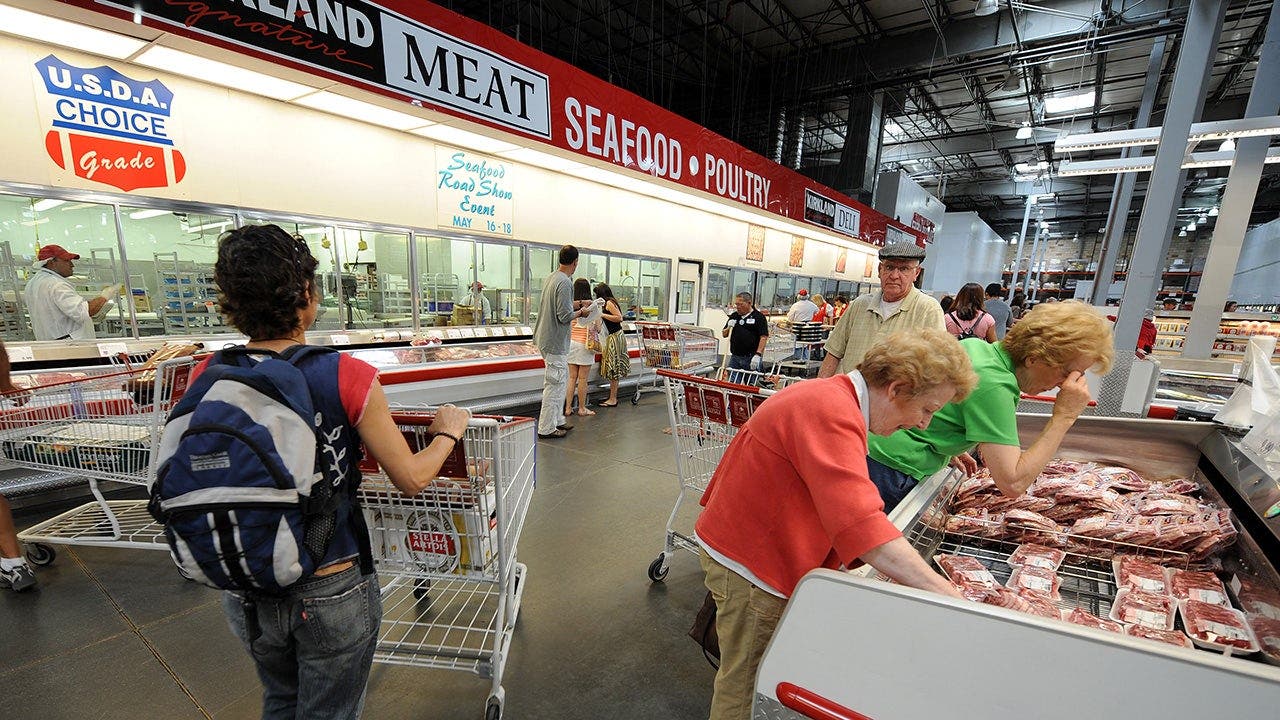
Costco was the grocery retailer where the largest share of higher-income Americans reported doing most of their grocery shopping, according to a recent YouGov survey.
Eleven percent of respondents earning at least $150,000 a year said Costco was their primary grocery store. Fourteen percent selected “other,” while Kroger followed at 10% and Walmart Supercenter at 8%.
The warehouse retailer, known for its bulk goods and discounted prices, topped the rankings despite requiring shoppers to pay an annual membership fee.
BUDGET-FRIENDLY VEGETABLE IS BECOMING ONE OF 2026’S BIGGEST FOOD TRENDS
YouGov defines higher-income households as those earning at least $150,000 annually, or more than 200% of the U.S. median household income. Higher-income Americans make up 10% of the population, according to YouGov.
Just over half (51%) of higher-income households reported spending more than $150 each week on groceries, compared to 28% of middle- and lower-income households.
Walmart Supercenter was the most popular grocery store among middle- and lower-income Americans, with 20% of respondents naming it as their go-to supermarket. Five percent of those respondents reported Costco as their preferred grocery store.
CHEFS REVEAL THEIR FAVORITE GROCERY STORES AND WHERE SHOPPERS CAN SAVE THE MOST MONEY
Walmart earned second place, with 12% of middle- and lower-income shoppers going there for food. Kroger and “other” tied for third place, with 10% of respondents selecting each.
“Even though the hype says that these wealthier shoppers are going to the Erewhons and the Whole Foods of the world, not necessarily.”
The findings were not surprising, Santa Monica, California-based food industry analyst Phil Lempert told Fox News Digital.
“Wealthier households typically are larger households,” he said. “So it fits perfectly with the model of Costco having larger sizes. Also, wealthier people shop more often, and what they want is value. One of the reasons they have more money is they’re frugal.”
Costco’s bulk sizes and lower prices naturally appeal to larger households looking to stretch their grocery dollars, Lempert said.
“Even though the hype says that these wealthier shoppers are going to the Erewhons and the Whole Foods of the world, not necessarily,” Lempert said.

A Costco membership ranges from $65 to $130 a year, according to its website. Lempert said he doesn’t think this is prohibitive enough to deter middle- and lower-income Americans and that it’s well worth the savings it brings.
Kroger’s strong showing among wealthier shoppers surprised him, though he noted that consumers often shop where they live, Lempert said. Costco stores are concentrated in larger metropolitan and suburban markets.
With higher gas prices, shoppers are less likely to drive longer distances in hopes of saving money on groceries, Lempert said.
CLICK HERE FOR MORE LIFESTYLE NEWS
“People are nervous about what the future looks like,” he said. “And when we get nervous, we get more frugal. We have to be smart consumers these days more than ever before.”
To save money on groceries, Lempert offered several tips. “No. 1, always shop with a list,” he said.

The U.S. Department of Agriculture (USDA) sets standards for certain products, such as cheddar cheese. The cheddar cheese sold in a specialty cheese case often meets the same USDA standards as cheese in the dairy aisle but can cost 20% to 30% more, Lempert said.
TEST YOURSELF WITH OUR LATEST LIFESTYLE QUIZ
Seafood displayed at the counter is often previously frozen and thawed, while comparable frozen products may cost less, Lempert said.
The best thing to do is order groceries online and pick them up yourself, Lempert said.
CLICK HERE TO DOWNLOAD THE FOX NEWS APP
Shopping strategically — whether by buying in bulk, comparing unit prices or ordering groceries online for pickup — can help consumers offset rising food costs, he said.
Read the full article here