

Trump ‘Decimated’ Two National Monuments in Utah. Meet the Man Who Will Challenge the Administration with a Lawsuit

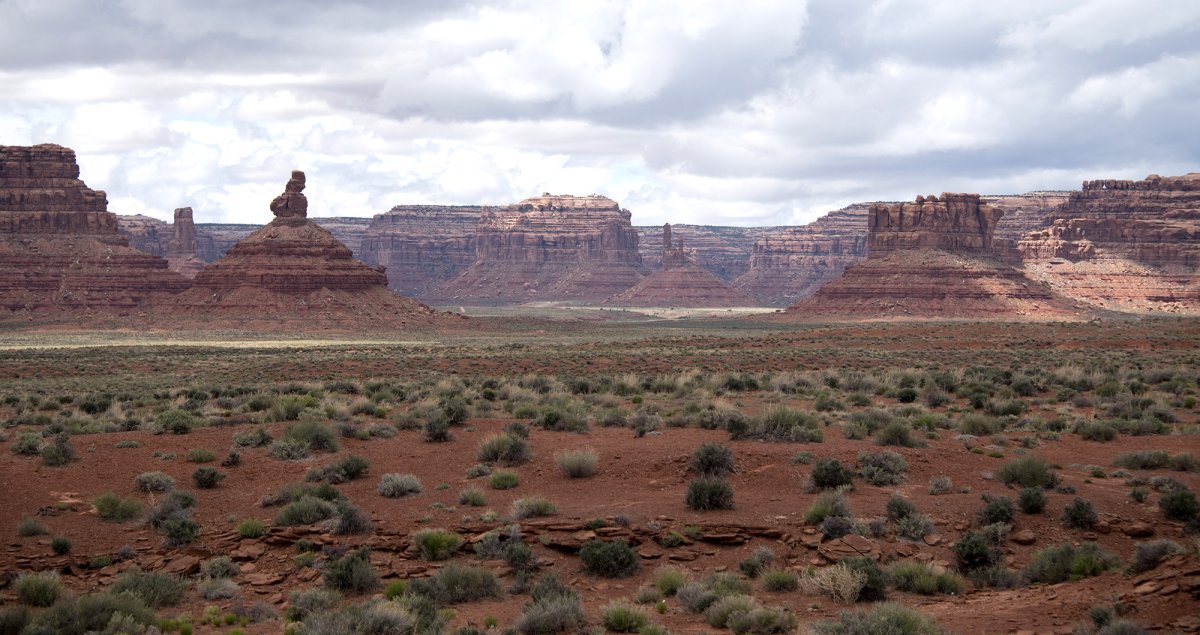

On Monday President Trump signed two presidential proclamations to once again reduce two popular Utah national monuments. He cut the size of Bears Ears National Monument by 91 percent and Grand Staircase-Escalante National Monument by more than 90 percent. That’s a total reduction of about 3 million acres in southern Utah. Utah politicians, including Senator Mike Lee, attended the signing to fully support these rollbacks.
Related: Trump Cuts 2 Popular Utah National Monuments by 90 Percent — About 3 Million Acres
This week’s news wasn’t exactly a surprise. There’s been a political tug-of-war over Bears Ears and Grand Staircase for years that aligns with changing presidential administrations. The rollback is also part of the larger anti-public lands movement we’ve been seeing, not just from Utah politicians, but from the current Department of the Interior.
That’s why on this week’s episode of the Outdoor Life Podcast I spoke to Steve Bloch, the longtime legal director of the Southern Utah Wilderness Alliance. Steve is an attorney who lives in Utah, specializes in natural-resource law, and has worked on public lands issues at SUWA since 1999. In this episode, he explains what went down this week, what it means for hunters, anglers, and wildlife, and what happens next. You can listen to the interview on Apple, Spotify, or wherever you get your podcasts, or read on for a full transcript of the episode.
Full Interview Transcript
Outdoor Life: Steve, to start things off, could you just briefly explain what happened this week in your home state?
Steve Bloch: Sure. So Monday afternoon, 4:30 Eastern Time, the president held a brief signing ceremony in the White House where he signed two proclamations that decimated the Grand Staircase-Escalante and Bears Ears National Monuments. With regard to the Grand Staircase, it’s a national monument that was 1.9 million acres, all federal public land in southwestern Utah. Under the terms of Trump’s new proclamation, that monument was reduced to 181,000 acres. On the Bears Ears side, that monument was about 1.3 million acres. That’s southeastern Utah. And under the new Trump proclamation, the monument is now 121,000 acres in a few non-contiguous units.
Outdoor Life: Okay. And this is just the latest development in an ongoing political back and forth over these two monuments. For the folks who need a refresher or who really haven’t been following this issue, can you put this week’s rollbacks in context of how we ended up here?
Steve Bloch: Sure. We’ll start with Grand Staircase, because that’s the older of the two monuments. So in 1996, President Bill Clinton establishes Grand Staircase-Escalante National Monument. It’s about 1.7 million acres. It’s the first national monument entrusted to the Bureau of Land Management. It’s Southwestern Utah — remarkable canyon country, mesas, canyons, spires, tremendous paleontological resources, as well as a cultural landscape. Many plant and animal species found nowhere else but in that monument.
A few years later, there’s a land exchange, because there were some state lands within the Grand Staircase. Those are all traded out. The state of Utah receives a $50 million check from the Treasury, and Utah gets lands outside of the Grand Staircase in exchange for these lands that were inside. I just think that’s important because, as I’m sure we’ll talk about, there’s a lot of complaining from the state of Utah about what they perceive as the unfairness of the monument.
I think it’s important for people to know that Utah, the state, was made more than whole by all the taxpayers and all Americans who own — we’re all co-owners of these federal public lands. They’re all managed — they’re owned by Americans, managed on their behalf by these federal agencies. The state of Utah, who had some lands inside of Grand Staircase, they made a tidy sum, right — that $50 million check, and lands outside.
There’s a management plan that’s finished in 2000 for the Grand Staircase-Escalante National Monument. We really think of it as the shining city on the hill for national monuments—the crown jewel of the public land system. The monument was controversial when it happened. Utah politicians felt very slighted and upset by the designation and nursed that grudge along for 20 years. And in 2017, in the first Trump administration, Senator Orrin Hatch, longtime senator from Utah, succeeded in convincing the president to attack the Grand Staircase-Escalante and downsize that monument.
So it was downsized by Trump from 1.9 million acres, which was the total of the monument after that land exchange, to about a million acres. So 900,000 acres were excluded.
Southern Utah Wilderness Alliance, who I work for, along with many other national and regional conservation groups, sued and challenged that unlawful decision by the president. That lawsuit, which was filed in federal court in Washington, D.C., never made it all the way across the finish line before, in 2021, President Biden restored the Grand Staircase to its full size.
And now you know what happened next, which is in 2026, just [this week], the president announced he was going to once again attack Grand Staircase. Whereas in 2017 he reduced it from 1.9 million acres to a million acres, now he reduced it from 1.9 million acres to 181,000. On the Bears Ears side, the concept for Bears Ears National Monument really came forward from several tribal nations who were a part of what’s called the Bears Ears Inter-Tribal Coalition. So that’s the Navajo Nation, the Hopi Tribe, the Ute Mountain Ute Tribe, the Zuni Tribe, and the Ute Indian Tribe. So those five nations were advocating for the establishment of this monument, and in December of 2016 it was established by President Obama in Southeastern Utah — widely described as one of the most culturally rich and significant landscapes in the country. It’s remote, and that remoteness has really kept the landscape and the cultural sites intact over centuries, or really thousands of years, and significant today as a living cultural landscape for those nations.
So the monument was about 1.3 million acres under President Obama. Less than a year later, it was also downsized by President Trump, who attacked it, and it went from 1.3 million acres to just a couple hundred thousand acres. President Biden restored the monument in 2021 to its original size, plus some additional acreage. So it was about 1.3 when we were done. And then again, we saw what happened yesterday, where Trump attacked the monument and it’s now a little over 120,000 acres.
Outdoor Life: Thanks for breaking down that complicated back and forth. One of the things President Trump said on Monday was that, on national monuments, quote, “you can’t go hunting, you can’t go fishing, you can’t do anything. You can virtually not even walk on it,” end quote. That is not accurate, as you know, but I think it does reflect a broader misconception — something that some members of the public, including some hunters and anglers, are often confused by or believe when it comes to national monuments: that these are basically places of pure preservation, off limits to everyone but nature watchers, and that they don’t have multiple uses. Can you address the President’s statement on this?
President Trump signs executive order shrinking Grand Staircase, Bears Ears National Monuments
Steve Bloch: Sure. Well, I think everybody should know that what the President said — his claim that you can’t hunt or fish in the monuments — is just false. It’s a little embarrassing, frankly, that you would say something like that, because it’s so uninformed. Both Grand Staircase-Escalante and Bears Ears National Monuments are entirely open to hunting and angling.
Those activities are regulated not by the Bureau of Land Management or the Forest Service, but by the Utah Division of Wildlife Resources. And I’ve gone fishing in both monuments. There are no restrictions. On the Grand Staircase side, it’s great. There are some red rock canyons. You can fish for brown trout on a multi-day backpacking trip. It’s really an incredible experience to be standing in a slickrock canyon and casting for and catching trout.
The Staircase is also known for its robust populations of mule deer. There’s the Paunsaugunt Herd, which migrates from near Bryce Canyon National Park down to northern Arizona. And there’s a migration corridor that runs right through the western edge of the monument. And for desert bighorn sheep, which are obviously very elusive. But if you’re lucky enough to get a tag, that’s one of the places that you’ll go. And on the Bears Ears side, also, from the Abajo Mountains, which are 9,000 to 10,000 feet, down to the basins, you have really rich populations of elk and mule deer. I don’t know that there’s any simpler way to say it, other than the president had no idea what he was talking about.
Outdoor Life: I’m curious, did that statement strike you as just him not being prepared about the subject matter? Or did it really feel more strategic than that — like leaning into a lot of the public-land policy that we’ve been seeing on the national level out of Utah, and some of the rollbacks we’ve been seeing from the Department of the Interior? What’s your read on that?
Steve Bloch: I think it’s tough to say, right? It’s tough to say if he was just ad-libbing and said things that came into his mind.
And really, the most embarrassing moment was when the Deputy Secretary of the Interior, Kate MacGregor, who was one of the people in the audience — after Trump said you can’t hunt or fish in the monument, he looked back at her and she agreed with it. And she’s an attorney by training. She’s worked in multiple administrations, and I have no doubt in my mind knows that what he just said was absolutely wrong, and yet she agreed with it. It was really just a sort of jaw-dropping moment.
But I do think it’s a part of that misinformation campaign about public lands, and some of the lands that are protected, like national monuments, that the state of Utah and other politicians try to lean into — and create their own facts, to create their own narrative about why people shouldn’t care about the fate of public lands, and in particular the protected lands.
You know, they spread this misinformation about you not being able to hunt, to fish, to drive a car, to horseback in these monuments. And every one of those statements is wrong. For example, in Grand Staircase-Escalante, more than 900 miles of dirt roads and trails are open to motorized vehicle use. You can horseback, you can hike throughout the entire monument. As I said before, you can hunt and fish in the monument.
I have watched and heard these narratives from some local politicians who maybe don’t know what they’re talking about, or maybe are just intentionally misleading, but really try to play up: you’re not able to do these things. And that’s just false.
Outdoor Life: So all of these activities are currently available in these monuments to us. And they’re designated within the national monument system. And it’s not like these rollbacks have removed this acreage from the public-land system. It just changes its designation. So I guess I’m curious about what the conservation downsides to this are. What is at risk with this rollback, if we’re still allowed to hunt and fish there as we have been?
Steve Bloch: Sure. Well, so when a president establishes a national monument like Biden did for the Grand Staircase and for Bears Ears, they issue a proclamation. And the proclamation sets out the guideposts for how these federal agencies are to manage those lands. What are the so-called objects that are important to preserve for current and future generations? And it’s the proclamation that then becomes the guideposts for how to manage those lands on the ground.
So the cultural sites, the fossils, the unique plants and animals — those are the things that these agencies are charged to prioritize the protection of. To the extent that you can recreate, hunt, fish, graze cattle, target shoot — in many instances there’s not a conflict, which is why those activities are allowed throughout the monument. For example, target shooting at rock art — that’s a federal crime. So where there are identified rock art sites, that activity is not allowed. And that makes sense, right?
And it’s the same for these other resources. Where driving a vehicle would impact fossils or would run over a habitat that doesn’t exist anywhere else — that activity is going to be limited.
But broadly speaking, the monuments are there for people to enjoy and to be appreciated. And at the same time, these agencies have a job to do: conserve these resources for now and for the future. So by designating them — across, for example, the Grand Staircase, that 1.6-some million acres that’s now excluded from the monument — hose lands will be treated as multiple-use lands, which means yes, hunting and fishing can go on there, but they’re going to be exploited. They’re going to be open to that kind of damaging activity that we all know and see across the West and across public lands can happen when you don’t prioritize the protection of certain things.
Outdoor Life: Gotcha. And so maybe some specific examples there that the White House is touting as pros of shrinking these monuments would be expanded off-roading, which has been another priority of the administration — to open a lot of public lands to off-roading. What about natural resource extraction? Does that open the door for that, which has also been a priority of the administration?
Steve Bloch: So it does. Part of the proclamation signed by Trump lifted what was called a mineral withdrawal. So in the 1.9 million acres of Grand Staircase, 1.3 million acres for Bears Ears, those landscapes were withdrawn from mineral entry. And what that means is they were closed to new hard rock mining claims, they were closed to new leasing for oil, gas, coal. Trump lifted those withdrawals — that’ll take effect in 60 days. And on the ground, that means those lands will now be open for people to stake new mining claims, for companies to ask the Bureau of Land Management to offer leases for oil, gas, and coal. And in this administration, where they’re encouraging that kind of activity, we expect to see that there will be lease sales held in these places.
Why does that matter? Well, those activities all have on-the-ground impacts. Mining claims take roads, entrenching, and other industrial activity. And obviously oil and gas — if you have a lease and want to drill, we’ve all seen photos of drill rigs and know that there are roads that are punched in, there may be pipelines, there’s a drill rig that’s set up, et cetera. And those all really impact this landscape.
Outdoor Life: You mentioned coal. Grand Staircase does have high potential for coal development, based on a survey that was done a few years ago. But also, coal use continues to decline in the U.S. And from what I’ve seen from the Utah Geological Survey, there’s low to moderate energy mineral development potential in this area. So I guess the point is, this doesn’t appear to be a really viable site that would justify potentially extracting all these natural resources for, say, national security. Does that sound right?
Steve Bloch: Yes. For coal in the Grand Staircase — you’re right, there are some coal resources there. We’ve known that. They really fit in the box of what people call technically recoverable resources, which means there is a resource that is in the ground. Is it economically recoverable? And the answer is no. It’s incredibly remote. There are no roads, there’s no pipeline, there’s no power, there’s no communities near there. And like you said, coal use and new coal mines have been on the decline, frankly, for decades.
Is that something that we expect to see, or fear? Yes, I am worried that the Trump administration may try to prop up or prioritize coal leasing, at least in this area. And that’s obviously something we would get involved in and challenge. Mineral resources in Grand Staircase and Bears Ears are pretty meager. There may be some pockets of minerals in the monuments — these are large landscapes — but not in some way that equals, we’re going to have any meaningful supply for the economy or for national security.
Mining in the Grand Staircase or Bears Ears National Monuments for uranium, for example, is extremely speculative. The term they use is wildcatting. This just isn’t where the resource is.
Outdoor Life: Okay. And you have this deep background in natural resources law, and SUWA has been clear that these two proclamations on Monday are an illegal move. The Trump administration takes the opposite stance — basically that the White House is correcting abuses of the Antiquities Act made by presidents who designated these monuments at such scale and expanded them. Can you walk us through those two opposing legal arguments?
Steve Bloch: Yes. The heart of the argument that we’re making is that the Antiquities Act — the law that was passed by Congress in 1906 — Congress, under the Constitution, has plenary power, being sort of full power, over the public lands in this country. Congress delegated a piece of that authority to the president in the Antiquities Act, saying that he or she has the power to establish national monuments.
That power to establish or create a monument was never intended to be the power to undo or diminish a monument. We talk about it as a one-way ratchet. It’s the power to create, not the power to destroy. And to the extent there was any confusion about that, in 1976 Congress clarified that point. And we had not seen a president try to attack a national monument the way Trump did since Congress had passed that law in ’76. So he is really off — we think off the deep end—with this attack, not well-grounded in law.
The administration obviously takes a different view. They think that along with the power to create naturally comes the power to destroy. That’s not what the Antiquities Act says. And for lawyers and legal scholars who like to ground their arguments in the text of statutes, like many Republicans and Republican appointees on the bench do, this really should be a clear case, because it doesn’t say the power to reduce or eliminate a national monument is a part of the power that Congress has granted in the Antiquities Act. It’s only the power to establish a new monument.
So that really is, I think, the nub of the argument. Well, no court has had to decide that. There have been lots of challenges over the 120-year history of the Antiquities Act where parties have said, we think a president’s use of the Antiquities Act violated the law because the monument was too big, or it protected objects that shouldn’t have been included, like landscapes or ecosystems. And what the courts have said, time and time again, is that’s wrong. The president has broad authority under the Antiquities Act — the law encompasses more than just individual sites.
That’s how the state of Utah, for example, likes to talk about its view: that the Antiquities Act is really properly understood to protect individual cultural sites — a kiva, or a pit house, or a ruin. And we think that’s not right. And other courts, including the U.S. Supreme Court, have agreed.
So, for example, the Antiquities Act was passed in 1906. In 1908, President Teddy Roosevelt established the Grand Canyon National Monument at over 800,000 acres, and it was intended to protect the geology of that landscape. And that was challenged, and the Supreme Court said that is within the scope of the Antiquities Act, and the monument was not too big.
Outdoor Life: Gotcha. And you kind of said this, but I just want to make sure we emphasize it. The Trump administration really shrank the two monuments, but it did not eliminate these two monuments. And the crux of that argument is that they were designated at too large of a scale. That’s the argument. I think that Grand Canyon example is important, because it was such a large acreage right off the bat.
Steve Bloch: Yeah. At the signing ceremony yesterday, that was one of the examples that the Deputy Secretary of the Interior, Kate MacGregor, [did not] reference. She said, ph, in 1906 there were these very small national monuments established, maybe at a thousand or 1,200 acres — suggesting that that was always the intent. But she left out that just a year later, the same president, Teddy Roosevelt, established the Grand Canyon National Monument at over 800,000 acres.
And that’s really an argument we hear a lot from the state of Utah — that the Antiquities Act was always intended to be just very small, discrete objects. And that is unfounded.
Outdoor Life: So given those two opposing legal arguments, what’s next with these two proclamations? Do they just stand? Are they challenged legally? Walk us through what the recourse here is.
Steve Bloch: So I expect that we — Southern Utah Wilderness Alliance and other plaintiffs — will challenge the new orders in federal court. They’re unlawful, and we intend to challenge these decisions, and we expect to prevail. Who exactly is going to join us in the litigation, that remains to be seen. In 2017 there was a collection of tribal nations, other recreation groups, other national and regional conservation organizations who were all plaintiffs in challenging the Trump One reductions in the monument.
I expect we’ll see some similar collection, which I think reflects how deeply unpopular what the president has done is with the American public. Those groups alone have tens of millions of members and supporters. The tribal nations, obviously, are their own sovereign entities. And everybody is incredibly up in arms with what the administration has done here.
Outdoor Life: As we know, and as you mentioned, the previous legal challenges didn’t make it to the finish line before the monuments were restored in the Biden administration. What, if anything, will change on the ground at Bears Ears and Grand Staircase in the meantime? You mentioned the 60-day window before mineral leases can go up, but are there people out there just four-wheeling around right now on 3 million acres? What’s happening?
Steve Bloch: Well, I think there’s a lot of confusion that happens, and some of it is really fostered by state and other officials who are misleading, I think, about what the on-the-ground impacts are from the proclamation. So I sort of think about it in three buckets.
The first bucket, like you said, is: in 60 days, we expect to see some mining claims located within the lands that were cut out of the Bears Ears and Grand Staircase-Escalante monuments. It’s literally what you would do 150 years ago — you go out and stake claims with sticks, or wood, or a PVC pipe in the ground, and then you have to go record those claims. So we expect that to happen. I do think there is confusion on the ground about where you can drive, how you can behave. And again, I think that’s fostered to some extent by state officials who suggest that it’s a bit of a free-for-all now.
Well, let’s be clear: if you’re in the Grand Staircase, if you’re in the Bears Ears, you have to travel on roads that are designated for that motorized use. You can still hunt, fish, hike, horseback throughout the monuments, but activities like off-road vehicle use are limited to existing designated roads and trails. But I do think people get confused about what you can do. They see the news about the proclamations. They maybe see something on social media saying you should go out and enjoy these lands. And they’re essentially being incited to misbehave, or do something that is unlawful. We obviously hope that’s not going to happen, and think we’ll be watching to look for that kind of damage.
And then the third bucket is: there are management plans in place now that should remain intact for the foreseeable future. So that tempers my fear a little bit. There are these other risks, but the plans that were finished in 2025 by President Biden’s administration should remain on the books for some near term. So there’s a little bit of a cushion. We can catch our breath, make sure we understand the full contours of what the proclamations are saying, keep an eye on the ground and see what’s happening. And then we’re going to go to court.
Outdoor Life: We are, by nature of this topic, talking about two very specific places in southern Utah that some of our listeners certainly have never seen before, and may never see or enjoy in their lifetime. So why does this matter to a hunter or angler in another state? What does this mean for public-land users as a whole?
Steve Bloch: Well, you could think about it so many different ways. At the very highest level, if it can happen in Utah, it can happen anywhere. And Utah politicians have made Utah the epicenter of the anti-public-lands movement.
We saw that last summer, I’m sure people remember, when Senator Mike Lee and Representative Celeste Maloy tried to push through a public land sell-off to Congress, and hunters and anglers and horseback riders and recreationists from around the country spoke up, made their voices heard, and were able to turn Lee and Maloy and others back at the gate. This is really just another facet of that same movement — the same movement that has a radically different view of the American West. If you live out here, we also know how lucky we are, that it’s easy to recreate, to hunt, fish, horseback within minutes, often, of your doorstep.
And for those listening in the Midwest or the East, it’s very different. Those public lands are in state parks, and you have to have permission a lot of times, and things are different here in the West. There’s just this wildness and openness that is really under attack by the Trump administration, Senator Mike Lee, and some others who — their vision is a privatized West. Lee and these politicians think that federal public lands are unlawful the way they exist now. That sounds like an exaggeration, but when you read what they file in court, they’re literally trying to break the system of federal land management in the West, and federal land ownership. And this attack on the monuments in Utah is just one facet of this larger attack that’s trying to push and pull and tear apart the system of federal lands in our country.
Outdoor Life: You referenced this previously, that these monument rollbacks are quite unpopular with the American public, but they are very popular with Utah’s congressional delegation. So can you break down for us what the discrepancy is between what the congressional delegation from Utah is doing versus what the majority of its constituents want to see? What is public opinion on this?
Steve Bloch: In this regard, at least, Utah politicians are just wildly out of step with what poll after poll shows of Utah residents, who want to see the Grand Staircase-Escalante and Bears Ears National Monuments protected for current and future generations. Time and time again, that’s what the polls say. And in general, that Utahns recognize that public lands matter, and want to see — federal public lands, as I said, are the birthright of all Americans, to be able to go enjoy these places — that they oppose these efforts by Utah politicians to sell them off, or move them into state hands so they can be exploited.
Outdoor Life: For the folks who don’t support these monuments, they have often been controversial because of claims of government overreach, that it’s tough on families who live in the area, and so on. There are a lot of reasons that people cite as arguments against these monuments. Can you talk about that?
Steve Bloch: So what we know is that the Grand Staircase-Escalante National Monument has been only upside for those local economies — those economies in Kane and Garfield counties in southern Utah. The data shows that the small towns that ring the monument, like Boulder and Escalante and Kanab — these small outpost towns are more durable, more resilient to the good and bad economies, because they have this stable base of the Grand Staircase. They have guides and outfitters, they have local restaurants and shops, they have federal workers who live in these towns with their families. And the data confirms that these local towns and counties have benefited from having the monuments there.
So there is this counter-narrative that the monuments depress the local economies, that you can’t raise a family there anymore. And that is a rural myth. The data, from multiple years of tracking this — especially for Grand Staircase, which has been in existence for 30 years, so we have a nice arc of time here — shows that those counties, those economies, are stable and are better off.
Outdoor Life: To wrap this up, I’m curious if there’s anything that those Americans, those public land users all across the country can do. Is there any recourse, whether it’s public comment, like another grassroots upwelling like we saw last summer with the public-land sell-off [attempt], that they can do to speak up about this? Or is this really going to play out in the courts? What are folks’ options here?
Steve Bloch: I think of it maybe a couple of different ways. Joining a conservation or hunting and angling group is really important — strength in numbers, right? And we know that oftentimes people feel that they don’t know as much as they should, and so they don’t comment, maybe, when there are opportunities to push back on what the administration is doing. And staff at Backcountry Hunters & Anglers, or Trout Unlimited, or the Mule Deer Foundation — that’s their job, to go and advocate in the halls of Congress and with the administration. And those are powerful voices. So joining and participating in those organizations, I think, matters.
Read Next: If You Want to Vote Out Anti-Public-Land Politicians, Pay Attention to What This Wyoming PAC Just Did
At a higher level, I think the Trump administration wins when it convinces people that their voices don’t matter, and we know that’s wrong. We saw that last summer with the public land sell-off — that it took both those organizations I talked about and individuals making their voices heard. So attending rallies, writing letters to your local newspaper — those all still matter. We know that politicians see those, listen to those, pay attention.
I think it’s more important than ever for people to know that there is that agency that comes from taking action. And it’s only when we are convinced that our voices don’t matter that that’s when an administration like this, who wants to break the system of federal public lands, is going to win.
Read the full article here
