

Trump Cuts 2 Popular Utah National Monuments by 90 Percent — About 3 Million Acres

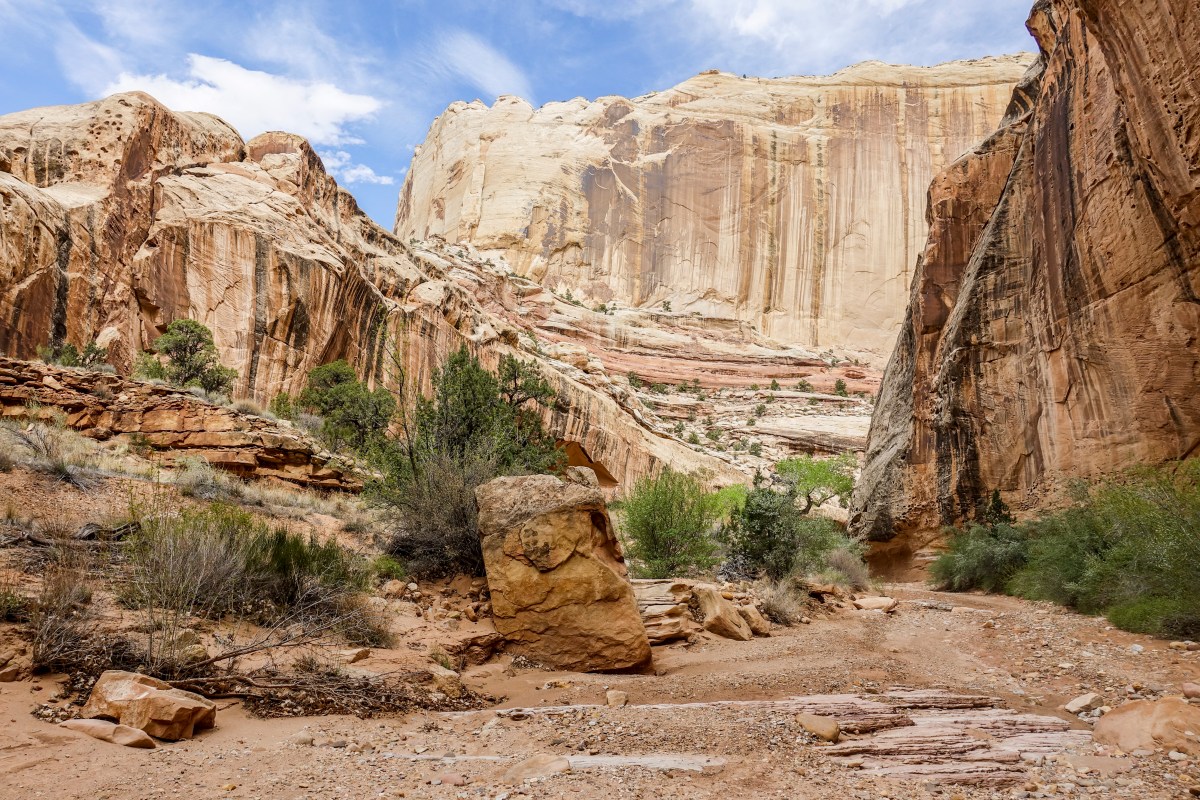

President Donald Trump signed an executive order today once again slashing two popular Utah national monuments, this time by even more than he did in 2017. The order cuts the size of Bears Ears National Monument by 91% and Grand Staircase-Escalante by more than 90%, a reduction of about 3 million acres.
Utah’s congressional delegation including Sen. Mike Lee, a vocal opponent of public lands, joined Trump in a signing ceremony where the senator explained that national monuments should be “the smallest area compatible with the objects to be protected.”
The president added that on national monuments you “can’t go hunting, you can’t go fishing, you can’t do anything, you can virtually not even walk on it.”
However, hunting, fishing, camping, grazing, driving vehicles, hiking, and many other recreational activities are permitted on the national monuments.
This decision to remove most of the monument designation is “short sighted,” says Ryan Callaghan, president and CEO of Backcountry Hunters and Anglers. While opening the fragile desert up to more roads may create additional immediate hunting and recreation access, it also opens the door to increased invasive species, erosion, wildfires and development at a time when the Bureau of Land Management and U.S. Forest Service are already overworked and underfunded, Callaghan says.
“This is more broad top down management that doesn’t address the actual on the ground needs,” he says. “Is the monument perfect? Probably not. Is the previous travel management plan or resource plan perfect? Probably not. But why are we just having the conversation of one or another? If neither is perfect, let’s come up with one that works.”
The national monuments have long been a lightning rod for anti-public land sentiment in some parts of the West. They are seen by critics as big government overreach. To many others, however, the monuments give the region’s tribes a say over how to manage their historic lands while conserving unique landscapes that draw visitors from around the world. Both monuments give some level of protection to important cultural and traditional tribal sites along with draw-dropping vistas including the dramatic sandstone sentinels of Bears Ears’ Valley of the Gods and Grand Staircase-Escalante’s famous colored bluffs. The land also provides robust hunting, fishing, camping, hiking, climbing and other recreational opportunities.
Before the Trump Administration order, Bears Ears National Monument stood at 1.36 million acres and Grand Staircase-Escalante held 1.87 million acres.
This is hardly the first time either national monument has made headlines in the back and forth over who controls the rich and varied desert landscapes. President Clinton used the Antiquities Act to create Grand Staircase-Escalante in 1996, and President Obama established Bears Ears National Monument in 2016. After Biden restored the monuments to their original acreage in 2021, he directed the Forest Service and BLM to work with the Hopi Nation, Ute Indian Tribe, Ute Mountain Ute Tribe, Navajo Nation, and Zuni Pueblo to come up with a new management plan for Bears Ears. The five tribes have important cliff dwellings and cultural sites and have long supported and pushed for the monument designation. The Biden administration also drafted and signed a new management plan for Grand Staircase-Escalante.
While a monument designation does not restrict hunting—the Utah Division of Wildlife still manages hunting for the region’s wildlife including deer, elk, bighorn sheep, black bear, mountain lion and turkey—it does come with management plans that limit some off-road vehicle travel along with new mining claims. An original version of Biden’s draft management plan for Bears Ears banned recreational shooting, but the BLM and Forest Service eventually reversed course and allowed recreational shooting throughout the monument.
Unlike more restrictive land use designations like wilderness areas, national monuments allow vehicle use on hundreds of miles of existing roads and two-tracks, says Steven Bloch, legal director for the Southern Utah Wilderness Alliance. Grand Staircase alone has 900 miles of roads and trails. Monday’s announcement did not come with an updated management plan, which means the current ones approved by the Biden administration stand until new ones are created.
The current management plans ban new mining claims. Conservation groups expect the new plans to open the region to mining, though a 2021 report from Utah Geological Survey shows “low to moderate energy mineral development potential” in both monuments. While Grand Staircase-Escalante offers high potential for coal development, coal use in the U.S. continues to decline.
The Southern Utah Wilderness Alliance and its partners plan to sue the Trump administration over these new orders, as they did in 2017, says Bloch.
The conservation groups present a solid case, according to John Ruple, a research professor of law at the University of Utah. The Antiquities Act clearly gives presidents the authority to create national monuments but does not explicitly give them authority to diminish them.
Read Next: Trump Administration and Congress Are Attempting an ‘Unprecedented Maneuver’ to Roll Back Minnesota’s Boundary Waters Protections
Monday’s move was also the latest in a long-running effort by Sen. Mike Lee to overturn public lands protections and eventually sell those same lands. He and Utah’s Rep. Celeste Maloy attempted to use the wonky Congressional Review Act to overturn the Grand Staircase-Escalante designation earlier this year but it died before reaching a vote.
Bottom line, writes Barrett Kaiser from American Hunters and Anglers, “America’s public lands should never be subject to a crazy political tug-of-war that threatens their very existence, as well as the livelihoods of countless of us public land owners.”
Read the full article here
