Saddle hunting has boomed in popularity, as whitetail hunters embrace a minimalist mindset to save weight and bulk compared to traditional treestand options. Manufacturers and brands are in an arms race as they aim to offer lightweight and modular solutions to meet the demands of the modern mobile hunter. This bodes well for anyone hoping to upgrade their saddle kit, but the seemingly endless options can be intimidating to navigate. I tested nine of the best tree saddles on the market to narrow your search.
The Best Tree Saddles at a Glance
How I Tested the Best Tree Saddles
I’ve been hunting exclusively from a tree saddle since 2018, when I was lucky enough to kill a beautiful 8-point buck on opening day of Wisconsin’s archery season — I haven’t looked back since. I was immediately fond of a saddle’s lighter weight and smaller footprint compared to my old hang-and-hunt setup.
I’ve used saddles everywhere, from cottonwood-choked river bottoms in western whitetail country to the classic hardwoods of the midwest. I’ve tinkered with my setups over the years, adding DIY solutions for hauling sticks, platforms, and attaching extra gear.
I say all that because I used my experience hunting and experimenting with saddles to create my test methodology.
I evaluated saddles based on the features that are most important to me when buying one. This includes comfort, features, weight, and price. All saddles were completely kitted with dump pouches, ropes, and carabiners necessary to climb a tree. I spent at least one hour at hunting height, taking notes regarding comfort, hip pinch, how the bridge moved through loops as I pivoted my hips, and how the features advertised by the manufacturer translated to real-world use.
Comfort
I climbed 17 feet into a 15-inch diameter white oak using four climbing sticks with each tree saddle. Once at hunting height, I “hung out” (bad pun, I know) for one hour. I spent at least 30 minutes leaning and 30 minutes sitting with my knees bent and resting against the tree. I graded each saddle on a score of 1 to 5, with 5 being the most comfortable.
Features
It’s tricky to decipher marketing slang and understand how special features translate into the bowhunting world. I kept a list of all special features brands listed on each respective product and noted the functionality.
Weight
While all saddles are lighter than any of the best hang-on treestands on the market, it’s important to be mindful of the additional accessories, like platforms, extra ropes, and carabiners, that are required to saddle hunt. This can quickly add up and lead to a saddle kit that weighs as much (or more than) a lightweight treestand. With that in mind, I noted any saddle as “heavy” if it weighed more than 2 pounds without additional accessories and noted it in the cons section. Saddles were weighed with a digital scale that accurately measured to the nearest hundredth ounce.
Price
Saddles are offered at a wide range of prices. Of the models featured in this test, the most expensive was $430, and the most affordable was $150, yielding a mid-price of $309. It’s important to consider what’s included with your purchase to fully understand the value of each product. In this test, anything more expensive than $309 was listed as “expensive” and noted in the cons section.
The Best Tree Saddles: Reviews and Recommendations
Best Overall: Timber Ninja Black Belt Ronin
See It
Pros
- Simple, minimalist design
- Integrated pockets eliminate extra bulk and potential noise
- Magnetic waist buckle is easy to operate
- Magnetic stick haulers quickly and easily attach sticks to the saddle while climbing
- Magnetic platform hauler eliminates the need for a DIY alternative
- Padded, breathable saddle body for added comfort in a single panel
Cons
- Wish pockets were slightly larger
-
Single-panel -
Weight:
1 pound, 3 ounces -
Integrated stretch side pockets -
MOLLE webbing:
1 row on waist belt -
Waist belt:
webbing with magnetic buckle -
Leg straps:
webbing strap with G-hook and retaining clip -
Special features:
magnetic platform holder, integrated stretch pockets and 4-way stretch padded “NinjaMesh” material -
Available in Military Green or Mossy Oak Bottomland -
Comfort:
5 -
Price:
$309.99
If you’re like me, you were drawn to saddle hunting to solve two problems: reduce weight and eliminate the bulky profile that comes with carrying a treestand into the woods. As saddle technology increased, so did the bells and whistles we attached to them — specifically pockets and systems for carrying more gear with your saddle. While this sounds great on the surface, before you know it your saddle is just as heavy — and arguably bulkier, with annoyingly overstuffed pockets — as a lightweight treestand. The Timber Ninja Black Belt Ronin solves this problem with a lightweight, comfortable saddle with the best integrated pocket system on the market. These features earned its spot as “best overall,” an award that goes to the best saddle in the lineup, regardless of style (single-panel, two-panel or hybrid).
I’ve run nearly every saddle on the market. My biggest frustration with them is oversized pockets that flip-flop around on your waist belt. They’re bulky — and when I need to turn into the tree for a weak-side shot, I’m reminded how loud they are when they brush against the tree. The Ronin uses two stretch side pockets (one on each hip) to store your tether and lineman’s rope. This solves the aforementioned issues and also makes the saddle easy to stow in your pack if you’d rather not wear it on a long walk in. Admittedly, the pockets are a bit on the tighter side (you’re not going to fit an 11mm rope in them). However, you can certainly fit an 8mm rope with a Kong and carabiner. I pared my setup down a bit more by switching to a 6mm lineman’s belt and 7.5mm tether, both from Arsenal. This created even more room, and they stowed away with ease.
You’ll find many of the same features in the Ronin as you’ll find in other Timber Ninja saddles, specifically its magnetic stick and platform haulers. These have become my favorite way of carrying my sticks and platform up the tree. Simply connect the stick haulers to your climbing sticks and loop your platform through the hauler on the back. The magnets easily find their way into place, and because the system has a tactile feel, it can be done without looking (which especially matters in the dark).
I didn’t experience a noticeable difference in comfort when sitting in the Ronin. It features Timber Ninja’s proprietary “NinjaMesh” 4-way stretch fabric, which is breathable and has a soft, spongy feel to it. Sure, two-panel designs may be a bit more comfortable for all-day sits, but you’re certainly not sacrificing comfort with the Ronin. Plus, the minimalistic design more than outweighs any creature comforts found in a two-panel. If you’re like me, all-day sits are few and far between. I certainly spend days in the woods from dark to dark, but often find myself moving locations (even if these are micro-adjustments of just 30 to 50 yards to get a better shot at a trail or scrape).
The Ronin accepts Timber Ninja’s accessory pockets, but in my opinion, adding them detracts from the spirit of its design. At $309.99, the Ronin’s features punch far above the price point.
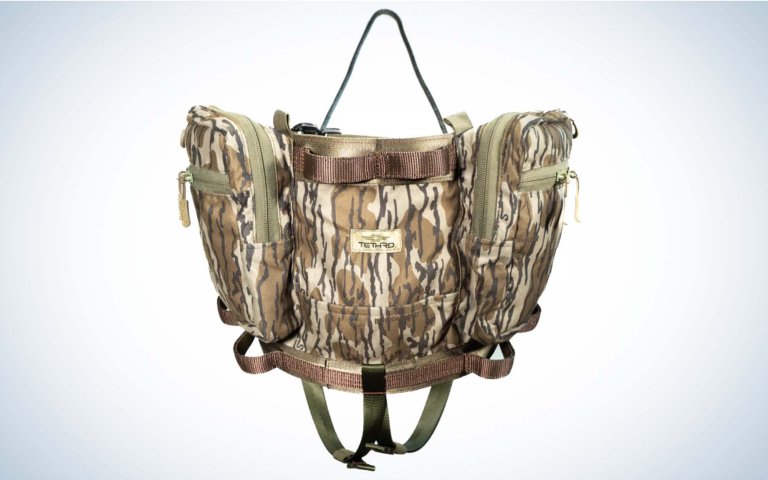
Best Value: Tethrd Grit Workhorse Saddle Kit
See It
Pros
- Best value in the lineup
- Includes tether, lineman rope, and back support recliner
- Quiet fabric offered in Mossy Oak Bottomland or Realtree APX
Cons
- Bridge can slip in loops
- Heavy
Key Features
-
Single panel -
Weight:
2 pounds 5 ounces -
Saddle bags integrated into the saddle -
Waist Belt:
Webbing with quick connect buckle -
Leg Straps:
Webbing with quick connect buckle -
Bridge Type:
Adjustable AmSteel -
Special Features:
Includes tether, lineman rope, and back support recliner in the box, integrated zippered pockets built into the waist belt, and adjustable AmSteel bridge -
Comfort:
4.5 -
Price:
$330
The Grit Workhorse by Tethrd is by far the best value in saddle hunting. In addition to a highly capable saddle, you’ll also find an 11mm lineman rope, 11mm tether, and recliner backband included in the box — a $140 value that most manufacturers require you to purchase separately. While the value is incredible, don’t be fooled, the Grit Workhorse isn’t just a beginner’s tree saddle. While it’s certainly an ideal option for anyone new to saddle hunting, it’s also highly capable for a seasoned vet.
The integrated zippered pockets are built into the waist belt and provide plenty of storage volume while maintaining a sleek profile that’s easily operated by one hand. The pockets provide plenty of room for the included 11mm rope and tether, recliner, and additional accessories like neck gaiter, headlamp, or whatever small items you can think of. Even when fully loaded, the pockets fit snug against your hips to eliminate unwanted bulk.
The material is incredibly soft and quiet, and resists abrasions. While the Grit Workhorse weighs over 2 pounds, it’s important to understand that weight includes the pockets. For context, the Timber Ninja Black Belt Ultimate weighs 2 pounds 7 ounces with a lumbar pocket and two side pockets.
Best Expandable: Tethrd Phantom XP

See It
Pros
- Comfortable expandable design keeps a low profile when needed, but extends 3 1/2 inches for added comfort
- Lace Lock Tensioner eliminates slop when expanded
- Expanding body handles produce easy adjustments
- Adjustable AmSteel UtiliBridge accommodates a wide range of positions
- Sleeker design than Ultralock and Ultralock SD
- Affordable
-
Expandable -
Weight:
1 pound, 12 ounces -
MOLLE webbing:
2 rows — 1 on waist belt/top panel, 1 on top of bottom panel -
Waist belt:
webbing with quick-connect buckle -
Leg straps:
webbing with quick-connect buckle -
Bridge type:
adjustable AmSteel -
Special features:
expandable design, Lace Lock Tensioner for precise adjustments and free-floating “Freedom Belt” for additional adjustability -
Comfort:
5 -
Price:
$274.99

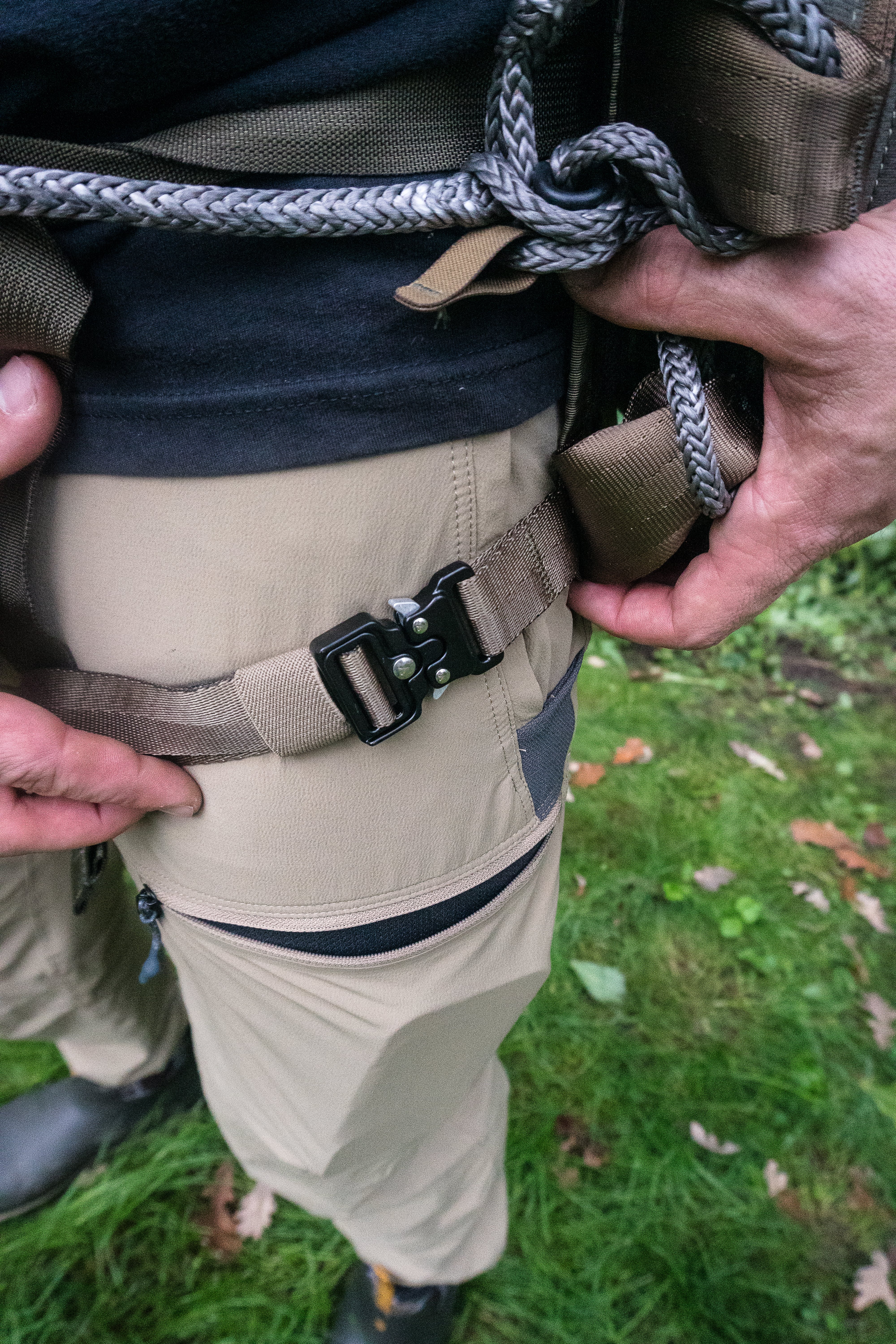
Serving as a hybrid between single- and two-panel saddles, the Tethrd Phantom XP sits atop the newly emerging category of expandable saddles. If you’re familiar with Tethrd’s lineup, you might recognize the “Phantom” name, which was one of my favorite single-panel saddles years ago. The Phantom XP is a mashup of Tethrd’s flagship models over the years, intentionally blending features from the Phantom, Ultralock and Carnivore into what I believe is the best ever in its lineup.
Expandable saddles give hunters comfort benefits associated with most two-panel designs, but with the simplicity of a single panel. The Phantom XP expands to an extra 3 1/2 inches of material (compared to 5 1/2 inches in the Ultralock), which I think is the sweet spot. I felt like I was swimming in the Ultralock, but the Phantom XP was just right. Once expanded, the Phantom XP uses Tethrd’s proprietary Lace Lock Tensioner to quickly fold the saddle back into single-panel size. The tension-based system is simple and doesn’t require any effort to retract the material when you want to move.
My favorite feature in the Phantom XP is the Quad Lock UtiliBridge, which allows for independent adjustment of the top and bottom panels. It uses small, pre-installed bushings (Tethrd calls them Bridge Barrels) to dial in this fit. The bridge is set to “free-float mode” out of the box, which allows for consistent tension to the top and bottom of the panel. This creates equal give (or tilt pressure) to the top and bottom of your hips. If you’re logging serious hours in the tree and really want to dial this in, simply remove the bushings and let the prusik knot on the bridge tighten down onto the loop. I likely won’t use this feature unless I’m spending all day in the tree — but in those scenarios, this translates to more comfort and less fidgeting in the tree.
At $274.99, the Phantom XP is the best saddle value on the market. It’s comfortable and built on the foundation of one of the most popular saddles ever to hit the market (the original Phantom), but with intentional upgrades to make it even better.
Most Comfortable: Arsenal Cloud Freedom
See It
Pros
- Comfortable expandable design keeps a low profile when needed, but extends 5 1/2 inches for added comfort
- Expanding body handles produce easy adjustments
- Oversized, zippered dump pouches are built into the design with plenty of storage and one-handed operation
- Adjustable AmSteel UtiliBridge accommodates a wide range of positions
- Modular yoke helps redistribute weight
-
Expandable, foldable design with magnetic closures -
Weight:
2 pounds, 1 ounce -
MOLLE webbing:
1 row on waist belt -
Waist belt:
webbing with quick-connect buckle -
Leg straps:
webbing with quick-connect buckle -
Bridge type:
2X Dual Bridge -
Special features:
expandable and foldable design, transport storage mode and integrated back support -
Comfort:
5 -
Price:
$329.99
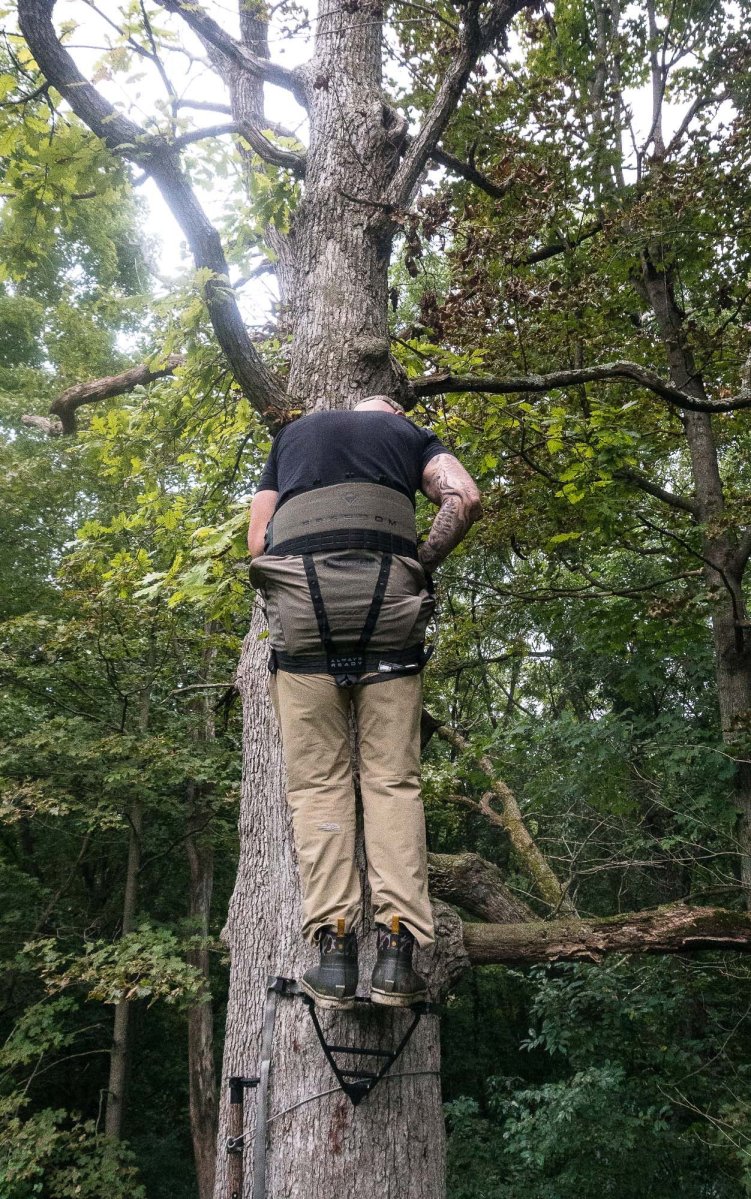
New for 2026, Arsenal’s Cloud Freedom saddle uses a unique design to create what I think is the most comfortable saddle on the market. It’s in a category of its own, using a single, oversized panel and folding design that deploys into a giant hammock that cradles you from mid-back to thigh. If you’ve struggled finding comfort while hunting from a saddle or suffer from back pain, I’d suggest giving the Cloud Freedom a try.
I was a bit intimidated by the design after unboxing the Cloud Freedom. I noticed right away that it doesn’t look like other saddles in the test. While most saddles use a single bridge that connects to a tether, the Cloud Freedom uses two bridges. The top bridge adjusts the saddle’s integrated backrest, while the lower bridge adjusts leg and thigh tension. Working together, the bridges create what Arsenal calls the “Triangle of Comfort.” Traditional saddles create an acute angle where the bridge connects the top panel to the bottom. The larger angle (or obtuse, for fans of basic geometry) creates more weight dispersion than anything I’ve experienced. The saddle’s chassis extends from just above your lower back to mid-thigh. I’d compare it more to sitting in a hammock than a saddle. If hip pinch is your nemesis and the reason you’re not saddle hunting, this solves it.
Aside from functionality, the biggest difference I noticed while using the Cloud Freedom was my tether placement. I usually run my tether about 1/2 inch below head height to create a steep enough angle to keep pressure from the saddle pointing upward, allowing me to sit with my knees bent against the tree when I need a change in position. I noticed the Cloud Freedom felt best with the tether lower (roughly the same height as my upper chest). I also kept my bridge shorter. This meant I was more upright, which decreased how much of my body was hanging off the tree, keeping my profile smaller. The upright position felt more active, and because I was closer to the tree, I could easily navigate all sides of the platform for shot opportunities at any angle.
Arsenal’s bridges are adjusted using its Glyde adjustment system. I’ve used a Kong or Ropema on other saddles, but the Glyde system is easy to use and eliminates the need for adding extra bulk and potentially noisy excess material.
Two bridges mean you need to manage excess rope. The Cloud Freedom folds in half during transport. The fold creates the perfect place to store any excess rope, and built-in zippered pockets are perfect for any extra gear.
If comfort is the biggest roadblock between you and saddle hunting, the Cloud Freedom is worth exploring. While I was intimidated at first, Arsenal’s website breaks down the setup process in detail. The Cloud Freedom retails for $329.
Read Next: The Best Hunting Arrows
Best Two-Panel: Timber Ninja Black Belt Ultimate
See It
Pros
- Most comfortable saddle in the test
- Magnetic waist buckle is easy to operate
- Magnetic stick haulers quickly and easily attach sticks to saddle while climbing
- Magnetic platform hauler eliminates a DIY alternative
Key Features
-
Two-panel -
Weight:
1 pound 15 ounces -
MOLLE Webbing:
Two rows, one on each panel -
Waist Belt:
Webbing with magnetic buckle -
Leg Straps:
Webbing strap with G-hook -
Bridge Type:
AmSteel with rubberized bridge loops -
Special Features:
Magnetic platform holder, built-in Mud Flap stick carrier panel, and two magnetic stick haulers -
Comfort Score:
5 -
Price:
$350
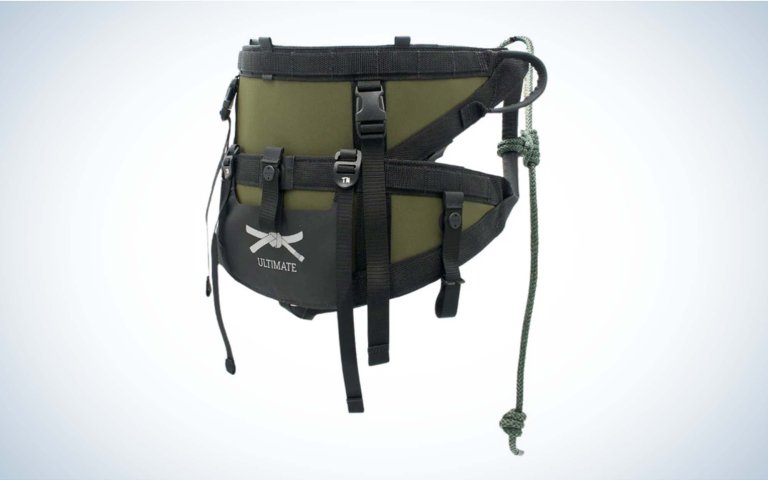
The Timber Ninja Black Belt Ultimate sets itself apart from an already impressive lineup of saddles featured in the test because of its comfort and features.
As soon as I reached hunting height and leaned into the saddle, I was impressed by its comfort. I didn’t feel any hip pinch during the test, which solidified the Ultimate as the most comfortable tree saddle in the field while still producing a modest, sub-2-pound weight rating.
I liked the magnetic components used throughout the saddle, which included a waist buckle and stick and platform haulers. Not only is the waist belt magnetic, the center buckle can be set offset to one side, which eliminates stacking buckles on top of each other. The built-in Mud Flap can carry up to four lightweight climbing sticks, which I especially appreciate for quick, early-season hunts when I don’t want to lug a backpack. The rubberized coating on the bridge and lineman loops allow you to cinch down the ropes for a fine-tuned, non-slip fit.
While pricey, Timber Ninja also offers a full lineup of premium accessory bags. The Ultimate integrates with streamlined saddle bags (right and left specific) and can even accept an additional lumbar pouch. All Timber Ninja pouches are water resistant and feature a high-visibility orange interior to help find small objects in low-light scenarios.
These are high-quality accessories, but I wish they had a bit more room, dual zippers (so you can pull from both directions), and a tab to hold your pouch in place while zipping the pocket closed.
Timber Ninja moved manufacturing overseas in early 2025. The change in direction came after being hit by Hurricane Helene in 2024 while dealing with challenges of material sourcing, rising labor costs, and supply chain disruptions. For the customer, this means you can expect lower prices on Timber Ninja products ($409.99 to $349.99 on the Black Belt Ultimate) while the brand retains the same or even improved quality in other areas.
Latitude Method 3
See It
Pros
- Magnetic panel management system is easy to use and secures panels in place
- Comfortable
- Metal-free design makes it incredibly quiet
- Affordable
Cons
- Heaviest saddle in the test
- Material can get warm if worn during transport, especially during early seasons
Key Features
-
Weight: 2 pounds 7 ounces -
MOLLE webbing: 1 row on waist belt (top panel) -
Waist belt: prusik knot -
Leg straps: removable webbing strap with G-hook -
Bridge type: Latitude’s proprietary rope-style “Butter Bridge” -
Special features: metal-free construction, magnetic Quick-Connect System attaches panels while on the move -
Comfort: 5 -
Price: $299.99
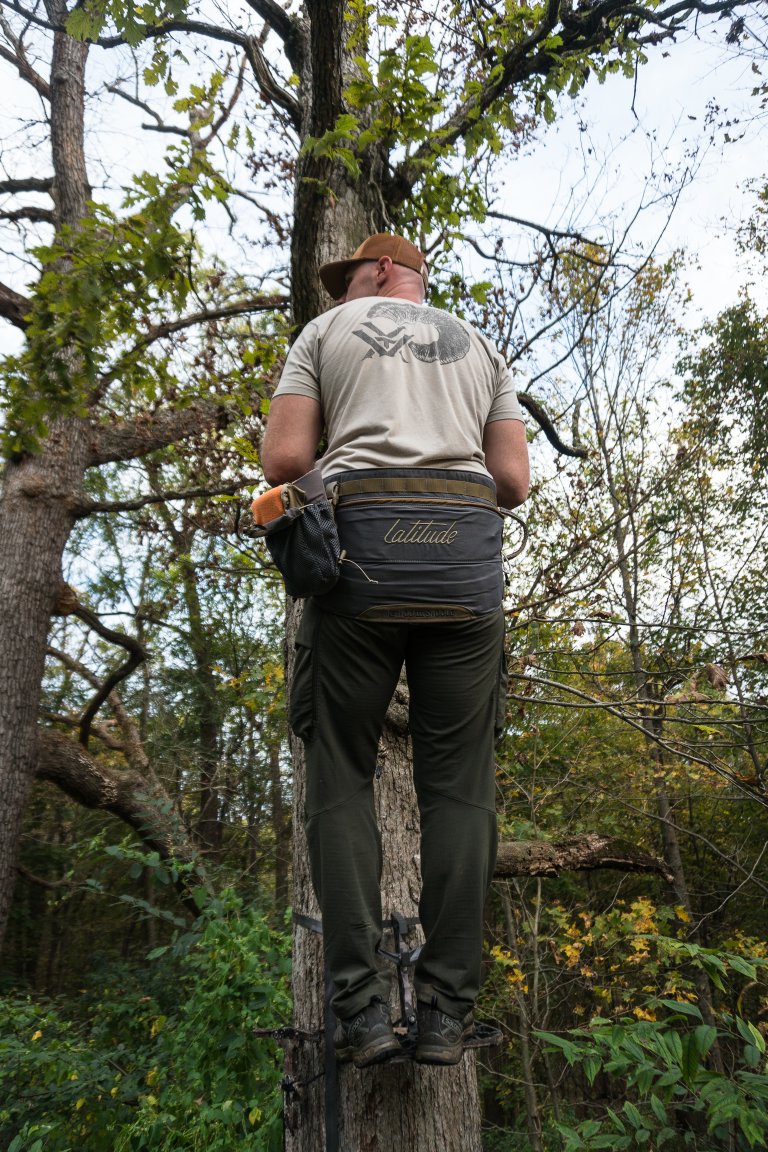
The Method 3 is Latitude’s latest addition to their saddle lineup. Similar to the Method 2, the Method 3 uses thoughtfully placed magnets to create a saddle that functions as a single- or two-panel, depending on your preference. Unlike the Method 2 that used several small magnets that needed to be aligned for optimal functionality, the Method 3 has a continuous strip built into the panels to eliminate the hassle of aligning magnets. The panels effortlessly pop in and out of place, and I was especially impressed by how they stay together while walking. I never experienced the panels coming apart in transport.
The Method 3 uses a drawstring system to tailor the saddle’s fit when being used as a two-panel. Simply deploy the bottom panel and use the drawstring stoppers to dial in the fitment. The slack material in the drawstring stoppers also function as an ultralight, built-in stick hauler to loop over climbing sticks.
If you’re looking for comfort, the Method 3 delivers. Integrated water-resistant padding on both panels is a plush feature that makes it superior to all saddles in the test for all-day comfort. As is usually the case, comfort comes at a slight weight penalty. At 2 pounds 7 ounces, it’s heavy. My Method 3 weighed in at 4 pounds 1 ounce once fully set up with dump pouches and ropes.
I added Latitude’s brand-new Operator Pouch to my Method 3, which I think is the best accessory on the market. The Operator Pouch is easy to operate with one hand and maintains its structure when empty, which makes it easy to stow gear away in low light. A fleece liner makes for silent operation, and quick-detach design uses buckles to remove it from your saddle to maintain a sleek profile while hunting.
At $299, the Method 3 is the best value in the test. I was impressed by the value of the Method 2 one year ago (which also retailed for $299). Given the upgraded features, functionality, and materials in the Method 3, I’m pleasantly surprised Latitude didn’t raise prices despite packing even more value into a top-notch product.
Trophyline Venatic
See It
Pros
- Waist belt doesn’t slip once set due to the rubberized interior
- Breathable ripstop nylon material
- Rubberized MOLLE attachment points
- Waist belt sleeve keeps your buckle centered
- Comfortable
- Made in USA
Cons
- Wish the bridge didn’t need a carabiner to attach
- Bridge isn’t made of AmSteel
Key Features
-
Single panel -
Weight:
1 pound 10 ounces -
MOLLE webbing:
Two rows, on constructed of traditional MOLLE plus an additional rigid rubber design -
Waist Belt:
Webbing with Raptor buckle -
Leg Straps:
Webbing with Raptor buckle -
Bridge Type:
Adjustable 33.38-inch rope bridge (polyester jacket over stranded nylon core) -
Special Features:
Rubberized inside back panel to prevent slipping, free-floating waist belt sleeve, bridge garage to secure bridge during transport, seat strap to compress seat while walking, and rubberized MOLLE attachment points -
Comfort:
4.9 -
Price:
$320
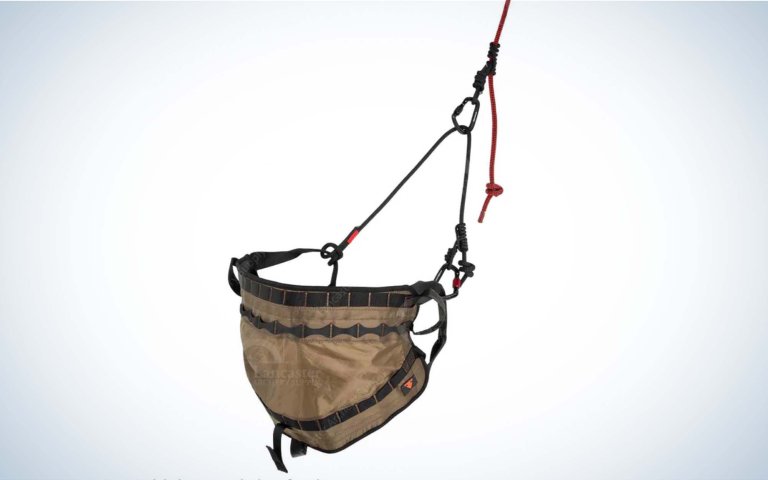
The Trophyline Venatic is thoughtfully designed, integrating many tech features unique to the Trophyline lineup. A rubber-coated interior locks the waist belt securely in place to eliminate unwanted sliding while walking or climbing. I was instantly fond of the free-floating waist belt sleeve, which allowed me to align the buckle over my belt to prevent any discomfort while sitting. The Venatic integrates a bridge keeper into the waist belt, called Bridge Garage, which stows the bridge out of the way while walking. In addition, the seat strap compresses the material so the saddle doesn’t sag or feel cumbersome during long hikes.
The leg straps sit mid-thigh and don’t ride up after a few hours in the tree. I prefer to sit with my knees against the tree when hunting for more than a few hours, and found the Venatic to be incredibly comfortable as it cupped my waist without unwanted pinching.
The bridge requires a carabiner to attach to the saddle, which adds a bit of weight and requires aftermarket stealth stripping to avoid any unwanted noise. I’d prefer an AmSteel bridge over nylon. Despite that, the Venatic is the best single panel on the market.
How to Choose a Tree Saddle
Single- vs Two-Panel Tree Saddles
Single-panel tree saddles are simple, utilizing a single piece of fabric without moving pieces. They’re easy to use and stow away nicely in a backpack, ideal for those who prefer to pack their saddle instead of wearing it while walking to the tree. Double-panel saddles, as the name implies, use two separated panels to provide a tailored fit. While a bit bulkier than single panels, a double-panel saddle provides incredible comfort, especially for those who like to sit while in the tree. Hybrid saddles utilize an expandable body to provide extra material when seated, but stows away while you’re on the move or leaning in the tree.
Hunting Style
Consider the type of hunting you do most frequently and buy a saddle that meets your needs. If you’re a minimalist that hikes far from the road and prefers to stuff your saddle in a backpack, a single panel is a great fit. A double-panel is ideal for those who prioritize comfort, especially those who may spend dark-to-dark in the tree. Hybrid options are ideal for anyone who wants a do-it-all system and doesn’t mind lugging a bit of extra weight.
Tree Saddle Features
Saddles are loaded with features to make your hunt easier. While things like integrated stick or platform carriers are nice, they come at a price. These top-end features are nice, and well worth their price tag. However, if you’re a minimalist or DIY-er, you can customize a more simplistic saddle to accommodate your needs. I’ve used Nite Ize gear ties and S-biners as an affordable, do-it-yourself hack to attach a platform and climbing sticks to my saddle when ascending or descending.
Manufacturer Support
Consider the level of support you’ll receive from the manufacturer when purchasing a saddle. All of the brands featured in this test have responsive technical support and are active on social media, and all responded to my questions in a timely manner. I have no doubt any customer would receive the same level of support, so don’t be bashful with questions.
Final Thoughts on the Best Tree Saddles
We’re in the golden days of saddle hunting, as manufacturers are constantly improving and adjusting their products to meet the demands of today’s mobile hunters with purpose-built saddles. The best tree saddles are quiet, comfortable, and packed with features to help us enjoy our time in the woods. All of the saddles featured in this test fulfill these requirements and will help you hunt more effectively.
Read the full article here