

We may earn revenue from the products available on this page and participate in affiliate programs. Learn More ›
Hot-shooting 22-caliber cartridges are nothing new, so what might newcomers like the 22 ARC or 22 Creedmoor offer that is different? After all, classic medium-sized cartridges like the .243 Win., .250 Savage, .25/06, and others have thrived alongside .22 powerhouses like the .220 Swift and .22/250. What, if anything, do these new .22-caliber cartridges do better than their predecessors, let alone the big-game/varmint crossover cartridges? The answer might surprise you. I have a feeling that cartridges like the .22 ARC are going to prove their versatility and ability to serve hunters—and yes, do so better than some of the old favorites.
The Mild Cartridge Sweet Spot
Jack O’Connor was a fan of quarter-bore and other medium-sized cartridges for all but the largest of game. Story from the April 1946 issue of Outdoor Life
Medium-sized and smaller calibers have been popular among hunters for more than a hundred years, especially for deer-sized game. Early on, the .25s were quite prolific, and Jack O’Connor considered them as top choices for varmints and smaller big game. In the 1950s, the .243 chiseled out a prominent place in this category. In fact, O’Connor lamented that the .244 Remington’s standard twist rate of 1:12 resulted in the .243 Win. — which had a 1:10 twist rate — burying the .244. He argued that the .244 was a better overall cartridge, but hunters wanted the ability to shoot heavier bullets, not just varmint fodder.
Medium-sized .24- and .25-caliber cartridges generally fire 55- to 125-grain bullets at excellent velocities with mild recoil. Until the relatively recent advent of laser rangefinders, the flat trajectories of these cartridges offered hunters a lot of forgiveness at longer distances compared to other cartridges of the time.
For many hunters, the .243 became the ultimate option in versatility, and it has been used with great success for larger animals like black bears, sheep, and moose. As it turns out, accurate, smaller-caliber cartridges that are easier to shoot tend to do just fine at killing game effectively.
What Do Cartridges Like the 22 ARC Have to Offer?
One of the most common criticisms of newer cartridges is that they are simply re-hashing an old idea to re-invigorate gun sales and keep the marketing machine turning. Though firearm and ammunition companies are certainly in the business of keeping business going, they’re also motivated to gain a competitive edge and improve products. When considering the attributes of a new .22-caliber hot rod, it’s easy to look at one or two characteristics and assume that it can’t do anything that the .22/250 can’t do. But it’s not that simple.
As with any of the recent cartridges developed with the principles of modern cartridge design, the benefits are about more than raw speed with a given array of bullet weights. In 1925, evaluating cartridges on velocity and drop made sense, but considering the precision rangefinders and optics that shooters have at their fingertips, those velocity numbers are no longer of primary importance. With custom chambers, tight-twisted barrels, and handloaded ammunition, many old cartridges can certainly be elevated, but as a whole, they simply don’t match the whole suite of benefits that some of these new rounds offer.
For example, the 22 ARC, which was designed to give .22/250-like performance from a .223-length cartridge with heavier bullets is cool, sure, but it’s the bullets it’s designed to shoot that make it special (you can read about the details in shooting editor John Snow’s review of the 22 ARC). Even I didn’t really start to see the potential in the 22 ARC until I built a couple of them and started shooting at distance.
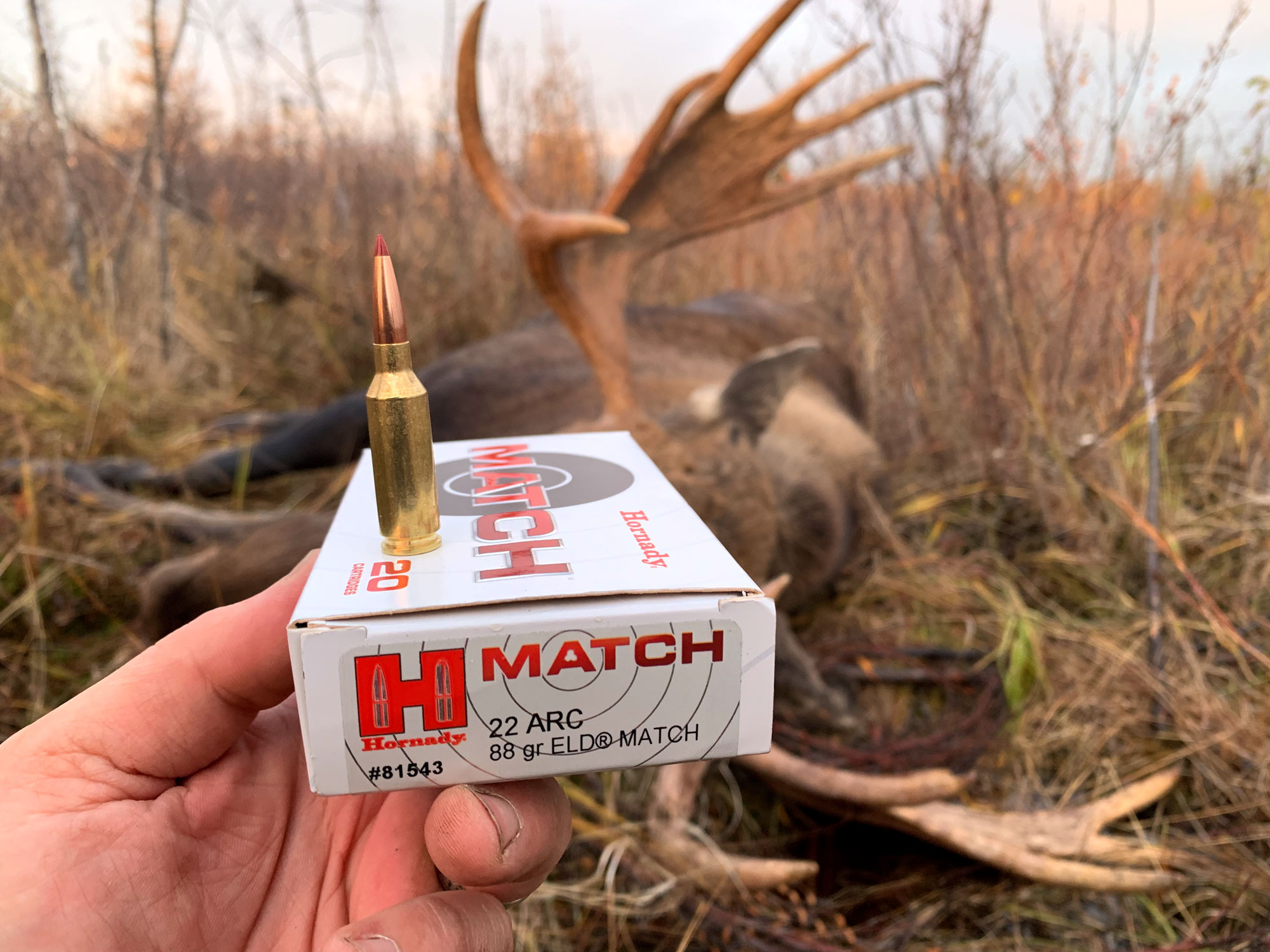
The day I realized that there might be something to it, I was shooting a 20-inch-barreled gas gun that I’d put together. It was a pretty standard barrel nut design with a button-rifled barrel, but it printed surprisingly small groups. I was shooting targets out to 1,000 yards, alternating with a 6.5 Creedmoor using 140-grain Sierra MatchKing bullets. Firing Hornady’s Black 75-grain ELD-M load, which I recorded at 2,938 fps, in a 10 to 12 mph crosswind, the 22 ARC had a flatter trajectory and was a one-to-one match for wind deflection with the heavier 6.5. Where stretching the .223 to that distance can become quite difficult, I easily made first round impacts and quick follow-ups, watching the trace arc into the target. And remember this is out of a gas gun, not using the most efficient bullet in the cartridge.
I’ve long thought that a .22/250 would make a hell of a sheep rifle, and legendary market hunter and predator control agent Frank Glaser touted his .220 Swift as killing hooved game quicker than any other cartridge he’d tried. But compared to my long-favored .25/06, the newer 6.5 Creedmoor, and others, choices in .22-caliber bullets simply gave up too much wind drift for my liking. That’s no longer the case. Hornady’s 80-grain ELD-X is a thick-jacketed, extremely efficient .22-caliber bullet that offers some clear ballistic advantages over some bullets, and matches characteristics of others — all with essentially zero recoil.
Terminal Performance of the 22s and the .243
The downrange velocity, wind drift, and drop characteristics of several new 22-caliber bullets is undeniably better than any slugs you’d load in a standard .243 Winchester. From a hand-loaded 22 ARC bolt rifle, or a 22 Creedmoor, the 80-grain ELD-X even outruns the heavier 103-grain ELD-X fired from a 6mm CM with an equal-length barrel.
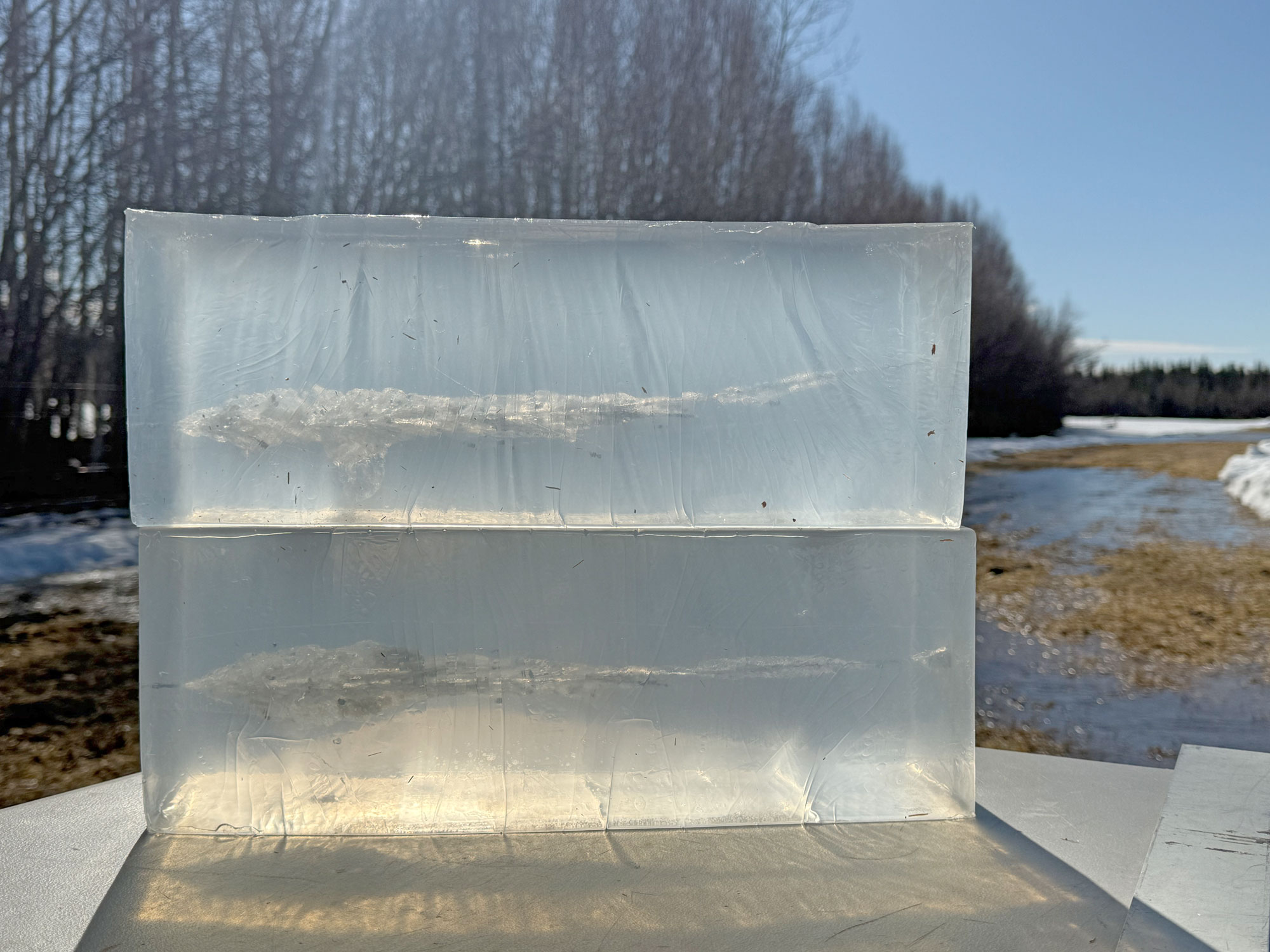
Even considering this, many won’t buy that a smaller .224 bullet will produce similar terminal performance as the .243 — which offers slightly more mass and a larger expanded frontal diameter. To investigate this, I fired examples of both into ballistics gel. For the .224, I fired an 80-grain Hornady ELD-X — a projectile that I’ve seen great results on game with — from my 20-inch 22 ARC, with a muzzle velocity of 3,039 fps. Standard 22 Creed loads using the same bullet typically produce between 3,150 and 3,200 fps with a 20-inch barrel. I’ve parted ways with my old .243, so I loaded a 90-grain ELD-X in my 20-inch 6mm Creed to replicate factory .243 Win. velocities. A 24-inch barrel would likely produce around 3,100 fps, but the more efficient .224 would match it’s speed at about 150 yards.
Pursuit of the Perfect Rifle Cartridge
A perfect hunting rifle cartridge would deliver a projectile that creates an adequate wound cavity to quickly kill quarry, and do so with a perfectly flat trajectory, zero wind drift, and zero recoil — but of course no such cartridge exists and we must compromise on these qualities. In the case of the .243 to .257-class of cartridges, I have no qualms about shooting a moose, sheep, or even grizzly bear under the right circumstances, with a good, stubby 90-, 100-, or 110-grain bullet. I’ve taken a lot of game with them. So why not adopt an 80-grain bullet of similar properties, but with better sectional density, equal or better trajectory, and equal or better wind drift? In fact, I think that as bullet technology continues to give us hyper-efficient, heavy .22s, the only thing we’ll be giving up is recoil.
The post Could the 22 ARC Replace the .243 Winchester? appeared first on Outdoor Life.
Read the full article here