
NEWYou can now listen to Fox News articles!
Just four minutes of daily strength exercises can dramatically improve mobility, balance and leg strength in older adults, per new research from the Penn State College of Medicine.
Standard public health guidelines recommend at least 150 minutes of moderate exercise per week. However, the study suggests that fewer than one in five older adults meet the recommended muscle-strengthening guidelines.
The research team designed a home-based program called Functional Activity Strength Training, or FAST-2. They evaluated 97 sedentary participants 65 and older, with an average age of 74.
FITNESS EXPERT REVEALS 6 PILLARS OF STRENGTH TRAINING THAT OLDER ADULTS SHOULD MASTER
Before entering the study, these individuals were averaging just 18 minutes of total physical activity each week.
The older adults were randomly split into two groups, with one group performing the daily exercise routine and the other serving as a control group that received no intervention, according to the study’s press release.
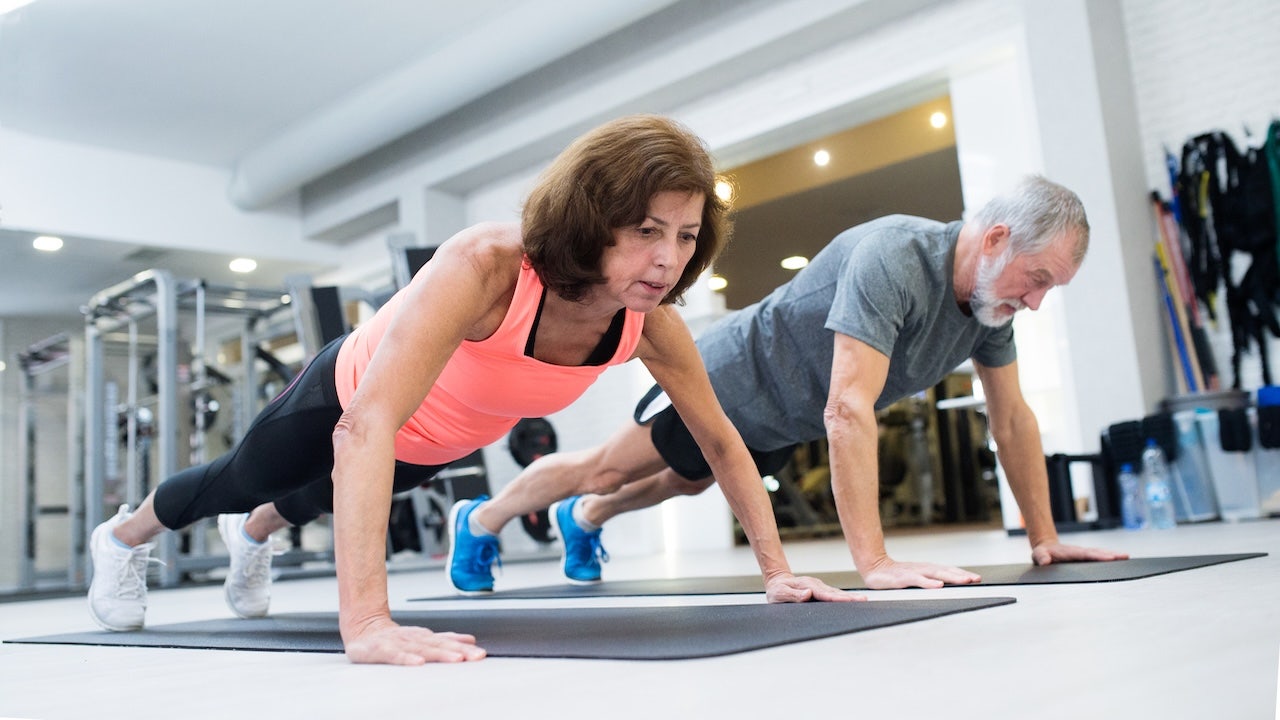
Participants performed four basic movements for 30 seconds each, separated by 30-second rest intervals. The entire routine lasted exactly four minutes. The circuit consisted of push-ups, chair stands, two-arm resistance-band rows and stair stepping.
To keep the routine accessible, researchers provided written explanations and simple modifications. For example, participants could perform push-ups against a kitchen counter or wall, or use their hands on their knees for support during chair stands.
Participants were also given four elastic resistance bands and an adjustable step platform.
7 COMMON FITNESS MISTAKES OLDER ADULTS MAKE AND HOW TO AVOID THEM FOR BETTER WORKOUTS
“Exercise is actually really complicated, because you have to decide how many repetitions, how far, how many sets, how much rest and how many times per week,” co-author Smita Dandekar, associate professor of pediatrics at Penn State College of Medicine, said in the press release.
“It’s hard work … so if we can make it short, we’re part [of the] way there.”

As the participants grew stronger, they were encouraged to progress to higher levels of difficulty, such as transitioning away from modifications or increasing the height of the stepper.
DOCTOR SHARES 3 SIMPLE CHANGES TO STAY HEALTHY AND INDEPENDENT AS YOU AGE
After 12 weeks, the results suggested that a tiny dose of regular exercise could yield noticeable physical benefits. On a 30-second chair-stand test, the exercise group performed an average of 4.2 more repetitions than the control group.
“These indicators … give you a sense of whether or not you’re going to be able to be active in the future.”
The adults doing the exercises also shaved 2.3 seconds off their time during a test measuring how they could stand up and sit down five times consecutively. Furthermore, they extended their one-legged balance time by an average of 3.6 seconds.
CLICK HERE FOR MORE HEALTH STORIES
The researchers emphasized that these specific measurements are critical medical indicators of an older adult’s future health.

“These indicators predict your future ability to go into a nursing home, your future likelihood of falling and of developing difficulty walking,” noted lead author Christopher Sciamanna, professor of medicine and of public health at Penn State College of Medicine, in the press release.
“They give you a sense of whether or not you’re going to be able to be active in the future.”
CLICK HERE TO SIGN UP FOR OUR HEALTH NEWSLETTER
While traditional home exercise programs generally see low engagement, the participants in this study successfully completed their workouts on 81% of the tracked days, according to the researchers.

The study had several noted limitations. As it tracked a relatively small sample size of fewer than 100 individuals over a brief 12-week timeframe, it is unknown whether these mobility gains can be sustained long-term.
TEST YOURSELF WITH OUR LATEST LIFESTYLE QUIZ
Additionally, the researchers did not specify the exact dropout rates or detail how the routine might affect seniors who already relied on assistive devices like walkers or canes.
CLICK HERE TO DOWNLOAD THE FOX NEWS APP
Because the final trial results reflected a specific group of participants who met the entry criteria, further investigation is required to determine whether the short routine can safely benefit older adults facing more severe physical limitations or cognitive decline.
The study was published in the journal PLOS One.
Read the full article here