“Jesus, Mary, get me there. Get me there.”
More than 50 years after then-Capt. John Ripley rhythmically chanted that prayer for three hours as he swung back and forth under a North Vietnamese bridge to rig 500 pounds of explosives, the Marine is set to posthumously be awarded the Medal of Honor.
But for the Ripley family, June 18th is more than just the date of the White House ceremony.
“June 18, that’s the day my father’s brother, Mike Ripley, was killed,” Tom Ripley told Military Times.
After three 13-month tours in Vietnam Mike Ripley was back in the U.S. in 1971, when the new AV-8A Harrier jump jet he was test flying crashed into Chesapeake Bay, killing him instantly.
“Service is something that’s been a long tradition in our family,” noted Ripley. “I was a Marine, my brother was a Marine, obviously, my father was a Marine, my uncles, two of my nephews, my son is going into the Navy — he just graduated just a couple weeks ago from the Naval Academy. We love our country. We’re proud and honored to serve our country. It means the world to us to have the opportunity to stand … with of these types of Americans.”
On April 2, 1972, Capt. Ripley, a senior advisor to the 3rd Vietnamese Marine Battalion, found himself on the south bank of the Cua Viet River in Quang Tri Province, South Vietnam, as the North Vietnamese launched a three-pronged assault with some 30,000-40,000 North Vietnamese Army regulars streaming southward across the Demilitarized Zone.
The so-called Easter Offense was to be the largest attack of the war and the first major assault since the Tet Offensive in in 1968.
One bridge, the Dong Ha Bridge, was the only crossing in the Quang Tri Province capable of supporting heavy armored vehicles. Elements of the North Vietnamese 308th and 304th Divisions, supported by tanks from the 203rd Tank Regiment, soon amassed across the river. Dong Ha Bridge was the only impediment between the North Vietnamese and rolling south.
The situation grew more dire still when Ripley noticed that the South Vietnamese engineers had not properly set explosives on the bridge.
Then the order came down. “Hold and die.”
Ripley didn’t hesitate.
“The idea that I would be able even [to] finish the job before the enemy got me was ludicrous,” Ripley recalled in 2007 in an interview with the U.S. Naval Institute. “When you know you’re not going to make it, a wonderful thing happens: You stop being cluttered by the feeling that you’re going to save your butt.”
Unfettered by emotion, Ripley “put a satchel charge over each shoulder and reached up and grabbed the beam as it approached the south bank,” the Marine told The American Society for the Defense of Tradition, Family and Property in 2008.
“Then I began kicking my way through the anti-sapper fence.”
The fence that protected the bridge’s undercarriage was laced with steel-tipped razor wire that sliced into Ripley’s legs and backside as he attempted to traverse the barrier.
His uniform, already sodden from perspiration from three days and nights of nonstop fighting, quickly became blood-soaked.
Hanging from the steel girders Ripley began to haul hundreds of pounds of explosives across the bridge, hand rigging them while “.30-caliber messages” were being sent Ripley’s way by the North Vietnamese.
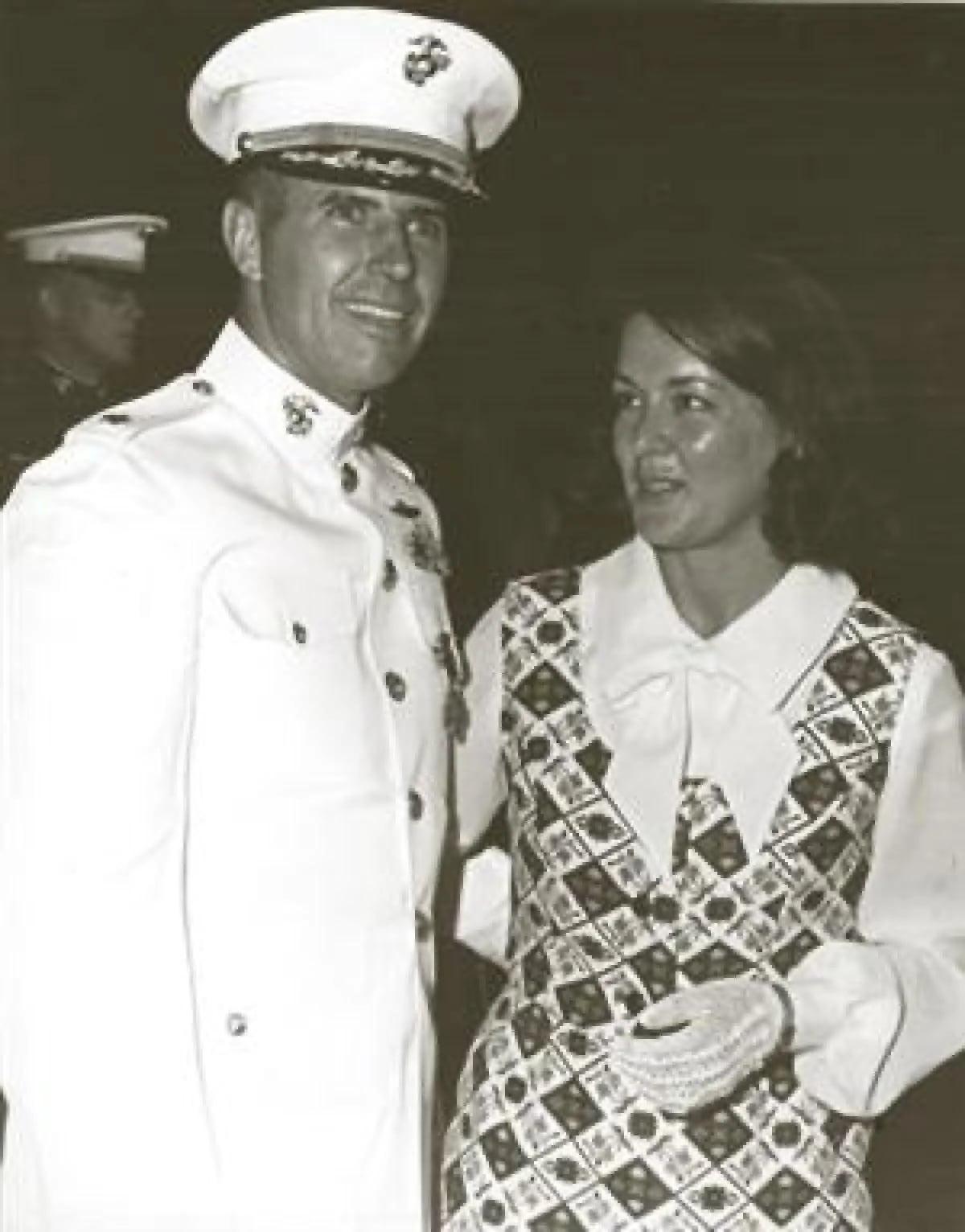
After achingly placing all 500 pounds of explosives along the 600-foot steel structure, Ripley finished the job by attaching the blasting caps.
“He had to bite down on the blasting caps to attach them to the fuses,” retired Marine Col. John Grider Miller, author of The Bridge at Dong Ha, told The New York Times. “If he bit too low on the blasting cap, it could come loose; if he bit too high, it could blow his head apart.”
Ripley bit just right.
For his heroism, the Marine was awarded the Navy Cross, the highest medal for valor behind the Medal of Honor. The famed Marine passed away in 2008, but tomorrow his family will be on hand as President Donald Trump posthumously bestows the nation’s highest award for heroism to Ripley.
“I hope what people will take away is the importance of living a life of honor,” Ripley’s biographer, Norman J. Fulkerson, told Military Times.
“The key phrase in the Marine Corps hymn is ‘keep our honor clean,’ and what you have in Col. Ripley is the man who embodied that. He’s a man who lived a life of honor.”
Claire Barrett is an editor and military history correspondent for Military Times. She is also a World War II researcher with an unparalleled affinity for Sir Winston Churchill and Michigan football.
Read the full article here