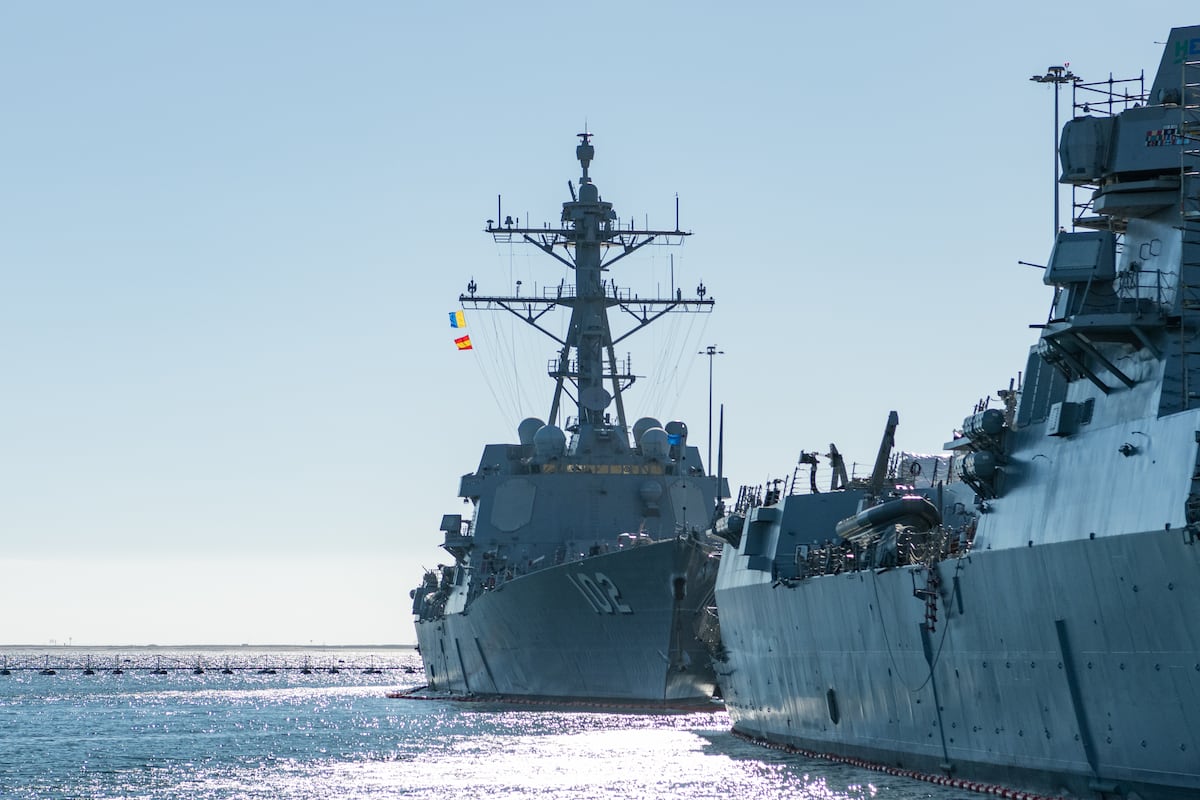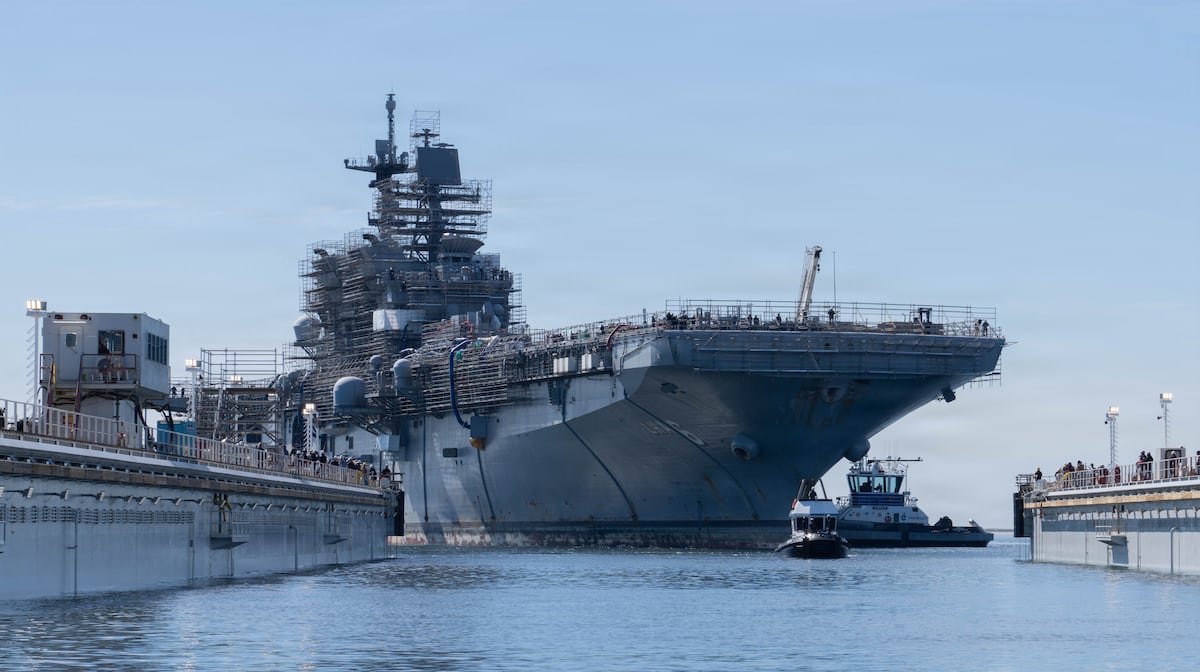

The U.S. Marine Corps and Navy are collaborating to boost the nation’s current inadequate amphibious fleet size, according to the top-ranked U.S. Marine Corps officer.
Marine Corps Commandant Gen. Eric Smith said at the 2026 Sea-Air-Space Conference during a Tuesday keynote that the two services are working together with a “unified sense of purpose” to increase the size and availability of the U.S. amphibious fleet through three methods.
“We’re in complete agreement that our current inventory of 31 amphibious ships is not sufficient to meet our new presence that our combatant commanders are requesting and requiring,” Smith said during his speech.
As of April 2026, there are four amphibious ships deployed across North America, the Caribbean and the Pacific, according to Navy data. Currently, the amphibious assault ship USS Tripoli is in the Arabian Sea in support of the U.S. blockade of the Strait of Hormuz, while the USS Boxer has deployed to the Middle East from the Pacific.
The Tripoli Amphibious Ready Group was sent to the Middle East in mid-March as reinforcements for the war in Iran.
In 2025, amphibious ships’ readiness rate crucial to Marine missions dropped to 41% amid increased U.S. operations in Latin America and the Caribbean to fight drug cartels. The lack of ships readily available caused a five-month delay in Marine Expeditionary Unit deployments last year.
During his speech, Smith said that the Navy and Marine Corps are “optimizing maintenance schedules” and fourth-generation runs to get more out of the ships they already have. Secondly, the two services will invest in service life extensions for the “best of breed” ships that are in the best mechanical and physical shape.
Lastly, Smith said that they are moving forward with the procurement of new and more capable ships with the help of Congress.
The commandant noted that they are seeking “increased, sustained and predictable investments” in the amphibious shipping industry to achieve this expansion and heightened availability of the fleet.
Smith also noted that the fiscal year 2027 budget proposed by President Donald Trump was a considerable “down payment” for this generational effort to build up the amphibious fleet, but it’s just a start.
“To build the amphibious fleet that our nation needs and deserves will require continued commitment of leaders in uniform and the support of leaders in our government,” Smith noted.
Smith said that they can “never walk away from” bolstering the traditional amphibious capabilities, but they are also focusing on littoral mobility — the ability for Navy and Marine forces to move and operate to and from shore.
Littorals encompass most of the Pacific, and the commandant referred to the Indo-Pacific as the world’s most challenging environment due to its scale.
In December 2025, the Navy and Marine Corps selected the Dutch shipbuilder Damen LST-100 design as their new medium landing ship, which Smith highlighted in his speech as having “game changing capability” for allowing the forces to maneuver and self-sustain in a resilient and reliable manner.
Cristina Stassis is a reporter covering stories surrounding the defense industry, national security, military/veteran affairs and more. She previously worked as an editorial fellow for Defense News in 2024 where she assisted the newsroom in breaking news across Sightline Media Group.
Read the full article here