
A former U.S. Army combat engineer turned gun influencer was arrested for distributing videos that provided step-by-step instructions on making explosives.
In the criminal complaint filed in a Missouri federal court, authorities linked Jordan Derrick’s tutorials to at least two incidents, including the deadly 2025 terror attack in New Orleans.
The complaint alleged that Shamsud-Din Jabbar, also an Army veteran, downloaded Derrick’s videos and created explosive devices consistent with Derrick’s content.
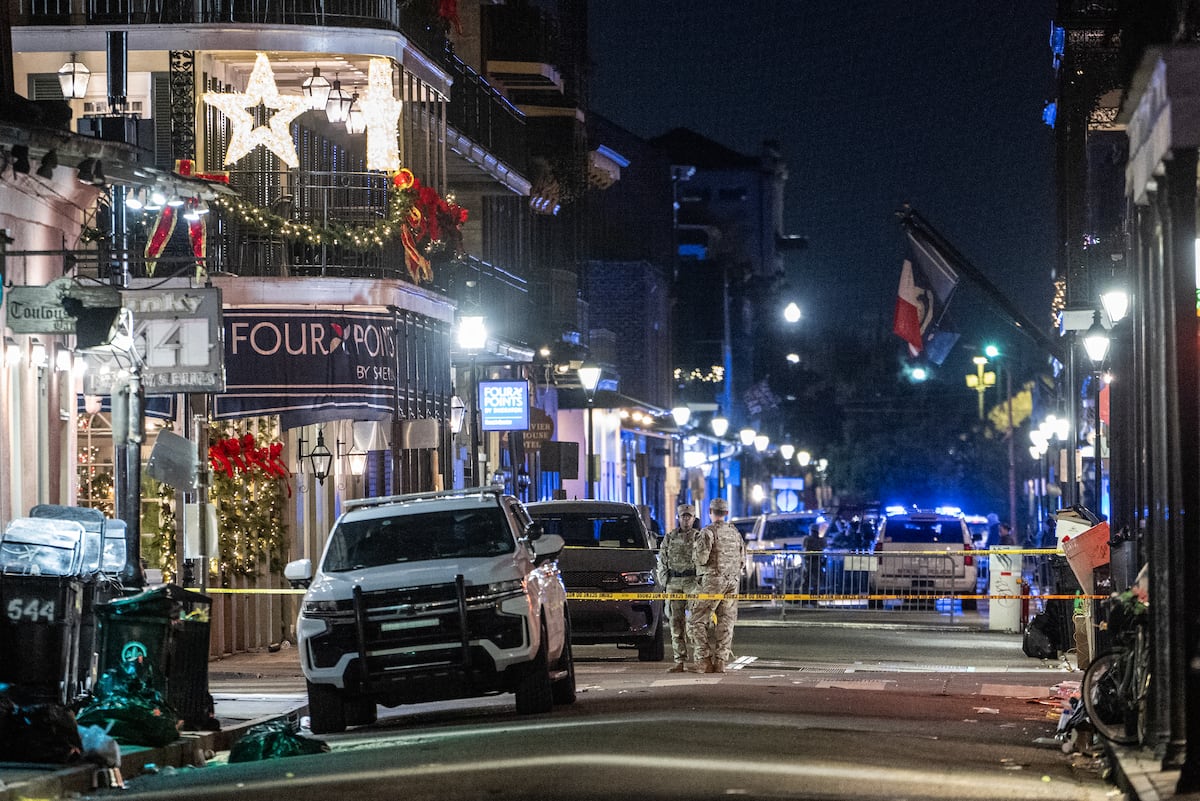
Although his bombs failed to detonate, Jabbar killed 14 people and injured 57 others after driving a pickup truck into a Bourbon Street crowd before exchanging gunfire with police early on New Year’s Day.
The other incident happened on May 4, 2026. A man suspected of making a bomb that damaged an apartment complex in Odessa, Missouri, told police he learned how to make improvised explosive devices by watching Derrick’s videos.
Derrick’s explosives background
In the complaint, authorities cite Derrick’s service record, saying the Army released him from active duty in 2009 and gave him an honorable discharge in 2013.
Authorities also say Derrick completed the Sapper Leader Course. They added that “sappers are elite combat engineers in the military” and “skilled in demolitions, explosives, mine disposal, and obstacle reduction.”
According to the complaint, Derrick received approximately $5,000 per month in disability payments from the Department of Veterans Affairs in 2025, while earning hundreds of dollars each month from his videos.
“Outside of Jordan Derrick’s online content, Derrick has no known employment,” the complaint added.
Authorities explained that Derrick primarily distributed his videos through a YouTube channel he launched in 2023, but he had backup accounts on other platforms like OnlyFans, Patreon and Odysee.
Odysee, which allows creators to earn cryptocurrency, has been criticized by the Southern Poverty Law Center for providing a funding stream for extremists banned from mainstream platforms.
In a video cited in the complaint, Derrick promotes his Odysee account, saying, “If these videos go down, the backup is going to be on Odysee. That’s where you can find all these.”
In the video, which remains live on YouTube, Derrick explains how to make detonators using commercially available components, and he guides viewers through the assembly process.
He acknowledged the moral dilemma of teaching bomb-making. “Of course, the wrong people could get it. Of course, it could be misused. It will be misused, right?” he said.
The complaint does not state that Derrick knew Jabbar had downloaded his videos.
“My angle on it is that my responsibility to my countrymen is to make sure that I serve the function of the Second Amendment. To strengthen it for you, my fellow militia, and that’s what this is all about,” Derrick said in an April 2025 video. “This is how I serve my country for real.”
He described his instruction as “really quite innocuous but critical information that we would need if we needed to use it in warfare — in unconventional warfare.”
An early ‘guntuber’
Brandon Herrera, a popular gun influencer with political aspirations and ties to the Trump administration, called Derrick “one of the OG guntubers.” He explained that Derrick gained notoriety in the online gun world in 2012, when he launched the channel Carnik Con and the character Dugan Ashley.
“The production value, the humor, the access to crazy weaponry from machine guns to explosives … nobody else was on this guy’s level at the time,” Herrera said. “His blend of cool and exotic firearms and, like, satirical off-the-wall humor was an inspiration to a lot of the guys in the gun tube space today.”
A “guntuber” is a slang term for an online influencer who focuses on firearms. The gun industry, which cannot advertise through traditional online channels, relies on guntubers to promote gun sales online.
Herrera added that Derrick left the YouTube space around 2015 because of “burnout and some deeper health issues,” but made appearances in periodic videos and collaborations. Content from the Canik Con channel has since been deleted or archived.
Then, in 2021, Derrick reportedly reappeared on YouTube to inform his fans of his ongoing battle with Multiple Sclerosis. In the video, he appeared thinner, beardless and had difficulty moving parts of his face.
Derrick explained that he had been receiving medical treatment through the VA but believed he was close to death. He told viewers that he needed money for specialized care to prolong his life.
A few weeks later, he posted an update thanking his fans and explaining that his doctors figured out that he was experiencing a side effect of his medication.
Legal defense
Since federal authorities charged Derrick, his fans and supporters have come out in his defense. More than 1,100 people have donated almost $75,000 to his legal defense fund.
In the description for the crowdfunding page, his wife, Phoebe Derrick, wrote that he “is categorically not guilty of these charges, which we believe constitute a violation of his First Amendment rights, among others.”
Following the Oklahoma City bombing, Congress passed a law making it illegal to distribute bomb-making instructions when the information is intended to be used in violent crimes.
Lawmakers later revisited the measure in 2003 to address concerns about how the law would apply in the internet age while attempting to avoid conflicts with First Amendment protections.
Still, gun influencers and bloggers have also started posting on Derrick’s behalf. John Crump, a self-described activist journalist who writes for the Ammoland blog, argued that prosecutors “will have a hard time proving ‘intent.’”
“Derrick’s videos were very scientific and never called for violence. He covered the chemistry of the explosives but did not discuss their use in committing crimes,” Crump wrote. “It is also unlikely that Derrick had any knowledge of Jabbar’s planned attack.”
Attorney Lisa Schaffer explained that finding people who have been charged and convicted of posting bomb instructions is “extremely rare” but “it does happen.”
She pointed to the case of Samuel Baptiste who posted online instructions for making explosives, including one document titled “Instructions: How to Make a Homemade Pipe Bomb.” Prosecutors argued that Baptiste attempted to provide the information directly to terrorists. Baptiste was ultimately convicted and sentenced to 15 years in prison.
“It’s a balancing act between free speech and national security,” Schaffer wrote. “But beware, if you are found guilty, the penalty is high.”
Derrick’s attorney Matthew Brown said the defense team will review the allegations, evidence and court filings through the normal course of the federal proceedings.
In a press release, he said Derrick “is entitled to the presumption of innocence and the protections afforded by the judicial process.”
Along with the distribution charge, authorities also charged Derrick with manufacturing explosives without a license and unlawfully possessing a destructive device. If convicted, he could face up to 20 years in prison.
Daniel Terrill is a contributor to Military Times. He’s been reporting on military issues, the gun industry, and the outdoors for nearly two decades. Although writing is his passion, he’s been a Marine, police officer, and, perhaps the most dangerous job of his career, a substitute teacher.
Read the full article here