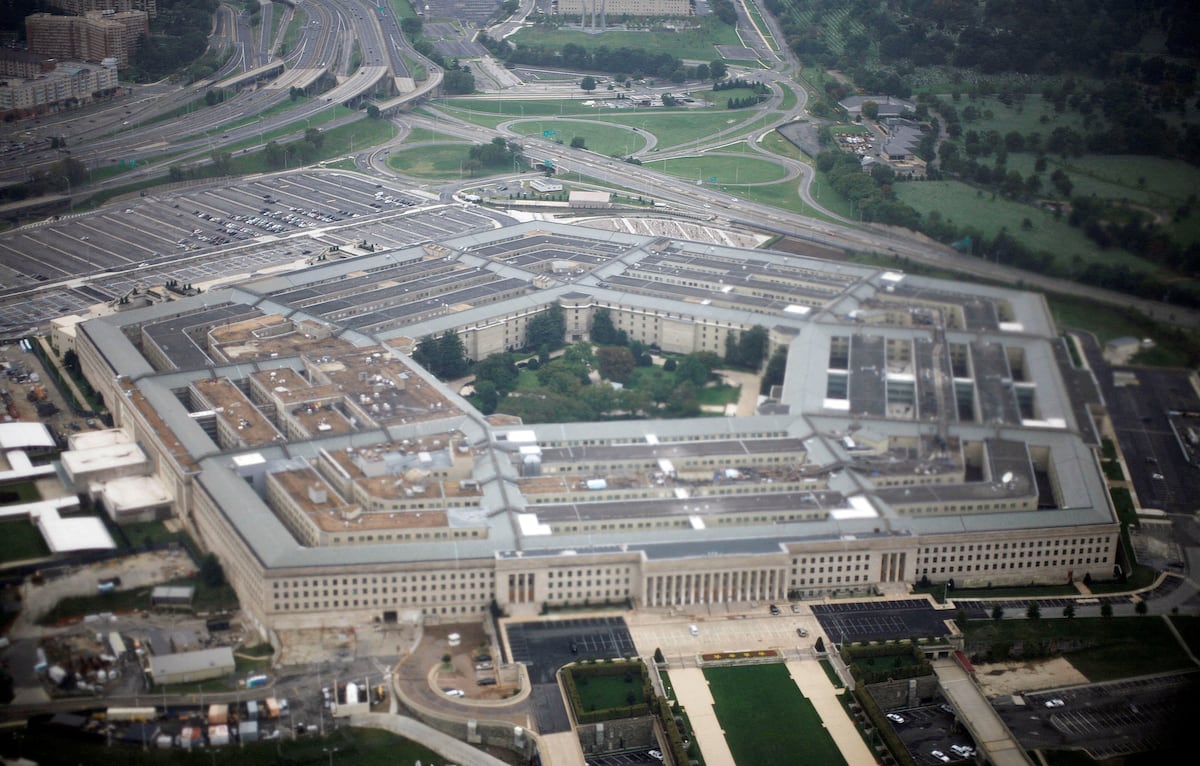

The Pentagon on Sunday altered the way it has reported casualties since Operation Epic Fury began on Feb. 28, when the U.S. and Israel first launched military strikes against Iran.
In its updated accounting method, the Defense Casualty Analysis System’s category labeled “Overseas Operations (OO) Casualty Summary” lists U.S. casualties suffered in the conflict since July 7 — effectively removing the totals from those associated with Operation Epic Fury.
The new page comes in the wake of criticism that the Pentagon had dropped the number of U.S. troops killed and wounded in the war with Iran.
On July 17 three U.S. service members were killed when an Iranian missile hit their sleeping barracks at Muwaffaq Salti Air Base in Jordan. The fourth death occurred two days later in a separate incident in Erbil, Iraq, during a controlled detonation of an attack drone.
The Pentagon initially updated its system to 18 killed before lowering that number to 14 once again.
On July 23, Sean Parnell, the chief Pentagon spokesman, refuted a New York Times article on the lowering of the KIA number, writing on X that “Our Pentagon Press Office gave the New York Times a courtesy off-the-record phone call explaining in detail that the site errors on the Defense Casualty Analysis System (DCAS) were due to a temporary data disruption. Our team explained we are working on it being resolved in coordination with the Military Services.”
Under the “overseas operations” system, the Pentagon reports that 207 U.S. service members have been wounded in action. It lists 417 wounded during Operation Epic Fury. Combined, the two categories account for 624 wounded service members. The total number listed as killed is 18.
The post-July 7 tally comes one day prior to the collapse of the tenuous June ceasefire agreement between the U.S. and Iran, resulting in U.S. Central Command delivering 13 continuous nightly strikes against the Middle East nation.
The collapse of the ceasefire, the Trump administration argued, restarted the 60-day clock that allows the president to use military force without congressional approval.
The new accounting system is in line with President Donald Trump’s assertion that the latest escalation between the U.S. and Iran is part of a new conflict with the Islamic Republic, not a continuation of the one that began in February.
On July 10, the president formally notified Congress that hostilities with Iran had resumed, a position that administration officials contend allows them to bypass the War Powers Resolution and restart the clock again on the war.
In April, Defense Secretary Pete Hegseth controversially claimed that the ceasefire with Iran meant that Trump did not yet have to seek congressional consent to extend the war.
Hegseth argued that the pause in hostilities froze the ticking clock that would otherwise require the president either to get agreement from lawmakers or to end military operations after 60 days.
“We are in a ceasefire right now, which [in] our understanding means the 60-day clock pauses, or stops,” Hegseth told Sen. Tim Kaine, D-Va., during a Senate Armed Services Committee hearing.
“I do not believe the statute would support that,” Kaine said, adding that he has “serious constitutional concerns and we don’t want to layer those with additional statutory concerns.”
Congress has not technically declared war since World War II, and yet more than 100,000 service members have died in conflicts spanning the globe since 1945.
Claire Barrett is an editor and military history correspondent for Military Times. She is also a World War II researcher with an unparalleled affinity for Sir Winston Churchill and Michigan football.
Read the full article here