Nearly 6 Million Suppressors Are Now Registered in the U.S. — How Do You Say “Common Use” Without Saying It?


Key Takeaways
- As of April 2026, the National Firearms Registration and Transfer Record has nearly 6 million suppressors registered, marking significant growth since 2025.
- The elimination of the $200 NFA tax stamp and procedural reforms at the ATF have accelerated suppressor registrations in 2026.
- In the 2008 Heller decision, the Supreme Court recognized that items in common use, like suppressors, should not be banned.
- Litigation is underway challenging the constitutionality of the National Firearms Act, especially concerning the regulation of suppressors.
- The surge in suppressor sales and registrations indicates a shift in legal and cultural attitudes towards suppressor ownership.
Estimated reading time: 7 minutes
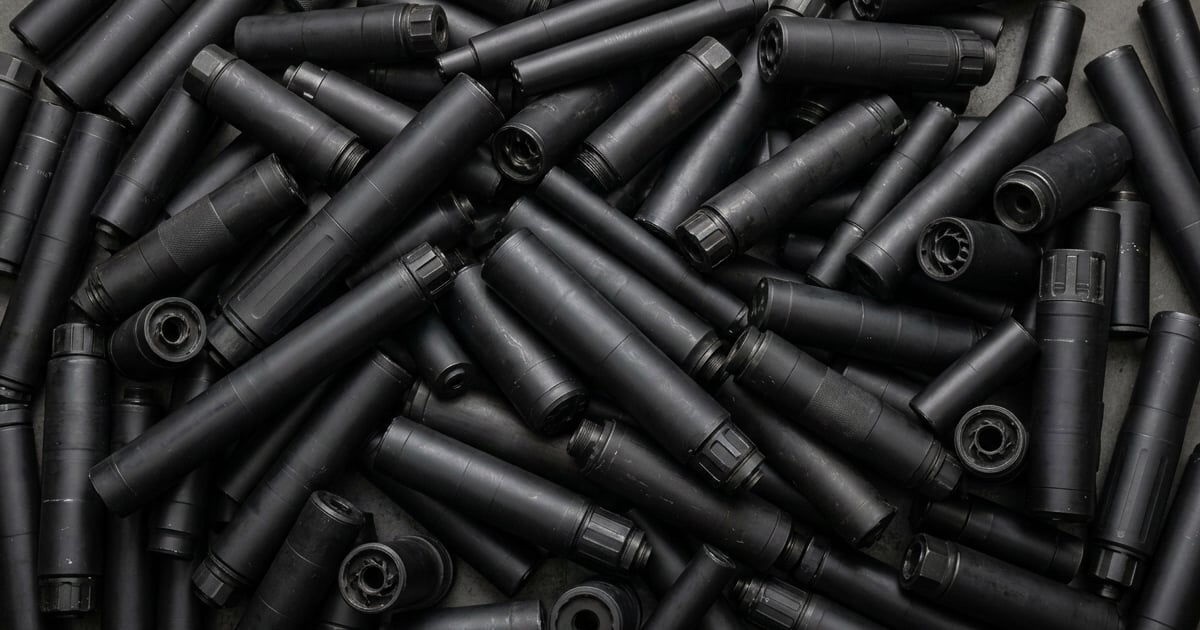
WASHINGTON, DC — The American Suppressor Association is reporting that the National Firearms Registration and Transfer Record now contains nearly 6 million suppressors, a number that has grown so quickly in 2026 that it is reshaping the legal conversation around the National Firearms Act itself.
According to the American Suppressor Association, as of April 10, 2026, there were 5,998,065 suppressors registered in the NFRTR. ASA noted that figure “has likely surpassed 6 million” since that date. The growth in 2026 alone is staggering. ASA stated that the number of suppressors registered between January 2026 and April 10, 2026, is almost as many as all the suppressors registered between 1934 and 2010 combined, a span of 76 years.
The data tells the story of a market that has changed beyond recognition. In 2000, there were just 83,627 suppressors registered nationwide. By 2010, that number had climbed to 223,761. In January 2025, ASA reported approximately 4.4 million suppressors in the registry. By January 5, 2026, the figure was 5,776,685. By April 10, the total was just shy of 6 million.
What Changed in 2026
Two things triggered the 2026 surge. The first was the elimination of the $200 NFA tax stamp on suppressors, short-barreled rifles, and short-barreled shotguns, which took effect on January 1, 2026, as part of the budget reconciliation bill signed into law in 2025. Machine guns and destructive devices were excluded from the tax repeal and remain subject to the $200 tax.
The second is the procedural reform happening at the Bureau of Alcohol, Tobacco, Firearms and Explosives. ATF processed approximately 150,000 eForms on January 1, 2026, alone, compared to a typical pre-2026 daily volume of around 2,500. By the time SHOT Show wrapped on January 23, ASA Executive Director Knox Williams reported that more than 260,000 eForms had been processed that month.
The pace did not slow down. According to ATF data published in February, the agency had received 464,746 Form 1, 2, 3, 4, and 5 applications since January 1, 2026, with 325,075 already processed at an average turnaround time of about 10 days. ASA reported that Form 4 transfer applications for suppressors alone hit 240,270 in that period, which is a 394 percent increase over the 2025 monthly average.
Guns.com confirmed in late April that more than one million NFA forms had been processed in 2026, with the suppressor registry passing the 6 million mark.
The “Common Use” Question
The number matters because of a Supreme Court doctrine that has direct implications for the constitutionality of the National Firearms Act itself.
In the 2008 case District of Columbia v. Heller, the Supreme Court held that arms in common use by law-abiding citizens for lawful purposes are protected by the Second Amendment and cannot be banned outright. In the 2016 Caetano v. Massachusetts decision, the Court applied that standard to roughly 200,000 stun guns and ruled they qualified as being in common use.
Suppressors now outnumber that benchmark by a factor of approximately 30. With nearly 6 million registered, suppressors are in the hands of more law-abiding Americans than there are residents of 33 individual states.
The 2022 New York State Rifle and Pistol Association v. Bruen decision added a second test. Modern firearm regulations now have to point to a historical analogue from the founding era to survive Second Amendment challenge. Suppressors were not regulated at all until 1934, and there is no clear pre-1934 American legal tradition of restricting noise reduction devices on firearms.
The implication is straightforward. A heavily regulated item that nearly 6 million Americans lawfully own, with a regulatory framework that lacks any historical analogue from the founding era, is on increasingly thin constitutional ice.
Where the Registry Stands
According to ATF data published earlier this year, the breakdown of the 5,776,685 suppressors registered as of January 5, 2026, was as follows. Legal trusts and corporate entities held the largest share at 1,973,702. Individual citizens held 1,891,352. Federal Firearms Licensees and Special Occupational Taxpayers had 1,461,118 in their inventories. Government, military, and law enforcement users held 443,872.
Setting aside the FFL and SOT inventories, that means American civilian ownership outnumbers government, military, and law enforcement suppressor possession by nearly 9 to 1.
The Litigation Landscape
ASA has not been waiting on the legislature alone. The ASA Foundation, joined by the National Rifle Association, the Second Amendment Foundation, and the Firearms Policy Coalition, has filed suit challenging the constitutionality of the National Firearms Act itself.
That suit is one of several active cases testing whether suppressors and other NFA items can survive constitutional scrutiny under the modern Heller, Caetano, and Bruen framework. Other litigation, including challenges related to Silencer Shop and various plaintiffs, is also pending in federal courts.
The argument is not complicated. If 6 million civilian suppressors do not constitute common use, no number ever will. And if there is no historical analogue for restricting them, the Bruen test is not satisfied.
The Regulatory Reform Picture
I recently reported on the ATF’s 34-rule reform package, which was announced under Executive Order 14206, Protecting Second Amendment Rights. Several items in that package directly affect suppressor owners.
The proposed rules include streamlining interstate transport procedures for NFA firearms, authorizing joint spousal registration of NFA firearms, removing the Chief Law Enforcement Officer notification requirement for NFA applications, and eliminating redundant marking requirements for NFA firearms makes. The agency also proposed clarifying firearm possession obligations during common carrier travel, an item with direct implications for suppressor owners who travel with their property.
Together, these rule changes would meaningfully reduce the friction of lawful suppressor ownership. Combined with the elimination of the $200 tax stamp, the NFA framework is being squeezed from multiple directions at once.
More from USA Carry:
Why This Matters for Gun Owners
The Second Amendment is a fundamental civil right. The right of law-abiding Americans to own and use firearms accessories that protect their hearing and the hearing of their families, neighbors, and pets is a logical extension of that right.
Suppressors do not silence firearms. They reduce muzzle report by an average of 20 to 35 decibels, bringing the sound of a gunshot down from levels that cause permanent hearing damage to levels that are loud but survivable. The CDC has reported that millions of Americans suffer hearing loss, and recreational shooting is a known contributor.
The fact that nearly 6 million Americans have voluntarily navigated a federal registration process, paid the historical tax, submitted fingerprints and photographs, passed a background check, and waited months for approval to own one of these devices is itself the answer to the question of common use. Americans are voting with their Form 4s, and they are voting overwhelmingly in favor of safer shooting.
What Comes Next
Industry estimates suggest 2026 could see suppressor sales doubling over 2024 and 2025 numbers as the elimination of the $200 tax stamp pulls in buyers who had been priced out or simply discouraged. Several manufacturers are projecting 25 to 50 percent annual growth.
The combination of registration data approaching 6 million, the ASA Foundation lawsuit challenging the NFA’s constitutionality, the ATF’s regulatory reform package, and the elimination of the tax stamp puts suppressors in a different legal and cultural position than they have occupied at any point in the last 92 years.
The American Suppressor Association posed the question directly. How do you say “common use” without saying it?
The numbers say it for them.
Read the full article here