
VIENNA — Austrian Eurofighter Typhoon fighter jets scrambled two days in a row to intercept U.S. military aircraft, the government said.
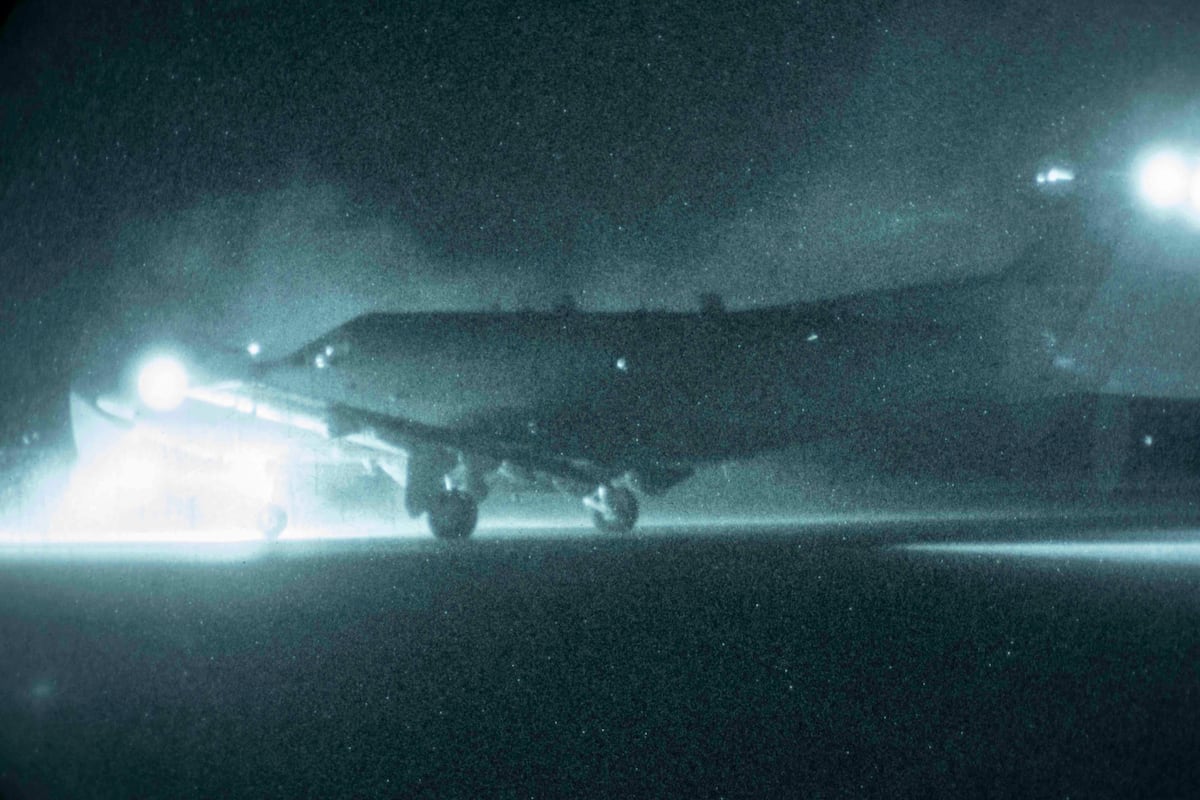
The interceptions took place on May 10 and 11 and were related to modified PC-12 turboprop aircraft that the U.S. military uses primarily for signals intelligence and scouting operations. The U.S. designation for the aircraft is U-28.
Contrary to initial reporting in German-language media, no aircraft seems to have illegally violated Austrian airspace. The U.S. Air Force had filed for an overflight permit for two aircraft on May 10, but didn’t use it. When later that day two different USAF aircraft approached Austrian airspace unannounced, jets were scrambled to meet them – but they turned back before crossing the border, Austrian military spokesperson Michael Bauer said in a statement on X on Wednesday.
The U.S. refiled the overflight permit for the following day and used it then. The Austrian air force sent fighter jets to confirm that the aircraft overflying the airspace matched what had been approved. “Some things you have to see for yourself,” Bauer said in a reply on X
Austrian jets were scrambled in a “priority A intercept” on May 11, Bauer said on Tuesday, marking the highest urgency in the Austrian air force’s nomenclature.
Later reporting by the major Austrian daily Der Standard cited the Austrian government as saying that, as of Wednesday, the verdict was still out on whether the planes that overflew Austrian airspace were the ones for which a permit had been issued. No further details were provided on what was taking so long for the verification.
Austria is not a member of the NATO alliance and has perpetual neutrality enshrined in its constitution. Transits by foreign militaries – whether by land or by air – require prior approval and are generally granted only if they are unrelated to a war. Austria was the fifth European country to close its airspace to U.S. activity related to the war in Iran, with the country’s vice chancellor, Andreas Babler, saying that Austrians want “nothing to do with Trump’s politics of chaos and his war.”
The May 11 intercept reportedly took place over the Totes Gebirge mountain range in Upper Austria, over 60 kilometers from the German border. The American planes were met by Eurofighter Typhoons.
Swiss news portal “20 Minuten” first reported on the incursion and it was later confirmed by other German-language media, although initial reporting stated that unpermitted airspace violations had taken place – a claim that was refuted by the Austrian military on Wednesday
“This flight took place after an administrative error in the overflight clearance paperwork was corrected,” an official from U.S. European Command told Defense News in an email. “The United States continues to work closely with Austrian authorities on any questions regarding overflights and fully complies with Austrian laws and procedures.”
Publicly available reporting of unauthorized U.S. overflights is rare, and permissions are generally granted in peacetime. Austria’s location and geography – a thin sliver of land between major NATO allies Germany and Italy, and dividing northern from southern Europe – makes it a prime transit route. Neighboring Switzerland has similar neutrality policies.
The most remarkable precedent is a case in October 2002, when the U.S. attempted to smuggle two F-117A Nighthawk stealth attack aircraft through Austrian airspace by filing a flight plan only for the accompanying KC-10A tanker aircraft. Austrian Draken fighter jets identified the undeclared aircraft and Vienna later lodged a formal diplomatic complaint.
The recent incidents, too, will be addressed through diplomatic channels, Bauer said.
Editor’s note: This story was updated with new information from the U.S. military and the Austrian government refuting initial reporting that the airspace incursions were unauthorized.
Linus Höller is Defense News’ Europe correspondent and OSINT investigator. He reports on the arms deals, sanctions, and geopolitics shaping Europe and the world. He holds master’s degrees in WMD nonproliferation, terrorism studies, and international relations, and works in four languages: English, German, Russian, and Spanish.
Read the full article here