
A House panel advanced a measure to increase cooperation between the U.S. and Israeli defense technology sectors after one lawmaker’s Friday attempt to halt the proposal fell flat.
The United States-Israel Defense Technology Cooperation Initiative, part of the House’s version of the fiscal 2027 defense policy bill, would codify and increase military technical cooperation between the U.S. defense industry and Israel’s, as well as create a technical liaison position within the Pentagon to support the effort.
The House Armed Services Committee approved the measure as part of its National Defense Authorization Act after a marathon debate on hundreds of amendments.
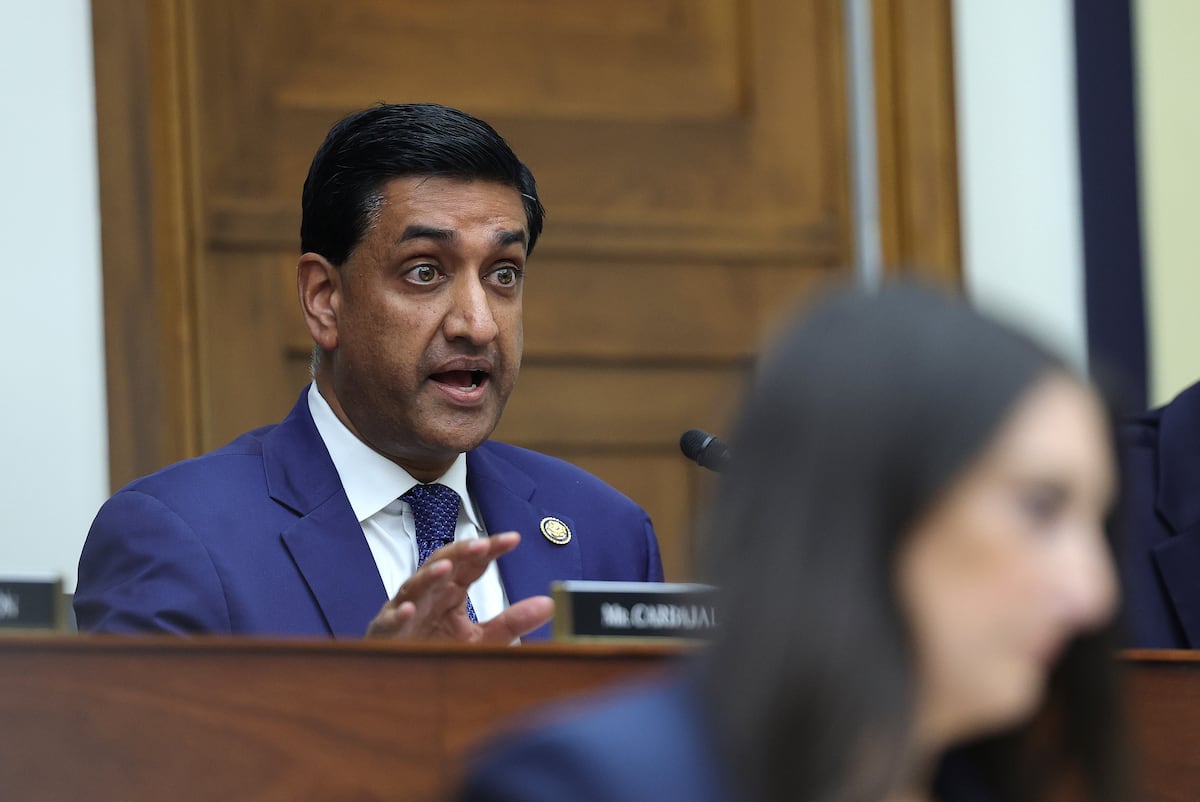
Rep. Ro Khanna, D-Calif., introduced an amendment to strike down the proposal, but it found very little support from his colleagues.
“We need to tell [Israeli Prime Minister Benjamin] Netanyahu that America calls the shots, not the prime minister of any other country,” Khanna said during his introduction of the amendment. “[Americans] want less cooperation and blank checks to Israel, not more. Only the United States Congress would dream up at this moment, ‘Let’s actually do more for Israel,’ not less.”
Eight committee members, including fellow Democrats, spoke against Khanna’s effort to quash the measure. The amendment was ultimately defeated.
The proposal “actually improves oversight and accountability for these programs by designating a single official responsible,” said committee chairman Rep. Mike Rogers, R-Ala. “Claims that this provision somehow cedes authority to a foreign government are ridiculous.”
RELATED
Rep. Adam Smith, D-Wash., the ranking Democrat on the committee, conceded that he understood some of the concerns Khanna outlined in his amendment, particularly regarding Netanyahu’s leadership in Israel and his multi-front war.
“We have endless wars, now, in Gaza, in the West Bank […], in Lebanon,” Smith said. “No effort to negotiate, no effort to find partners for peace amongst the Palestinians or the Lebanese, even where there are opportunities to do so.”
But the measure puts existing programs under streamlined supervision, Smith argued. He and other committee members touted the benefits of Israeli technology for U.S. weapons systems.
The cooperation initiative “comes at a very bad time because of everything I’ve just said about Israel, but let’s not forget” what it actually does, Smith said.
Michael Hanna, director of the U.S. program at International Crisis Group, told Military Times the addition of the U.S.-Israel cooperation initiative “tells us something important about the broader climate.”
Further integrating U.S.-Israeli military cooperation differs from the memorandum of understanding, or MOU, process that has dictated military aid to Israel historically, he said.
“It’s hard to imagine there will be another MOU after this one,” which expires in 2028, Hanna said. “The Israelis understand that and are trying to get ahead of that” by moving from an aid model to one of co-production and procurement.
One committee member spoke in support of Khanna’s amendment. Rep. Sara Jacobs, D-Calif., argued the cooperation initiative “entrenched” the U.S. and Israeli militaries “with no strings attached.”
“A clear majority of Americans already oppose sending more military aid to Israel,” Jacobs said. “They will not support this, and neither should we.”
A majority of Americans now hold negative views of Netanyahu and Israel, according to polling from the Pew Research Center. By August of last year, 60% of Americans disapproved of sending the country additional military aid, per a Quinnipiac poll.
The House’s version of the NDAA is expected to go to the floor for a vote in mid-July. Rep. Thomas Massie, R-Ky., pledged to introduce another effort at that time to strike the section about U.S.-Israeli cooperation.
Read the full article here