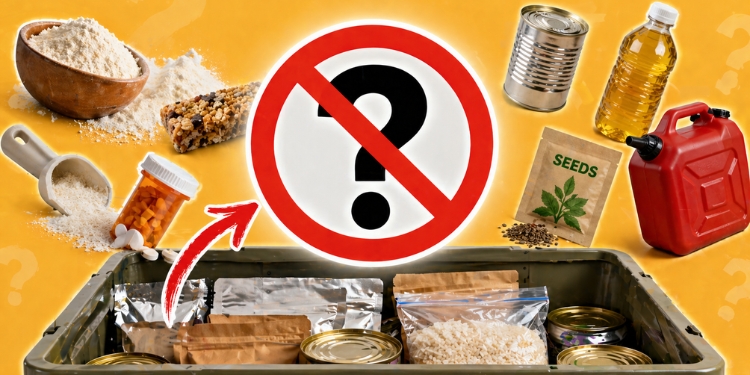

When it comes to building a solid emergency stockpile, most advice focuses on what to store. And that makes sense – you want to be ready for whatever comes your way. But the thing is that knowing what to leave out of your stockpile is just as important as knowing what to put in it. Some items will go bad faster than you think, others will take up space without giving you much in return, and a few could even put your health at risk when you need to be at your best.
Let’s go through the few things that have no business sitting on your storage shelves, no matter how good an idea they might seem at first glance.
11. Whole Wheat Flour
This one is going to surprise a lot of people, because whole wheat flour feels like such a natural choice for a long-term pantry. It’s wholesome, it’s useful, and you can make bread with it – what’s not to love?
Well, the problem is that whole wheat flour contains the entire grain kernel, including the germ. That germ is packed with natural oils, and those oils go rancid over time, even when the flour is sealed up tight.
We’re talking about a shelf life of roughly three to six months at room temperature, and maybe up to a year if you freeze it. Compare that to plain white rice or dried beans, which can last for decades when stored the right way, and you can see why whole wheat flour is a poor choice for any stockpile meant to last.
If you want the ability to make this dandelion bread recipe, for example, or other baked goods during a long-term situation, store whole wheat berries instead. The intact grain stays good for years and years, and you can grind it into fresh flour whenever you need it using a simple hand-cranked grain mill.
10. Powdered Milk from the Grocery Store
Regular powdered milk from the baking aisle of your local grocery store is not the same product as the long-term storage powdered milk sold by preparedness companies. Grocery store powdered milk is typically non-instant and has a shelf life of about one to two years at best. It also tends to taste pretty bad, which matters more than you might think when you’re trying to get adequate nutrition during a difficult time.
How to Make Butter Last Forever
If milk is something you want in your stockpile – and it’s a solid choice because of the protein, calcium, and calories it provides – invest in properly packaged instant powdered milk that’s been sealed in nitrogen-flushed cans. These can last 20 years or more and actually taste decent when mixed with cold water.
9. Cheap, Off-Brand Canned Goods You’ve Never Tried
There’s a strong temptation to load up on whatever is cheapest when you’re building a large food stockpile, and that’s understandable. But filling your shelves with canned foods you’ve never actually tasted is a gamble you don’t want to take.
Beyond the taste issue, some bargain-brand canned goods have questionable quality control. Dented cans, inconsistent seals, and poor nutritional content are more common when you’re buying from unknown brands. Always taste-test before you buy in bulk, and stick with brands you actually enjoy eating. Your future self will thank you.
That said, cheap doesn’t have to mean bad. I’ve spent a lot of time hunting for the sweet spot between price and quality, and I’ve found several cans at Walmart that come in under $1 each and have held up for years in my root cellar – still tasting good after long-term storage, which is the only test that actually matters. I put together a full 3-month food plan built around affordable but proven items, and you can check it out here.
8. Trail Mix and Granola Bars
These are fantastic for a 72-hour bug-out bag or a short camping trip, but they have no place in a long-term stockpile. Most trail mixes contain nuts and seeds that are high in oils, and those oils go rancid within a few months, especially in warm storage conditions. Granola bars tend to go stale and lose their texture relatively fast as well, even when they’re still within the date printed on the wrapper.
The chocolate chips in trail mix will melt and re-solidify into an unappetizing mess, the dried fruit can ferment, and the overall product just doesn’t hold up for more than six months to a year.
If you want calorie-dense snack options for your stockpile, consider things like this super easy hard candy recipe, honey, peanut butter in sealed jars, or commercially freeze-dried fruit, all of which last much longer and hold up far better in storage.
7. Brown Rice
Just like whole wheat flour, brown rice is often seen as the healthier option, and in everyday life, it absolutely is. But for stockpiling purposes, it’s a terrible choice. Brown rice still has its outer bran layer intact, which contains oils that will go rancid within about six months to a year, even under good storage conditions.
👉 Try This Recipe: Long-Lasting Amish Chili Soup
White rice, on the other hand, has had that bran layer removed, which is exactly why it can last 25 to 30 years when properly stored in Mylar bags with oxygen absorbers. When it comes to your emergency food supply, white rice wins by a landslide. You can always supplement the missing nutrients with other stored foods like canned vegetables or a good multivitamin.
6. Medications Past Their Expiration Date
This one might ruffle a few feathers, because there’s a popular belief in preparedness circles that most medications are still perfectly fine well past their printed expiration dates. And while there is some truth to that for certain drugs, the reality is more complicated than most people realize.
Some medications, like tetracycline antibiotics, can actually become toxic as they degrade. Liquid medications tend to break down much faster than pills. And critical items like EpiPens, insulin, and nitroglycerin lose their effectiveness in ways that could genuinely put your life in danger if you’re counting on them during an emergency. 👉 Here’s what actually happens when you take expired medications
Instead of hoarding expired medications, work on rotating your supply so that what you have on hand is always reasonably fresh. Talk to your doctor about getting a slightly larger prescription if emergency preparedness is a concern – many healthcare providers are understanding about this.
As a backup, you must learn how to make this DIY natural antibiotic recipe and make sure you have these 3 antibiotics stockpiled and rotated – because without them, your chances of survival drop fast. in a crisis.
5. Vegetable Oils in Bulk
Cooking oil is useful, there’s no argument about that. But large quantities of vegetable oil (corn, soybean, canola) have a surprisingly short shelf life compared to what most people assume.
Once the seal is broken, most vegetable oils start going rancid within a few months, and even unopened bottles typically last only one to two years before the flavor and nutritional value start to decline.
Rancid oil doesn’t just taste awful – it can also cause digestive problems and contains harmful free radicals that you don’t want in your body, especially during a time when you need to stay healthy.
Better alternatives for long-term storage include:
- Coconut oil (which can last two or more years and is naturally resistant to going bad).
- Olive oil in dark glass bottles.
- Ghee, which has been used for centuries in the Amish community – Find the original recipe here!
4. Bleach in Large Quantities
Yes, bleach can be used to purify water in a pinch, and it’s a great disinfectant. But people tend to go overboard and store gallons upon gallons of it, thinking it will last forever. It won’t. Regular household bleach starts to lose its strength after about six to twelve months, and after a year or so, it may not be strong enough to reliably purify water anymore.
On top of that, storing large amounts of bleach in a confined space creates a genuine safety hazard. The fumes alone can cause problems if a container cracks or leaks, especially if it’s stored near other cleaning products that could cause a chemical reaction. A much better approach is to keep a small, fresh supply and rotate it regularly.
Bleach works in a pinch, but after rotating bottles for years and never being fully sure the stuff was still strong enough to trust, I started looking into atmospheric water generators – and I haven’t looked back since. These devices pull moisture straight from the air and filter it into clean drinking water.
I tested mine during a long winter stay at a remote family cabin in the mountains, and even in cold, dry conditions, it kept producing enough water every single day. If water is the weak spot in your preparedness plan (and for most people it is), this is the one I personally use and recommend.
3. Tons of MREs
MREs are designed for soldiers in the field who are burning through thousands of calories a day during intense physical activity. They’re calorie-dense, compact, and require no preparation, which makes them sound perfect for a stockpile. But there are some serious downsides that get overlooked.
First, they’re expensive – building a stockpile of MREs for a family of four for even a month would cost a small fortune. Second, the sodium content in MREs is extremely high, which can lead to dehydration and high blood pressure. Third, anyone who has actually eaten MREs for more than a few days in a row can tell you that the digestive issues are real and unpleasant. They’re designed for short-term use in extreme situations, not for weeks or months of daily eating.
So instead of spending a fortune on MREs that wreck your stomach and expire faster than you’d think, try making your own shelf-stable meals that actually taste like real food. This hamburger and gravy meal in a bag costs a fraction of the price, and with freeze-dried beef packed in Mylar bags with oxygen absorbers, it’ll last 5 to 10 years easily – sometimes even longer if you keep it cool and dry.
Here’s exactly how to make it:

2. Fuel Without a Proper Rotation Plan
Stockpiling gasoline, diesel, or kerosene makes sense in theory – you might need to power a generator, run a vehicle, or fuel a heater. But fuel degrades over time, and most people store it and then forget about it.
Gasoline starts breaking down within three to six months and can gum up engines, clog fuel lines, and become genuinely useless if left sitting long enough. Even with fuel stabilizers like Sta-Bil, you’re looking at a maximum of about one to two years before it becomes unreliable.
Never Stockpile This Type of Fuel!
The bigger concern is safety. Improperly stored fuel is a fire hazard and a health hazard due to fumes, and local regulations in many areas limit how much fuel you can legally store on your property. If you do keep fuel on hand, keep the amount reasonable, use stabilizers, label every container with the date you filled it, and rotate it into your everyday vehicles on a regular schedule.
1. Seeds that Aren’t Suited to Your Climate
Growing your own food is a wonderful long-term survival strategy, and having a supply of seeds stored away is genuinely smart planning. But a lot of people make the mistake of buying pre-packaged “survival seed vaults” without checking whether the varieties included will actually grow in their specific climate and soil conditions.
If you live in the northern part of the country with a short growing season, seeds for crops that need long, hot summers (like certain varieties of watermelon or sweet potatoes) aren’t going to do you much good. And if you’ve never gardened before, a crisis situation is the worst possible time to figure it out for the first time.
The best approach is to buy open-pollinated and heirloom seeds that are known to do well in your specific region, and then actually practice growing them in your garden now, while the stakes are low.
One more thing about seeds that most people miss entirely – food is only half the equation. What about medicine? Chamomile, yarrow, echinacea, calendula – these aren’t just pretty plants. They’re the antibiotics, painkillers, and wound treatments that kept people alive long before pharmacies existed. This medicinal seed kit gives you all of them in one pack, ready to grow. Food crops keep you fed, but these are the ones that could save your life. I bought them from here.
If You Already Stockpiled These…
Don’t panic, and definitely don’t throw everything in the trash. If you’ve been reading this list and realizing that half your storage shelves are full of the items mentioned above, the good news is that most of them are still perfectly usable right now.
They just won’t hold up for the long haul, and that’s the key difference. The smart move isn’t to waste what you already spent money on – it’s to use it up, learn from it, and replace it with better options going forward.
Here’s a quick action plan, item by item:
- Whole wheat flour and brown rice – Open them up and do a sniff test. If the flour smells bitter, stale, or like old paint, it’s rancid and needs to go. If it still smells fine, move it into your everyday kitchen and use it up over the next few weeks. Same with brown rice – if it looks and smells normal, start cooking with it now.
- Vegetable oils – Check the dates on every bottle and do a quick taste test. Rancid oil has a sharp, unpleasant flavor that’s impossible to miss. If it still tastes clean, move it to the front of your kitchen pantry and use it in your daily cooking before it turns.
- Cheap canned goods you’ve never tried – This week is tasting week. Open a few cans from each brand and find out what you’re actually working with. If they taste decent, great – keep that brand in your rotation. Donate anything you truly won’t eat, and from now on, only stockpile products you’ve already tested and enjoyed. I’ve personally taste-tested these under $1 cans from Walmart and genuinely enjoy them.
- Expired medications – This one needs a careful sort. Look up each specific medication online to check whether it’s a type that simply loses strength over time or one that can become harmful (like certain antibiotics). Use what’s still good, and bring anything that’s too far gone to your local pharmacy for safe disposal – most pharmacies accept expired medications.
- MREs, trail mix, and granola bars – The easiest fix on this list: just eat them. Pack them for your next road trip, bring them on a hike, toss a few in your work bag for lunch, or hand them out to the kids as snacks. T
- Bleach and fuel – Check your bleach for its manufacture date. If it’s been more than a year, it’s likely too weak to reliably purify water, so use it for general household cleaning and pick up a fresh bottle along with some calcium hypochlorite for your long-term water plan. For stored fuel, pour it into your vehicle’s gas tank (as long as it hasn’t turned into a gummy mess), and going forward, label every container with the fill date so you can rotate it on a regular schedule.
- Seeds you haven’t tested – If you’ve got a survival seed vault sitting unopened in a closet, don’t just leave it there and hope for the best. Open it up this spring and actually plant a test garden with what’s inside. Find out which varieties grow well in your area and which ones are a waste of time.
The point here isn’t to feel bad about what you’ve already bought – every single person who takes prepping seriously has made purchases they later realized weren’t the best use of their money or shelf space. That’s just part of the learning process, and the fact that you’re reading articles like this one means you’re already thinking more carefully than most people do.
Use up what you have, take note of what worked and what didn’t, and make smarter choices as you rebuild and improve your stockpile over time.
You may also like:
 7 Stores Where You Can Buy Cheap Survival Food
How to Make “Frontier Penicillin” (VIDEO)
Read This Before Stockpiling Seeds
What Happens When You Eat Only Costco Cans For 30 Days?
Never Buy Garlic Again!
Hoarding These Items Might Get You Arrested
Read the full article here