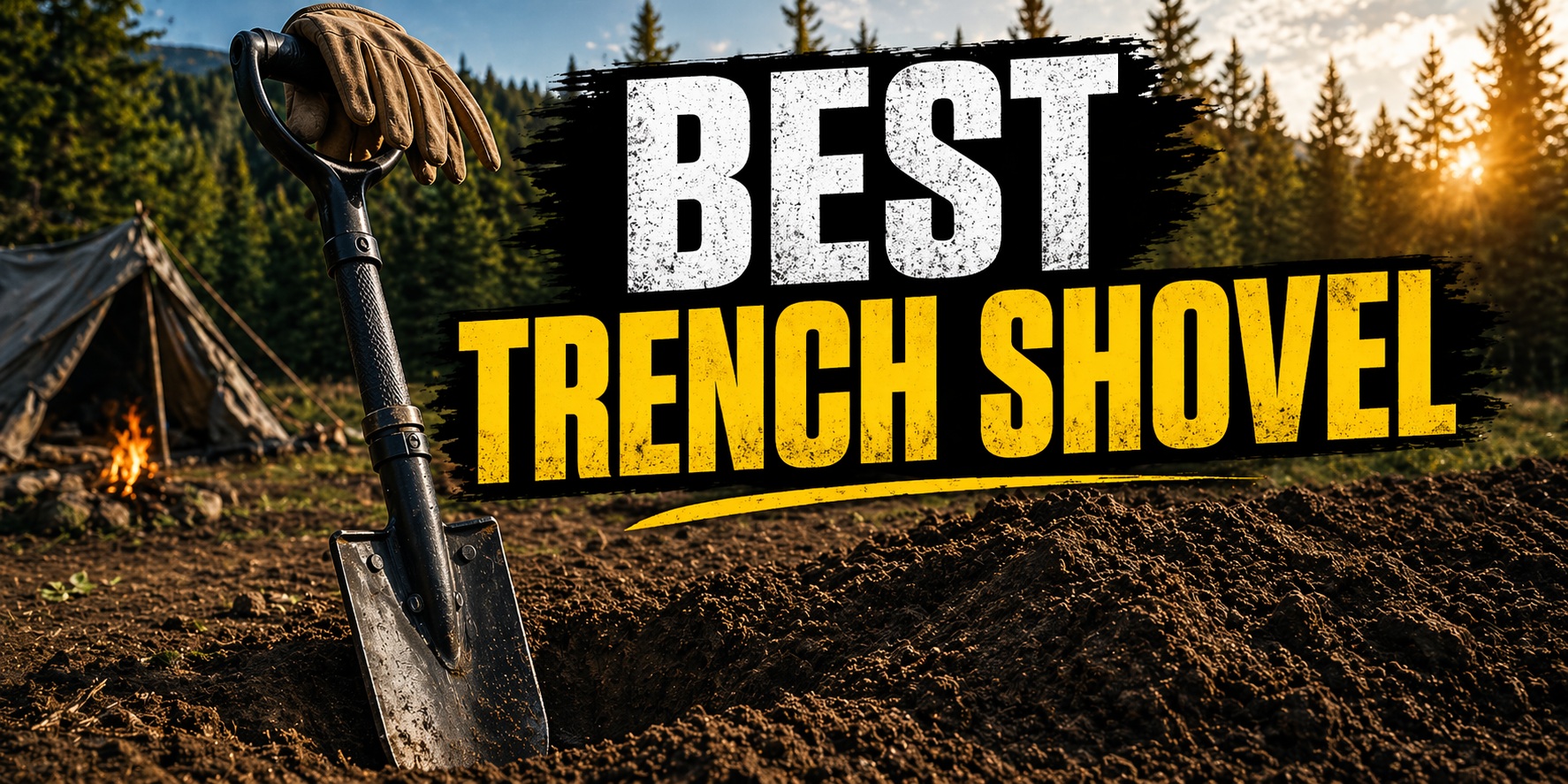

A trench shovel is not glamorous. It does not have a battery, an app, or a multi-tool attachment. What it does have is a narrow blade, a strong handle, and the ability to dig exactly the kind of hole that keeps you alive, concealed, or dry when it matters. If you have not thought seriously about having a quality trenching tool in your preps, this guide will change that.
Trench shovels serve a specific mechanical purpose: cutting clean, narrow ditches in compacted earth. They are built differently from standard round-point or flat-blade shovels. The blade is long, thin, and often angled to let you bite deep without spraying soil everywhere. That design is what makes them worth owning as a dedicated tool rather than trying to force a garden spade to do the job.
This article covers the survival use cases for a trench shovel, the specs that actually matter when buying one, and three current picks available on Amazon that hold up to hard use.
Why a Trench Shovel Belongs in Your Gear
Most preppers think about trenching tools only in a construction context: laying pipe, running electrical conduit, that kind of thing. That framing undersells them. In a grid-down or bug-out scenario, a trench shovel becomes a multi-purpose survival asset with very specific advantages over a general digging shovel.
Field Drainage
Water management is one of the most overlooked elements of field camp survival. A shelter positioned in a low spot or on a slope without drainage will flood in a moderate rainstorm. A trench shovel lets you cut diversion channels around a tent footprint or shelter perimeter in twenty minutes. The narrow blade removes exactly what needs removing without excess excavation. The
CDC’s guidance on emergency preparedness consistently identifies water intrusion as a primary driver of shelter failure in disaster conditions.
Latrine Construction
In any situation lasting more than 24 hours away from plumbing, sanitation becomes a public health problem fast. A cat hole dug with a folding trowel is adequate for one or two people for one day. A group camp or extended shelter situation requires a dedicated latrine trench, and that means a real trenching tool. A narrow blade digs the correct trench profile quickly and does not leave rough edges that make the structure unstable.
Fighting Positions and Concealment
If you have studied any military field manual on defensive positioning, you already know that even a shallow scrape position can be the difference between taking fire and not. A trench shovel digs the 18-to-24-inch-deep prone fighting position that a GI folding entrenching tool struggles to reach without three times the labor. The longer handle gives you real leverage and keeps your body posture upright, which reduces fatigue significantly.
Root Cutting and Soil Penetration
The sharpened, narrow blade of a trench shovel is effective against roots that would stop a wide blade cold. When you need to remove a plant, dig along a fence line, or trench through heavy clay or hardpan, the thin profile of a trenching blade focuses force efficiently. Research published through the
USDA Forest Service on soil disturbance and root architecture confirms that narrow-blade penetration requires substantially less force per inch of depth than wide blades in compacted soils.
Key Specs to Evaluate Before Buying
Blade Width
Four inches is the standard for a dedicated trench shovel. This width is narrow enough to dig a clean drainage channel or utility trench without excessive soil removal, but wide enough to hold a useful volume of dirt per stroke. Blades wider than five inches start to behave like drain spades and lose the precision advantage. Blades under three inches are typically designed for specialized irrigation work and sacrifice capacity.
Blade Material and Heat Treatment
Look for high-carbon steel or hardened steel blades. Stainless is corrosion-resistant but tends to flex under load. Carbon steel holds an edge better and resists deformation when you are prying against a root or hitting rock. A blade that arrives sharp and stays sharp after field use is worth paying more for. Avoid blades described only as “alloy steel” without further specification.
Handle Length and Material
A 48-to-58-inch handle is the practical range for a full-size trench shovel. Shorter than 48 inches forces you to hunch while digging, which destroys your back after an hour. Fiberglass handles are the best choice for hard use: they do not absorb moisture, do not crack from freeze-thaw cycles, and resist breaking under lateral load. Hardwood ash handles are traditional and perform well in moderate conditions but can swell, crack, or fail in wet environments over time.
Socket Construction
The socket is the connection point between blade and handle. A closed-back socket fully wraps the handle and is significantly stronger than an open-back design. Look for a socket that is bolted or rivetted to the handle, not just press-fit. Failures at the socket under load are the single most common way a cheap shovel becomes a liability in the field.
Step Plate
A step plate is the horizontal ledge at the top of the blade where you can put your boot to drive the shovel into hard ground. Not all trench shovels include one, but if you plan to use yours in compacted or rocky soil, a step plate matters. Digging into clay or caliche without one requires using the blade handle junction as your foot contact point, which accelerates failure.
3 Trench Shovels Available on Amazon Worth Considering
The following three shovels are currently listed on Amazon with verified product pages. Link status may change, so confirm availability before purchasing.
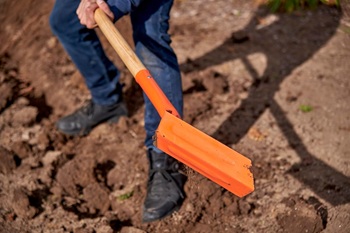 1. Corona SS 64104 General Purpose Trench Shovel
Corona has been manufacturing professional-grade garden and field tools since 1928, and this trench shovel reflects that lineage. The four-inch blade features a flat bottom with one-inch raised sides, which is a cleanout-style geometry designed to retain soil during removal. That design is most useful when you are pulling loose material out of an already-established trench rather than cutting initial channels.
The blade is 12-gauge steel with a high-angle closed-back socket for solid handle retention. The ash hardwood handle is lighter than fiberglass but still robust for most field conditions. If your trench work is in moderate soil without extreme freeze-thaw exposure, this is a well-built, proven tool from a manufacturer with a long commercial track record. The Bob Vila testing team rated this model as their top pick for trench shovels in head-to-head soil tests, noting it performed well in heavy clay.
Best for: precision cleanout work, moderate soil conditions, users who want a domestic-brand professional tool.
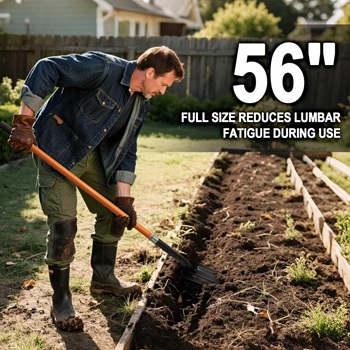 2. VNIMTI Trench Shovel, 4-Inch, 56-Inch Fiberglass Handle
VNIMTI produces a well-regarded line of narrow-blade digging tools, and this model addresses some of the practical field complaints about traditional trench shovels. The blade is high-carbon steel with a rust-resistant coating, and the 56-inch fiberglass handle with dual non-slip grip zones is built for extended use. The four-inch blade uses a V-shaped profile rather than a flat-bottom cleanout geometry, which means it cuts initial trenches more aggressively.
The fiberglass handle is the critical differentiator here for preppers. In wet conditions, a wood-handle shovel can swell or crack over a season of storage. Fiberglass handles maintain dimensional stability across temperature and humidity ranges, which matters if this tool is sitting in a vehicle, storage shed, or cache for months between uses. At just under four pounds, it is also light enough to pack without significant weight penalty.
Best for: cutting new trenches in varied soil, wet or humid storage conditions, preppers who want fiberglass over wood.
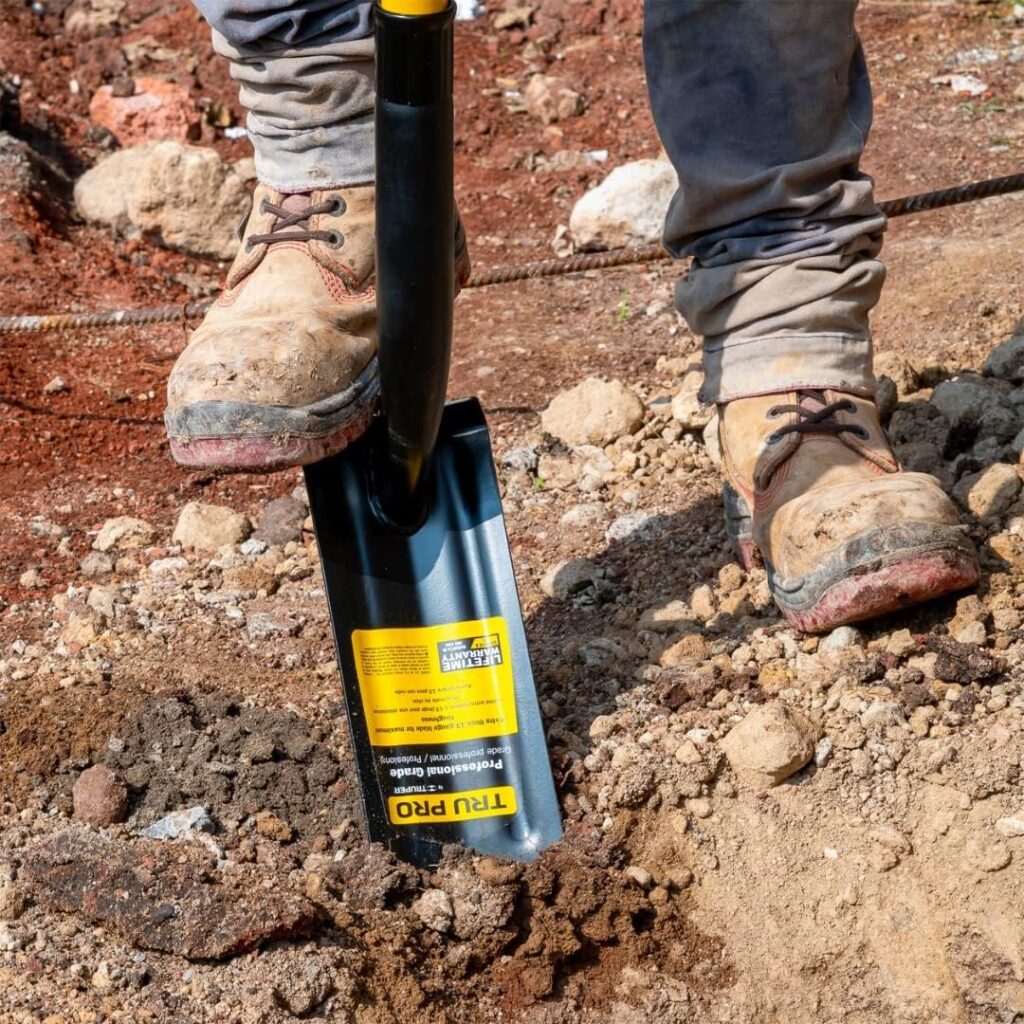 3. Truper TruPro California Trenching Shovel
Truper is a Mexican professional tool manufacturer with distribution throughout North America, and the 33436 model is their heavy-duty trenching option. The blade is 13-gauge steel at four inches wide, and the 48-inch fiberglass handle features a nine-inch non-slip cushion grip. The blade is attached to the handle with a crimped-steel collar ring, which eliminates the blade twist and socket separation that causes failures in cheaper tools under heavy lateral load.
The handle is shorter than the VNIMTI at 48 inches, which makes this a better choice for users under six feet who find 56-inch handles awkward. The extra-durable handle construction is rated to hold significant load, and the tool has a consistent track record in professional landscaping and utility contractor use where equipment gets used hard daily. According to independent reviews on BestAdvisor, the Truper is rated as the top pick for durability in demanding conditions.
Best for: heavy or rocky soil, users who prioritize handle durability and socket integrity, shorter handle preference.
Storage and Maintenance in a Prepper Context
A trench shovel stored incorrectly becomes a liability. Mud left on the blade traps moisture against the steel and accelerates rust. After any use in wet conditions, wipe the blade clean and apply a light coat of linseed oil or machine oil before storage. If the handle is wood, inspect it annually for cracking and treat with linseed oil to prevent drying and splitting.
For long-term cache storage, wrap the blade in an oiled rag before placing the shovel in its storage position. This is the same technique used by military armories for edge tools held in reserve. If you are storing a trench shovel in a vehicle kit, position it where it cannot slide or shift, as blade movement against other gear dulls the edge and damages surrounding equipment.
The
University of Georgia Cooperative Extension recommends cleaning carbon steel tools thoroughly between uses and storing them in dry conditions to prevent oxidation, a standard that applies directly to field survival tools.
Trench Shovel vs. Entrenching Tool: Understanding the Difference
A folding entrenching tool (e-tool) and a dedicated trench shovel are not interchangeable. An e-tool is compact and packable, making it a reasonable choice for a bug-out bag or vehicle emergency kit where space is the primary constraint. It is not, however, a high-efficiency digging tool. The folding joint is a mechanical weak point, the blade is typically small, and the short handle means you are working hunched over.
A dedicated trench shovel is a base camp or vehicle tool, not a carry tool. If your scenario involves establishing a fixed shelter location, building a defensive perimeter, or doing any sustained digging work, a full-size trench shovel is the correct choice. Most serious preppers maintain both: a compact e-tool in the bag and a full-size trench shovel at the cache, vehicle, or home base.
The distinction also matters for soil type. Clay, compacted hardpan, and root-heavy soil absolutely require the leverage advantage of a long-handle trench shovel. An e-tool used in those conditions will either break or cost you twice the energy for half the depth.
Skills Over Tools
A trench shovel is one of those tools people underestimate right up until the moment they desperately need one. It’s not flashy, but it directly solves problems that can break a survival situation—water flooding your shelter, sanitation failures, or the inability to dig in when conditions turn hostile. And that’s exactly the point most people miss: tools matter, but knowing how and when to use them matters more.
That’s where the The Wilderness Long-Term Survival Guide comes in.
This isn’t another gear list or surface-level prepper read. It’s a field-tested manual that shows you how to actually operate in real-world survival conditions—how to build proper drainage around a shelter so you don’t wake up in mud, how to establish sanitary latrine systems that won’t turn into a health disaster, and how to prepare defensive positions using tools like a trench shovel efficiently, not exhaustively.
Because here’s the reality:
Owning a trench shovel without understanding terrain, water flow, soil behavior, and positioning is like owning a rifle without knowing how to aim. You’ll have the tool… but not the advantage.
Inside this guide, you’ll learn how to:
- Choose the right ground for shelter placement (before you even start digging)
- Manage rainwater and runoff so your camp stays dry in bad weather
- Build practical, low-effort field sanitation systems that scale beyond one person
- Use terrain and digging tools for concealment and protection without wasting energy
- Think in terms of systems, not just individual tools
Most people prepare for comfort. This guide prepares you for reality.
If you’re serious about making your gear actually work for you when it counts, this is the kind of knowledge that turns a simple tool like a trench shovel into a real survival asset.
👉 Learn how to use what you have to stay alive: The Wilderness Long-Term Survival Guide
Final Assessment
A trench shovel is a force multiplier in a sustained survival scenario. It reduces the time and energy required to establish drainage, sanitation, and defensive positioning, and it does the job with far less physical cost than improvising with general-purpose tools. The three models listed above represent the practical range from proven professional brands to fiberglass-handle field options.
Buy the one that fits your soil type and storage conditions. Then maintain it properly so it works when you need it. In a long-duration emergency, the difference between a sharp, functional trench shovel and a rusted one stored incorrectly could be measured in hours of labor you no longer have the margin to spend.
You may also like:
 Solar Panels for Off-Grid Living: How to Build a System That Actually Works
You Probably Won’t Survive Off Grid Without This (VIDEO)
How to Light Charcoal Without Lighter Fluid – 7 Proven Methods Every Prepper Should Know
The Complete Guide to Finding the Best Generator for Home Use
Read the full article here