
Most people watch movies to be entertained. Preppers watch them differently. They watch for skills, for tactics, for systems of living that worked for thousands of years without a grocery store, a pharmacy, or a power grid.
Native American cinema, at its best, documents something that no survival manual quite captures: what it actually looked like to live in complete self-sufficiency with the land. The tracking, the hunting, the plant knowledge, the shelter construction, the community organization, the situational awareness that kept entire nations alive through winters and droughts and conflict for millennia.
The films on this list are not selected because they are feel-good stories or because they sanitize history. They are selected because they contain survival knowledge worth extracting, scenes worth pausing and studying, and perspectives on self-reliance that cut against everything modern convenience culture has conditioned us to believe about what humans need to survive.
Some of these films are Hollywood productions. Some are independent or foreign works. Some have been criticized for historical inaccuracies in other respects. None of that changes the survival value of what they depict. Watch with a notebook.
The Smithsonian National Museum of the American Indian documents the depth and sophistication of Indigenous ecological knowledge systems, many of which took thousands of years to develop and represent some of the most comprehensive land-based survival knowledge ever accumulated by any culture on earth.
Why Native American Films Are a Survival Education Resource
Indigenous peoples of North America lived in full self-sufficiency across every biome on the continent, from arctic tundra to desert southwest to temperate rainforest to open plains. They did this without refrigeration, without synthetic materials, without pharmaceutical medicine, and without any of the supply chain dependencies that modern preppers spend years trying to work around.
The skills that made this possible did not disappear. They were documented, practiced, and in many cases preserved. Films that depict pre-contact or early contact Indigenous life, when done with genuine attention to authenticity, show these systems in action in ways that text alone cannot convey.
A few skills categories that appear consistently across the films in this list and deserve specific study from a prepper perspective are listed below.
- Tracking and situational awareness: Reading compressed soil, broken vegetation, scat, feeding patterns, and behavioral signs to locate game, detect threats, and navigate terrain without instruments.
- Fire making without modern tools: Friction fire methods including hand drill and bow drill, coal-catching techniques, tinder bundle preparation from natural materials.
- Hunting and trapping: Bow construction and use, snare and trap placement, game processing, preservation through smoking and drying.
- Plant knowledge: Identification and use of edible, medicinal, and utilitarian plants in specific regional environments.
- Shelter construction: Tipi, wickiup, longhouse, and earth lodge designs using only naturally available materials. Insulation principles that kept people alive through extreme cold without modern materials.
- Water sourcing and purification: Spring identification, vessel construction for boiling, and knowledge of plant-based water indicators.
- Community and group survival dynamics: How roles were organized, how decisions were made under pressure, and how communities maintained function during crisis and conflict.
Research published through the Traditional Ecological Knowledge program at the University of Victoria documents how Indigenous land-based knowledge systems represent thousands of years of empirical observation about ecosystem function, species behavior, and sustainable resource use that has direct practical applications for modern wilderness survival.
12 Native American Movies Worth Studying for Survival Skills
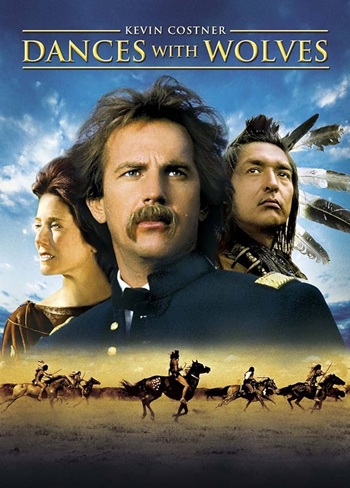 1. Dances with Wolves (1990)
Kevin Costner’s Oscar-winning film remains one of the most detailed depictions of Lakota Sioux life ever committed to mainstream cinema. The production team worked extensively with Lakota consultants and cast Native American actors in all Indigenous roles, resulting in a level of cultural and practical authenticity unusual for a Hollywood production of its era.
From a prepper’s perspective, the film is particularly valuable for its depiction of buffalo-based subsistence living on the Great Plains. Watch for how the Lakota camp is organized for rapid relocation, how sentries and scouts operate, how hunting parties coordinate across open terrain using hand signals and minimal communication, and how the tipi structure is erected, insulated, and ventilated. The smoke management system in a properly constructed tipi is a genuine engineering solution to indoor fire use without chimneys that took generations to optimize.
The film also shows camp security thinking that translates directly to modern group survival scenarios: perimeter awareness, approaching strangers protocols, and how trust is established with unknown parties who may or may not be threats.
Survival skills to study: Camp organization for mobility, tipi construction and fire management, horse-based scouting tactics, large game processing on the plains.
 2. The Revenant (2015)
Alejandro González Iñárritu’s brutal survival film is set in 1820s frontier wilderness and features extensive interaction between Hugh Glass and Arikara warriors. While the protagonist is a white fur trapper, much of the practical survival knowledge depicted in the film reflects Indigenous techniques absorbed through years of living on the land.
The Revenant is essential viewing for its depiction of extreme cold weather survival without modern equipment. The improvised shelter scenes, the raw caloric management under physical stress, and particularly the controversial but historically documented use of a horse carcass as an emergency bivouac shelter are extreme-condition solutions that represent genuine field knowledge.
The Arikara scenes show tracking and pursuit tactics across snow-covered terrain that are worth careful study. Following a trail in snow without being detected, managing footfall noise, and reading disturbed snow for information about the target’s pace, weight distribution, and direction of travel are all depicted with reasonable accuracy.
Survival skills to study: Extreme cold improvised shelter, tracking in snow, fire starting in wet conditions, caloric management under extreme physical stress, wound treatment without medical supplies.
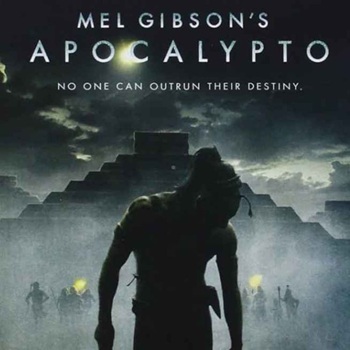 3. Apocalypto (2006)
Mel Gibson’s Mesoamerican survival film is set among the Maya civilization and follows a jungle villager fleeing capture. While the Maya are not a North American Indigenous nation, the film’s survival content is sufficiently relevant and unique to earn its place on this list.
The opening village sequences, before the story turns to pursuit, contain detailed depictions of jungle subsistence living including tapir hunting with pit traps, root and plant harvesting, and the social organization of a small self-sufficient community. Pay particular attention to the hunting scene. The pit trap design, the driving behavior used to channel the animal, and the team coordination required are all techniques with direct modern application for anyone building a wilderness subsistence hunting strategy.
The pursuit sequences that dominate the second and third acts are essentially a masterclass in evasion and environmental use. The protagonist uses river systems, terrain features, and predator behavior to neutralize the tactical advantages of his pursuers. For preppers thinking about bug-out scenarios involving pursuit or evasion, the tactical thinking in this film is worth extended study.
Survival skills to study: Jungle pit trap construction, pursuit evasion using terrain and water, environmental hazard weaponization, small community self-sufficiency organization.
 4. Atanarjuat: The Fast Runner (2001)
This Inuit-language Canadian film is one of the most authentic Indigenous survival films ever made. Produced entirely by Isuma Productions, an Inuit-owned production company, with an all-Inuit cast and crew, it depicts Inuit life in the Canadian Arctic with a level of practical accuracy that no outside production has matched.
The film is essential viewing for arctic and extreme cold survival knowledge. Watch specifically for igloo and snow shelter construction techniques, the layering and design of traditional Inuit clothing, ice travel and navigation, seal hunting methods through ice, and the community food sharing and storage systems that kept arctic populations alive through months of darkness and extreme cold.
The clothing system depicted deserves particular attention. Traditional Inuit garment design solved the moisture management problem that modern outdoor gear technology spends billions of dollars trying to address. The layering principle, the ventilation design, and the use of air pockets for insulation are engineering solutions that work at temperatures no synthetic system fully matches.
Survival skills to study: Snow shelter construction, arctic cold weather clothing systems, ice hunting and fishing, food preservation in extreme cold, navigation without landmarks in featureless terrain.
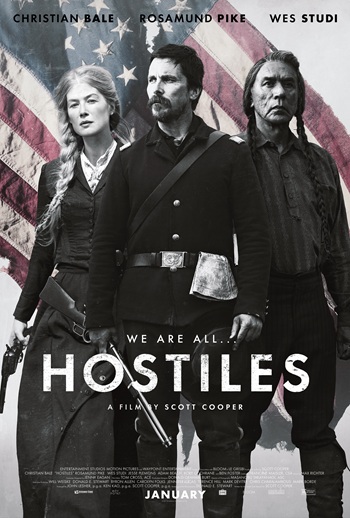 5. Hostiles (2017)
Scott Cooper’s revisionist Western follows a U.S. Army detail escorting a Cheyenne war chief and his family across hostile territory. The film is less a survival skills showcase and more a study in group dynamics under sustained threat, but the Cheyenne characters contribute specific practical knowledge throughout.
From a prepper perspective, the film’s most instructive content is its depiction of travel and security protocols for a small group moving through hostile terrain. Watch how the party manages scouting, how camp is established and defended at night, how the group handles a threat contact and recovers from casualties, and how information is communicated and acted on under pressure. These are small-unit tactics that apply directly to multi-person bug-out or patrol scenarios.
The Cheyenne elder Yellow Hawk demonstrates plant-based wound treatment in several scenes. The field medicine depicted is consistent with documented Cheyenne healing practices and is worth noting for anyone building an herbal field medicine knowledge base.
Survival skills to study: Small group movement security, camp defense and sentry protocols, field wound treatment, decision-making under stress in a multi-person survival group.
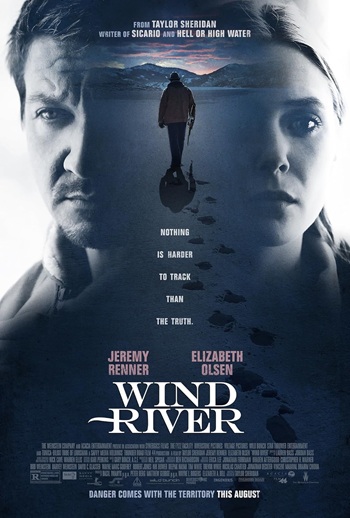 6. Wind River (2017)
Taylor Sheridan’s crime thriller set on the Wind River Indian Reservation in Wyoming is not strictly a historical survival film, but it contains some of the most detailed and accurate depictions of modern tracking and winter wilderness survival in any recent film. The Arapaho and Shoshone characters demonstrate knowledge that is rooted in traditional Indigenous land skills applied to a contemporary setting.
The tracking sequences throughout the film are exceptional from a practical standpoint. Reading animal and human sign in snow, interpreting disturbance patterns in the environment, and reconstructing events from physical evidence are depicted with a precision that reflects genuine tracking discipline. Jeremy Renner’s character, a wildlife tracker for the U.S. Fish and Wildlife Service, demonstrates specific techniques including aging tracks by ice crystal formation, reading stride length and pressure distribution to determine pace and body condition, and following a cold trail through wind-disturbed snow.
The film also depicts how extreme cold kills in physiological terms, which is valuable survival education in itself. Understanding the progression from cold stress to hypothermia to death, and what the body shows at each stage, is knowledge that could save your life or someone else’s in a winter emergency.
Survival skills to study: Advanced snow tracking and sign reading, track aging in cold conditions, hypothermia recognition and progression, winter wilderness navigation.
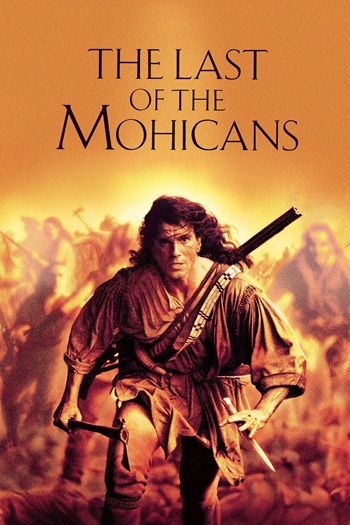 7. The Last of the Mohicans (1992)
Michael Mann’s adaptation of the Cooper novel, starring Daniel Day-Lewis, is set during the French and Indian War and features Mohican characters whose survival skills are central to the film’s action throughout. The film worked with historical consultants and depicts frontier wilderness survival with more practical detail than most period films of its era.
The opening sequence alone is worth studying for its depiction of moving through dense forest at speed while hunting. The awareness, the minimal environmental disturbance, the ability to move fast without noise are qualities that take years to develop and are depicted here better than in almost any other film. The characters demonstrate what truly capable woodsmen move and think like.
The film’s depiction of forest ambush tactics, split-second decision-making in contact situations, and the use of terrain for concealment and cover are tactical lessons applicable to anyone thinking seriously about security in a collapse scenario. The Mohican elder Chingachgook and his son Uncas demonstrate situational awareness and threat assessment at a level worth studying carefully.
Survival skills to study: Silent forest movement, ambush and counter-ambush awareness, terrain use for concealment, musket handling and reload under pressure, wilderness navigation at speed.
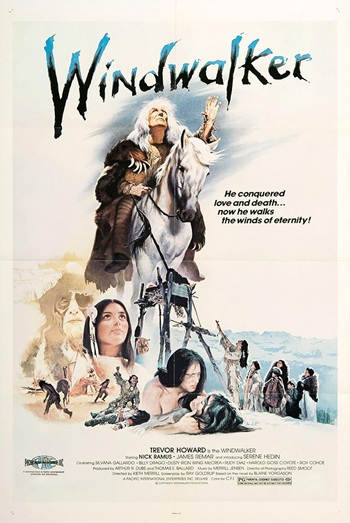 8. Windwalker (1980)
This largely forgotten film starring Trevor Howard is notable for being the first mainstream American film shot entirely in a Native American language, specifically Northern Cheyenne. It depicts Cheyenne tribal life across decades with a level of cultural detail that was unusual for 1980 and remains instructive today.
The film is particularly valuable for its depiction of intergenerational knowledge transfer in a pre-literate survival culture. Every skill the community depends on for survival, from hide tanning to bow making to plant gathering to weather reading, is shown being taught from elder to child. For preppers thinking about community resilience and long-term skills preservation, this is a model worth studying. A group where knowledge lives only in one person is catastrophically vulnerable. A group where every critical skill has multiple carriers and active apprentices is genuinely resilient.
The winter survival sequences in the film are authentic and detailed. Watch specifically for the emergency shelter construction, the methods used to stay warm with minimal fire in enemy proximity, and the food management under scarcity.
Survival skills to study: Intergenerational skills transfer systems, hide tanning and natural materials processing, winter survival with minimal fire, bow construction.
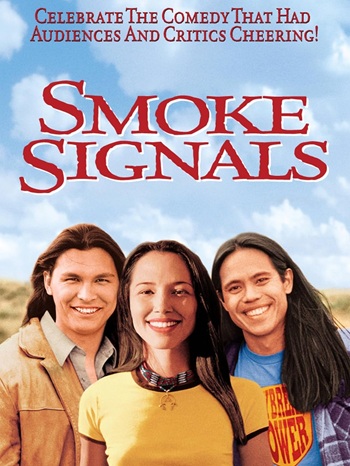 9. Smoke Signals (1998)
The first feature film written, directed, and co-produced by Native Americans, Smoke Signals is a contemporary story set on the Coeur d’Alene Reservation in Idaho. It is not a historical survival film, and including it on a prepper list requires explanation.
The film earns its place here because it is one of the most honest and unsentimental depictions of post-collapse community resilience available on screen. The reservation in this film is effectively a community operating in conditions that mirror many collapse scenarios: chronic resource scarcity, infrastructure that barely functions, disconnection from the broader economy, and a population that has learned to solve problems with what is locally available.
Watch how characters improvise transportation, share resources without formal economy, maintain community cohesion under chronic stress, and navigate humor and grief simultaneously. These are the social skills of a resilient community that has been living through a slow-motion crisis for generations. The practical ingenuity is worth studying as much as the more dramatic survival skills depicted in historical films.
Survival skills to study: Community resource sharing under scarcity, improvised transportation and logistics, maintaining social cohesion under chronic stress, problem-solving with limited resources.
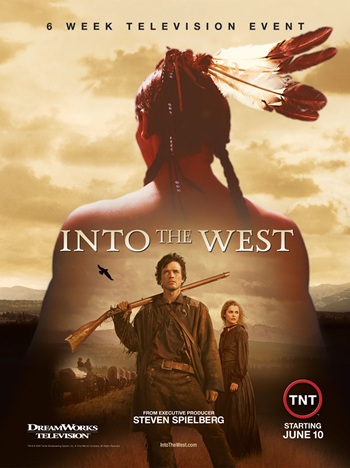 10. Into the West (2005 Miniseries)
This six-part Steven Spielberg-produced miniseries covers the settlement of the American West from the 1820s through the 1890s from both settler and Lakota perspectives. At roughly nine hours of total runtime, it is the most comprehensive depiction of plains Indigenous survival life in any screen production.
For preppers, the miniseries is invaluable for its extended, detailed portrayal of complete plains subsistence living across seasons. You see summer hunting camps, winter survival strategies, food preservation for lean seasons, medicinal plant use, horse-based mobility and logistics, and the full cycle of a self-sufficient nomadic community over decades.
The series also depicts in unflinching detail what happens to a self-sufficient community when external forces systematically destroy its food supply and resource base. For anyone thinking about what genuine collapse looks like and how communities respond, the later episodes showing the destruction of the buffalo herds and the forced reservation transitions are as relevant as any theoretical prepper scenario.
Survival skills to study: Complete seasonal survival cycle on the plains, large-scale food preservation, community adaptation to resource destruction, maintaining group cohesion under existential pressure.
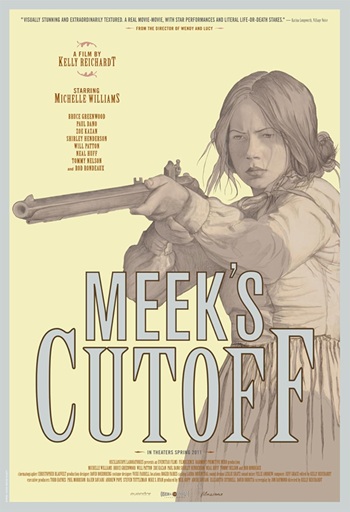 11. Meek’s Cutoff (2010)
Kelly Reichardt’s spare, austere film follows a wagon train that has become lost in the Oregon high desert in 1845. The survival content centers on a Cayuse captive whose knowledge of the desert landscape represents the group’s only real hope of finding water and surviving.
The film’s central prepper lesson is one of the most important on this list: the person who knows the land is the most valuable survival asset in any group, regardless of their social status, language, or the group’s prior assumptions about who holds authority. The wagon train settlers have firearms, supplies, and organizational structure. The Cayuse man has the knowledge that actually determines whether they live or die.
The desert water-finding sequences are realistic and instructive. Watching how an experienced desert traveler reads terrain for water indicators, including plant species patterns, soil discoloration, bird behavior, and insect concentration, is genuinely educational for anyone who may need to find water in arid environments without a map or a phone.
Survival skills to study: Desert water finding through environmental indicators, arid terrain navigation, plant and animal behavioral indicators for water location, group decision-making under existential uncertainty.
 12. Prey (2022)
Dan Trachtenberg’s Predator prequel, set in 1719 Comanche territory, is the most recent film on this list and one of the most practically instructive for survival skills despite its science fiction premise. The film was made in close collaboration with Comanche Nation consultants, features a Native American cast, and was released simultaneously in the Comanche language.
The protagonist Naru is a skilled hunter and medicine woman whose combination of tracking ability, plant knowledge, and tactical intelligence drives the entire film. The tracking sequences are exceptional and show specific techniques including reading compressed grass and soil, aging track freshness by moisture and edge crispness, and following a trail through mixed terrain. The plant medicine sequences depict genuine Comanche pharmacopeia knowledge including a blood-coagulation herb that functions as a field hemostatic agent.
The film’s tactical content is its most valuable prepper element. Naru consistently defeats a technologically superior opponent by using terrain, environmental knowledge, and the enemy’s own behavioral patterns against it. This is the fundamental principle of asymmetric survival: knowing your environment better than the threat knows it is a force multiplier that compensates for every material disadvantage.
The Comanche Nation’s official endorsement of the film is worth noting. A nation endorsing a Hollywood film’s depiction of their ancestors reflects a level of cultural authenticity that is unusual in mainstream cinema.
Survival skills to study: Advanced tracking techniques, plant-based field medicine, asymmetric tactical thinking, using superior terrain knowledge to defeat a better-equipped opponent.
From Screen to Practice: The Skills Worth Developing
Watching these films gives you awareness and inspiration. It does not give you the skills themselves. The survival knowledge depicted in these movies took years of practice and mentorship to develop in the people who originally held it. A film can show you what friction fire looks like. It cannot give you the muscle memory to produce a coal in under two minutes in wet conditions.
The following skills appear consistently across the films on this list and have the highest practical return on investment for a prepper willing to commit to genuine practice.
Tracking
Tracking is arguably the most transferable land-based survival skill depicted in Native American cinema, and it is dramatically underrepresented in modern survival training. The ability to read a landscape for human and animal sign, determine direction, pace, and elapsed time from physical evidence, and follow a trail through variable terrain has applications in hunting, scouting, security, and search and rescue.
Tom Brown Jr.’s tracking school and the work of the Tracker School represent the most rigorous Western teaching tradition of Indigenous tracking skills. The work of Louis Liebenberg on the scientific basis of tracking, published through CyberTracker Conservation, documents the cognitive and observational systems underlying expert Indigenous tracking and provides a structured learning framework.
Friction Fire
Every film on this list depicts fire starting without modern tools in some context. Friction fire via hand drill or bow drill is a skill that genuinely saves lives in extended wilderness emergencies and is one of the few survival skills that cannot be substituted with gear if your gear is lost or wet. It requires practice measured in hours, not minutes, to achieve reliable results. Find a local primitive skills instructor or wilderness school and take a hands-on course.
Plant Knowledge for Your Region
The plant knowledge depicted in these films is region-specific. Plains tribes knew plains plants. Desert nations knew desert plants. Arctic peoples knew tundra species. The most useful thing you can do with the plant knowledge inspiration from these films is find the equivalent knowledge for your own bioregion. Identify the edible, medicinal, and utilitarian plants within a day’s walk of your home or bug-out location and learn them to the level of confident field identification and preparation.
Shelter Construction from Natural Materials
The shelter systems depicted across these films, from Lakota tipis to Inuit igloos to jungle debris shelters, all demonstrate the same fundamental principle: a properly constructed natural shelter from locally available materials outperforms improvised modern gear in most wilderness survival scenarios. Take a hands-on wilderness survival course that teaches debris shelter and primitive shelter construction in your regional environment. The Aboriginal Living Skills School and similar programs offer intensive immersive training in these techniques.
A Note on Historical Accuracy and Respect
Not every film on this list is equally accurate, and several have been criticized by Native scholars and community members for specific inaccuracies or problematic elements. Dances with Wolves has been praised for its Lakota language authenticity and criticized for its white savior narrative framing. Apocalypto has been criticized by Maya scholars for mixing cultural elements from different time periods. The Last of the Mohicans plays loose with historical detail in several respects.
None of this makes the survival content depicted in these films less valuable to extract and study. It does mean that a prepper approaching them as survival education resources should also approach them with awareness of their limitations as cultural documents.
If the films on this list spark genuine interest in Indigenous survival knowledge, the most respectful and practically effective way to deepen that knowledge is through direct engagement with Indigenous-led educational programs. The National Museum of the American Indian maintains extensive resources on Indigenous knowledge systems. Many Native-led survival and land skills schools across North America teach traditional techniques directly from within the communities that developed them.
The Oldest Survival Manual Ever Written Is the Land Itself
The people depicted in these films solved every problem that modern preppers spend thousands of dollars on gear trying to address. Food security. Water sourcing. Shelter in extreme conditions. Medical care without pharmaceuticals. Group security without technology. Energy independence from any external system.
They solved these problems not with better gear but with deeper knowledge. Knowledge of their land, their plants, their animals, their climate, and their own physical and social capabilities under pressure. That knowledge is not gone. It is preserved in these films, in written ethnographies, in living traditions, and in people who still practice and teach it.
Watch these films with a notebook. Write down every specific skill you see. Research the technique. Find someone who teaches it. Then go outside and practice until the knowledge lives in your hands, not just your head.
That is the standard these films model. Everything else is preparation theater.
Frequently Asked Questions
What is the most accurate Native American survival film?
Atanarjuat: The Fast Runner is widely considered the most culturally and practically authentic Indigenous survival film ever made, produced entirely by and for the Inuit community with no outside interference in the cultural content. For Plains Nations survival knowledge, Dances with Wolves and Into the West both worked extensively with Lakota consultants and are considered more accurate than most Hollywood productions in their depiction of practical skills.
Which film has the best tracking scenes?
Wind River contains arguably the most detailed and technically accurate tracking sequences in any recent film, with specific techniques shown in enough detail to be instructive rather than merely atmospheric. Prey is the best depiction of tracking as active tactical intelligence, showing how tracking information is used in real time to make decisions under threat. The Last of the Mohicans depicts the movement and awareness of skilled woodsmen better than any other film on this list.
Are any of these films made by Native American filmmakers?
Yes. Smoke Signals was the first feature film written and directed by a Native American filmmaker and remains a landmark in Indigenous cinema. Atanarjuat: The Fast Runner was produced entirely by an Inuit-owned company with an all-Inuit cast and crew. Prey was developed in close collaboration with Comanche Nation consultants and was simultaneously released in the Comanche language. Several of the miniseries episodes in Into the West were directed by Native American directors.
What survival skills are most practically useful to learn from these films?
Tracking is the highest-return skill depicted consistently across these films and the most underrepresented in modern survival training. Friction fire is the most critical no-gear skill. Regional plant knowledge has the highest immediate practical value for anyone building a self-sufficiency skill set. Shelter construction from natural materials is the most directly life-saving skill in genuine wilderness emergencies.
Are there books that go deeper on the survival knowledge shown in these films?
Tom Brown Jr.’s tracker and wilderness survival series draws directly on Apache tracking and survival traditions and provides detailed instruction in many of the skills depicted on screen. Robin Wall Kimmerer’s Braiding Sweetgrass documents Indigenous plant knowledge systems with depth and precision. Mors Kochanski’s Bushcraft covers northern wilderness survival with reference to Indigenous Canadian techniques. For tracking specifically, Louis Liebenberg’s The Art of Tracking: The Origin of Science is the most scientifically rigorous treatment of Indigenous tracking methodology available.
Continue Learning the Skills That Kept Entire Civilizations Alive
The survival knowledge depicted in these films is not theoretical. It is not experimental. It is not based on assumptions or modern convenience.
It worked.
For thousands of years, Indigenous peoples across North America lived without supply chains, without pharmacies, without supermarkets, and without electricity. They hunted, tracked, preserved food, treated illness with plants, built shelters from raw materials, and maintained resilient communities capable of surviving droughts, winters, conflict, and displacement.
These were not hobby skills. They were the difference between life and death.
Modern preppers often try to solve survival problems by buying more gear. But gear fails. Batteries die. Supply chains collapse. Tools break or get lost.
Knowledge stays.
The Lost Ways II was created to preserve the exact type of practical, land-based survival knowledge you see depicted in these films. It documents time-tested techniques used by frontiersmen, early settlers, and traditional communities who lived in full self-sufficiency long before modern infrastructure existed.
Inside, you will discover:
- How people preserved meat for months or years without refrigeration
- Forgotten methods for building shelter using only natural materials
- Primitive cooking techniques that require no modern kitchen
- Traditional fire-starting methods that work even when matches fail
- Food sources that grow naturally in the wild but are rarely recognized today
- Survival solutions developed during times when supply chains did not exist
- Practical skills that can still be applied today in both rural and urban scenarios
These are the same categories of knowledge you see reflected in Native American tracking techniques, plant medicine traditions, friction fire skills, and seasonal food preservation systems.
Skills that allowed entire cultures to survive with complete independence from centralized systems.
If the films in this guide sparked your interest in real self-reliance, The Lost Ways II takes that curiosity further by showing how ordinary people historically solved the same survival challenges we prepare for today.
This is not theory. These are documented methods that have already been tested by history.
When modern systems fail, the people who endure are the ones who know how to produce what they need, repair what they have, and adapt using the resources available around them.
If you want to move beyond preparation as an idea and begin building genuine capability, this is knowledge worth having.
👉 Discover the forgotten survival skills inside The Lost Ways II here!
Because the most reliable survival tool has always been knowledge that cannot be taken away.
You may also like:
 EMP Movies That Do More Harm Than Good
The EMP-Proof Shelter You Need to Build Before It’s Too Late (VIDEO)
End-of-the-World Movies Every Prepper Should Watch
Martial Law Movies You Should Watch
Read the full article here