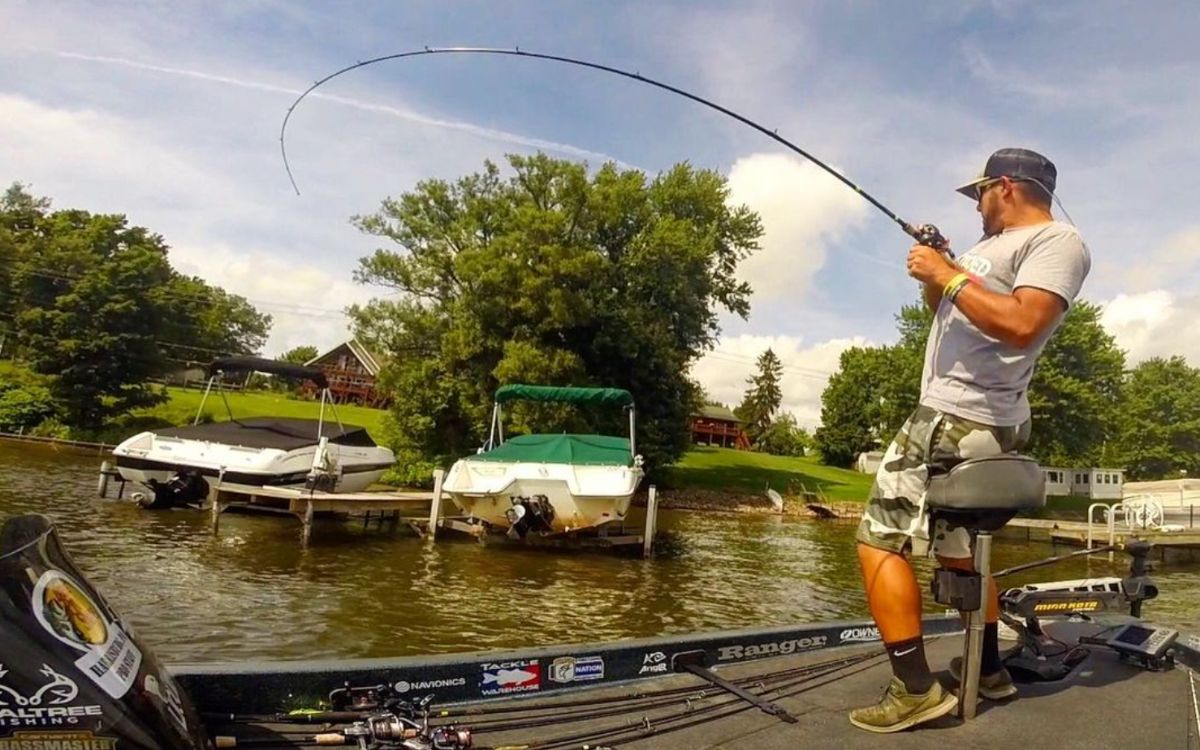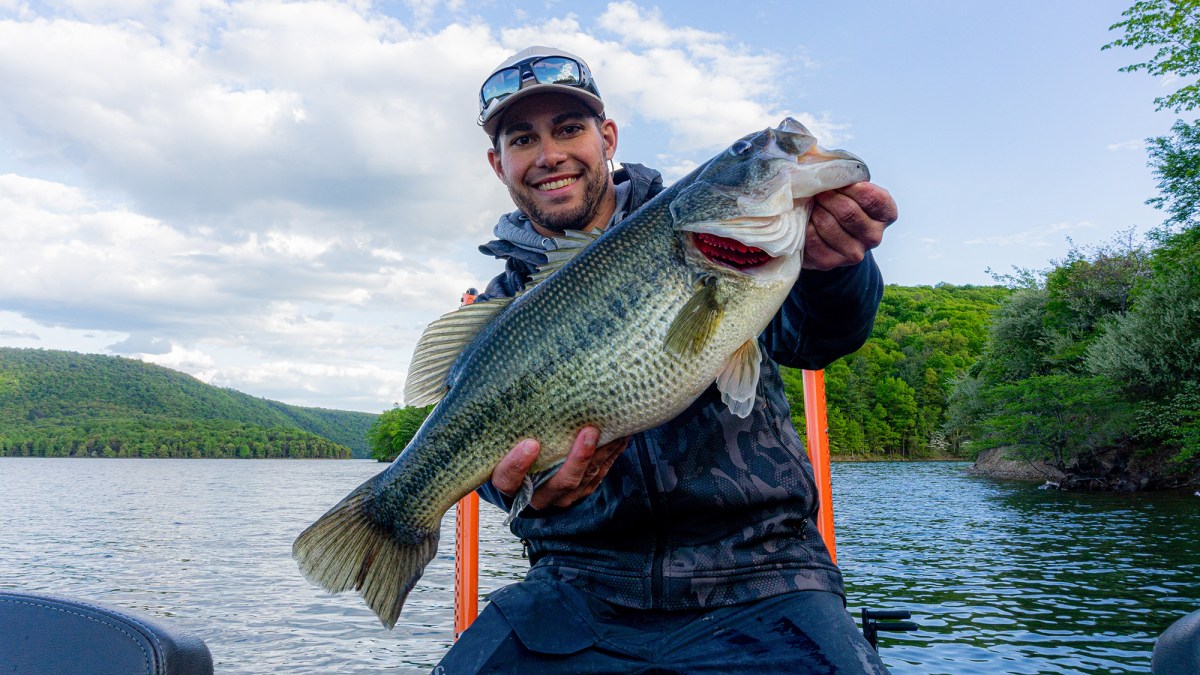

Whenever I scroll through my photo gallery of big bass, I’m always struck by the fact that I catch my biggest bass of the year in spring. Now, it’s not a groundbreaking statement to say that spring is the best time to catch giant largemouth — at least not for those who understand bass biology. In spring, female bass are full of eggs, pushing to the shallows to find a place to spawn as the water warms. Those giant egg-filled bellies only grow larger as bass take advantage of the massive balls of baitfish that congregate as the ice melts.
So, given that spring is the best time to catch the biggest bass due to those feeding patterns and spawn cycles, I wanted to give you a deeper look into exactly when, where, and how to target these monster pre-spawn females.
The Best Time to Catch a Big Bass in the Spring
Spring can mean different things to different anglers in different regions. So rather than guessing on that magical timeframe, there’s an easier equation to use to dial in the bite window where you fish.
As the ice comes off the lake and the water begins to warm into the low 40’s, most of the bass are still going to be congregated in the large basins of the lake or river, still lethargic and waiting for warmer water before they really start feeding heavily. A few weeks after ice off, with the right temperatures and a few warm rains, you’ll start to see a shift occur. The shift is typically accompanied by water temperatures in the high 40’s or low 50’s.
The bass will begin to move out of their deep water winter haunts and begin staging on steep banks and bluff walls. Still in deeper water, not flooding to the shallow creek banks just yet, but this is a signal that the time to target a giant bass is right around the corner.
As the days get longer and the water temperatures rise into the mid to high 50’s, the dogwoods will begin to bud, and you may even hear a turkey gobble in the distance, then you’ll know it’s time.
As this transition from bluff walls and steep banks begins, you’ll start to see smaller “buck” bass rushing to the shoreline. They won’t be ready to spawn just yet, but they’re beginning to look for the right spot. When this occurs, the big females that are full of eggs and baitfish will be lurking nearby on the first drop-off, typically around structure.
They’ll stay there for days or even weeks, waiting for the right time to push into the shallows and lock down on a bed to spawn. This time period where they’re shallow enough to target, just barely offshore, is when you’ll find the biggest bass are chewing.
Where to Catch a Big Bass in the Spring
As I said, the big bass this time of year can be found on the first drop-off. An easier way to put it might be to call it the first ledge off of the super-shallow water.
This can mean a lot of different depths depending on where you’re fishing and what part of the lake you’re fishing. On certain bodies of water, it could be as deep as 25 feet; on others, it could be as shallow as 5 feet. It all depends on the shoreline contours at your local waterbody.
To help give you an idea of what you’re dealing with, even if you’re a kayak or shore angler, I recommend checking out the Navionics Web App.
Above is an example map of areas to look for at your local lake or river. The blue represents super shallow water, while the tight black lines indicate the first drop off. Fishing right on the edge of that steep first drop is the best place to catch the biggest bass of your life this spring.
How to Catch a Big Bass in the Spring
Lucky for you, the how-to part of this equation isn’t incredibly difficult to grasp. Here’s what I’ve found to work in a variety of spring bass lakes.
The big bass baits are your friend. Glide baits, large soft-plastic swimbaits, big mop jigs, or heavy chatterbaits just to name a few. These baits have pulling power, they get the attention of bass in the area and these large females just can’t seem to get enough of them at this time of year. My personal favorite is the Megabass Magdraft 6- or 8-inch model. I fish it along the banks in 10- to 15-feet of water, cruise it by submerged tree tops or stump fields and hang on.
The key for using big baits in spring is to find clearer water, especially if you’re opting for a swimbait. In the clearer water, those bigger bait profiles have even more pulling power, grabbing the attention of a big bass from farther away than in muddier conditions. Typically, you’ll see a large shadow come out of the depths or off of a piece of structure and hunt behind the bait. Erratic action like pumping the reel handle or snapping the rod tip is a great way to trigger the strike once they’re following your lure.
Now, you don’t have to opt for a big bait, plenty of giant largemouth are caught this time of year with strolling techniques, drop shots, Ned rigs, and other finesse tactics too. But I’ve always found that the bigger baits help me target those larger than average bass this time of year, which is the goal if you’re trying to break your personal best.
Read Next: 3 Big Bass Baits You Should Throw This Spring
No matter if you’re a shore angler, in a kayak, your grandfather’s jon boat, or a bass boat, this magical window in the spring is one you don’t want to miss. The weather is warm and inviting and the fish are biting. If you just so happen to hook into the biggest bass of your life while you’re out there, that’s an added perk.
Read the full article here