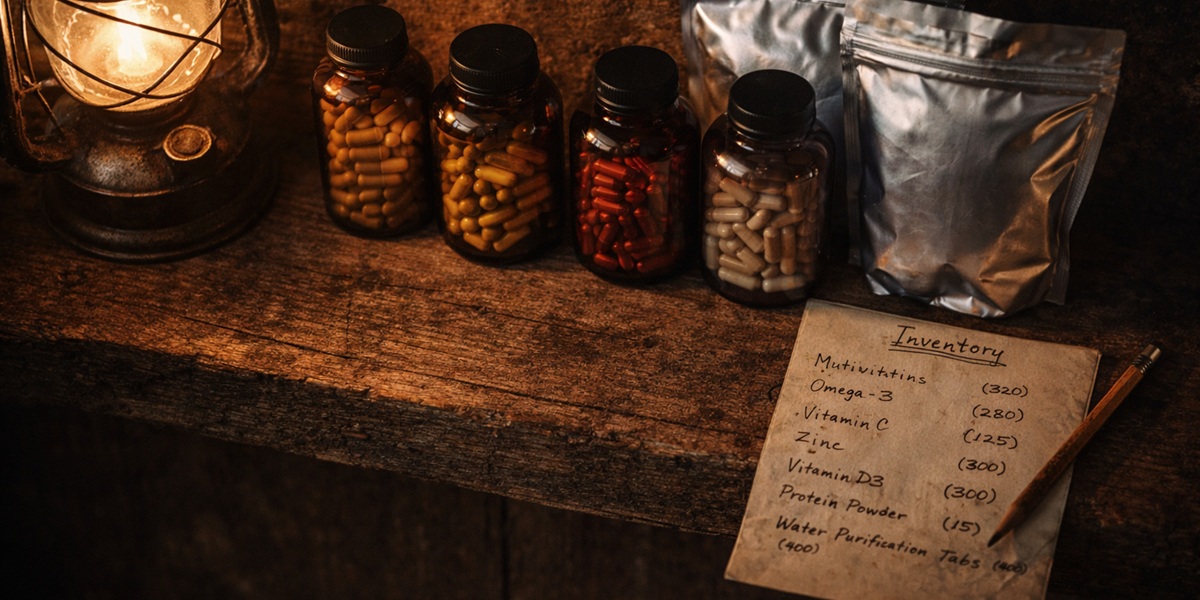

Most preppers spend considerable thought on food and water. Fewer think seriously about nutrition at the micronutrient level, and that gap can become a real problem in a prolonged emergency. When your diet is built around stored staples like rice, beans, canned goods, and freeze-dried meals, it is functional but nutritionally incomplete. Sure, you can opt for more advanced options like fenbendazole 444 mg but in the long run, you need the basics. These foods keep you alive and provide calories, but they are often low in specific vitamins, minerals, and fatty acids that your body needs to maintain immune function, wound healing, cognitive performance, and bone integrity over time.
Supplements are not a replacement for whole food nutrition. But in a grid-down or supply-chain disruption scenario where fresh produce, dairy, and a varied diet are unavailable for weeks or months, a well-chosen supplement stockpile becomes a meaningful buffer against deficiency.
This guide covers which supplements are worth storing, why each one matters in a survival context, how to evaluate shelf life, and how to store them correctly so they last.
Vitamin D: The One Most People Are Already Deficient In
Vitamin D deficiency is already widespread in the general population under normal circumstances. In a prolonged emergency where time indoors increases and access to sunlight decreases, that problem compounds fast.
Vitamin D plays a central role in immune system regulation, calcium absorption, bone strength, and mood. Deficiency is associated with increased susceptibility to respiratory infections, muscle weakness, and depression. For preppers managing a high-stress, physically demanding situation, all of these matter.
The NIH Office of Dietary Supplements notes that most adults need 600 to 800 IU per day, with upper tolerable intake set at 4,000 IU for long-term use. Many physicians now recommend 1,000 to 2,000 IU daily for general maintenance, particularly in northern latitudes or for individuals who spend limited time outdoors.
Vitamin D3 in gel capsule or softgel form has the best shelf stability and bioavailability. Stored in a cool, dark location, quality D3 supplements retain potency well past their printed expiration dates. Stockpiling 1,000 to 2,000 IU capsules gives flexibility to adjust dosing by person and season.
Vitamin C: Immune Support and Wound Healing
Scurvy is not a medieval disease. It is what happens when a person goes without adequate vitamin C for an extended period, and the symptoms begin appearing within four to six weeks of elimination from the diet. Fresh fruits and vegetables are the primary source of vitamin C, and in a serious emergency, both become scarce quickly.
Vitamin C is essential for collagen synthesis, which means wound healing, skin integrity, and vascular function all depend on it. It also plays a direct role in immune response and acts as an antioxidant that reduces inflammation.
According to the NIH Office of Dietary Supplements on Vitamin C, the recommended dietary allowance for adult men is 90 mg per day and for adult women is 75 mg, with the tolerable upper limit at 2,000 mg. In a situation where physical stress is high, some practitioners recommend higher maintenance doses, though excess intake causes gastrointestinal distress.
Ascorbic acid powder is the most economical form for stockpiling and stores well in sealed, airtight containers away from moisture and light. Tablet forms are convenient and durable. Avoid chewable forms for long-term storage as they tend to degrade faster.
Magnesium: The Deficiency Nobody Talks About
Magnesium is involved in over 300 enzymatic processes in the human body, including muscle function, nerve transmission, protein synthesis, and blood pressure regulation. It is also required for the activation of vitamin D, which means deficiency in one compounds deficiency in the other.
Modern diets are already low in magnesium due to soil depletion and processed food consumption. Stored food diets built around grains and legumes are not reliable sources of readily absorbed magnesium. Physical stress, heavy sweating, and poor sleep, all hallmarks of an emergency situation, further increase magnesium requirements.
The NIH Office of Dietary Supplements on Magnesium sets the recommended dietary allowance at 400 to 420 mg per day for adult men and 310 to 320 mg for adult women. Symptoms of deficiency include muscle cramps, irregular heartbeat, anxiety, poor sleep, and fatigue, all of which are serious liabilities in an emergency.
Magnesium glycinate and magnesium malate are among the most bioavailable and gentlest forms for daily use. Magnesium oxide is cheap and widely available but poorly absorbed. Choosing a better-absorbed form means you get more effect per dose, which matters when supply is limited.
Zinc: Immune Defense and Tissue Repair
Zinc is critical for immune cell function, wound healing, DNA synthesis, and protein metabolism. Deficiency impairs the immune response at a fundamental level, slowing wound closure and reducing the body’s ability to fight infection. In a scenario where medical care is unavailable and minor injuries carry real infection risk, zinc status matters.
Populations most at risk for zinc deficiency include vegetarians, people relying heavily on grain-based diets, older adults, and anyone under chronic physical stress. A survival diet heavy in beans, grains, and canned goods without adequate animal protein can tip someone into deficiency over weeks.
According to the NIH on Zinc, the recommended dietary allowance for adult men is 11 mg per day and for adult women is 8 mg. The tolerable upper limit is 40 mg per day. Long-term zinc supplementation above 25 mg daily should be paired with copper supplementation to prevent copper depletion, an important detail for preppers planning multi-month stockpiles.
Zinc gluconate and zinc picolinate are well-absorbed forms suited to daily supplementation. Zinc acetate lozenges are specifically useful for respiratory illness symptom management. Stocking both gives you options.
Omega-3 Fatty Acids: Inflammation Control and Brain Function
Standard survival food stockpiles are heavy in omega-6 fatty acids from vegetable oils and processed foods, and nearly devoid of omega-3s. This imbalance promotes systemic inflammation, which over time affects cardiovascular health, joint function, cognitive performance, and mood.
Omega-3 fatty acids, specifically EPA and DHA, play a direct role in reducing inflammatory response, supporting cardiovascular function, maintaining cognitive clarity under stress, and regulating mood. In a prolonged emergency where decision-making matters and physical stress is constant, brain and cardiovascular health are operational assets, not abstract concerns.
The NIH Office of Dietary Supplements on Omega-3 Fatty Acids notes that most adults consume inadequate omega-3s. Fish oil providing 1,000 to 2,000 mg of combined EPA and DHA daily is a commonly used maintenance dose.
Fish oil is the primary stockpile option. The challenge is shelf stability: fish oil oxidizes and goes rancid relatively quickly, typically within 18 to 24 months of production when properly stored. Buy from brands that use nitrogen-flushed capsules, store in a cool dark location, and rotate stock diligently. Algae-based omega-3 supplements are a vegan alternative with similar EPA and DHA profiles and often better oxidative stability.
Vitamin B Complex: Energy, Neurological Function, and Stress Response
The B vitamins are a group of eight water-soluble nutrients that work together to support energy metabolism, neurological function, red blood cell production, and the body’s stress response. They are found in a range of whole foods, but prolonged reliance on shelf-stable staples can create gaps in several of them.
Vitamin B12 is found almost exclusively in animal products. A survival diet that reduces meat and dairy intake will deplete B12 stores over months, and B12 deficiency leads to serious neurological damage that is not always reversible. Folate, B6, and B1 are also commonly under-supplied in grain-heavy stored food diets.
The NIH guidance on B12 notes that deficiency can develop slowly but causes progressive neurological damage including memory problems, numbness, difficulty walking, and psychiatric symptoms. Adults over 50 absorb B12 less efficiently and are particularly vulnerable.
A B-complex supplement covering all eight B vitamins is an efficient choice for general stockpiling. Sublingual B12 methylcobalamin tablets are worth stocking separately for anyone over 50 or following a plant-heavy diet, as sublingual absorption bypasses the gut factors required for standard B12 absorption.
Vitamin A: Vision, Immunity, and Skin Integrity
Vitamin A is essential for maintaining vision in low-light conditions, supporting immune function, and preserving skin and mucosal barrier integrity. In a scenario where night vision matters and exposure to pathogens increases, adequate vitamin A status becomes operationally relevant.
Most stored food diets are low in preformed vitamin A, which comes primarily from liver, eggs, and dairy. Beta-carotene from orange and red vegetables converts to vitamin A in the body, but this conversion is inefficient in many people, particularly under stress or illness.
The NIH Office of Dietary Supplements on Vitamin A sets the recommended dietary allowance at 900 mcg RAE for adult men and 700 mcg RAE for adult women, with a tolerable upper limit of 3,000 mcg RAE. Unlike water-soluble vitamins, vitamin A is fat-soluble and can accumulate to toxic levels with sustained high-dose supplementation. Sticking close to the RDA and avoiding megadose forms is the safe approach.
A standard multivitamin that includes a moderate vitamin A dose is usually sufficient for most healthy adults. Separate vitamin A supplementation is rarely necessary unless a specific deficiency is confirmed.
Electrolytes: The Overlooked Emergency Essential
Electrolytes, specifically sodium, potassium, and magnesium, regulate hydration, muscle function, nerve signaling, and blood pressure. In a physical emergency involving heavy labor, heat exposure, illness with vomiting or diarrhea, or reduced food intake, electrolyte balance can shift quickly and with serious consequences.
Hyponatremia, low sodium, and hypokalemia, low potassium, both cause muscle weakness, cramping, confusion, and in severe cases, cardiac arrhythmia. These are not abstract medical concerns. They are realistic risks in any scenario involving hard physical work, limited food variety, and potential illness.
The CDC’s guidance on heat-related illness highlights electrolyte replacement as a core component of heat emergency response, particularly in manual labor and rescue scenarios.
Oral rehydration salts and electrolyte powder packets are compact, light, and shelf-stable for years. They are far more effective than plain water for rehydration after illness or heavy physical exertion. Stocking a supply of electrolyte packets is one of the highest-value additions to any prepper medical kit, and one of the most commonly overlooked.
Probiotics: Gut Health When Your Diet Changes Suddenly
Transitioning abruptly to a survival diet, particularly one heavy in dry beans, grains, and preserved foods, is hard on the gut. Digestive discomfort, bloating, and disrupted bowel habits are common during major dietary shifts. More seriously, gut microbiome disruption reduces immune function since a significant portion of immune activity is tied to gut health.
Probiotics support the balance of beneficial gut bacteria and can shorten the adaptation period when diet changes sharply. They are also worth stocking for situations involving antibiotic use, which disrupts gut flora significantly.
Research published in the National Library of Medicine supports probiotic use for reducing duration of antibiotic-associated diarrhea and restoring gut flora balance after disruption.
Standard refrigerated probiotics are not viable for long-term stockpiling. Freeze-dried probiotic capsules with high colony-forming unit counts and multiple bacterial strains are shelf-stable and specifically designed for storage at room temperature. Look for products with guaranteed potency through the expiration date, not just at time of manufacture.
Iodine: Thyroid Function and Wound Care
Iodine is required for thyroid hormone production, which regulates metabolism, temperature regulation, and energy levels. Iodine deficiency, once a major public health problem before iodized salt became standard, can still develop on diets dominated by non-iodized stored foods, particularly if regular table salt is replaced with sea salt, kosher salt, or other non-iodized varieties.
Beyond nutrition, potassium iodide tablets serve a specific purpose in nuclear preparedness scenarios, taken before or immediately after radiation exposure to prevent the thyroid from absorbing radioactive iodine. These are different products serving different purposes, and both deserve a place in a comprehensive prepper supply.
The FDA’s guidance on potassium iodide explains the specific use case, appropriate dosing by age, and limitations of KI for radiation emergency response. It is not a general supplement and should not be taken outside of an actual radiation emergency.
For nutritional iodine, using iodized salt in cooking covers most adults’ needs. A standard multivitamin containing 150 mcg of iodine provides additional coverage. Potassium iodide tablets for radiation scenarios should be stored separately, clearly labeled, with dosing instructions included.
Iron: A Targeted Addition, Not a Universal One
Iron deficiency anemia causes fatigue, impaired immune function, and reduced physical and cognitive performance. For women of childbearing age, vegetarians, and anyone whose stored food diet is low in red meat, iron supplementation is worth considering.
However, iron supplementation carries real risks for people who are not deficient. Excess iron promotes oxidative stress, and hemochromatosis, a genetic condition causing iron overload, is not uncommon. Supplementing iron without confirmed deficiency can cause more harm than good.
The NIH Office of Dietary Supplements on Iron sets the RDA at 8 mg for adult men and postmenopausal women, and 18 mg for women of childbearing age. Supplementation above 45 mg per day is associated with gastrointestinal side effects and should be medically supervised.
If you have a confirmed history of iron deficiency anemia, stocking iron supplements is sensible. If you are unsure, prioritizing iron-containing foods in your stored food plan, such as canned beans, lentils, and fortified grains paired with vitamin C to enhance absorption, is a safer baseline approach than supplementing blind.
How to Evaluate and Store Your Supplement Stockpile
Supplement quality varies enormously across brands. Third-party testing is the most reliable indicator that a supplement contains what its label claims and nothing it should not. Certifications from USP, NSF International, and ConsumerLab indicate that a product has been independently verified for purity and potency.
The FDA’s overview of dietary supplement regulation explains the current regulatory framework. Supplements are not approved by the FDA before sale, which means third-party testing certification carries real weight in evaluating quality.
Shelf life of supplements is affected by heat, light, humidity, and oxygen. The single most effective storage practice is keeping them in a cool, consistently temperature-controlled, dark location. A dedicated airtight storage bin in a basement or interior closet outperforms a bathroom medicine cabinet where heat and humidity cycle daily.
Amber or dark glass containers protect light-sensitive vitamins better than clear plastic. If you are buying in bulk, transferring to dark glass with a desiccant packet inside helps maintain potency. Avoid storing supplements near heat sources, appliances, or in vehicles.
Rotation matters. Build your supplement stockpile the same way you build your food stockpile: first in, first out. Use what you store and replace it with fresh product. Most vitamins retain meaningful potency well past their printed expiration dates when stored correctly, but rotation ensures you are never relying on badly degraded stock during an actual emergency.
Building a Practical Supplement Stockpile on a Budget
You do not need to stockpile every supplement on this list to get meaningful benefit. A focused, affordable core set covers most of the nutritional gaps in a stored food diet.
The highest-priority items for most adults are vitamin D3, vitamin C, magnesium, a B-complex, and electrolyte packets. These five address the most common deficiencies in a survival diet scenario, are widely available, store well, and are inexpensive enough to buy in meaningful quantities.
If budget allows, adding zinc, omega-3 fish oil, and a probiotic rounds out the core stockpile effectively. Specialty items like potassium iodide are scenario-specific and worth including if nuclear risk is part of your threat assessment.
Buying in bulk from reputable brands with verified third-party testing brings the cost per dose down significantly. For a family of four, a six-month supplement supply for the core five items can often be built for well under a few hundred dollars bought incrementally over several months.
The USDA’s MyPlate nutritional guidance provides a useful reference for understanding baseline nutritional targets. Cross-referencing your stored food inventory against these targets helps identify where your diet has gaps that supplements should fill.
The Bottom Line
A supplement stockpile is not about optimizing wellness in comfortable conditions. It is about preventing deficiency-related health failure in conditions where your food supply is limited, medical care is unavailable, and physical demands are elevated.
The supplements covered in this guide are not exotic or expensive. They are well-documented, widely available, and address the specific nutritional gaps that a long-term stored food diet creates. Stocked thoughtfully, stored correctly, and rotated consistently, a supplement supply is one of the most cost-effective additions to any serious preparedness plan.
Your stored calories keep you going. Your supplement stockpile keeps you functional.
Frequently Asked Questions
How long do supplements last in storage?
Most vitamins and minerals retain meaningful potency well past their printed expiration dates when stored correctly. Cool, dark, dry conditions are key. Fat-soluble vitamins like D and A are more stable than water-soluble ones like C and B vitamins. Fish oil degrades fastest and should be rotated every 18 to 24 months.
Should I take all of these supplements every day?
This list is a stockpile guide, not a daily protocol. Most healthy adults do not need all of these supplements simultaneously. Consult a physician about which deficiencies are relevant to your specific situation. In a grid-down scenario, prioritize the supplements that address the clearest gaps in your stored food diet.
What is the most important supplement to stockpile for a prepper?
Vitamin D3 and magnesium are among the most impactful for most people because both are already widely deficient in the general population and both become harder to maintain through diet in a survival scenario. Electrolyte packets are also high-value because they address an acute risk, not just a chronic one.
Can I take supplements instead of eating a varied diet?
No. Supplements address specific micronutrient gaps but do not replace whole food nutrition. Your stored food plan should be the foundation, with supplements filling defined gaps where the diet falls short. Over-reliance on supplements in place of food planning creates false security.
Is potassium iodide the same as iodine supplements?
No. Potassium iodide tablets are a radiation emergency countermeasure that protects the thyroid from radioactive iodine uptake. Nutritional iodine supplements maintain thyroid function under normal conditions. They are different products with different purposes, dosages, and appropriate use cases.
How should I prioritize supplements for children?
Children have different dosing requirements than adults. Pediatric multivitamins with iron, vitamin D drops for infants, and age-appropriate electrolyte products are the starting points. Always use age-appropriate dosing from the product label and consult a pediatrician about specific supplementation needs before an emergency arises.
Do supplements interact with medications?
Yes, some do. Vitamin K can interfere with blood thinners. High-dose vitamin E has blood-thinning properties. St. John’s Wort interacts with numerous medications. Before building a supplement stockpile, anyone on prescription medications should review their supplement list with a pharmacist or physician.
You may also like:
 Top 1% Farmer Voices His Concerns About The Coming Food Crisis
The Plant That Is Sweeter Than Sugar And Helps People With Diabetes (VIDEO)
12 Foods to Stock Up On Before it’s Too Late
How To Make a Powerful Calendula Extract to Keep in Your Medicine Cabinet (with pictures)
Read the full article here