
We may earn revenue from the products available on this page and participate in affiliate programs. Learn More ›
You’re about to learn something that comes with responsibility. There will be a time to use this new knowledge in the field and a time to keep it in the chamber. If you agree to those terms, read on.
We conducted an experiment at the conclusion of our turkey load test to see how brush might deflect or degrade a pattern of TSS pellets. We were shocked by the results, and the knowledge gained has already led me to tag a tom that I might not have otherwise gotten. Here’s a summary of the test and some field notes.
The Test
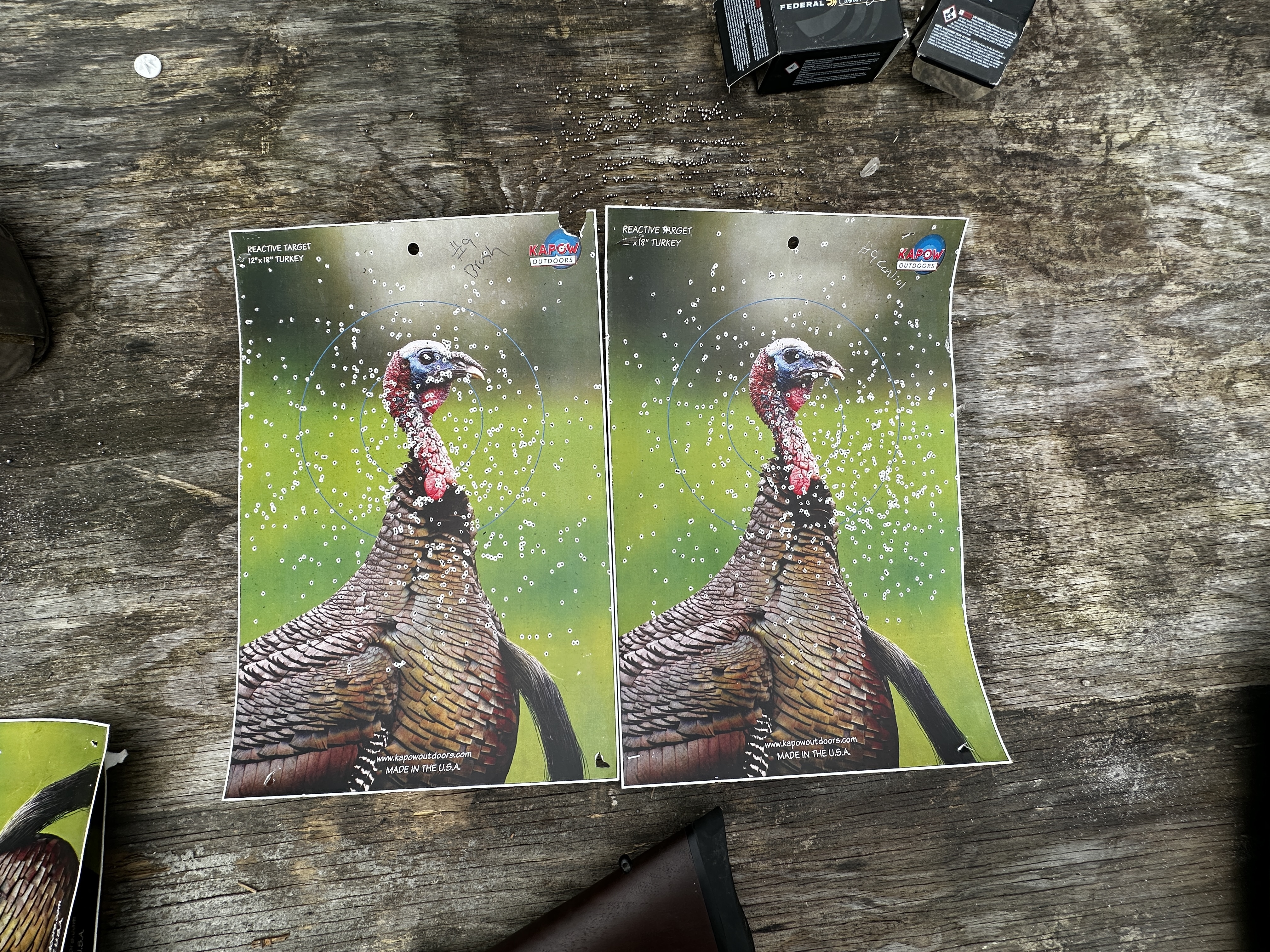
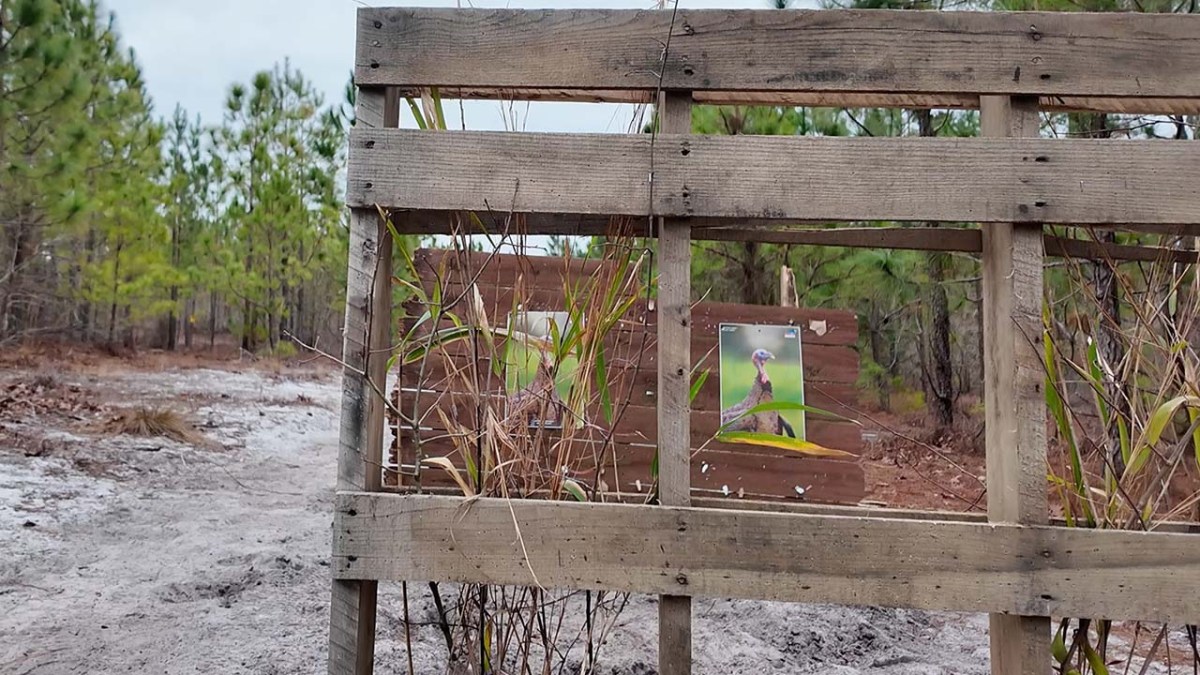
We started by patterning 12-gauge Federal Custom Shop TSS #9s and #7s at 40 yards to get a baseline. Then we placed a wooden crate 3 yards in front of the turkey targets, and created a screen of brush within the window of the frame. The brush consisted of grass, rivercane, brambles, and sticks. You could still see the turkey targets beyond the brush, but there was enough stuff in the way that I would pause before pulling the trigger in a real hunting scenario for fear that the brush might deflect my pattern.
We shot through the brush with the targets at 40 yards, and much to our surprise, the pattern remained unchanged. All the brush was mowed down. There wasn’t a noticeable difference in terms of performance between the #7 and #9 loads.
We decided to try moving the brush closer to the shooter to see if it would make a difference. We loaded the frame with more woody brush this time, expecting to cause a disruption. This time the frame was 10 yards in front of the muzzle, and the turkey target was 40 yards from the gun. Once again, the TSS no. 9s printed an excellent pattern with more than enough pellets on target to kill the bird. There were 216 pellet strikes within the 8-inch circle around the longbeard’s head (as you can see in the video above).
Why It Works
Pellets fired from a shot shell fly in a three-dimensional shot string. As that shot string travels down range, it continues to lengthen. TSS turkey loads are packed with a ton of tiny pellets and then fired through a tight choke, which tends to make long shot strings. Our theory is that when shooting TSS through brush, the pellets at the front of the string are blasting the brush and opening a clear pathway for the pellets behind them. Because there are so many pellets in the shell, you still get plenty on target at relatively close ranges.
We were not able to capture this on a high-speed camera, so it’s really our best guess as to why you can get a good pattern with brush in the way. But that also means that if there are multiple layers of brush, you’ll have a harder time getting an adequate number of pellets on target. Our test simulated a single screen of brush — not a range of brush all the way to the target. If there are significant layers of brush between you and the target, the answer is simple: Don’t shoot.
Safety Always Comes First
Back when you took your hunter safety course, you learned that you should always be sure of your target and what’s beyond it. Sometimes that’s impossible in thick brush, and in those cases you must not shoot, even if you feel like you could kill the turkey. You’re accountable for every round fired in the woods, and an honest mistake can come with serious consequences. Each year we hear stories of turkey hunters getting shot because someone failed to identify their target before pulling the trigger. If you’re going to take a shot at a turkey standing behind brush, you must first be certain you’re shooting at a legal bird, and there is nothing behind it that you don’t want to hit, including other turkeys.
In the Field
I kicked off my turkey season in South Texas this year and got into birds on the first morning of my hunt. I was working a bird to my left, which was hung up about 70 yards out of sight. He gobbled 10 times in the same spot to test my patience. Then a gobbler fired off to my right.
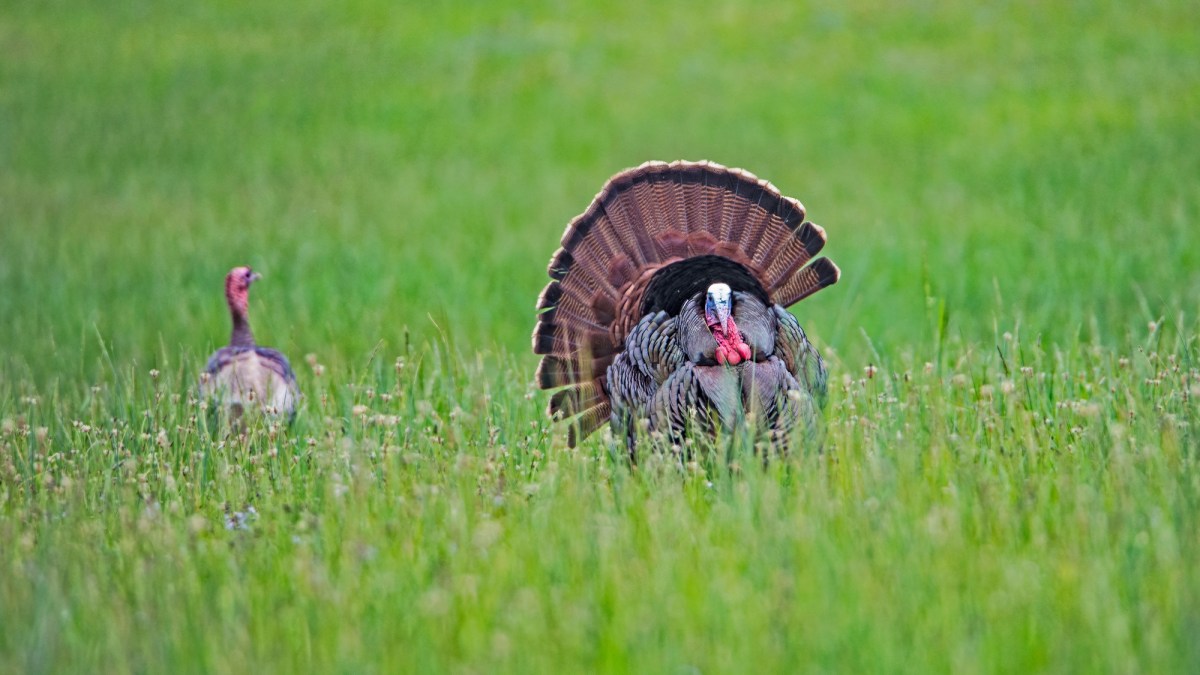
A few soft yelps, clucks, and purrs later, the new gobbler closed the distance and was in sight. It seemed like he was going to walk right down the sendero to give me a 25-yard shot. But he stopped at 45 yards and putted. There was tall grass about 15 yards between me and the bird. I had already watched him strut a few times at 100 yards and spotted his beard, so I knew it was a gobbler. I could clearly see the turkey’s snood over the grass as he peered around, looking for the hen I had imitated.
Watch Next: This Is the Best Turkey Load We Ever Tested
When that bird putted and stuck his neck out, I had zero hesitation dropping my dot on his head and squeezing the trigger, thanks to the brush-shooting experiment. I was shooting a 20 gauge with Apex Greenleaf 9/10 blend, which stoned him in his tracks.
Read the full article here