
Most folks assume the U.S. military operates only overseas. In fact, detailed plans exist for responding to serious crises and unrest within the country. But the truth is these plans are far from theoretical. They are actively maintained, updated, and regularly practiced, ready to be put into action at a moment’s notice.
That’s why understanding how they function is one of the smartest ways to protect yourself and your loved ones when normal systems fail.
Jade Helm 15: The Test Run
In 2015, a large-scale exercise called Jade Helm 15 took place across multiple southwestern states. The official line? It was just a training op. But people noticed a few strange things:
- Civilian areas were labeled as “hostile” or “friendly”
- Surveillance and movement tracking occurred in towns across Texas, Arizona, and Utah
- Reports of unmarked vehicles, helicopters, and covert operations emerged
To many, it felt like a dry run for how the military might operate in American neighborhoods – tracking dissent, navigating resistance, and blending into civilian environments. If you ever wondered whether urban environments were being studied for strategic response, Jade Helm gave us our answer.
Garden Plot and Cable Splicer
Long before Jade Helm, there were Operation Garden Plot and Cable Splicer, that included plans developed during the Cold War era, when the government feared large-scale protests and uprisings.
 Operation Garden Plot focused on coordinating military and federal law enforcement responses to civil disturbances. It had roots in the 1960s when riots and anti-war protests rocked the nation.
Operation Cable Splicer was the continuity-of-government wing, designed to make sure the chain of command could survive unrest, nuclear war, or a major catastrophe.
Think emergency broadcast takeovers, government bunkers, and large-scale military deployment. Even if these programs have been retired in name, their DNA lives on in today’s protocols.
The Shadow Plan: CONPLAN 3502
Officially called the U.S. Army Civil Disturbance Operations Plan, CONPLAN 3502 is a roadmap for how the government deals with large-scale unrest. Mind you, this isn’t a wild conspiracy theory. This plan has been acknowledged through declassified fragments, whistleblowers, and military insiders.
It includes provisions for:
- Deploying active-duty troops alongside the National Guard
- Using non-lethal force like rubber bullets, sound cannons, and tear gas
- Setting up temporary detention sites for mass arrests
- Securing vital infrastructure such as electrical grids, water plants, and cell towers
- Imposing martial law if state governance collapses
What does this mean for you and me? It means that in a serious breakdown of order, normal protections vanish. Checkpoints, curfews, and detentions could happen fast, and law enforcement alone won’t be able to protect civilians. So you must have a plan at hand and know how to move or shelter safely without relying on outside help.
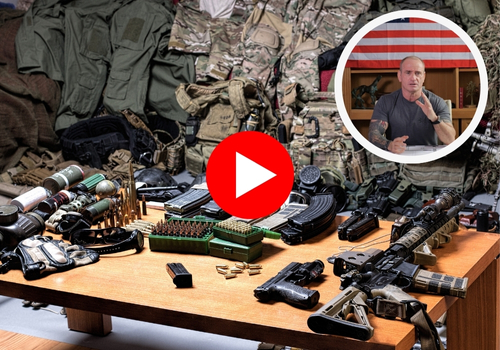
But how does the ideal plan look like? Watch this video and find out answers that will change your prepping knowledge forever:
A Real-World Example: Hurricane Katrina
When Hurricane Katrina devastated New Orleans in 2005, we got a preview of how the federal government and military can take over civilian areas.
Martial law was never officially declared, but military forces operated with extreme authority. Armed troops patrolled neighborhoods, house-to-house searches were conducted, and citizens were disarmed in certain areas, even those trying to defend their property.
Related: 2026 U.S. Earthquake Map. Is Your State in the Danger Zone?
The chaos also exposed failures in communication and logistics. Local, state, and federal agencies were often at odds. But it also showed the speed and power of a militarized response when the situation got out of hand.
For preppers, Katrina was a wake-up call: if things get bad enough, you’re on your own. Or worse, you might find yourself on the wrong side of checkpoints and control measures.
What Happens Under Martial Law?
Martial law is a term often mentioned in passing, yet its implications are profound and far-reaching. When properly declared, civilian authority is suspended, and military commanders assume full control over enforcement.
The consequences are significant:
- Curfews enforced at the point of a weapon
- Strict travel restrictions and mandatory ID checkpoints
- Suspension of habeas corpus, allowing detention without the usual legal protections
- Replacement of civilian courts with military tribunals
- Warrantless searches and seizures
These measures are not hypothetical. Historical precedents, such as Hawaii during World War II, demonstrate the reality of military governance on American soil. Modern frameworks, like CONPLAN 3502, provide a legal foundation for the military to assume domestic control if civil unrest reaches a level that overwhelms traditional law enforcement.
So yes, in extreme emergencies the government can requisition private supplies, which is why a stockpile isn’t enough on its own. Even if you already have food, water, and fuel stored, the truth is that most people aren’t fully prepared for a crisis of this scale.
But don’t worry – if you follow the detailed (yet easy-to-follow) plan from Easy Cellar, you’ll end up with one of the strongest and most reliable cellars possible.
So, when the inevitable will happen, this is what you need to do to protect your resources:

When you follow this plan, your supplies stay exactly where you need them, safe and organized. Every step is about keeping control, even if the military shows up to enforce martial law.
Continuity of Government: Behind Closed Doors
You may have heard of Continuity of Government (COG) protocols from the Cold War era, but these plans have since been updated to address modern threats such as pandemics, EMP attacks, cyberwarfare, and civil unrest.
Under these protocols, key government officials and military leaders are evacuated to secure locations, while a shadow chain of command is prepared to assume control if Washington, D.C. is compromised.
In these situations, it’s well known that FEMA takes the lead in managing logistics, population movement, and control, while the Department of Defense provides personnel for internment, riot suppression, and protecting critical infrastructure.
Overall, COG is designed to ensure the government maintains control, even in scenarios where a large portion of the population is incapacitated.
The Surveillance Network
 Advances in technology now give the military unprecedented capabilities to monitor civilian activity in real time. In the event of civil unrest, these tools allow for rapid and coordinated responses:
- Aerial surveillance: Drones can track crowd movements, identify congestion points, and help plan safe or controlled routes for both civilians and security forces.
- Cellular monitoring: Stingray and similar devices can intercept and analyze mobile phone signals, enabling authorities to map communications and movements across a city.
- Facial recognition: Sophisticated software can identify individuals in real time, cross-referencing them against databases to flag persons of interest or suspected agitators.
- Digital mapping of social activity: Social media posts, geolocation data, and other digital footprints can be aggregated to reveal patterns, trends, and potential flashpoints before they escalate.
Many of these tools are already in use by federal agencies during major events such as large protests, public gatherings, or high-profile national celebrations. In the case of a full-scale emergency, the military can step in to integrate these technologies, coordinating surveillance, communication, and response efforts across multiple agencies.
What Preppers Should Take from All This
I need to mention that this is not about fear, but clarity. Because the military has plans and that means you should too.

Plan Your Exit Strategy
Many preppers find it helpful to look at relocation as a set of possibilities rather than a single “bug-out plan.” Different destinations may offer different advantages – access to water, distance from major traffic corridors, or simply a calmer environment. It can also be useful to stay familiar with several potential routes, since conditions can change over time.
Keep a Low Profile
Avoid high-risk areas. Stay out of political protests. Don’t post prepping gear or plans on social media. The less people know, the easier it is to stay out of trouble.
Minimize Digital Footprints
Consider ditching tracking-heavy devices or turning them off when not needed. Use signal blockers and encrypted communication tools.
Build a Tribe
You’re much safer with a network of trusted people nearby. Practice communication drills, medical prep, and security strategies together.
Have an Elaborated Fuel Stockpile
Gasoline is something you don’t want to be superficial about. According to Joe Lambert, the author of A Navy Seal’s Bug-In Guide, gasoline is the most important fuel in today’s society and is one of the ten things that will become extremely valuable in an SHTF scenario.
You need it for your bug-out car, for running generators when the power grid fails, for powering essential tools, and even for bartering when traditional currency loses its value.

To learn more about this, dive into Lambert’s guide for practical steps on storing, managing, and maximizing your fuel supply. You’ll also find detailed recommendations on safe storage containers and long-term preservation methods.
Get Comfortable Living Gray
Avoid tactical gear in public, don’t display panic, and keep your routines low-key. By remaining inconspicuous, you reduce the likelihood of being targeted, giving yourself the freedom to move, observe, and make decisions without interference.
Stay Informed (But Not Paranoid)
Learning from past unrest is important. Keep an eye on local emergency management announcements and be aware of unusual troop movements in your area. And most importantly, don’t panic – observe, stay informed, and adapt your plans as needed.
Final Thoughts
The government has its plan. Do you have yours?
The U.S. military’s approach to civil unrest may never be fully disclosed, but the clues are there if you know where to look. Being ready doesn’t mean living in fear. It means living prepared. And if you’re reading this, you’re already ahead of the curve.
You may also like:
 Military Items That Might Be Missing From Your Prepping Kit
The First US Banks to Fail (VIDEO)
Prepping Items The Government Doesn’t Want You to Have
DIY Civil War Neosporin Recipe
Guns You Need To Buy Before The Government Bans Them
The IRS Is After You! Here’s What You Need to Do
Read the full article here