The Price of TSS Turkey Loads Has Skyrocketed, But Absurd Costs Won’t Kill This Popular Load — Yet

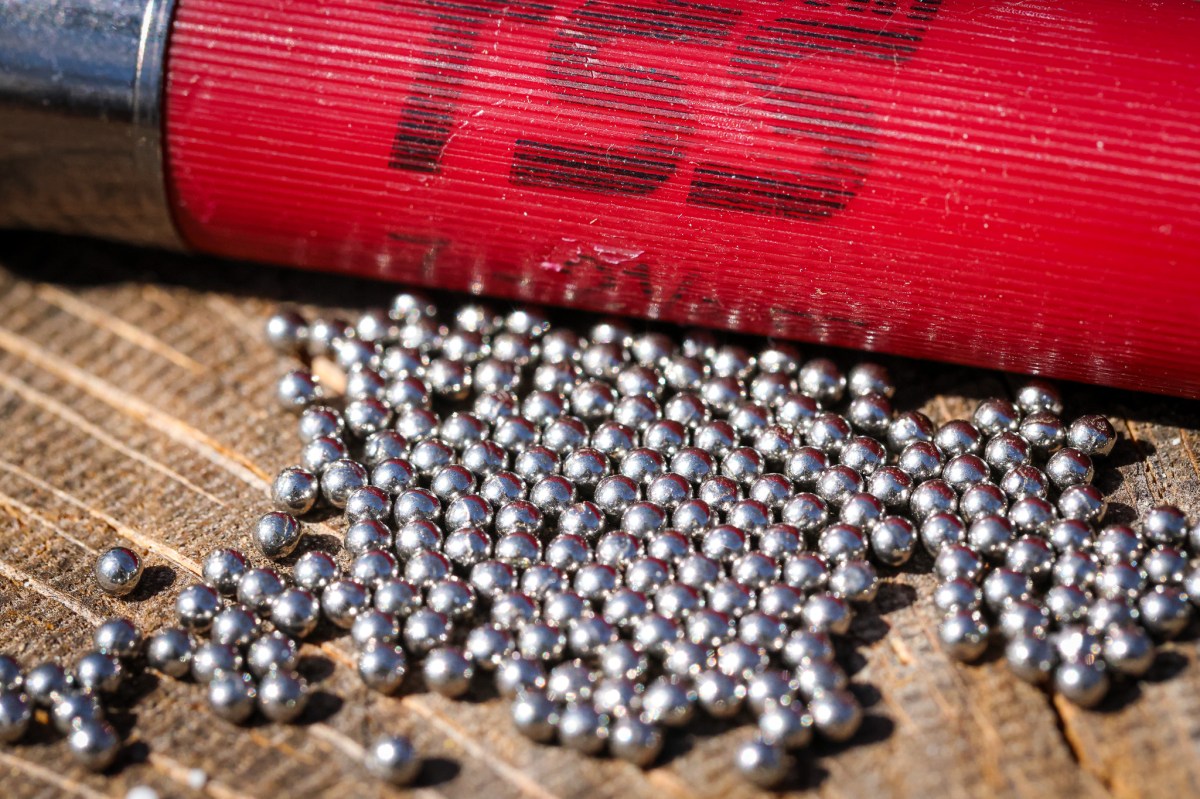

Turkey loads filled with tungsten super shot pellets have become popular in recent years despite the high prices they demand. But this spring, we might hit the threshold of what turkey hunters are willing to pay for TSS; loads have doubled in price since last year.
And right now, that means paying as much as $22 per shell.
That’s from niche ammo makers like Boss Shotshells and Apex Ammunition. A box of five 12-gauge BOSS Tom TSS will run you $110 (up from $56 per box in 2025). So will a box of five 3 1/2-inch 12-gauge or .410 bore Turkey TSS from Apex. Bigger ammo makers aren’t immune, either; Winchester is selling Long Beard TSS for upward of $95 per box.
Worse yet, TSS prices aren’t expected to drop anytime soon. The reasons behind the price spike boil down to Chinese trade wars, tariffs, and the rise of tungsten as a critical component for military ordnance. While shotshell manufacturers are mostly confident they’ll meet demand for TSS loads this turkey season, they’re less certain about how the rising price of tungsten will derail demand in the future. Here’s how ammo companies are trying to balance customer needs with the expense — and headaches — of sourcing TSS.
Why Is TSS So Expensive Right Now?
China dominates tungsten manufacturing. In 2020 the country controlled 83 percent of the global tungsten production. (That dipped to about 75 percent in 2022 due to self-imposed environmental regulation, but appears to be ticking up again.) As a result, China’s demand for raw tungsten products to refine has ramped up, causing the country to import more raw tungsten than it exports.
Experts predict tungsten demand will continue to boom. The global tungsten market size was estimated at $1.86 billion in 2024, according to one industry report, and is projected to reach $2.84 billion by 2033.
TSS Prices Have Quintupled in the Last Year
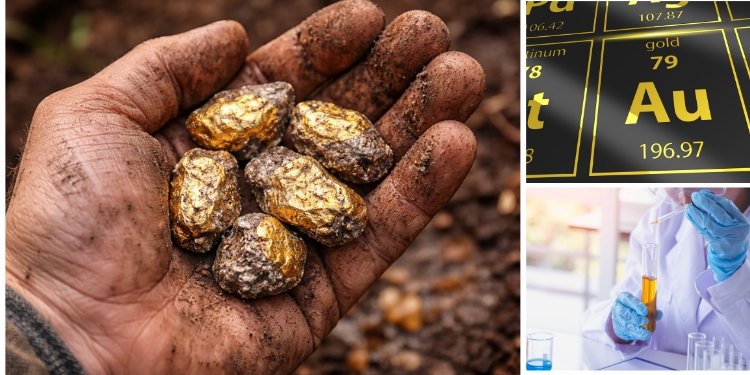
One look at the price spike of TSS’ key ingredient, ammonium paratungstate, also helps explain why turkey load prices have spiked. TSS manufacturers use heat to bind that raw powder with metals like nickel and iron. The result is a pellet that’s about 95 percent tungsten. TSS resists deformation and provides incredible penetration, thanks to its density of about 18 g/cc. (For reference, lead has a density of about 11.2 g/cc.)
But the cost of that ammonium paratungstate has jumped nearly fivefold since last year, from about $345 per metric ton unit in February 2025 to an average of $1,737 as of Feb. 13, according to pricing data from FastMarkets.
“Price is the biggest challenge,” says Jimmy Wilson, Winchester’s shotshell product manager. “The price has been going up basically every day for the last couple months. You can get tungsten, but at what price? And does it even make sense to buy it at that price? [We have to ask], would the consumer be willing to pay for a shell that has $140-per-pound TSS loaded in it [and costs about $29 per shell]? The answer is probably no.”
Those prices Wilson cites are roughly based on the current price of tungsten. The Long Beard TSS on the shelves at big box stores right now cost anywhere from $11 to $19 per shell. That’s because the product was priced based on the cost of the TSS months before turkey season. In other words, companies are selling TSS turkey loads with prices that correspond to what they bought the shot for; not what it’s actually worth right now.
An Anti-Dumping Tariff and Countervailing Duty
We reported last year that while ammo prices have been rising, tariffs weren’t yet to blame. That’s no longer true for TSS.
A new tariff went into effect in August that applies to the highest-density TSS (18 g/cc) imported from China. This steep fee, which is paid by American manufacturers and in turn drives up the cost for hunters, is called an “anti-dumping tariff.” The fee ranges somewhere between 183 to 201 percent of the cost of TSS. On top of that, there’s a countervailing duty, which is designed to offset any subsidies those companies receive from the Chinese government. That fee can reach nearly 300 percent the price of TSS, depending on the manufacturer.
That tariff was imposed after Tungsten Parts Wyoming petitioned the International Trade Administration to investigate sketchy trade practices in China. In 2025 the company’s new CEO, Mark Holden, testified about how the Chinese government was subsidizing TSS competitors in China to the detriment of American manufacturing. TPW imports tungsten from “allied sources in South America, Western Asia, and Europe,” according to Holden, and turns that raw material into TSS pellets domestically.
“China has historically dumped material, like tungsten, into the global economy,” says Holden. “Meaning, they will hold it back for a very long time, they will watch the price skyrocket and everybody rationalize the parabolic pricing, and then just release the floodgates by dumping a ton of product on the market and scrambling the economics in the entire industry. Prior to the rise in tungsten [prices], China was dumping tungsten at a loss to ensure the United States never stood up a domestic supply chain of tungsten.”
Here’s an example of this in action. Sometime around 2022 TPW offered Boss Shotshells a quote for American-made TSS, according to owner Brandon Cerecke.
“At that time, they quoted us $100 per pound,” says Cerecke. “And we were like, this is crazy. We’re getting this for $33, $34 per pound out of China, delivered.”
Ultimately, the federal investigation agreed that China was dumping TSS, and so it enacted the new tariff. The results were advantageous for TPW and, theoretically, the future of American tungsten production. In the meantime, it’s puts pressure on American manufacturers who currently rely on Chinese companies for more affordable TSS.
“There are only two manufacturers that are making tungsten shot in the U.S. and one of them isn’t supporting large-scale [commercial] production. They’re all military now,” says Cerecke. “So these companies got government protection, then they quit supporting the market. Which is why everything is as expensive as it is.”
Holden contends that purchasing shotshells loaded with Chinese-sourced TSS directly funds China’s military and is therefore unethical.
“Obviously the goal isn’t to fund competitive nations that don’t like us,” says Cerecke. “At the same time [there] was not a market with a U.S. manufacturer of TSS shot [years ago]. And now there’s only two, and the ability for them to produce doesn’t even come close to the market demand. So you can’t really blame the American consumer or manufacturer for having to go to an outside country.”
Currently, the TSS in Boss Tom (the 12-gauge loads that cost $22 per 2 ¾-inch shell) is sourced from Elmet Technologies in Maine. Elmet and TPW are currently the only two TSS producers in the U.S., according to Cerecke.
“Back in November I was quoted just under $83 per pound of TSS, plus shipping from China. And the price has gone up significantly since then,” says Cerecke. “I want to say it’s around $120 per pound domestically, and Chinese prices have risen [too]. A year ago, we were buying it at $36. That’s almost a four times increase. All these Chinese metals [including bismuth], whether it’s the trade war or the resulting tariffs, have everything in free fall. It’s wild.”
The Rise of Tungsten for Military Use
More than half the world’s tungsten is used for construction, mining, and transportation (think EV car batteries). But it’s increasingly valued as a critical mineral for modern defense and warfare. That’s one reason, Holden says, China would want to discourage American tungsten manufacturing.
“It’s no big secret the United States is gearing up for a shooting war with China potentially in the future,” says Holden, who is also a Navy veteran. “What China realizes is that the United States for the last 25 years have been training and equipping our forces … with weapons that can counter insurgency forces.”
“The only thing inside of the periodic table of elements that we have available to us on this earth that can pierce enemy tanks and armor is tungsten.”
—Mark Holden, ceo tungsten parts wyoming
That includes the war on terror in Afghanistan, in Iraq, and in other less developed nations in recent years. But the future of warfare, says Holden, looks more like the battlefields in Ukraine.
“What the United States is now doing is reconverting not just the soldiers and military industrial complex, but they’re retooling the whole nation’s production of going against a heavily armored enemy,” says Holden. “This is an enemy that rides around the battlefield in main battle tanks, not in Toyota pickup trucks. An enemy that fights wars in body armor … And the only thing inside of the periodic table of elements that we have available to us on this earth that can pierce enemy tanks and armor is tungsten.”
The qualities that make TSS such a lethal turkey load — high density, high-heat resistance, tendency not to deform — are why tungsten is a key component for tank rounds, vehicle armor, hypersonic missiles, and more.
“Tungsten is an essential alloying metal for aerospace, ground vehicles, munitions, and many other defense systems,” Vic Ramdass, then-acting assistant secretary of defense for Industrial Base Policy at the Department of Defense, told Army Technology in July. “Developing a domestic source for tungsten is one of our top critical and strategic mineral priorities.”
The U.S. has not mined tungsten, which is found in ore and must be heavily refined, since 2015 for a host of reasons. In 2022 the U.S. passed the REEShore Act, which (among other goals) seeks to shore up a U.S. tungsten supply and prohibits Chinese tungsten use in U.S. military equipment by 2027. In the last months of the Biden administration, the U.S. also raised tariffs on tungsten concentrate from China by 25 percent.
Now mining companies, several with federal funding support, are working to open or revive deposits in places like Beaverhead County, Montana, Pilot Mountain in Nevada, and Lemhi County, Idaho to secure domestic tungsten. The U.S. is also teaming up with countries like Canada. In 2024, the then-Department of Defense announced a joint $25 million investment to develop a deposit that straddles the Yukon and Northwest Territories.
What Ammo Companies Are Doing About TSS Prices
One key workaround to the antidumping tariff is that it doesn’t apply to all tungsten. Rather, it only affects TSS: shotshell pellets that are at least 92.6 percent tungsten, which typically results in pellets with a density of 18 g/cc. That means imports of Chinese-made shot with tungsten levels below that threshold aren’t subject to the steep tariff. Winchester is already applying this concept to its newest turkey load, Long Beard Tungsten, by simply using less tungsten.
“TSS starts out as a powder, with tungsten being the primary ingredient,” says Wilson, Winchester’s shotshell product manager and an engineer by training. “But if you mix less tungsten in, or more iron or copper or whatever your binding agent is, you lower the density and you lower the cost.”
In other words, says Wilson, the pellets contain the same ingredients, just a slightly different ratio of those materials.
“We were able to cut out a lot of cost just by dropping to 17 grams per cubic centimeter,” says Nathan Robinson, Winchester’s marketing manager. “So you get almost identical performance, and you actually get a little bit more shot in the shotshell because the weight is slightly different … That’s one step we’ve already taken to try to alleviate having to raise prices as much.”
Long Beard Tungsten is still pricey at $10 to $22 per shell (depending on the payload), but the cost savings should keep an edge as TSS prices continue to rise throughout 2026. Winchester is also highlighting its mid-price lead turkey round, Long Beard XR, which costs between $2.60 and $3.20 per shell.
Other companies are also offering mid-tier turkey loads for hunters who are priced out of TSS. Remington Final Strut includes a 12 g/cc tungsten pellet at $10 to $11 per shell. Hevi-Shot also has a 12 g/cc tungsten load in its Hevi-13 Turkey, which is priced at $10 to $11 per shell but can be found for closer to $7. Migra started making the Hybrid 12, a blended load that includes lead No. 5s and TSS No. 9s at $8 per shell. (Note: OL will test the performance of many of these loads and release the results in early spring.)
All the ammo makers we talked to for this story have shaved their margins to absorb some of the costs turkey hunters will feel this spring. Even companies that have kept pure TSS in their turkey loads, like Boss and Apex, still haven’t raised prices as high as they could.
“We’re reducing margins. We are passing costs along, but not at the full rate. We’re eating some of that internally … we’ve cut marketing budgets, we’ve scaled back the amount of inventory we carry, we’re going leaner with our production, we’re creating internal efficiencies and trying to make the best of a bad situation,” says Cerecke. “Boss is in a good spot but we’re really doing everything we can to avoid price shocks with our consumers.”
The (Near) Future of TSS Is Limited
Apex Ammunition sources some, though not all, of its TSS from Tungsten Parts Wyoming. When Apex started its business nine years ago, says co-founder and CEO Jason Lonsberry, the only place they could get TSS was from China. A key goal for the Mississippi company was to diversify its supply chain.
“One of the risks for us was the fact that if China were ever to have a problem with the United States, we couldn’t get tungsten anymore. And here we are,” says Lonsberry. “A lot of the trade wars have opened opportunities to the rest of the world, and a lot of the rest of the world is starting to play ball.”
Holden is optimistic about the future of tungsten development in the U.S. and expects that within three years, U.S.-sourced tungsten will enter the market.
“From our current reports, I feel very confident that our short and long term [supply of tungsten] is secure,” says Lonsberry. “Our customers ask, do we have TSS? The answer is yes, we have TSS. The next big question is, ‘Is the price going to keep rising? … Right now I get mixed feedback [from my industry sources]. Some say, ‘It’s only going to go so high before the bottom falls out,’ or ‘There’s no telling what’s going to happen.’ Our forecast this year is favorable. For years to come, we don’t know.”
Forecasting product development and sales for turkey season is complicated. TSS is slow to produce in the U.S. because manufacturers don’t yet have the capacity to make it on commercial scales. Right now lead times can reach five months or greater.
“We’ve already had reorders [for turkey loads from retailers] and we’re only in February. Turkey season hasn’t even started yet,” says Lonsberry. The reason, he adds, is because some of Apex’s competitors have not been able to fulfill their orders for TSS loads. “Ammo companies are kind of in the same boat in this. It’s an industry-wide problem. The reason you’ll probably see a lot of TSS loads out of stock this year is [our competitors] don’t have enough TSS to manufacture. TSS is our niche, and something we never take our eye off.”
“There’s a market for premium loads that we will service, but the days of having a $4 pure TSS load? Those days are gone. I hate to say it because, as an ammo manufacturer, the general public doesn’t want to hear bad news about prices going up.”
-Brandon cerecke, boss
Lonsberry predicts that even with the sky-high prices of TSS turkey loads in 2026, Apex will likely sell out again, as the company usually does.
“Selling out is not the strategy. I would love to sell as much as we possibly could as a business. It makes no sense to miss sales, However, we want to grow at a responsible rate.”
Quality control is essential to Apex’s brand mission, says Lonsberry, and scaling up production too quickly to address high demand could jeopardize that. Boss also expects to move most or all of its TSS turkey loads this spring, but is prepared to adapt if that prediction falls short. Cerecke is less optimistic about the future of TSS outside turkey loads.
“There’s a market for premium loads that we will service, but the days of having a $4 pure TSS load? Those days are gone. I hate to say it because as an ammo manufacturer, the general public doesn’t want to hear bad news about prices going up,” says Cerecke. “They think it’s our fault and we’re just making all this money. But that’s not the case.… If we want to support the TSS market, it’s a four-month lead time to get your stuff domestically with significant down payments. It ties up a lot of cash. We’ll know by the end of the year if we’re going to support it again. But if we didn’t really grow in that market or we sold half as much, we’re probably going to really dial it back in tungsten.”
The biggest hit to hunters who’ve come to count on tungsten might be waterfowlers. While turkey hunters are still buying Boss Tom without much complaint, says Cerecke, but it’s clear across the industry that TSS waterfowl loads are becoming less available. Lonsberry notes that this is apparent with competitors who had planned to produce TSS for waterfowl but are no longer taking orders. Apex’s speciality is TSS, however, and the brand isn’t abandoning it.
Read Next: Why Does Ammo Keep Getting More Expensive?
“Industry-wide you’ll see a retraction in waterfowl TSS,” says Lonsberry. “Where Apex stands today … we’ve readjusted our price points … to adjust for those different cost structures. Time will tell in the next quarter or two whether it will come to fruition. But right now we are aiming to have it.”
Read the full article here