
Cold water kills. That’s a fact. Though water as warm as the high 60s can cause deadly hypothermia if you’re in it long enough, once the temperature drops below 50 degrees, you’ve got minutes to get out before you’re unable to move or swim. Naturally, this is a big concern for wading anglers, and I’ve taken my share of cold-water plunges over the years while trout and steelhead fishing. But wading usually occurs in shallow water, which mean if you hit the drink, you can usually get up, get out, and start putting the wheels in motion to get warm fast. The same cannot be said if you’re on a kayak far from the launch point.
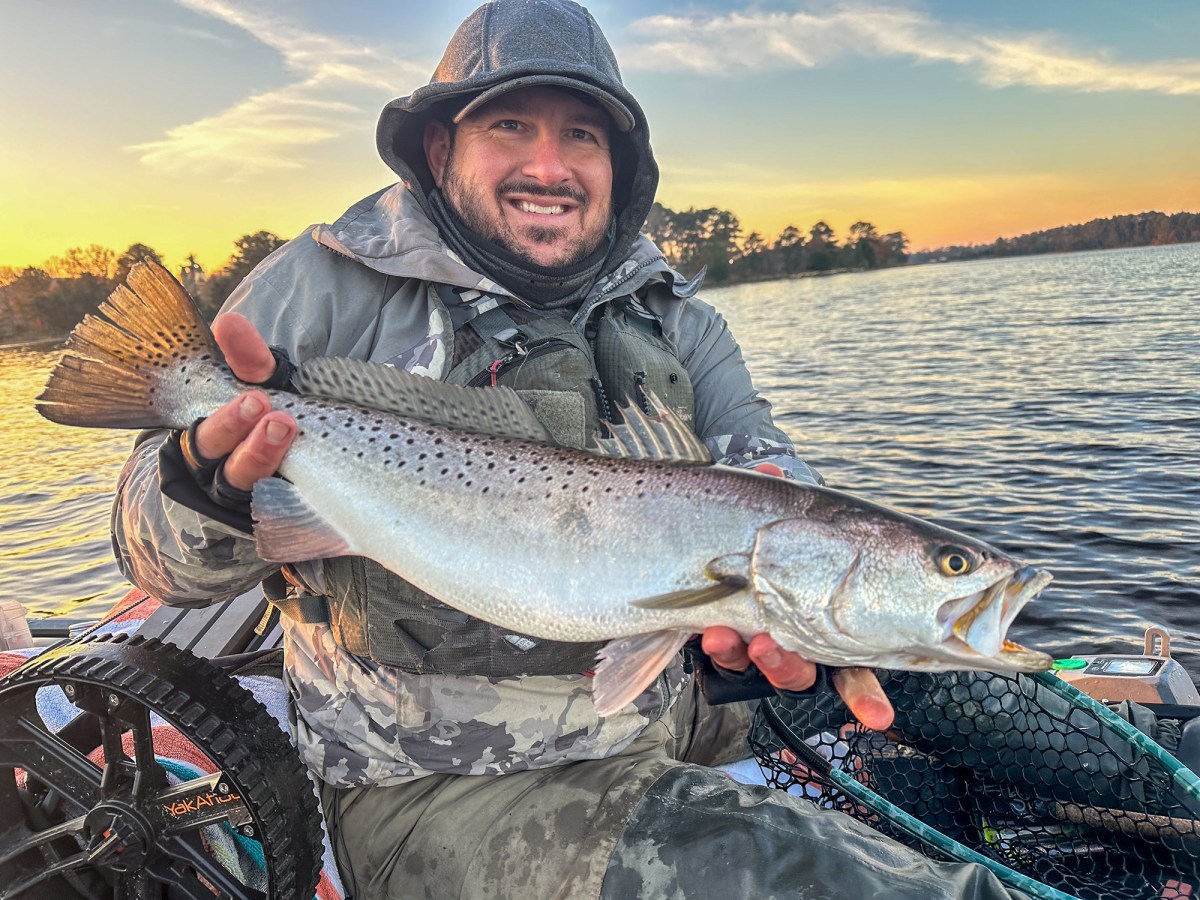
My friend and Outdoor Life contributor Kevin Hughes is a kayak-fishing machine with no off switch. He lives in coastal Virginia, which is a funky zone in winter. Though the climate can shift one way or another year over year, it’s not uncommon for some bodies of freshwater to remain open in winter, and there are also saltwater opportunities that span the coldest months. Hughes’s kayak is as useful a tool for getting in the zone now as it is during the summer. But when he launches in the dead of winter, there’s a mandatory safety checklist that must be ticked. If you’re thinking about doing some winter kayaking fishing, heed his advice so you can get hooked up and back home safe.
Listen to this week’s episode of the Quick Strike Podcast on Apple, Spotify, or wherever you get your podcasts.
Plan a Play Date
Kayak safety starts long before worrying about extra steps on the water or new gear you might consider buying before shoving off. The truth is, this pre-game preparedness should apply to fishing trips year-round, but once the temperature plummets, knowledge becomes power and it’s good to have friends.
“I’m usually a solo angler, but in the winter, I always prefer to fish with someone else,” says Hughes. “Especially if I’m planning to range far from the launch or if I’m fishing a river. Bays and lakes are much more controlled environments, but I’ll admit that kayaking a river in winter is a bit scary because you don’t always know what moving water will throw at you. I used to muskie fish on rivers a lot in the winter and always made sure I had a partner.”
If you don’t have a friend to fish with, always file a float plan with someone. That’s just a fancy, nautical way of saying tell somebody exactly where you’re going, where you’ll be parked, and what time you plan to be done for the day. Though this might seem incredibly obvious, many anglers skip this step. I’ll admit I skipped it for many years, but after I had kids, I changed that habit. Whether it’s February or July, if I’m fishing alone, my wife knows where I’m going and what I’m doing.
Hundred-Proof
It’s almost impossible to fish in a kayak without getting wet. Of course, if you’re fishing in the summer, you might not even notice. Your feet get drenched launching. Water seeps up through the scuppers and onto the deck. The mere act of paddling means water is dribbling into your lap all day. Though minor inconveniences when it’s 85 degrees, any water that gets on your person in winter can, at minimum, make you very uncomfortable and, at worst, be the catalyst for death. That’s why Hughes takes no chances.
“Making sure your body is 100 percent waterproof is essential,” he says. “A lot of people wear waders in their kayaks, and that’s fine for staying dry, but if you end up in the water you run the risk of those waders filling, which will put you in greater danger. I wear a full-body dry suit that’s sealed at the neck and all the cuffs. Mine is designed in such a way that it will also fill with air if I go in, which helps keep me extra-buoyant.”
A dry suit is a great insurance policy, but not a get-out-of-jail-free card. While the suit keeps Hughes dry, it offers no insulation, so the cold water will still zap his body heat. Because of that, Hughes always dresses for the water temperature, not the air temperature, and layers appropriately under his dry suit. There is also always a change of clothes and warm blankets in his truck during winter missions.
Cut the Cord
The invention of low-profile PFDs changed the boating safety game in several ways. Most critically, these unobtrusive life vests pushed more people to wear them. They don’t restrict casting movement and won’t cause you to overheat in the summer, and because of this they’ve become very popular with kayak anglers who need a wide range of motion. But Hughes says come winter, they’re a no-go.
“It’s one thing if you have a model that auto-inflates, but still, there’s always a chance that it won’t pop if you go in,” he says. “If you have the type that requires you to pull a cord to inflate it, now that’s one more thing you have to do in what will already be a scary situation. It might not seem like a big deal, but cold water can throw your body into instant shock and if for any reason you can’t pull that cord, the PFD is worthless.”
Luckily, companies like Old Town produce angler-specific, fixed PFDs that are extremely comfortable and functional. You can easily attach a safety knife and tether a whistle — a simple tool that can save your life in a bad situation. Hughes also points out that the padding and bit of bulk from a traditional PFD also adds another layer of warmth, which you won’t hate during a long day of sitting inches above that chilly water.
Read the full article here