
We turkey hunters are lucky to have a ton of great options for pot calls, and they come in a dizzying assortment of materials. So how do you go about finding the right call for your needs? How do you pick one with the right surface, soundboard, pot material, and striker?
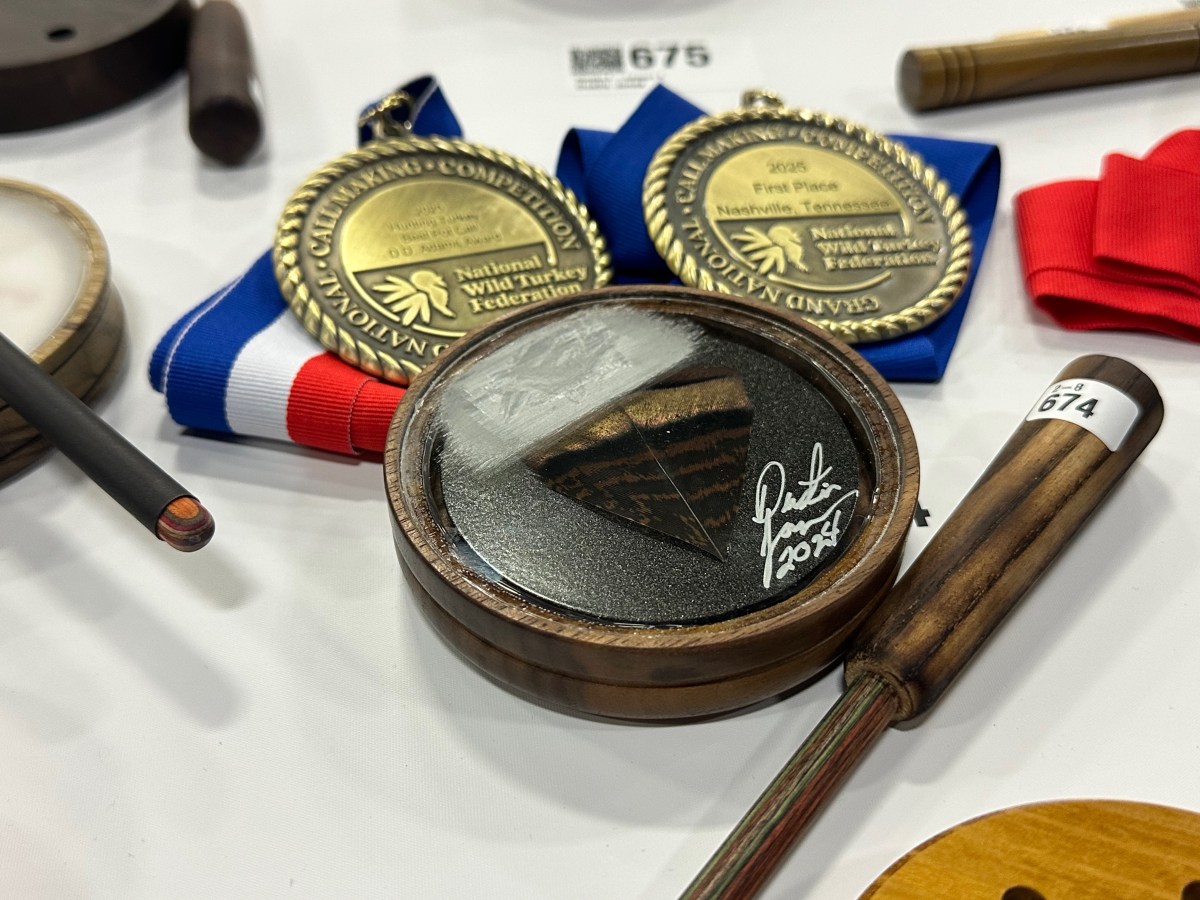
To answer those questions, I talked to one of the foremost pot call experts, Dustin Jones of Blackstone Custom Calls, in this week’s episode of the Outdoor Life podcast. In 2025, Jones won the D.D. Adams Award, which is awarded to the best pot call at the NWTF’s custom call making competition. The same year, he also won the friction division at the Grand National Calling Competition. So not only is he one of the best pot call makers, he’s also one of the best at running them. Here’s his advice on choosing a pot call.
The Go-To Pot Call: Black Slate with a Glass Soundboard in a Walnut Pot
You simply can’t go wrong with a good slate call.
“Something that I always have in my vest is a good slate call,” Jones says. “I run it a lot in competition. It’s easy to use and easy for beginners to use. It’s just the standard. You know, it’s killed more turkeys than the bird flu probably.”
You can get slate in a variety of colors, like gray, black, green, red, and purple. The colors vary in their hardness, which affects how they sound.
“You get a little bit of a different sound out of them,” Jones says. “Not a lot, but it is noticeable if you know what you’re listening for. And it also depends on how you design your call.”
Jones recommends black slate because it’s the most consistent. The other colors can vary widely in their thickness, which makes it more difficult to produce a consistently good-sounding call. He also likes glass or slate soundboards because they’re consistent. For the pot body, Jones recommends sticking with the classics: walnut and cherry wood.
“Those two have probably done more, won more awards, and killed more turkeys than anything out there,” he says. “Just a classic gold-standard stamp of approval every time. If you’re looking for a solid call, those are my two go-to.”
Jones’ other top picks include mahogany, red cedar, and padauk.
Read Next: Best Turkey Calls
Glass and Crystal Calls
Another of Jones’ go-to’s is a glass or crystal surface. The call that won Jones the D.D. Adams Award was a glass surface with a glass sound board in a walnut pot — aother classic combo that can’t miss.
“It’s one of the most widely used combinations in probably call-making history next to the slate call and walnut pot,” Jones says.
One of the most common questions turkey hunters debate is whether to get a glass or crystal call.
“To me, glass has a little higher-pitched sound,” Jones says. “You’ll get more of a clear, what we call front-end of the yelp, or start to the yelp. It’ll be more of a two-note sound. You’ll hear that defined clear front end and then it’ll start to build and then break over. Whereas crystal, it’ll be what I would say is a shorter front end, maybe not so clear, maybe a little bit of a hazy sound and you’ll notice a rasp in the call starting quicker than glass. And it’ll build throughout the yelp quicker.”
Aluminum and Ceramic
Just like slate and glass, there are a wide variety of aluminum options, like anodized, stoned, and blasted aluminum. Jones prefers bead-blasted aluminum because it’s the easiest to find a consistent grip with your striker. Stoned and anodized aluminum can become slippery after a lot of use and are tricky to condition.
“Aluminum is really good for striking birds at distance,” Jones says. “It’s got that high-pitch ring to it. I usually don’t use it for anything other than that.” He especially leans on an aluminum call when hunting Merriams out West.
Ceramic is another great material. I own a ceramic made by Jones and it has a resonant quality to it that sounds very realistic.
“It’s a little higher pitched than slate, at least the way I make mine,” Jones says. “Still pretty versatile. I think it makes a good call depending on the soundboard you put in it.”
Jones typically uses a glass soundboard to get a higher pitch from his ceramic calls. He likes them for cutting and loud yelping, especially on windy days. He also finds that birds in certain areas really respond to a ceramic call.
Strikers
Just like Jones’ picks for surfaces, sound boards, and pots, his pick for a striker is practical and proven. A two-piece diamondwood striker is his favorite. Jones individually weighs his strikers and matches them by weight to ensure consistency. He can also add weight to the tops to adjust their feel and sound.
“If the striker is too light for that call, it’ll just be all high pitched and it won’t get much rasp at all,” he says. “If it’s too heavy, it’ll be too low pitched, and you can’t get a high front end out of it. Again, that’s depending on the person and how they’re gonna press on it.”
Conditioning Matters
One of the best tips from this podcast was how to condition all the various call surfaces. Jones has some next-level tips on getting the best sound from your pot, and he explains how to get multiple pitches from one surface through conditioning.
Here’s an article with all his tips: How to Condition Pot Calls
How to Modify a Pot Call for Soft Calling
An Old School Pot Call Hack From a Champion Caller
A bonus tip from Jones is how to modify your pot call to make it into a two-sided call. It’s a tip that will work on just about any call and can even be done in the field. Here’s an article on this pot call hack: This Clever Turkey Call Hack Will Help You Bring Toms in Close
Final Tips
The best pot calls sound realistic, can make a wide range of vocalizations, and are easy to run.
To find a call that sounds good. First you need to know what a real hen sounds like. A consistent tip from turkey call experts is to listen to recordings and watch videos of hens. Then you can compare those sounds to call sound files or what you hear as you play the call yourself.
Some calls play best with a lot of downward pressure, some play best with soft pressure, and the best calls will sound like a turkey no matter what you do. That’s an important consideration to keep in mind as you test out calls.
Read the full article here