
In 2015, long before Jade Helm became a buzzword online, many of us noticed military activity that did not follow the usual patterns they were accustomed to seeing. It wasn’t announced through national briefings or clearly explained to the people living in the affected areas. Instead, information surfaced slowly through local observations and eventually through leaked documents that raised more questions than they answered.
This slow and unclear rollout was the real spark. Military exercises are nothing new, and most people understand the need for training. What unsettled many Americans was the lack of transparency, combined with the scale of the operation and the type of units involved.
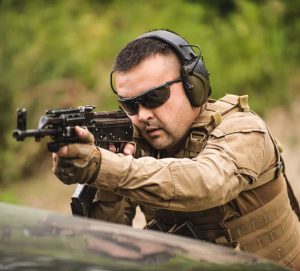
Special Operations forces were moving through civilian environments across multiple states, often at night, often without markings, and with very limited public explanation.
What Jade Helm 15 Was Supposed to Be
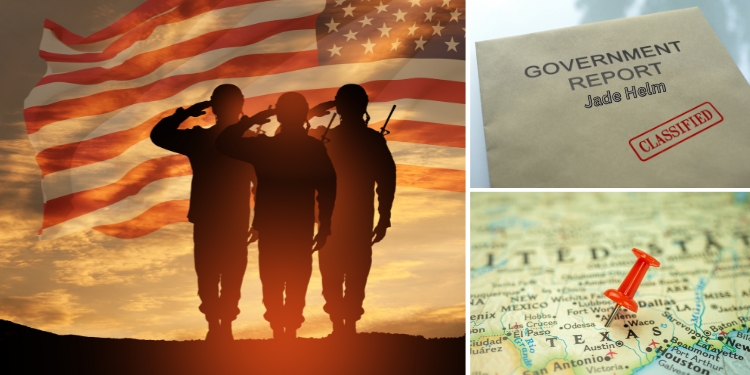
 According to the Pentagon, Jade Helm 15 was a military training exercise conducted between July and September 2015.
It involved the U.S. Army Special Operations Command working alongside the Marine Corps and Air Force Special Operations units. The stated goal was to simulate operations in a realistic environment, including urban and rural settings.
The exercise took place across Texas, Arizona, New Mexico, Utah, Nevada, Colorado, Mississippi, and Florida.
Texas became the center of attention, mainly due to leaked maps that labeled states as either “hostile” or “permissive.” Texas, curiously, appeared in red.
Military officials later claimed that the labels used during Jade Helm had no political meaning and were part of a fictional training exercise. That explanation did little to ease concerns. When a government refers to parts of its own country as hostile, even on paper, it forces people to wonder how quickly that label could stop being fictional. History shows that governments rarely prepare for scenarios they believe will never happen.
The Pentagon also assured the public that troops would not carry live ammunition and that civilians would not be targeted. Those promises sounded comforting on the surface, but they raised a deeper concern: If no one was at risk, why was it necessary for soldiers to blend so completely into everyday civilian life?
The Texas Controversy
Texas became the center of the controversy after internal training maps surfaced showing the state labeled as hostile territory within the exercise.
Even though military officials later said the label was fictional, for many Texans, that explanation was not reassuring.
What reason did the Government have to casually describe parts of their own country as hostile? This crosses a line, even for training, unless the idea had already been discussed and accepted behind closed doors.
The wording touched a deep nerve in a state with a long memory of federal overreach and a strong attachment to constitutional limits. Once those maps became public, the issue was no longer about training logistics. It was about mindset, intent, and how easily citizens could be reclassified when conditions change.
If This Happens, It Could Send Us Back to the Dark Ages
Governor Greg Abbott responded by ordering the Texas State Guard to monitor the exercise. His speech was calm and deliberate, but the message was clear. Texans were not willing to blindly accept federal assurances without oversight. Abbott stated that residents deserved transparency and that the state had a responsibility to ensure federal activity did not cross legal or constitutional boundaries.
That decision confirmed what many citizens already feared. The concern was real enough to require monitoring, and the questions being asked were serious enough to justify state involvement. When a governor feels the need to watch a military exercise inside his own state, it sends a quiet but powerful signal that trust alone is no longer enough.
Why the Public Reaction Was Different This Time
 The concern surrounding Jade Helm did not come out of nowhere. It was shaped by years of expanding federal authority, increased surveillance, and a growing feeling that major decisions were being made without meaningful public input.
By 2015, trust in institutions was already fragile, especially among Americans who paid attention to emergency powers and government planning.
Special Operations forces are trained for unconventional missions. They move quietly, gather intelligence, and adapt to hostile environments where cooperation cannot be assumed. Watching those same capabilities rehearsed inside the United States made many people uneasy. This was not disaster relief training or humanitarian support. It looked like preparation for operating among a population that might not be informed or compliant.
For many Americans, that realization crossed a line. Why? Because a military that trains to move unnoticed among its own citizens raises questions that cannot be brushed aside. It forces people to wonder where the boundary is between protection and control, and who decides when that boundary can be crossed.
What made those concerns harder to dismiss was who was raising them. Many critics had military backgrounds themselves. They understood training doctrine, operational realism, and command structure. They also understood that when realism becomes the priority, civilian oversight often fades into the background.
That understanding shook what trust many folks still had in the system. They didn’t fear an overnight takeover. They feared something slower and quieter, where rights are adjusted during emergencies and never fully restored once the crisis is declared over.
Martial Law Fears
Jade Helm 15 was an eye-opening incident because it showed how far emergency preparation had already gone inside the US. The exercise involved elite military units training to move through civilian areas, communicate outside normal channels, and operate without public awareness. Those are the same conditions that exist when civil authority weakens, and federal power expands.
Sneaky Inside Secrets to Surviving Martial Law from the People Who Enforce It
The federal government openly maintains contingency plans for domestic emergencies involving civil unrest, infrastructure failure, and loss of order. These plans are designed for moments when speed and control take priority over public debate. When elite military units train to operate among civilians inside the country, it reflects planning for situations where traditional boundaries may no longer hold.
For example, Terry, a former Green Beret and U.S. Army Special Forces, has warned that under Martial Law, preparedness can attract attention rather than provide protection. From a military standpoint, civilians who own firearms or store food are often viewed as resource holders that may need to be secured. In these scenarios, enforcing control and compliance takes priority over individual rights. According to Terry, this one simple step can protect your home before Martial Law is declared. Learn more about it here.
Preppers, especially, understand how this unfolds because history has already shown the pattern. Rights are restricted during emergencies, enforced immediately, and explained afterward. Once authority shifts in the name of stability, it rarely returns to its original limits. By the time citizens realize what has changed, the mechanisms are already in place.
Trump, Military Trust, and the Republican View
 Under President Trump’s second term, the majority of Americans continue to view the military as a force meant to defend the nation, not manage civilian life.
Trump has spoken repeatedly about strengthening the armed forces, supporting veterans, and restoring respect for military institutions.
For a large portion of the public, that message reinforces confidence that military power exists to protect the country from external threats rather than to involve itself in domestic control. But that confidence is what makes Jade Helm even more troubling.
Also, it’s important to mention that the exercise did not take place under Trump’s leadership. It was planned and carried out during the Obama administration, at a time when federal authority was expanding, and public trust in the Government was already under strain. Plenty of folks interpreted Jade Helm through that context, seeing it as part of a broader shift toward centralized power and emergency readiness inside the country.
However, the concern today is not about who occupies the White House. Exercises approved years ago remain embedded in the same system, still operating now. Trust in leadership does not eliminate the risk posed by powers that already exist and can be activated quickly when circumstances change.
What Changed After Jade Helm Ended
Jade Helm officially wrapped up in September 2015, but something important did not end with it. The exercise normalized the idea that large-scale domestic military movement could happen quietly, with limited public explanation, and still be defended after the fact as routine.
Before Jade Helm, a drill of that size moving Special Operations forces through civilian towns would have triggered loud, early briefings. After Jade Helm, silence became acceptable.
 In the years that followed, the military increasingly referred to “homeland complexity” and “gray zone environments” in public doctrine.
Those terms describe situations where the line between foreign threat and domestic instability is blurred. Civilian populations are no longer treated as a constant, cooperative factor. They are variables.
Jade Helm helped test something else too: public reaction. Officials watched how fast concern spread, how governors responded, how media framed the issue, and how quickly the story faded.
From a planning perspective, that feedback is invaluable. It shows what can be done openly, what must be done quietly, and how long public attention lasts. That may be the most unsettling legacy of Jade Helm. It wasn’t just a rehearsal for troops, but for the system itself.
So, Fact or Fiction?
Jade Helm 15 was a real military exercise. That part is fact. It involved real troops, real towns, and real secrecy. Regarding martial law, many point out that it was never publicly proven, yet operations of this scale and nature are exactly how such measures are prepared long before they are ever officially declared.
What is also fact is that the exercise exposed a deep trust gap between citizens and institutions. It highlighted how quickly confidence erodes when people feel excluded from decisions that affect their communities.
Calling every concern fiction ignores real questions people have. Treating the exercise as clear proof of a takeover goes too far. The reality sits in the uneasy space between those two views.
Why This Still Matters
Jade Helm 15 served as a reminder that military power inside the United States is real, active, and constantly adapting. The next exercise of this kind may not carry a name that draws attention. It may arrive quietly and be justified by a different emergency. When it happens, those who remember 2015 will recognize the signs sooner than others.
But what Jade Helm actually taught us is how quickly “training” can roll out across real communities while everyday families stay in the dark. When operations happen quietly, the safest move is to prepare quietly too, before confusion, shortages, and sudden restrictions turn normal life into a scramble.
Ex-Pentagon Officer Warns: The Last Reset Has Already Begun – Dark Days Are Just Ahead
If the grid failed tonight and stayed down… the people who already have water, heat, food, and a calm plan will make it through the first 72 hours with their family intact.
This short 5-minute video breaks down what insiders expect next and the simple, practical steps regular households can take right now to stay stable if the lights go out, services stall, and access to money and supplies gets disrupted.
You may also like:
 Only a Combat Medic Would Know This
How to Deal with Injuries Caused During Social Unrest (VIDEO)
How to Make Your Home Bulletproof
This Is How I Am Going to Stay Safe During the Upcoming Riots
72 Hours After The Grid Collapses. What Really Happens?
Read the full article here