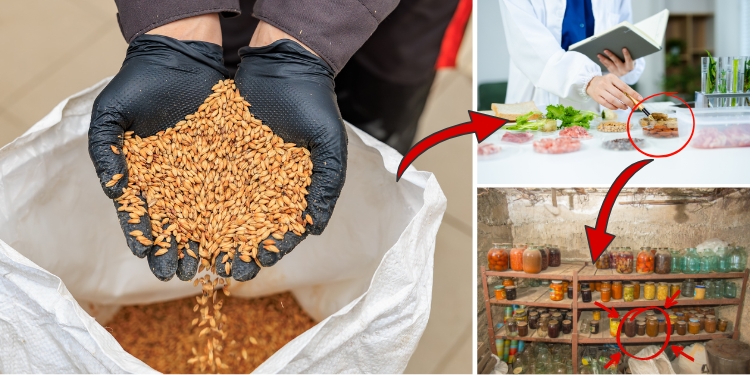

Whole grains have always been one of the most trusted survival foods, and for good reason. They fill an empty stomach, provide steady energy, and store well for long periods when handled properly.
Storing whole grains for decades is not guesswork – it’s science. Researchers at the U.S. Department of Agriculture and other food science institutions have spent decades studying how grains age, how nutrients break down over time, and how environmental factors like moisture, oxygen, heat, and light affect long-term stability.
These studies confirm that whole grains can remain both safe and nutritionally useful for 30 years or more when stored with proper methods. The key is to remove the main enemies of longevity and preserve the grain in its most stable form.
Why Whole Grains Are Essential for Long-Term Food Security
 Whole grains are a concentrated source of calories, complex carbohydrates, protein, dietary fiber, and essential micronutrients like B vitamins and minerals that many survival situations make harder to access.
Unlike highly processed foods, whole grains do not depend on preservatives; they withstand long storage when environmental conditions are managed correctly.
A study published by the Journal of Agricultural and Food Chemistry found that properly stored whole grains retain a significant portion of their nutrient content even after decades, particularly when kept in low-oxygen, low-temperature environments.
This contrasts sharply with flour and other processed grain products, which lose valuable oils and vitamins much faster because grinding exposes them to oxidation and heat. This means if your goal is long-term survival nutrition, your pantry should be stocked with unprocessed wheat berries and whole grains rather than store-bought flour.
What Destroys Grain Over Time
If grains degrade over time, it isn’t because they are naturally unstable. This happens when they react with their surrounding environment.
But the biggest enemy is moisture: as you might already know, water promotes microbial growth, rancidity, sprouting, and fungal contamination. High-humidity environments can make grain unusable in as little as a few months. Oxygen is the second big factor, because it accelerates oxidation and nutrient loss; studies show that even moderate levels of oxygen exposure significantly degrade oils and vitamins stored in whole grains.
Heat also accelerates deterioration, which is why the USDA and emergency food scientists emphasize the golden rule: cooler is always better. Temperature swings, like those in an attic or garage, can be far worse than a consistently cool basement environment. Finally, pests like insects and rodents are relentless if given access, and one infestation can ruin an entire stockpile.
So, to keep your grains longer, you must know it depends on controlling moisture, oxygen, heat, and pests before they ever reach your supply. If you get even one of these wrong, you risk losing your stockpile.
In this regard, I recommend you to read Bug-In Guide (a bestselling 101 survival manual written by a former Navy SEAL), because it gives you everything you need to preserve food for the long haul, along with plenty of other useful advice. It explains exactly how to package, store, and protect your food so it stays usable for years, not months. If you are serious about building a dependable food reserve, this book gives you the blueprint. Get your copy here.
Choosing the Right Grains for 30-Year Storage
 Not all grains are created equal when it comes to long-term storage, and choosing the wrong ones can quietly ruin your food security years down the line.
Some grains are naturally stable and can last for decades, while others begin breaking down much sooner because of higher oil content or processing.
If your goal is thirty-year storage without serious nutrient loss, you need to focus on grains that remain chemically stable over time.
Whole, intact grains store far better than processed products, because grinding exposes oils and nutrients to oxygen, which speeds up spoilage. This is why experienced preppers and food scientists alike emphasize storing grains in their whole form and processing them only when needed.
The following grains have a proven track record for long-term storage when kept dry, sealed from oxygen, and protected from pests:
- Hard red wheat, which is widely considered the best long-term survival grain due to its durability, high protein content, and ability to remain viable for decades.
- Hard white wheat, which offers the same storage longevity as red wheat but with a milder flavor that many families prefer
- White rice stores exceptionally well because it lacks the oils found in brown rice that cause rancidity over time. According to Dollar Apocalypse (pg. 77), you should keep a minimum of 75 lbs per adult for long-term emergencies.
- Dent corn, also known as field corn, which can last for decades when dried and sealed properly and can be used for meal, flour, or animal feed
- Pearled barley, which has had its outer hull removed and stores longer than hulled varieties when moisture is controlled
- Whole oats, especially when stored as oat groats rather than rolled oats, which retain stability far longer in intact form
- Sorghum, a drought-resistant grain with excellent shelf life that can be used as a rice substitute or ground into flour
- Millet, a small, low-oil grain that stores well and cooks quickly, making it useful during fuel shortages
But what matters most across all of these examples is not just the grain itself, but its natural oil content and physical structure. Grains with lower oil content and intact kernels resist oxidation far better, which allows them to retain calories and nutrients for decades under the same storage conditions.
The Best Way to Store Grains for 30 Years (Tested Method)
For decades, disaster preparedness experts and food scientists have recommended a storage system that works because it removes oxygen, blocks pests, and limits environmental exposure. This combination has outperformed every other method I’ve tried over the past few decades, and it has proven its ability to keep food safe from pests and nutrient loss for years:
- First, use food-grade buckets (pg. 67) or similar heavy-duty containers to provide a primary physical barrier.
- Inside each bucket, place a Mylar bag that resists light and moisture far better than plain plastic.
- Add oxygen absorbers, such as silica gel, before sealing the Mylar bag. This strategy removes the air inside and creates a low-oxygen environment that dramatically slows oxidation and nutrient loss.
So, if you start with clean, dry grain and use this packaging method in a cool, dry space, your grain stockpiles will remain edible and nutritious well past 30 years.
More Than Just Storage
 A mistake you are probably making right now when prepping is that you are focusing on longevity rather than preserving the calories and nutrients you will actually need in a crisis.
Whole wheat berries are superior to ground flour for this reason, because milling grain accelerates oxidation and nutrient loss. That’s why food scientists advise storing grain in whole form and only grinding what you need when you need it.
Temperature plays a critical role here, too. A USDA agricultural research report shows that every 10°F increase in storage temperature can significantly reduce the useful life of stored grains because heat speeds up chemical reactions that degrade fats, vitamins, and enzymes. So I cannot stress this enough – store your grain where it stays cool year-round!
How to Store and Organize a Decades-Long Grain Pantry
Good long-term grain storage (EC) depends on logistics just as much as packaging, because even perfectly sealed food can be wasted if it is not organized and maintained correctly. Here are a few things you must do to preserve your stockpile’s nutrients:
- Label every container with the grain type and the date it was packed, so you always know what you have and how old it is
- Store grains in a rotation-friendly way, keeping older buckets accessible so you can use and replace them over time
- Inspect your stockpile once or twice a year to catch problems early, especially cracked buckets, broken seals, or pest activity
- Check that lids remain tightly sealed and that the storage space stays consistently dry and cool throughout the seasons
- Keep grains off concrete floors by using pallets or shelves, since moisture can slowly transfer through cement over time
- Store the tools you will actually need to use your grains, including a reliable grain mill, airtight scoops, and basic measuring containers
- Consider having a moisture tester on hand, because even slightly damp grain can shorten shelf life dramatically
- Organize your pantry so you can find essentials quickly during an emergency, instead of digging through unmarked buckets under stress
But even if you do all this, you can still make a mistake. And one mistake is enough. So, are you sure you’re truly ready to protect your food long term?
This stockpile challenge might prove you wrong:
How to Maximize the Nutritional Value of Stored Grains
Even perfectly stored grain can lose part of its practical value if it is not managed correctly over time. Long-term food security depends not just on preservation, but also on how you handle and use what you store. To protect the nutritional strength of your grains for decades, follow these principles:
- Store grains whole, not ground. Intact kernels protect their internal oils and vitamins far better than flour, which begins degrading soon after milling.
- Keep a reliable grain mill. Grinding only what you need prevents unnecessary exposure to air and preserves nutrients inside the remaining stock.
- Practice real rotation. Use and replace small portions over time so your supply stays familiar, functional, and dependable.
- Cook with your stored grains regularly. This ensures your family can prepare them efficiently during an emergency without waste.
- Learn traditional preparation methods. Soaking, sprouting, or fermenting grains can improve mineral absorption and make them easier to digest under stress.
- Protect from cross-contamination. Always use clean, dry scoops and reseal containers immediately after opening to avoid introducing moisture.
- Monitor long-term condition. If grains develop an off smell, discoloration, or unusual texture, separate and inspect them before mixing with fresh stock.
Therefore, grain storage is not passive. The families who treat their pantry as a working system rather than a sealed vault are the ones who preserve both calories and nutrients for the long term.
Best Places to Store Your Grains
 Where you put those buckets matters just as much as how you seal them.
The ideal storage spot is consistently cool and dry, with stable temperatures year-round. A basement or a cellar with low humidity is often perfect.
If you are wondering how to create a space with low humidity, you can install a dehumidifier, improve ventilation, seal cracks or just use a very efficient method that’s not so popular nowadays. Click here to find out more.
When storing grains, avoid garages, attics, and most sheds, where temperature swings and moisture buildup speed up nutrient loss and attract pests. Even so, a shed can actually be a good option, but only if it is built the right way, following a few key rules. With this unconventional blueprint, you can put together a cool, moisture-proof storage shed in a single weekend, even with no building experience.
But if your only options are warmer spaces, consider climate-controlled storage or high-capacity desiccants that can help lower local humidity. Also, it’s important to remember that grains are only half the equation. Buckets keep calories. A steady source of fresh food keeps you from living on stored carbs for months, and it fills the gaps grains can’t cover.
This short presentation shows a simple backyard system that produces food day after day with minimal input, so you are not betting everything on what you managed to store years earlier. Watch it here.
Frequently Asked Questions
1. Can whole grains really last 30 years without losing nutrients?
Yes, when stored correctly. Whole grains kept dry, sealed from oxygen, protected from pests, and stored in a consistently cool environment can remain both edible and nutritionally useful for 30 years or longer. The stability of the intact kernel is what allows this longevity.
2. Why is whole grain better for storage than flour?
Whole grains protect their natural oils and vitamins inside the kernel. Once grain is ground into flour, those nutrients are exposed to air and begin breaking down much faster. If your goal is long-term nutrition, store the grain whole and grind it only when needed.
3. What is the most common mistake people make when storing grains?
The most common mistake is ignoring temperature stability. Even properly sealed buckets will age faster in hot or fluctuating environments. A cool, steady storage location can dramatically extend both shelf life and nutrient retention.
4. How can I tell if stored grain is no longer good?
Check for unusual odors, visible mold, insect activity, or significant discoloration. Properly stored grain should smell neutral and look consistent in color and texture. If anything seems off, inspect it carefully before use and avoid mixing questionable grain with fresh supplies.
You may also like:
 50 Ways Mylar Bags Will Save Your Life Post-SHTF
The ONLY 5 Super Foods You Need to Survive when SHTF (VIDEO)
How To Choose The Best Food Grade Buckets
10 Ingenious Ways to Keep Moths Away From Your Grains
$1 Survival Meals for Hard Times
Read the full article here