

How to Make Peanut Butter: The Prepper’s Complete Guide to Homemade, Long-Lasting Peanut Butter

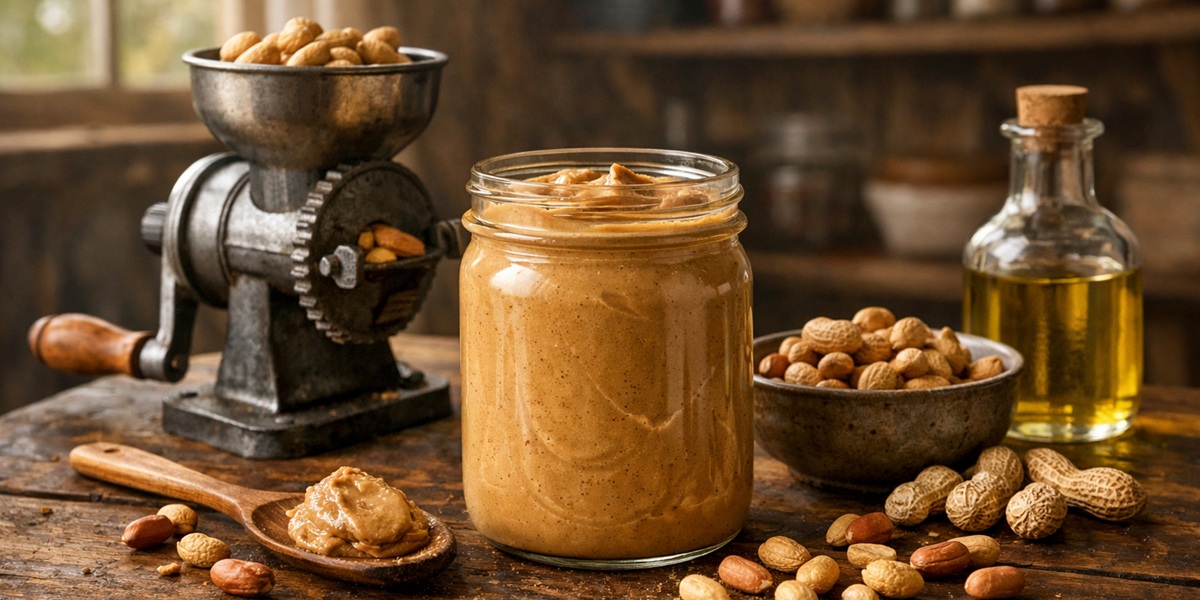

When the grid goes down and grocery store shelves are bare, peanut butter might just be one of the most valuable foods in your stockpile. It’s calorie-dense, protein-rich, and incredibly shelf-stable — exactly what a serious prepper needs. But here’s what most people don’t realize: store-bought peanut butter is just the beginning. Knowing how to make peanut butter from scratch gives you a critical skill that could feed your family for months, even when commercial supplies dry up.
In this guide, we’ll cover everything from the basic recipe to long-term storage strategies, shelf life facts, and the nutritional value that makes peanut butter a true survival superfood.
Why Preppers Should Know How to Make Peanut Butter
Before we get into the how, let’s talk about the why. Peanut butter checks nearly every box on a prepper’s food priority list:
- High caloric density — roughly 1,500–1,600 calories per pound
- High in healthy fats and protein — critical macronutrients during periods of high physical activity or stress
- Requires no refrigeration (when stored correctly)
- Made from a single, storable ingredient — raw peanuts can be stored for 1–2 years in proper conditions
- No cooking required to eat — a big advantage during emergencies
If you can store raw peanuts and have a manual food grinder or even a mortar and pestle, you can make peanut butter indefinitely — no electricity required.
What You’ll Need
Ingredients
- 2 cups dry roasted peanuts (unsalted, to control sodium content)
- 1–2 tablespoons peanut oil or another stable oil (optional, for creaminess)
- ½ teaspoon salt (optional)
- 1 teaspoon honey or sugar (optional, for sweetness)
That’s it. The beauty of homemade peanut butter is its simplicity.
Equipment Options
You don’t need a fancy kitchen setup. Here are your options from most to least convenient:
 How to Make Peanut Butter Step by Step
Step 1: Roast Your Peanuts (If Starting Raw)
If you’re working from raw peanuts — which is ideal for long-term storage — you’ll need to roast them first. Roasting brings out the oils and flavor that make peanut butter taste the way it should.
Spread raw peanuts in a single layer on a baking sheet. Roast at 350°F (175°C) for 15–20 minutes, stirring halfway through. Watch them closely — they go from perfectly roasted to burnt quickly. You’ll know they’re ready when they’re golden brown and smell nutty and fragrant.
Allow the peanuts to cool completely before processing. Grinding warm peanuts can result in an overly oily texture.
Step 2: Remove the Skins (Optional)
Once cooled, rub the peanuts between your hands or in a clean kitchen towel. The skins will flake off. Removing them creates smoother, milder peanut butter, but it’s not strictly necessary. Many preppers skip this step to save time and retain every bit of nutrition.
Step 3: Process the Peanuts
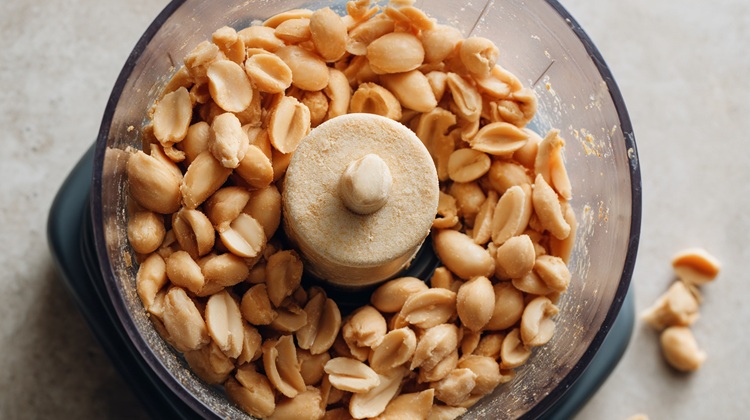
Add your peanuts to your food processor, blender, or grinder. Here’s what to expect at each stage:
- 0–30 seconds: Coarse, crumbly texture — this is chunky peanut butter territory
- 1–2 minutes: The oils begin to release and the mixture turns paste-like
- 2–3 minutes: Smooth, creamy peanut butter
Scrape down the sides as needed. If the mixture seems too thick or your machine is struggling, add peanut oil one teaspoon at a time until you reach the desired consistency.
Step 4: Season to Taste
Once you’ve achieved your desired texture, add salt, honey, or sugar if desired. Pulse a few more times to incorporate. Taste and adjust.
Step 5: Transfer and Store
Spoon your peanut butter into a clean, airtight jar — a wide-mouth Mason jar works perfectly. Label it with the date. Now comes the most important part for preppers: storage.
Peanut Butter Storage: Making It Last as Long as Possible
This is where homemade peanut butter diverges significantly from commercial versions — and where your prepper knowledge really matters.
The Shelf Life Reality
Commercial peanut butter contains stabilizers like fully hydrogenated vegetable oils that prevent oil separation and extend shelf life. Homemade peanut butter, made with just peanuts and natural oil, will separate (the oil rises to the top) and has a shorter window before going rancid.
Here’s a practical shelf life breakdown:
| Storage Method | Estimated Shelf Life |
| Room temperature (pantry) | 1–3 months |
| Refrigerator | 3–6 months |
| Freezer | 6–12 months |
| Vacuum-sealed + cool/dark pantry | Up to 6 months |
The enemy of peanut butter is oxidation. The fats in peanut butter — primarily oleic acid (monounsaturated) and linoleic acid (polyunsaturated) — break down when exposed to oxygen, heat, and light, causing rancidity. You’ll know your peanut butter has gone rancid when it smells sharp, sour, or like paint. Don’t eat rancid peanut butter — it can cause digestive issues and contains harmful free radicals.
According to the USDA Food Safety and Inspection Service, proper storage is critical to maintaining food quality and safety.
Best Practices for Long-Term Storage
- Use the right containers. Mason jars with tight-fitting lids are ideal. Avoid plastic containers for long-term storage, as plastic is oxygen-permeable over time. Glass is your best option.
- Minimize headspace. Fill your jars as full as possible to reduce the oxygen inside the jar. Less oxygen = slower oxidation = longer shelf life.
- Consider oxygen absorbers. Dropping a small food-grade oxygen absorber into your jar before sealing dramatically slows rancidity. These are inexpensive and widely available from preparedness retailers.
- Store in a cool, dark location. Heat and light accelerate fat oxidation. A basement, root cellar, or cool pantry away from sunlight is ideal. The University of Georgia Cooperative Extension notes that for every 10°F decrease in storage temperature, food shelf life roughly doubles.
- Freeze for maximum longevity. Homemade peanut butter freezes exceptionally well. Portion it into smaller jars before freezing so you’re only thawing what you need. Thaw in the refrigerator overnight and stir to recombine any separated oil.
- Label everything. Always date your jars. In a crisis, rotating your food stores (first in, first out) is essential. The CDC’s emergency food supply guidelines emphasize rotation as a core principle of emergency preparedness.
Storing the Source: Raw Peanuts
For the true long-game prepper, storing raw peanuts rather than finished peanut butter gives you more flexibility and potentially longer storage life.
- Raw peanuts in-shell can last 1–2 years at room temperature in a cool, dry place
- Shelled raw peanuts store for 4–6 months at room temperature, up to 1 year refrigerated, and up to 2 years frozen
- Vacuum-sealing shelled raw peanuts with oxygen absorbers in Mylar bags can extend shelf life considerably
This means you can store the raw ingredient long-term and make fresh peanut butter in small batches as needed — always maximizing freshness and minimizing waste.
Nutritional Profile: Why Peanut Butter Is a Survival Superfood
Understanding what peanut butter provides nutritionally helps you plan your emergency food supply more effectively.
Per 2-tablespoon serving (approximately 32g) of natural peanut butter:
| Nutrient | Amount |
| Calories | 190–200 |
| Total Fat | 16g |
| Saturated Fat | 2.5g |
| Monounsaturated Fat | 8g |
| Polyunsaturated Fat | 4.5g |
| Protein | 7–8g |
| Carbohydrates | 6g |
| Fiber | 2g |
| Sodium | 0–75mg (depending on added salt) |
| Potassium | 200mg |
| Magnesium | 49mg |
| Vitamin E | 2.9mg |
| Niacin (B3) | 4.2mg |
Data sourced from the USDA FoodData Central database.
In a survival scenario, caloric density is king. Peanut butter delivers approximately 167 calories per ounce — comparable to many commercial survival bars. A single pound of peanut butter provides roughly 2,800 calories, which is close to an entire day’s caloric needs for an active adult.
The protein content is equally important. During a crisis, maintaining muscle mass and physical strength is critical. Peanut butter’s 7–8g of protein per serving adds up quickly when it’s a dietary staple.
The healthy fats in peanut butter — primarily monounsaturated — also provide sustained energy release, meaning you won’t experience the blood sugar spikes and crashes associated with carbohydrate-heavy survival foods.
Variations Worth Knowing
Extra-Stable Peanut Butter for Long-Term Storage
Replace natural peanut oil with refined coconut oil (1–2 tablespoons per 2 cups peanuts). Refined coconut oil is highly saturated, making it far more oxidation-resistant than polyunsaturated oils. This version stays stable longer at room temperature and separates less. Note that this does slightly alter the flavor.
Dry-Roasted Peanut Powder (Dehydrated Peanut Butter)
Powdered peanut butter — made by pressing most of the oil out of roasted peanuts before grinding — has a dramatically longer shelf life than regular peanut butter. Commercial versions like PB2 typically have a shelf life of 4–5 years unopened. While you can’t easily make true powdered peanut butter at home without specialized equipment, it’s worth stocking alongside your homemade supply.
Frequently Asked Questions
Q: Does homemade peanut butter need to be refrigerated? A: It doesn’t need to be refrigerated immediately, but refrigeration significantly extends its shelf life. At room temperature, homemade peanut butter lasts 1–3 months. In the fridge, expect 3–6 months. For preppers without refrigeration, use within 4–6 weeks and store in the coolest, darkest location available.
Q: Why does my homemade peanut butter separate? A: Unlike commercial peanut butter, homemade versions don’t contain stabilizers to keep the oil emulsified. Separation is completely normal and doesn’t mean your peanut butter has gone bad. Simply stir it back together before using. Storing your jar upside down can help keep it more evenly mixed.
Q: Can I use a manual grinder to make peanut butter off-grid? A: Yes. A manual grain/nut grinder with fine-grinding plates works very well for peanut butter. You may need to run the peanuts through 2–3 times to achieve a smooth consistency. This is one of the most valuable non-electric tools a prepper can own for food self-sufficiency.
Q: Is peanut butter safe for long-term emergency storage? A: Commercial peanut butter is an excellent long-term storage food, with an unopened shelf life of 1–2 years. Homemade peanut butter has a shorter shelf life but can be extended significantly with proper storage techniques. Powdered peanut butter offers the longest shelf life of all peanut butter options.
Q: What are the signs that peanut butter has gone bad? A: Rancid peanut butter will smell sharp, sour, bitter, or chemical-like — similar to paint or nail polish remover. The texture may also become very hard and dry. When in doubt, throw it out. Rancid fats are not safe to consume in quantity.
Q: How many peanuts do I need to make a jar of peanut butter? A: Approximately 1 pound (about 2 cups) of shelled, roasted peanuts yields roughly one 16-ounce jar of peanut butter. Plan your raw peanut storage accordingly.
Final Thoughts
Knowing how to make peanut butter is a simple but genuinely valuable survival skill. With nothing more than peanuts and a grinder, you can produce a high-calorie, high-protein food that keeps your family fueled through extended emergencies. Pair that knowledge with smart storage strategies — cool temperatures, airtight glass containers, oxygen absorbers, and strict rotation — and peanut butter can be a cornerstone of your long-term food supply.
Stock the raw ingredient, master the process, and you’ll never have to worry about this nutritional powerhouse disappearing from your pantry.
The Skill That Matters More Than the Recipe
Making peanut butter is about far more than blending peanuts. It’s about reclaiming a mindset most modern households have completely lost — the mindset of self-reliance.
Our great-grandparents didn’t panic when stores ran empty. They didn’t freeze when supply chains broke. They knew how to produce, preserve, repair, improvise, and adapt using simple tools and practical knowledge.
That’s exactly why the Amish remain one of the most resilient communities on the planet.
They live comfortably with minimal dependence on fragile modern systems. No panic. No chaos. No desperate last-minute scrambling. Just skills, preparation, and time-tested methods that work when everything else fails.
If you found this peanut butter guide valuable, imagine having an entire library of that kind of knowledge.
The Amish Ways Book is packed with practical, real-world skills designed for exactly the kind of uncertain future preppers train for:
✔ Food preservation & storage techniques
✔ Off-grid cooking & kitchen strategies
✔ Natural remedies & health solutions
✔ Homestead efficiency hacks
✔ Low-tech survival skills that don’t require electricity
✔ Crisis-proof lifestyle systems
This isn’t theory. This is generational knowledge from people who have quietly mastered long-term resilience.
When systems fail, skills become survival currency.
👉 Grab your copy of the Amish Ways Book here while it’s still available
Because when the next disruption hits, you won’t wish you had bought another gadget.
You’ll wish you had learned how to live without needing one.
You may also like:
 Does Peanut Butter Go Bad?
How To Make Hamburger Meat Last For 25 Years (Video)
Can Water Expire?
Does Antibiotic Ointment Expire?
The 6 Expired Foods That You Can Safely Eat When SHTF
How To Choose The Best Food Grade Buckets
Read the full article here



