Game-Farm Mallard Genetics Are a Bigger Problem Than Waterfowlers Think — Only 2% of Greenheads in the Atlantic Flyway are Fully Wild

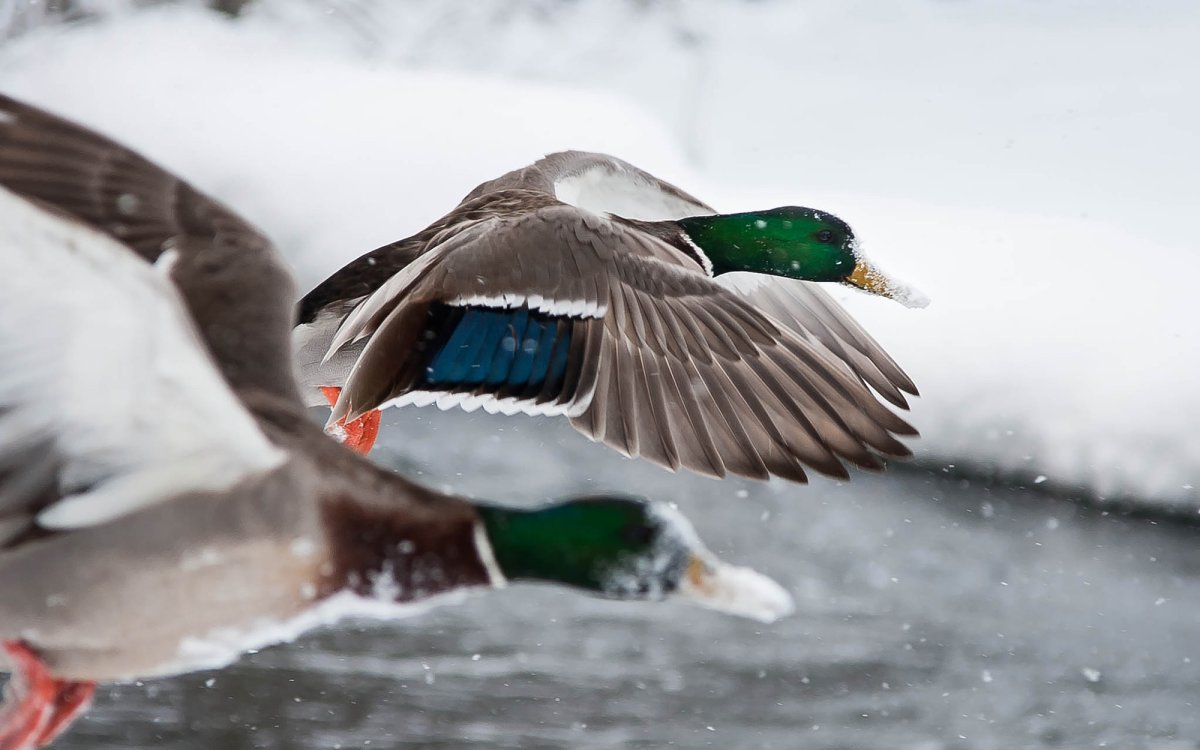

Waterfowlers go to great lengths chasing mallard ducks across the continent and prize them above all other duck species. Witnessing the migration, working these ducks over decoys, and watching your dog retrieve a fully plumed greenhead is the kind of stuff that duck hunter’s dreams are made of. However, due to the presence of mallards released from game farms, and the hybridization that’s occurred over the years, a notable percentage of the birds hunters harvest nowadays aren’t 100% wild —— even if they appear to be.
This rampant crossbreeding is an issue across all four flyways, and ongoing research is helping paint a clearer picture of the problem. New data shared by the duckDNA project in December shows that game-farm mallard genetics can be found in 45 of the Lower 48 states, with different prevalence rates across the four flyways. These rates are highest along the Atlantic Flyway, where new data shows that 74 percent of hunter-harvested mallards contain evidence of game-farm ancestry.
“The thing about game-farm mallards is that they have a very distinct genetic signature,” says Dr. Phillip Lavretsky, an associate professor at the University of Texas at El Paso who works with Ducks Unlimited to collect and analyze data for the duckDNA project. “We actually went and collected birds from all over the country, and have a time stamp from 1800 to today allowing us to track their genetics. Our research has found that crossbreeding has been rampant enough over the years that in the Atlantic Flyway today you have about a 2% chance that a bird you shoot in the region is a 100% wild mallard, with the rest of the birds having at least 10% game farm mallard ancestry.”
Understanding the Problem
Research on mallard crossbreeding is expanding as scientists discover more about the cause-and-effect relationship between wild and farm-raised waterfowl. The data being collected by Dr. Lavretsky’s team and Ducks Unlimited biologists is a large part of this effort, and a lot of it is coming from duck hunters themselves.
“Through the duckDNA program, we’re leveraging hunters to help collect examples to answer this question of what the different levels of ancestry are,” says DU Senior Waterfowl Scientist Mike Brasher. “These hunters are helping us see how these crossbreeding issues are affecting the overall mallard population and helping us find solutions to the problem.”
More than 4,000 waterfowlers have participated in the project so far by submitting birds they’ve harvested, Brasher says. Through their contributions, the duckDNA project is able to continue adding to the data around mallard genetics, and how the issue of crossbreeding could be affecting wild populations.
“Though all our data on duckDNA is preliminary, the data we have collected and the patterns that we’re seeing are consistent with other data collected in past studies,” says Brasher. “We’re just now expanding and hoping to find an answer on a more significant scale. What’s perhaps more important at the moment though is that we’re making people aware of this issue.”
Mapping this out shows that the biggest influence from game farm mallards is in the Atlantic Flyway — and, increasingly, Lavretsky says, in the Great Lakes region. Some mallard populations, like those in the Central Flyway, have been less affected by crossbreeding, with prevalence rates of game-farm genetics closer to 10 percent. But there is still a need for more research on the subject.
“The scientific community is doing its best to research and stop these game farm birds [from continuing to] producing inferior offspring,” says Brasher, “And to see how big of a threat these birds are to wild mallards throughout the country. This is in addition to habitat loss and we don’t want to lose sight of that issue. We’re still in the information stage.”
How It Started
In the wake of market hunting, the propagation and release of farm-raised mallards was seen as a way to boost low waterfowl numbers around the turn of the century. Since the 1920s, captive-bred mallards have been released by federal, state, and private entities, with well over 90% of those releases happening along the East Coast. Hunting clubs and well-intentioned wildlife groups began releasing these birds en masse during the 1930’s.
The practice has continued since then, with hundreds of thousands of game farm mallards released annually. While the landowners and game keepers who started releasing these birds did so with the best intentions, thinking these ducks weren’t any different from wild mallards, it turns out the two aren’t exactly the same.
The practice of introducing game animals like ducks to new areas is nothing new. The European practice of releasing ducks and other game birds to hunt dates back nearly 500 years. However, these animals were typically bred to be isolated to one specific area so they could be easily located, pursued, and killed, and were never intended to be used to increase natural wild game populations. Which is exactly how they’ve now become an issue.
“The bird that is causing the issue is a game farm mallard,” says Lavretsky. “It was bred for supplementation or stocking purposes in the 1630’s when England King Charles the III wanted more mallards to shoot. Over the last 400 years that breed has been honed and bred and then came to North America in the 1920’s where they didn’t exist before to help supplement dropping mallard populations, kicking off what has become a very significant modern day problem.”
Why Hybridization Is a Problem
It may seem like no big deal that these game-farm mallards have infiltrated wild populations so heavily. After all, a mallard is a mallard, right? The fact is, though, that hybridization can change wild genetics over the long term, which has biological consequences. These hybrid mallards are simply less adaptable than wild birds, and this “watering down” of wild genetics could be at least part of the problem with declining mallard populations, especially in the Atlantic and Mississippi Flyways.
“Game-farm mallards have less body fat, meaning they migrate more haphazardly or don’t migrate at all. The birds also have a differently shaped beak which makes them better at pecking rather than filter feeding,” Lavretsky explains. “This means that the ducks can’t subsist on the same amounts of natural forage as wild mallards, and so they require twice as much feed and must feed for twice as long in order to get the same amount of calories. This makes the loss of habitat that’s occurring all around the country all the more devastating, as the cross-bred ducks are much less adapted for survival in a shrinking habitat.”
In addition to the differences in feeding and migration behavior, game-farm mallards are less likely to incubate eggs and have poor nesting instincts. This in turn creates lower numbers of less productive offspring, which are also more susceptible to disease and likely predators.
“It’s like the difference between huskies and wolves,” says Lavretsky, “The game farm mallards may look the same, but they have very distinct differences in both appearance and behavior that makes them less adaptable to a wild environment.”
Keeping Wild Birds Wild
The release of game-farm mallards has been a long and ongoing practice by many property managers and hunting clubs to provide sport and full limits for waterfowl hunters. Yet as hunters and anglers, we need to ask ourselves what sort of damage such practices are doing to our wild bird populations.
“The fact is that game farm mallards are an unnatural creature being thrust into a natural environment,” says Lavretsky. “And just like hatchery-raised salmon and other animals raised outside of their natural habitat that have then been placed back into nature, they just don’t do well because they’re genetically unfit to survive. Unfortunately, this means that game farm mallards are breeding these unfit genetics back into the population and causing declines in the overall population of the species.”
Read the full article here