
When most people think about food storage, they think about cans, buckets of rice, or expensive freeze-dried meals. Very few stop to consider dehydrated vegetables, even though they’re one of the most practical, affordable, and versatile prepper foods you can store long term.
Dehydrated vegetables don’t just save space. They preserve nutrition, extend shelf life dramatically, and give you real food options when fresh produce disappears overnight. In a grid-down situation, during shortages, or after a natural disaster, they can mean the difference between eating well and just surviving.
If you’re serious about preparedness, dehydrated vegetables should already be part of your plan.
Why Dehydrated Vegetables Matter in a Crisis
Fresh vegetables rely on refrigeration, transportation, and constant resupply. All three disappear fast during emergencies. Dehydrated vegetables solve that problem by removing moisture, the main cause of spoilage, while keeping most of the nutrients intact.
They’re lightweight, compact, and don’t require electricity to store. A single shelf can hold months’ worth of vegetables without worrying about mold, freezer burn, or power outages. That alone makes them a strong choice for any prepper.
Another overlooked benefit is flexibility. Dehydrated vegetables can be rehydrated for soups and stews, added directly to rice or pasta, or eaten dry in small amounts if necessary. They adapt to what you have, not the other way around.
Shelf Life That Actually Makes Sense
When stored properly in airtight containers, dehydrated vegetables can last anywhere from five to ten years, sometimes longer. That puts them well ahead of canned vegetables, which usually top out at two to five years before quality drops sharply.
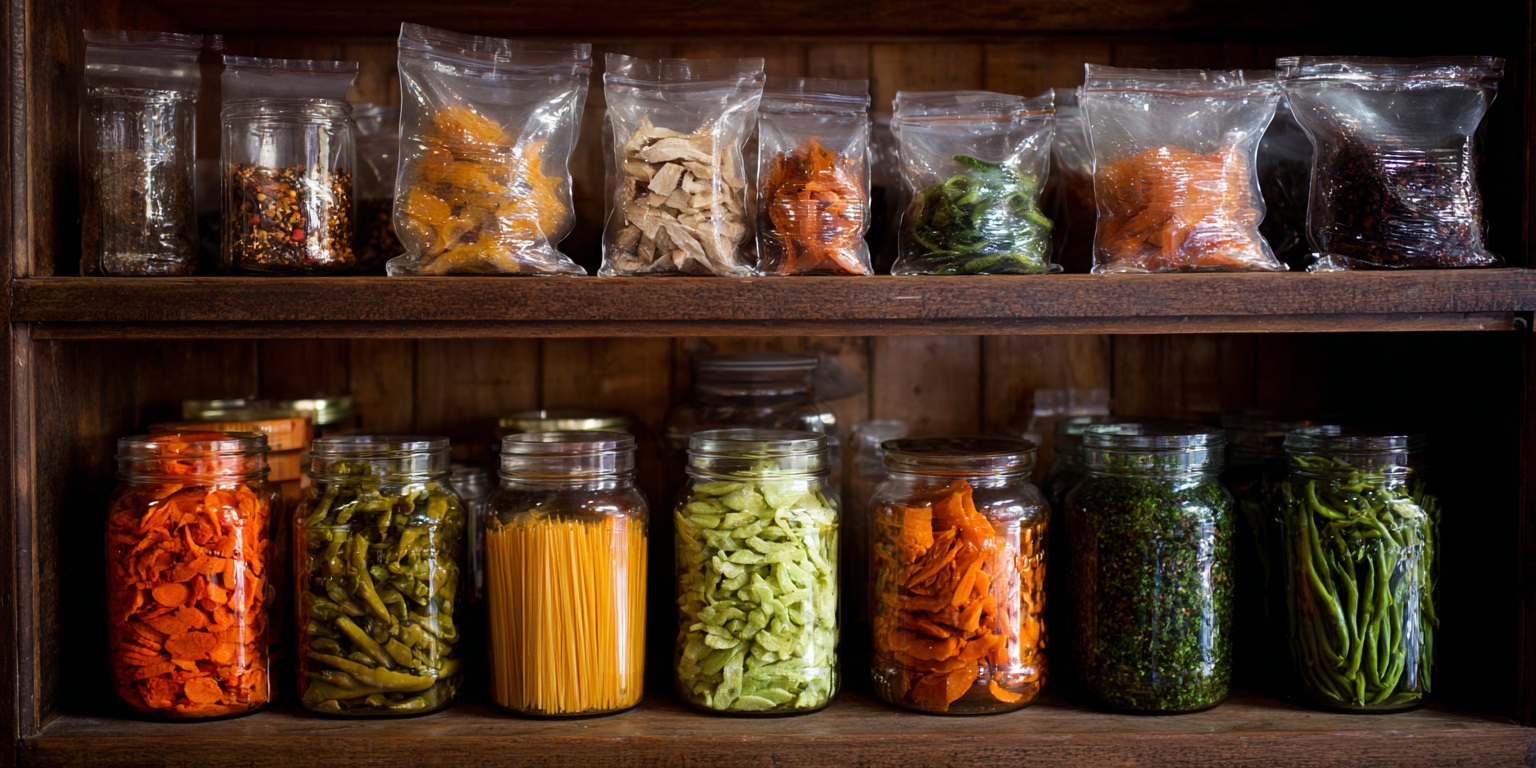
Because they take up so little space, you can store a wide variety instead of relying on just a few staples. Carrots, onions, peppers, peas, green beans, tomatoes, spinach, and even herbs can all be dehydrated and stored together.
Variety matters more than people think. Eating the same bland foods day after day destroys morale, and morale is a survival issue in long-term emergencies.
Nutrition Without the Bulk
Dehydration preserves a surprising amount of nutrients, especially minerals and fiber. While some vitamins are reduced, dehydrated vegetables are still far superior to surviving on empty calories alone.
Fiber keeps digestion working when diets become limited. Minerals support muscle function, hydration balance, and overall health. In stressful situations, your body burns through nutrients faster, not slower.
Having dehydrated vegetables available helps prevent weakness, fatigue, and the slow decline that comes from poor nutrition during extended crises.
Store-Bought vs. Homemade Dehydrated Vegetables
You can buy dehydrated vegetables in bulk, but they’re often expensive and limited in variety. Making your own gives you control over quality, cost, and selection.
A basic dehydrator is enough to get started, but even an oven can work in a pinch. Vegetables are sliced thin, lightly blanched in some cases, and dried until brittle. Once cooled, they’re stored in airtight containers away from light and moisture.
Homemade dehydrated vegetables are also a smart way to preserve garden surplus. Instead of letting excess produce go to waste, you turn it into long-term food security.
Easy Ways to Use Dehydrated Vegetables Daily
One of the biggest mistakes preppers make is storing food they never practice using. Dehydrated vegetables should be part of your regular meals so you know how they behave and how much you need.
They work exceptionally well in soups, stews, casseroles, rice dishes, omelets, and pasta sauces. Many can be added directly during cooking without pre-soaking, especially if the dish contains enough liquid.
Using them now also helps rotate your stock naturally, ensuring nothing sits forgotten for years.
Why Dehydrated Vegetables Beat Freeze-Dried for Most People
Freeze-dried foods are effective but expensive. They’re also harder to produce at home and often marketed with inflated claims. Dehydrated vegetables provide most of the same benefits without the high price tag.
They don’t require special equipment, don’t lock you into prepackaged meals, and don’t rely on long supply chains. In a real crisis, simplicity is an advantage.
For most preppers, dehydrated vegetables are the more realistic, scalable, and sustainable option.
Final Thoughts on Dehydrated Vegetables
Preparedness isn’t about hoarding gadgets or buying the most expensive gear. It’s about building systems that work when things stop working.
Dehydrated vegetables are simple, proven, and effective. They extend your food supply, improve nutrition, save space, and give you real flexibility in uncertain times. Whether you buy them, make them, or do both, they deserve a permanent place in any serious prepper pantry.
If you’re looking for one food category that quietly does everything right, this is it.
Take Dehydrated Vegetables to the Next Level With Lost Superfoods
Dehydrating vegetables is a powerful skill, but it’s only one piece of real food independence. The problem most people face isn’t just preserving food, it’s knowing what foods truly matter when everything goes wrong.
That’s where Lost Superfoods comes in.
This guide uncovers nutrient-dense foods our ancestors relied on to survive famine, war, and total supply collapse. These are foods that store long term, grow in poor conditions, and provide real calories and nutrition when grocery shelves are empty.
Inside Lost Superfoods, you’ll discover:
- Forgotten vegetables, roots, and plants that store longer than modern crops
- Survival foods that require little water, space, or equipment
- Calorie-dense options that outperform common prepper staples
- Ancient preservation methods that still work when power is gone
- How to build a food supply that lasts years, not weeks
If you’re already dehydrating vegetables, this is the natural next step. You don’t just want food, you want the right food. The kind that kept people alive long before modern systems existed.
👉 Click here to access Lost Superfoods and strengthen your long-term food security today
You may also like:
 How to Make Frybread: A Survival Food Every Prepper Should Master
Battle-Tested Army Survival Tactics You Can Rely On When Crisis Strikes (VIDEO)
Pemmican vs. Spam. Which is the best food for survival?
Cake In A Jar: The Secret Survival Dessert You Want In Your Pantry!
Read the full article here