Colorado Just Opened the Door to Its First Wild Bison Hunt in More Than a Century

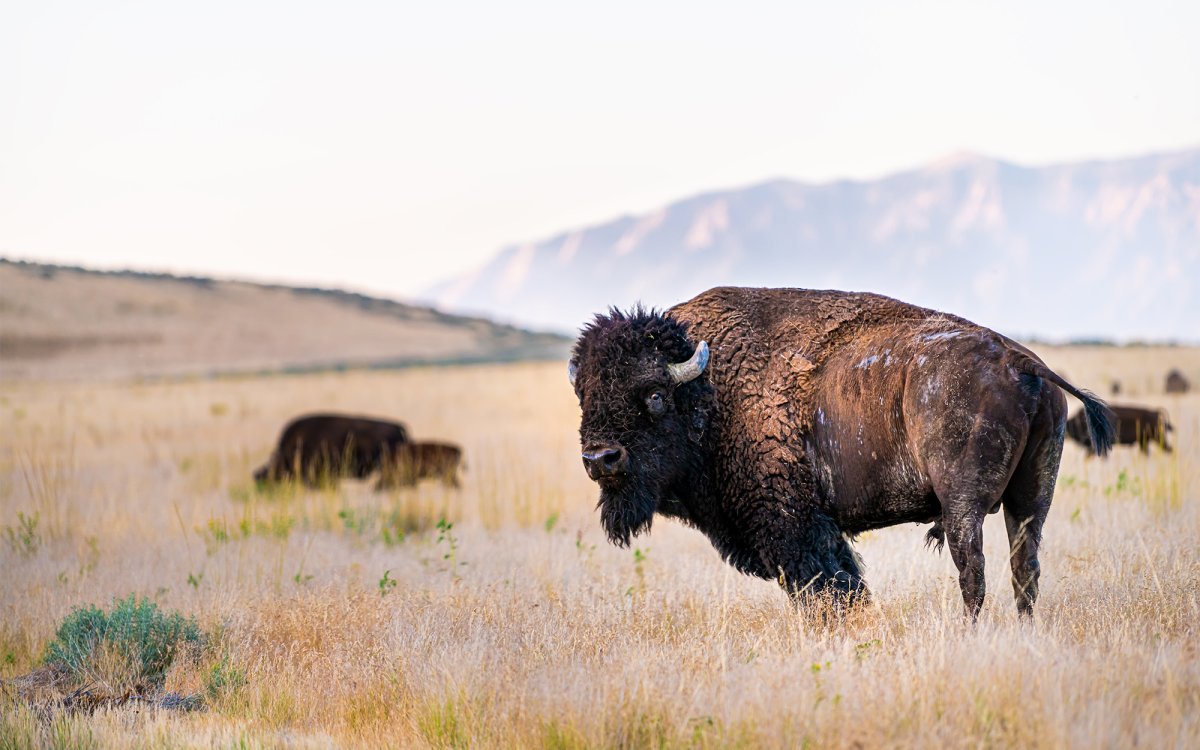

Wild bison have not been hunted in Colorado since the late 19th century, when the last herds were killed off by market hunters. And while the state doesn’t plan to establish a hunting season anytime soon, wildlife managers have opened the door to bison hunting as a potential management tool.
As of New Year’s Day, Colorado Parks and Wildlife is accepting hunter registrations for its newly created bison roster. CPW explained in its Jan. 1 announcement that these hunters would be issued special management licenses in the event that wild, free-roaming bison needed to be harvested. The licenses would be issued “on a case-by-case basis” if wild bison were, for example, damaging property or interfering with agriculture operations.
“If CPW determines that management action is necessary, hunters will be selected through a random drawing from the roster,” the agency explains. “If a hunter’s name is drawn and they accept the license, they will have one week from the time the license is issued to harvest a bison.”
Because there are no free-roaming bison herds established in Colorado, this new management tool is, in some ways, a hypothetical one. The new roster and surrounding regulations are meant to align with a recently enacted state law that reclassifies the species as both livestock and wildlife.
Under that new law, a privately-owned bison living behind a fence is still considered livestock and managed by the state’s Department of Agriculture. But if a free-ranging bison were to enter the state naturally, it would be considered a wild animal and managed as a big-game species by CPW — one that could not be killed without a proper license. This allows bison ranchers to go on about their business, while also creating a structure to protect the wild herds that occasionally trickle into western Colorado from Utah.
“This dual classification recognizes both the cultural and ecological importance of bison while providing the tools needed to manage wild bison as big game wildlife,” CPW big game manager Andy Holland said in November, when the agency unanimously approved regulations to support the dual-classification law. “Colorado’s last native bison were killed in the late 1800s, but as restoration efforts expand across the West, wild bison are moving into Colorado from the Book Cliffs herd in Utah.”
Read Next: After More Than a Century of Conservation Efforts, Why Can’t We Recover America’s Buffalo?
This specific herd is central to the Protect Wild Bison Act that was introduced in the state Senate in January 2025 and signed into law by Gov. Jared Polis in May. In past years, the Utah bison that drifted into Colorado near Rangely were typically shot after crossing state lines. This is not a frequent occurrence; CPW estimates that around a dozen of these free-roaming bison have been killed in the last decade, according to KUNC. Now the agency can establish a management plan for these wayward herds — one that hunters could potentially play a role in going forward.
“These regulations prepare Colorado for when wild bison once again roam here,” Holland explained. “Our goal is to ensure we have the management tools available while we are engaging stakeholders to create a Book Cliffs Bison Herd Management Plan.”
Read the full article here