Aoudad in Texas Are Getting Pink Eye. The State’s Desert Bighorns Are Safe — For Now

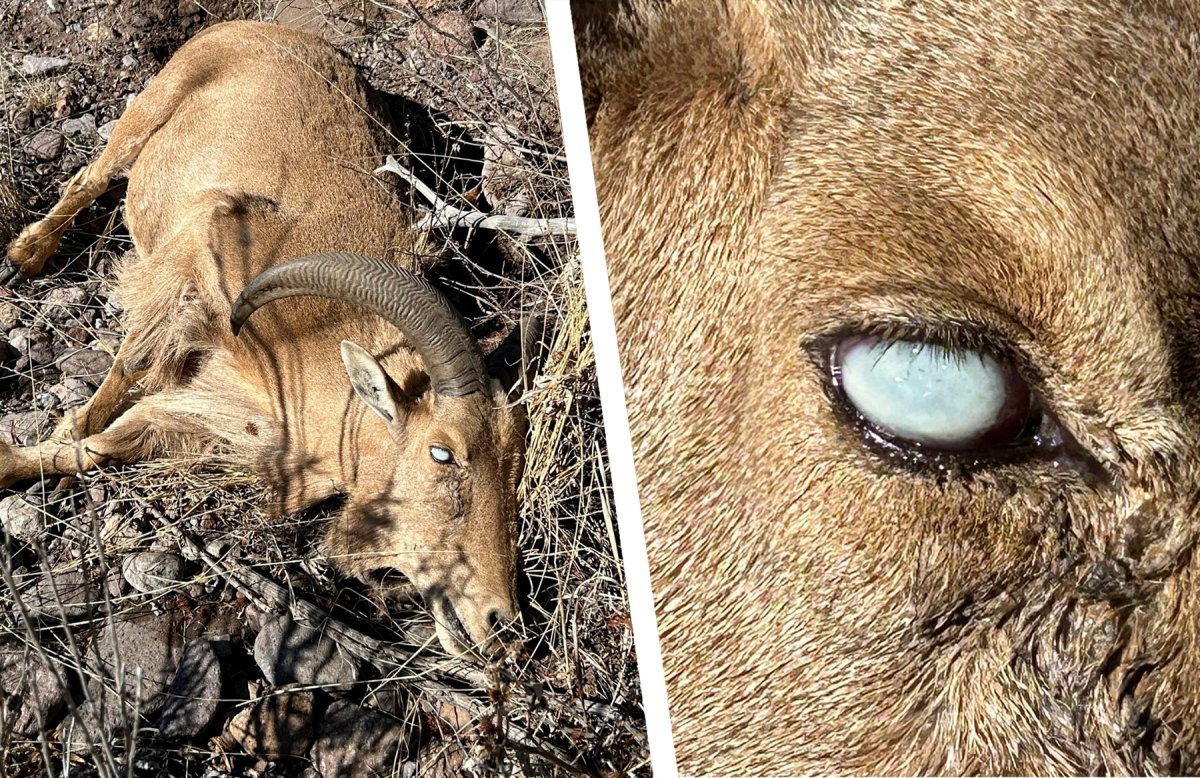

Earlier this month, a hunter in Texas reported harvesting an aoudad to the Texas Parks and Wildlife Department. This is somewhat unusual, since the state does not require harvest reports for the non-native animals. As it turns out, something was wrong with the sheep’s eyes. Three other hunters had reported a similar problem over the past three months, and yet another aoudad — one euthanized by state officials in September — had a similar condition: swollen, cloudy eyes, and even blindness. Lab results just confirmed the culprit: pink eye.
Pink eye is caused by contagious bacteria and is fairly common among livestock. Now it’s spreading among some of the state’s aoudad, also known as Barbary sheep, with an estimated 25 sightings reported from state parks and private ranches. The bigger concern is that it could potentially infect Texas’ native desert bighorn sheep, especially at a time when the state’s herds are experiencing steep declines from pneumonia, which is also carried by aoudad. There’s good news, though.
“This is not anything for anyone to panic about,” TPWD wildlife veterinarian Sara Wyckoff tells Outdoor Life. “The fact that we haven’t seen it in native sheep, even though we’ve been having aoudad cases for a couple of months, is a good thing. If it was really widespread and working its way around, we’d be seeing it in more animals. Somehow our bighorn sheep have been able to stay away from it.”
TPWD posted about the outbreak Thursday to raise public awareness, noting that officials have “not documented cases of [pink eye] in desert bighorn sheep and will continue to actively monitor our populations in west Texas.”
The affected area is a 30-mile stretch of West Texas that includes Jeff Davis, Presidio, and Brewster counties. Among livestock, pink eye, also known as infectious keratoconjunctivitis, or IKC, is often spread by flies. The more flies among animals, and the more animals in close proximity, the higher the risk of pink eye. Dust and other environmental factors can also be an issue.
“Flies can move the bacteria from one cow’s eye booger to another cow’s eye booger,” Wyckoff says. “The bacteria gets on the fly’s leg, then moves with them. That bacteria causes disease, but it is not fatal.”
While pink eye itself is not a fatal disease, it can cause poor vision or blindness, and a blind animal is more vulnerable. Of the few dozen pink eye cases reported in aoudad, some animals have been found dead due to apparent predation or roadkill. Research already shows aoudad and bighorn carry the same respiratory pathogens that can lead to crossover infections like pneumonia, and bacterial diseases can also pass between the two species.
“This is a disease that’s just going to have to run its course,” says Wyckoff. In wildlife populations there is no available treatment. “With the calls we’re getting, we know the sheep are blind now, but we don’t know when they got infected.”
Texas imported aoudad, which are native to Northern Africa, as a game species in the 1950s. They have adapted well to the rugged and arid terrain of West Texas. Aoudad hunts on private land are popular and reasonably attainable, whereas hunting wild bighorn sheep is out of reach for most hunters. This is because there are WAY more aoudad than bighorns.
The Wild Sheep Foundation estimates there are 85,000 bighorn sheep in all of North America, but there are around 100,000 aoudad west of the Pecos River in Texas.
“Aoudad show up in just about every county in Texas these days so they’ve done extremely well. It is completely out of hand,” said Texas Bighorn Society vice president Sam Cunningham in a 2025 episode of the Wild Sheep Foundation podcast. “I’ve heard it described as compound interest. It rolled along pretty slow for years and years and then in the past decade or so it has just gone crazy.”
Read Next: South Florida’s Newest Invasive Threat Is a 6-Foot-Long Lizard from Africa
Aoudad females can breed twice a year and usually have twins. They’re outpacing native bighorn sheep ewes, which are about to lamb. Desert bighorn sheep in particular have declined by 50 percent in Texas since 2021. Most of the loss is due to pneumonia, which aoudad carry but don’t usually die from. Pneumonia is devastating to wild bighorns, with mortality rates ranging from 50 to 80 percent in infected sheep.
Read the full article here