A Sneaky Animal-Rights Provision in the Farm Bill Would Make It Impossible to Train Your Hunting Dog

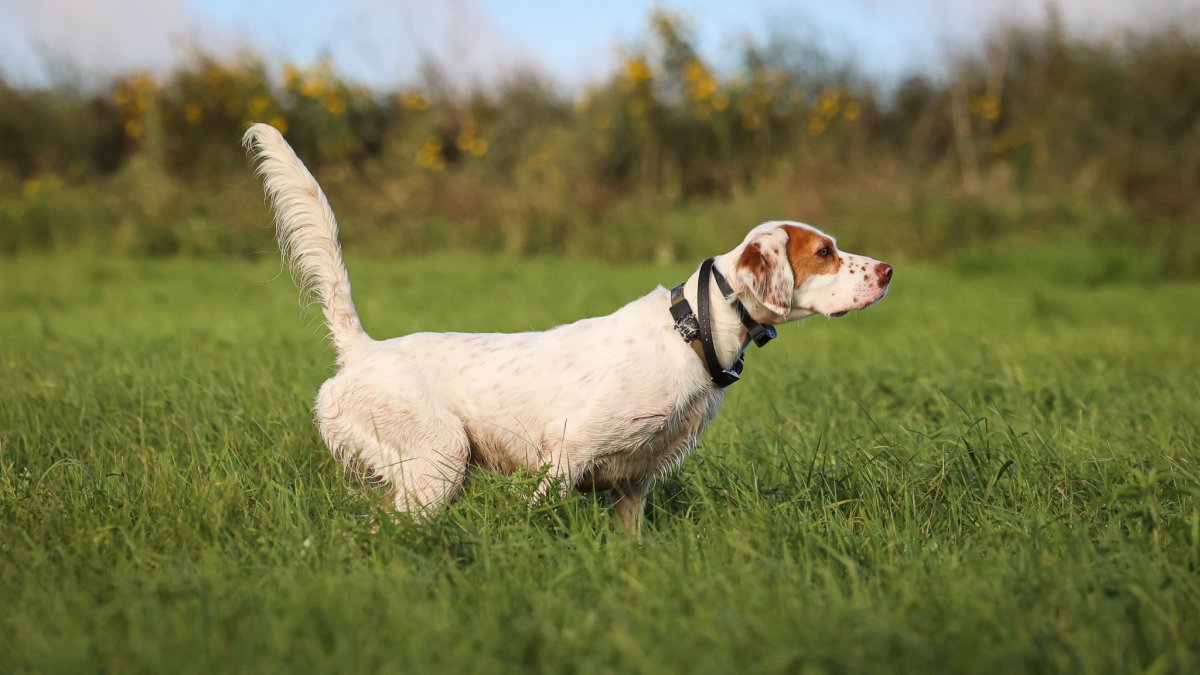

Sportsmen’s groups, bird hunters, and dog trainers are sounding the alarm about a provision that was slipped into the Farm Bill earlier this month and would upend the world of dog training as we know it.
The provision is part of H.R. 5017 — aka the “Greyhound Protection Act” — which was inserted into the Farm Bill during a House Agriculture committee hearing on March 3. Although the animal-rights bill appears to be focused on ending greyhound racing, it includes a ban on both “open field coursing” and “live lure training.”
Because of the vague language of that provision, which doesn’t specifically mention greyhounds, the ban could also extend to hunting scenarios where a hunting dog is legally chasing rabbits, coyotes, or other game. It would also affect practices that are essential to properly developing a bird dog — namely the use of live birds in training.
“The bill would only allow for lure training with inanimate objects, [that is] no live birds,” says Brian Lynn, vice president of the Sportsmen’s Alliance. “So planting birds for your pointer, that’s gone”
Lynn doesn’t think the vague language in the bill was an accident, since the animal-rights lobby behind 5017 is the same group that’s pushed anti-hunting ballot measures and related campaigns in Washington, Oregon, Colorado, and other states. He explains that in its current form, the so-called greyhound bill wouldn’t stand much of a chance of passing on its own. But when it’s incorporated into something like the Farm Bill, one of the most important and widely-supported pieces of legislation going through Congress right now, those odds shift dramatically.
“From our side of things, the conservation easements and programs like CRP are a huge part of it. But we’re also talking about SNAP programs. So the Farm Bill is popular across the [political] spectrum,” Lynn says. “This is just a sneaky, back-door way to attack hunting.”
He explains that the current version of the Farm Bill was amended to include H.R. 5017 during a hearing in the House Agriculture Committee. It is now in the House rules committee, and from there it could go to the House floor for a vote. The Senate would then have to craft its own version of the Farm Bill. This means the public still has time to write or call their Congressmen in the House and Senate to request the removal of the provision that targets live lure training — and by extension, their ability to train hunting dogs.
As Lynn says, “You can’t have a bird dog without birds.”
Kody Reynolds, who breeds and trains duck dogs, would agree with that assessment. Just like at most other kennels around the country, live, farm-raised birds are key to his training program at Yellabone Retrievers.
“For me, as someone who uses live birds daily, I think that if we’re going to hunt birds with dogs, they have to first see what those birds are,” Reynolds tells Outdoor Life. “It’s one of the most important processes of their life. Because if they’ve never seen a live duck or a rooster, or whatever the case may be, they do not know how to respond to it.”
Reynolds says one of the first things he does with a young dog is give it a dead duck, just to see how it responds. He’ll then start introducing live ducks or pheasants to a dog as soon as six months old. Along with elevating their prey drive, this helps dogs learn exactly what to smell and look for. Over time, this repetition is what helps turn a curious dog into one that lives to find and retrieve birds.
Read Next: Tom Dokken Is the Godfather of Retriever Training in America
A lot of dog trainers, especially in the upland hunting world, use live pigeons as well. Among other things, live birds help a dog — depending on its breed and skill set — learn confidence around birds, get used to finding game birds in cover, flush effectively or hold steady to the flush, retrieve birds, and trail and recover wounded birds. Reynolds says he rarely uses live pigeons himself, since he’d rather use the same kind of birds his dogs will encounter in the field, but they are still essential to dog training programs all over the country. Pigeons, which are not native to the U.S. and considered pests in many areas, are often trapped and sold or relocated to dog training facilities.
“When it comes to substituting other things for live birds, we can try,” Reynolds says. “But there’s nothing like the real thing.”
Read the full article here