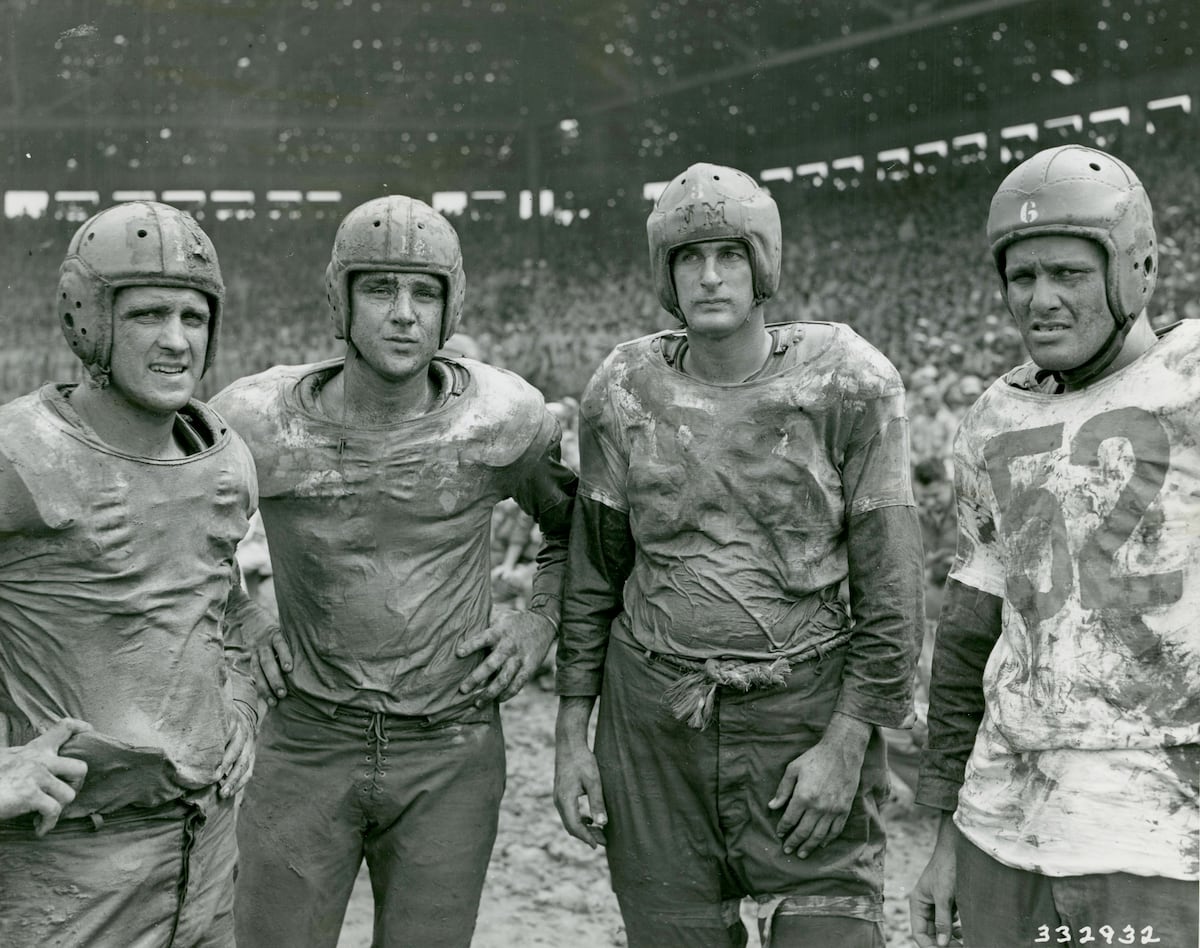

Throughout its 135-year history, the Army-Navy game has featured hundreds of athletes who would later serve in combat, including the likes of Omar Bradley and Dwight D. Eisenhower in West Point’s Class of 1915, later known as “the class the stars fell on” for producing 59 generals.
However, less than a dozen cadets or midshipmen who played for their school have gone on to receive the nation’s highest award for valor, the Medal of Honor.
Six midshipmen who lettered in varsity football have received the honor, while five cadets from West Point — who played, albeit minor roles, on their teams — would go on the receive the award.
Four of those came prior to World War II, including three — Navy’s Allen Buchanan, Jonas Ingram and Frederick McNair Jr. — from the same Vera Cruz campaign in Mexico in 1914. (Ingram held the distinction of being the only player to score a touchdown during the 1906 Army-Navy game.) The fourth, presented to Carlton Hutchins in 1938, was a rare peacetime award.
Hutchins played for Navy from 1922 to 1925 and was awarded the peacetime Medal of Honor for remaining at the controls of his damaged PBY-2 seaplane during a tactical exercise and, according to his citation, “endeavoring to bring the damaged plane to a safe landing and to afford an opportunity for his crew to escape by parachutes.”
Here are some of the players from this storied rivalry who would go on to earn the Medal of Honor.
Rear Adm. Richard Antrim
Richard Antrim played football for the Navy’s Midshipmen football team from 1927 to 1930 before graduating the following spring. Taken prisoner by the Japanese after the 1942 Battle of Java Sea, he was held as a POW in the city of Macassar in the Dutch East Indies. During this time, according to his citation, then-Cmdr. Antrim:
“Acting instantly on behalf of a naval officer who was subjected to a vicious clubbing by a frenzied Japanese guard venting his insane wrath upon the helpless prisoner, Comdr. (then Lt.) Antrim boldly intervened, attempting to quiet the guard and finally persuading him to discuss the charges against the officer. With the entire Japanese force assembled and making extraordinary preparations for the threatened beating, and with the tension heightened by 2,700 Allied prisoners rapidly closing in, Comdr. Antrim courageously appealed to the fanatic enemy, risking his own life in a desperate effort to mitigate the punishment. When the other had been beaten unconscious by 15 blows of a hawser and was repeatedly kicked by three soldiers to a point beyond which he could not survive, Comdr. Antrim gallantly stepped forward and indicated to the perplexed guards that he would take the remainder of the punishment, throwing the Japanese completely off balance in their amazement and eliciting a roar of acclaim from the suddenly inspired Allied prisoners.”
Antrim survived the war and was presented with the Medal of Honor by President Harry S. Truman on Jan. 30, 1947.
Lt. Col. Harold Bauer
Harold Bauer, a three-year letterman at quarterback for Navy from 1927 to 1929, engaged an entire of Japanese squadron, alone, while out on patrol as a Marine aviator at Guadalcanal during WWII.
On Oct. 3, 1942, after an over-water ferry flight of more than 600 miles, Bauer sighted a squadron of enemy planes attacking the USS McFarland. Undeterred by the enemy’s show of strength, Bauer managed to shoot down four enemy planes and left a fifth one “smoking badly,” according to his citation. Bauer continued to engage with the enemy until his fuel ran out.
On Nov. 14, 1942, Bauer was forced to abandon his Wildcat fighter after shooting down two more enemy aircraft. He was seen in a life raft by other American pilots, according to the State Department, but was never found despite several days of rescue attempts. Bauer was initially listed as missing, but when the war ended, he was declared killed in action.
On May 25, 1946, the Medal of Honor was presented to Bauer’s widow and their son, Bill, by Maj. Gen. Field Harris at Camp Miramar, California.
Gen. Douglas MacArthur
The Army’s five recipients famously include Douglas MacArthur, who, while a cadet, served as the team manager during West Point’s 4-5 season in 1899.
Graduating in 1903, MacArthur saw combat in World War I — nominated for the Medal of Honor twice during the Great War and received four Silver Stars and two Distinguished Service Crosses.
His service during WWII would give rise to his legend, and he was awarded the Medal of Honor for actions defending the Philippines during the Second World War.
Lt. Col. Robert Cole
Robert Cole played for the Black Knights for all four years at West Point, graduating with the Class of 1939. As a paratrooper in World War II, Cole was among the first Americans to touch French soil, jumping into Normandy on D-Day as the commander of the 3rd Battalion, 502d Parachute Infantry, 101st Airborne Division Regiment.
On the fifth day of fighting, Cole and his men, tasked with securing the last four bridges into the French town of Carentan, came under heavy fire from fortified German positions.
For over an hour Cole and his men were pinned down, sustaining numerous casualties from the enemy, a mere 150 yards away. Cole, observing “this almost hopeless situation,” issued his men to assault the enemy positions with fixed bayonets.
“With utter disregard for his own safety and completely ignoring the enemy fire,” reads his citation, Cole “rose to his feet in front of his battalion and with drawn pistol shouted to his men to follow him in the assault. Catching up a fallen man’s rifle and bayonet, he charged on and led the remnants of his battalion across the bullet-swept open ground and into the enemy position.
“His heroic and valiant action in so inspiring his men resulted in the complete establishment of our bridgehead across the Douve River.”
Cole would subsequently be killed on Sept. 18, 1944, during the second day of Operation Market Garden, the Allied invasion of the Netherlands.
Cole’s widow and 2-year-old son looked on as his mother accepted his posthumous award on the Fort Sam Houston parade ground just a few weeks after his death.
Lt. Col. Leon Vance Jr.
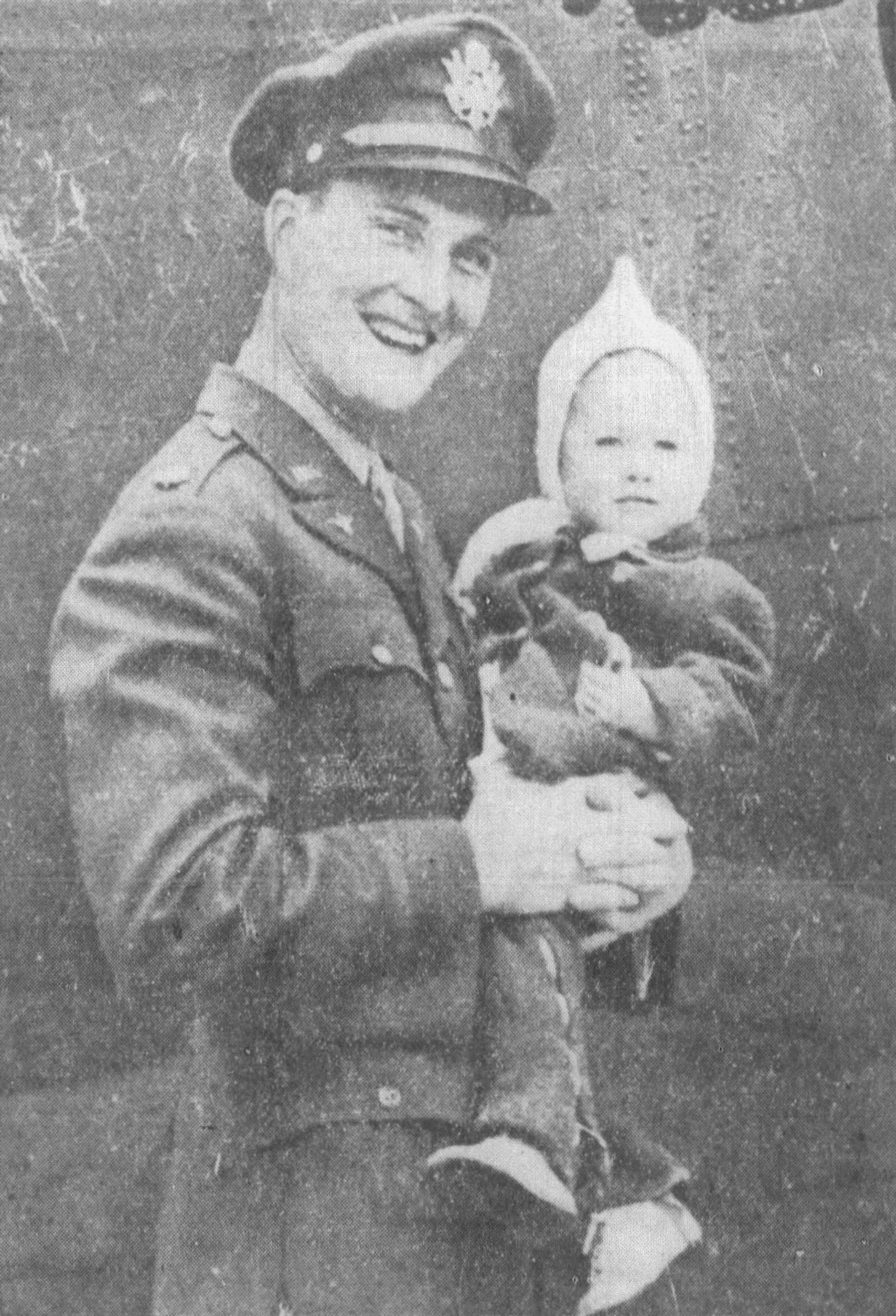
Leon Vance Jr., playing only one year of football in his freshman year, graduated in the Class of 1939 alongside Cole.
A command pilot with the 489th Bomber Group, Vance was flying with 66 Squadron lead crew on a pre-D-Day raid on the French coast when his plane was subject to a severe bombardment by the Germans. The flak instantly killed his pilot, wounded several members of his crew and took out three engines.
Vance, in shock, continued to lead his formation coaxing his B-24, “Missori Sue,” over the target and bombed it successfully.
Only then did Vance realize that his foot was attached to his leg by a few strands of intact tendons. Despite this and only one faltering engine left running, Vance successfully guided his B-24 back to the English coast.
After two months in hospital, Vance joined other badly injured personnel being evacuated stateside aboard a Douglas C-54 Skymaster.
Tragically, however, on July 26, 1944, the transport plane vanished somewhere on the Iceland-to-Newfoundland leg of its transatlantic flight. His body was never recovered.
On Oct. 11, 1946, Maj. Gen. James P. Hodges presented Vance’s daughter, Sharon, with her father’s Medal of Honor. She was just 3 years old at the time of the ceremony.
First Lt. Samuel Coursen
While never lettering, Samuel Coursen played football at West Point for his first three years. After graduating with the Class of 1949, Coursen was subsequently assigned to Company C, 5th Cavalry Regiment, 1st Cavalry Division, during the outbreak of the Korean War.
While leading his platoon in an assault on Hill 174 in Kaesong, North Korea, on Oct. 12, 1950, Coursen and his men came under heavy enemy small-arms fire. During the assault, one of his soldiers moved into what he believed to be an unoccupied emplacement, only to swiftly realize it was a well-camouflaged enemy shelter.
Seeing his soldier in distress, Coursen, according to his citation:
“rushed to the man’s aid and, without regard for his personal safety, engaged the enemy in hand-to-hand combat in an effort to protect his wounded comrade until he himself was killed. When his body was recovered after the battle, seven enemy dead were found in the emplacement. As the result of 1st Lt. Coursen’s violent struggle several of the enemies’ heads had been crushed with his rifle. His aggressive and intrepid actions saved the life of the wounded man, eliminated the main position of the enemy roadblock, and greatly inspired the men in his command.”
On June 21, 1951, Coursen’s 14-month-old son, Samuel, Jr., was presented with his father’s Medal of Honor award in a Pentagon ceremony.
First Lt. Frank Reasoner
This Marine-turned-cadet-turned Marine again has perhaps one of the more unique stories within the Army-Navy rivalry.
Shortly before his 18th birthday, Frank Reasoner enlisted in the U.S. Marine Corps, where he would serve for a year before his appointment to the U.S. Military Academy in 1958. Reasoner never played varsity football, but he did participate in the 150-pound football team — dubbed Sprint Football today — a full-contact, full-speed intercollegiate varsity sport that has been played by the likes of Jimmy Carter while he was attending the Naval Academy.
Reasoner graduated with the class of 1962 before returning to the Marine Corps as a second lieutenant, then first lieutenant following a promotion in subsequent years.
Assigned to Company A, 3d Reconnaissance Battalion, 3rd Marine Division (Rein) FMF, Reasoner was leading his platoon deep into enemy territory near Da Nang, Vietnam, on July 12, 1965, when he and his men came under intense enemy fire.
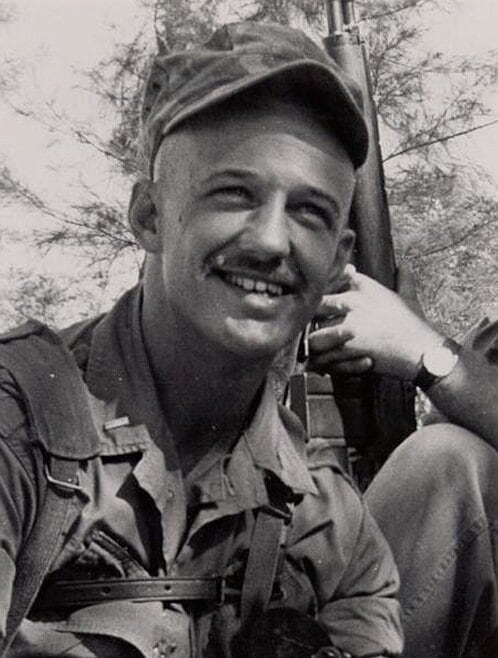
Pinned down by an estimated 50 to 100 Viet Cong troops, Reasoner continuously exposed himself to enemy fire in attempt to provide cover fire for his men.
After the wounding of one of his Marines, 22-year-old James Shockley, Reasoner leapt to tend to his injuries. Despite the wounded Marine’s pleas to stay away, Reasoner, according to the State Department, “pushed forward toward Shockley” before being hit at least once.
Shockley survived the firefight. Reasoner did not.
On Jan. 31, 1967, Reasoner’s widow received the Medal of Honor on his behalf from Navy Secretary Paul H. Nitze during a ceremony at the Pentagon.
Claire Barrett is an editor and military history correspondent for Military Times. She is also a World War II researcher with an unparalleled affinity for Sir Winston Churchill and Michigan football.
Read the full article here