
The U.S. Space Force released names of space weapon systems to better link guardians with the force’s specific culture and identity, according to remarks published by the force.
At the 2025 Space Force Association’s Spacepower Conference, Chief of Space Operations Gen. Chance Saltzman said in a keynote address Thursday that the force will begin labeling mission areas to help elevate the identity of the force’s weapon systems.
“These symbols conjure the character of the systems, the importance of their mission, and the identity of the Guardians who employ them,” Saltzman said in his speech.
Saltzman went on, nothing that the Space Force is a “highly technical service” and the identity of it is rooted just as much in the systems employed as those who operate them.
Over the past year, teams across the force’s operational units have been working to define these terms of reference to “cement the identities” of the space weapon systems, he continued in the keynote.
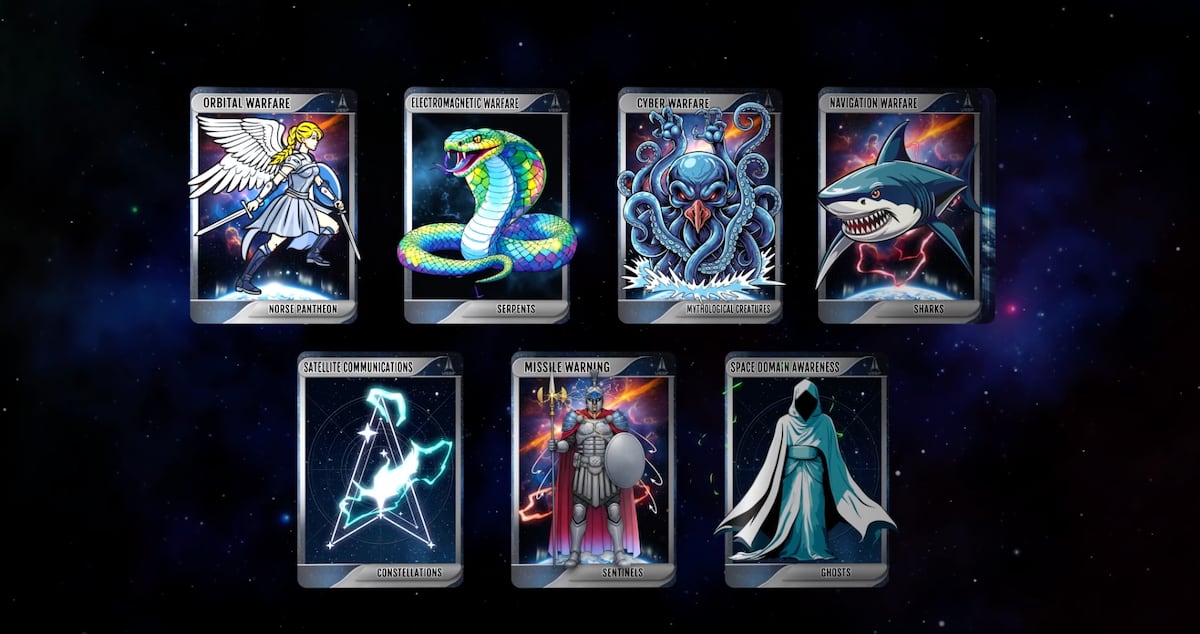
To shape the seven mission area themes that were shown in this animation at the Thursday conference, the force collected guardians’ input via emails and conducted focus groups earlier this year, a Space Force spokesperson told Military Times.
The spokesperson said guardians are currently using these assigned mission area themes to now submit ideas for more potential weapon system names to Headquarters Space Force, the spokesperson said.
Before names are finalized, the headquarters will complete a formal vetting process that includes considerations like trademark and licensing and protecting operational security, the spokesperson continued.
In an October 2024 CSO notice, Saltzman released a memo to guardians asking for their help in naming the equipment and systems the force operates.
“Language also reflects an organization’s culture. After all, words are simply thoughts given form, so the way we refer to something says much about the way we conceptualize it,” Saltzman said. “Taken in the aggregate, our collective language provides insight into our shared values, our common desires, our group norms — in other words, our culture.”
Naming weapon systems to give insight into its purpose or the branch’s culture is not new within the U.S. military.
The Air Force has the F-16 Fighting Falcon, the Army has the M1 Abrams and the Navy has the AEGIS Weapons System.
Now, in its sixth year as an independent service, the Space Force is dubbing categories and systems after symbols, with seven revealed Thursday:
Orbital warfare will be named the Norse pantheon; electromagnetic warfare systems are serpents; cyber warfare systems are mythological creatures; navigation warfare is sharks; satellite communications are constellations; missile warning is sentinels; and space domain awareness is ghosts.
Illustrations of these categories circulated online in an unofficial Space Force Subreddit r/SpaceForce and were posted on DVIDS.
“Guardians in each Delta help[ed] choose these themes to capture the identity of their mission and build their own unique warfighting culture,” Saltzman said in his keynote speech.
Saltzman also released the names of two systems after the “spirit of their disciplines.”
The 10th Space Operations Squadron has named the Ultra-High Frequency Follow-On system as Ursa Major.
“The Big Dipper, as you all know, part of the Ursa Major constellation, famously points to Polaris, our north star, always linking us to our most important missions,” Saltzman explained in the speech.
Additionally, the 1st Space Operations Squadron designated their Operationally Responsive Space system as Bifrost, which in Nordic lore is the bridge between Earth and the gods’ realm, per the speech.
The system in Low Earth Orbit bridges the gap between Earth and the higher geostationary orbit of the other 1 SOPS systems.
In the conference speech, Saltzman said that more themes will roll out but did not specify a timeline.
“There is no current timeline for release of more names — our priority is ensuring Guardians have been given an appropriate amount of time to choose meaningful names that proudly represent their unit’s heritage and mission,” the spokesperson said.
Cristina Stassis is an editorial fellow for Defense News and Military Times, where she covers stories surrounding the defense industry, national security, military/veteran affairs and more. She is currently studying journalism and mass communication and international affairs at the George Washington University.
Read the full article here