
I spend a fair bit of my time on the range with other people, and most of the time the skill level of these other people runs the gamut. Some really new to guns, and some very experienced and very skilled. I have a real appreciation for shooting standards that are accessible to every skill level. A bucket that can catch every drop so to speak. One that I have become particularly fond of lately is called the Short Combat Accuracy Test. This course of fire comes from Tom Givens of Rangemaster.
I am generally fond of courses of fire Tom designs, but I think this one tops my list of shooting standards from Tom. Here is why.
Real Versatility
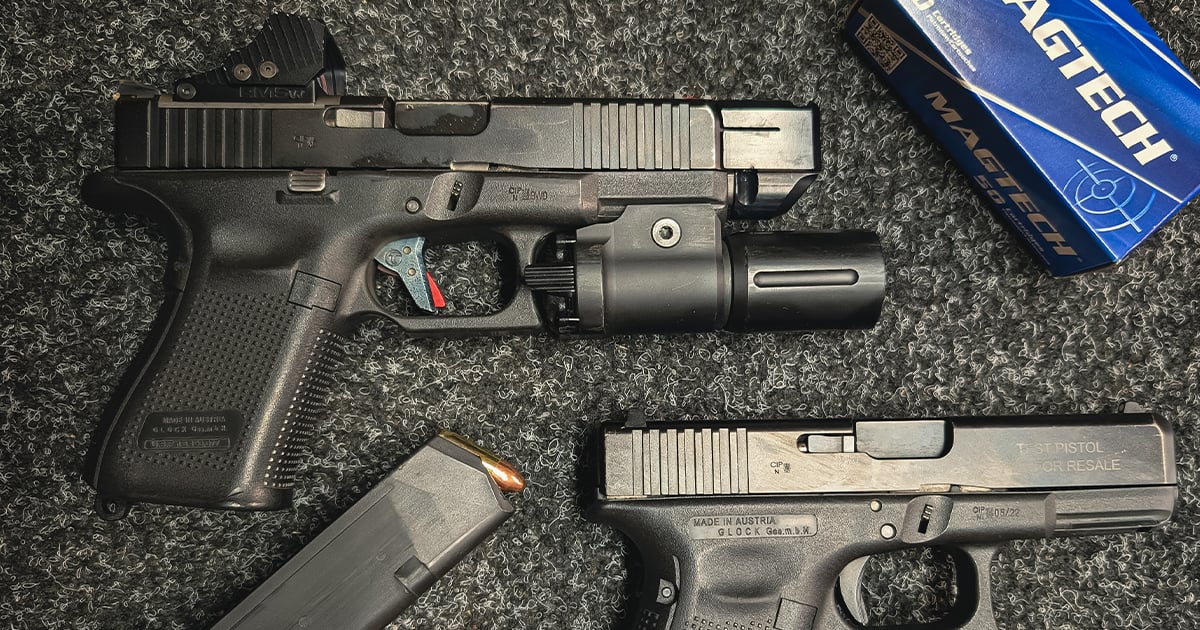
It can literally be shot with any gun you have. Wonderblaster 5000, got you. J-frame that belonged to your uncle who was a detective with the local PD, got that too. It doesn’t have any reloads, or strings of fire over 4 rounds. That means I can shoot it with a Glock 19, a Ruger LCP, or a Staccato HD.
Scoring
It uses a hit factor scoring scheme. This means that there is not a lowest possible score, nor is there a highest possible score. It can always go lower, and it can always go higher. It will accommodate both ends of the skill spectrum equally, and give them a score that they can build off of and move forward from.
The Course of Fire
It focuses on the 5-yard to 10-yard distance. Statistically, this is where most defensive shooting is likely to occur depending on whose numbers you look at. Inside this range is probably where 75-80% of our work should be focused.
Last, it is simple, low round count, and quick. There isn’t anything fancy about it. It is pretty easy to turn and burn and mostly focused on the shooting part of shooting.
The course of fire goes like this.
| Distance | String of Fire |
| 5 Yards | Draw and fire 4 rounds to the body. |
| 5 Yards | From low ready, fire 1 round to the head. |
| 5 Yards | From low ready, fire 1 round to the head. |
| 5 Yards | Dominant hand only, from low ready, fire 3 rounds. |
| 5 Yards | Non-dominant hand only, from low ready, fire 3 rounds. |
| 7 Yards | Draw and fire 4 rounds to the body. |
| 10 Yards | Draw and fire 4 rounds to the body. |
Target Choice
The target that should be used is RFTS-Q or IALEFI QP. Think FBI silhouette target with an 8” circle surrounded by a larger 10″ circle for the upper chest area, and 4” circle for the head. Hits inside the 8” circle or 4” head zone are worth 10 points, hits in the larger 10” chest area are worth 6 points. Hits inside the bottle shape above the “belt line” are worth 2 points. Alternatively, you could also shoot this on an IDPA target and get pretty close.
Tracking Time
Each string of fire, you have to record the time. At the end of the course of fire, add the time for all of the strings together, and calculate the points on the target. Divide the total number of points by the total time, and then multiply that number by 12.5 for the final score. A good benchmark is 100 points, but more importantly just record your score somewhere that you can find it later, and in 6 months try the SCAT again and see how much better you are.
Go Shoot It
So, wherever you are as a shooter, the SCAT can put a pin in your level of skill of today that you can look back on down the road, and you can compare to your new skill level. One caution, don’t try to just max the drill by shooting it over and over again. If you take a test over and over and over, it starts to lose its value. Instead, use it as it is meant to be used, an assessment tool. Shoot it once a quarter, or twice a year, or however you want to do it. Just don’t game it too hard and overdo it. It will lose value. Happy shooting.
Read the full article here