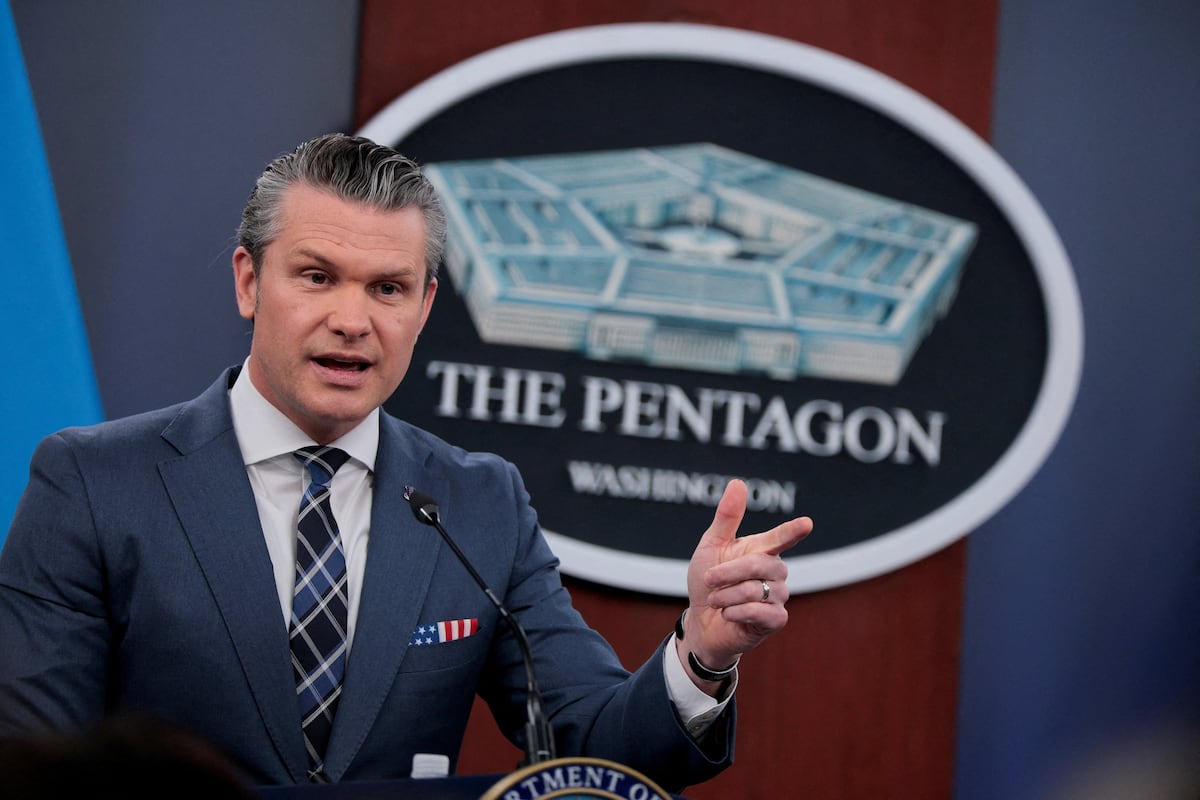

The Pentagon on Thursday said it is seeking roughly $200 billion to sustain its war in Iran, as senior military officials acknowledge that the Islamic Republic retains “some capability” to attack American assets and allies in the Middle East.
Asked about the figure during a press briefing, Defense Secretary Pete Hegseth said “that number could move,” before adding in a blunt aside: “It takes money to kill bad guys.”
“We’re going back to Congress and our folks there to ensure that we are properly funded,” Hegseth said.
He asserted that the request would help fund the ongoing mission, accelerate replenishment of weapons systems that have been expended in the fight, and rebuild depleted stockpiles to prepare for future deployments.
The White House on Sunday said the United States’ military campaign against Iran — dubbed Operation Epic Fury — had cost American taxpayers $12 billion as of that day. The opening salvo of the war was carried out by U.S. and Israeli forces on Feb. 28.
Now nineteen days in, Hegseth declined to outline how or when the war could end, aside from underscoring that the U.S. was “very much on track.”
“It will be at [President Donald Trump’s] choosing ultimately, where we say, ‘Hey, we’ve achieved what we need to on behalf of the American people to ensure our security,’” Hegseth said. “No time set on that, but we’re very much on track.”
Hegseth billed Thursday’s rounds of strikes as the “largest strike package yet” in the U.S. offensive against Iran, “just like yesterday was.”
“We’re hunting, we’re striking, death and destruction from above,” the defense secretary said. “To date, we’ve struck over 7,000 targets across Iran and its military infrastructure. That is not incremental. That is overwhelming force applied with precision.”
Gen. Dan Caine, the Chairman of the Joint Chiefs of Staff, recognized the scale of Iran’s arsenal.
“They came into this fight with a lot of weapons,” he said in the Thursday press briefing, emphasizing that U.S. forces continue to be “aggressive and assertive” in targeting missile stockpiles and drone launch sites.
Caine noted that the military dropped 5,000-pound bunker-buster bombs into Iran’s underground storage facilities, which held a cache of coastal-defense cruise weapons and other support equipment.
“These weapons are bespokely designed to get through concrete and or rocks, and function after penetrating those barriers,” he said.
Tanya Noury is a reporter for Military Times and Defense News, with coverage focusing on the White House and Pentagon.
Read the full article here