
NEWYou can now listen to Fox News articles!
Momentum is in full gear for Team USA following their win over Bosnia and Herzegovina in the Round of 32.
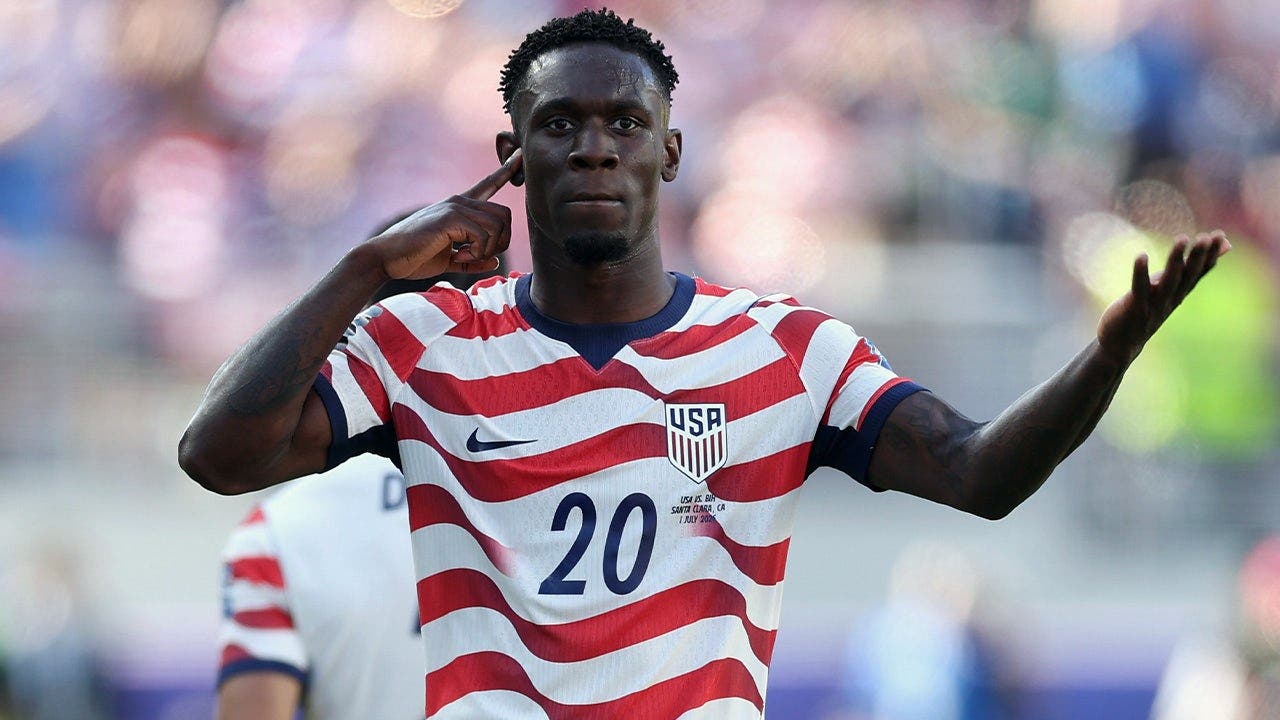
And what was originally a bittersweet ending in the San Francisco Bay Area due to the red card to striker Folarin Balogun has since changed thanks to FIFA’s announcement that the USMNT star will be able to play in the Round of 16 against Belgium on Monday night.
Balogun’s controversial red card, which came in the 64th minute of the 2-0 victory over Bosnia and Herzegovina, changed the trajectory of the USMNT’s hopes to make a World Cup Final run. After all, Balogun has been the perfect striker for this squad since the start of the tournament, securing his third World Cup goal in the Round of 32.
WATCH THE WORLD CUP FINAL ON FOX ONE
FIFA MAKES FINAL RULING ON US SOCCER STAR FOLARIN BALOGUN’S CONTROVERSIAL RED CARD SUSPENSION
However, Balogun will now be available for the U.S. in a stunning twist following the uproar over his red card.
The Athletic, which first reported Balogun’s playing status on Sunday, noted that part of FIFA’s disciplinary code is “the judicial body may decide to fully or partially suspend the implementation of a disciplinary measure.”
“If the person benefiting from a suspended sanction commits another infringement of a similar nature and gravity during the probationary period, the suspension shall be revoked by the judicial body and the sanction enforced without prejudice to any additional sanction imposed for the new infringement,” the rule added.
FOX Sports also confirmed that Balogun would be able to play. The report noted that the play should not have been flagged to head referee Raphael Claus, who ultimately gave Balogun the red card after a VAR review.
WATCH USA VS BELGIUM
In turn, head coach Mauricio Pochettino will be able to run with his regular starting XI instead of having to figure out what to do about Balogun.

On the other side, Belgium was 10 minutes plus stoppage time away from a shocker against Senegal in the Round of 32. Senegal owned a 2-0 lead late in the second half, but Belgium was able to force extra time with some clutch goals from Romelu Lukaku and Youri Tielemans.
BELGIUM COMPLETES STUNNING WORLD CUP COMEBACK AGAINST SENEGAL TO SET UP POTENTIAL SHOWDOWN WITH USA
In extra time, just before a penalty shootout appeared to be the only way to solve the deadlock, a foul was committed by Senegal in their own box, and Tielemans was awarded a penalty to decide the match. The veteran didn’t squander the opportunity, and Belgium kept their World Cup alive.
Now, both these squads will meet in Seattle, which was an electric atmosphere for the USMNT’s victory over Australia in the group stage. It’s expected to be even more raucous, as the U.S. aims to do what only one team in its history had done prior – reach the quarterfinals.
Here’s how to watch the game, including start time, TV information and streaming options.
CLICK HERE TO DOWNLOAD THE FOX NEWS APP

How to watch United States vs Belgium
When: Monday, July 6 at 8 p.m. ET
Where : Seattle Stadium, Seattle, Washington
TV: FOX
Stream: Watch on FOX One and FOX Sports
Read the full article here