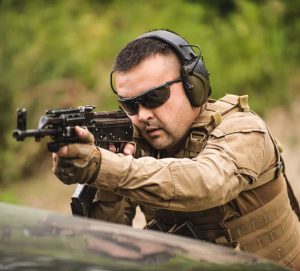
There’s a special kind of misery that comes from using the wrong pack for the job. But if you have a hunting backpack that fits you and matches the task, you’ll hardly notice it’s on your back. The Outdoor Life editors have been on both sides of that and we’ve used packs for hunting elk, sheep, moose, grizzlies, mule deer, whitetails, and mountain goats in the past year. With all that hunting we’ve been able to test a wide range of packs and come up with our favorites for each application. Here are picks for the best hunting backpacks from editors and their reviews.
How We Chose the Best Hunting Backpacks
Outdoor Life editors hunt throughout the country each fall for a variety of species. We used that collective experience to choose packs that work well for specific types of hunting. Each pack was evaluated for its comfort, features, build quality and capabilities.
How to Fit a Hunting Backpack
The first step in choosing the best hunting pack is to think about how much gear you need to carry. For a backcountry elk hunter, that can mean a tent, food, sleeping bag, a bow or rifle, and a frame that can haul 100 pounds of meat. For a whitetail hunter, the best hunting pack might be a daypack that carries lunch, scents, and a few extra layers for the long sit. Many packs feature specialized holders for a rifle or a bow.
After you choose a hunting backpack that will fit all of your gear, be sure it fits you. First, measure your torso length. Put your hands on your hips with the top of your hands touching the top of your iliac crest—your hip bones—with your thumbs pointing toward one another across your back. Measure from that imaginary line between your thumbs to the prominent bump in your spine at the base of your neck. That distance is your torso height. Some packs come in sizes, others can be adjusted to your torso size.
Once the pack fits, adjust the straps. Put some weight into the pack so it sits on your back as it will when you use it. Loosen all the straps. Fasten the belt first. The padded portion of the belt should hug your iliac crest when you snug the belt around your waist. Adjust the shoulder straps so there is no gapping between the strap and your shoulder.
Best Hunting Backpacks: Reviews & Recommendations
Best Overall: Stone Glacier Solo 3600
See It
Pros
- Lightweight yet able to handle heavy packouts
- Comfortable to wear on multi-day hunts
Cons
- A little pricey
- In an effort to keep weight down it doesn’t have many pockets and pouches
Key Features
-
Capacity:
3,600 cubic inch main bag -
Weight:
4 pounds, 6 ounces on X Curve Frame -
150+ pound load rating -
2,500+ cubic inch expandable load shelf -
Cordura 500 and Xpac fabric -
Made in the USA -
Price:
$655
I’ve been hunting with Stone Glacier packs for years and haven’t found a system that does a better job balancing light weight with load-hauling capability. A few seasons back I upgraded my old Stone Glacier pack, which was actually a prototype made by Stone Glacier founder Kurt Racicot, to the Solo. I’ve used it to haul deer, elk, and moose out of the mountains and it has been with me everywhere from Africa to Mongolia. (It fits in overhead bins as a carry-on, which is a nice bonus.)
As with all Stone Glacier packs built on either the XFrame or Krux Evo—you can read about the differences here—it includes an integral load shelf that allows you to strap meat between the frame and 3,600-cubic-inch bag. There are plenty of compression straps on the pack so that you can get a tight fit that snugs the load against you back—where you want it—and prevents it from moving around. The frame is easy to fit to different body sizes and you can purchase the Solo with a variety of belt lengths.
One of the smart design features on the Solo is how the zipper to the main compartment makes an upside down U-shape. This gives good access to the main bag, but in case the zipper fails the bag can still be used by cinching the compression straps across the bag. The way the straps are configured allows the user to easily secure a rifle, tripod, or trekking poles to the outside (I’ve done all three) where they are secure and easy to access.
The Solo has a decent sized pocket on the top of the bag that you can stuff your lunch and an extra layer of clothing in for easy access. The interior of the main compartment has a sleeve where you can stow a spotting scope or water bottle. Stone Glacier also sell lightweight pockets and sleeves that can be hung on the inside of the main compartment to help keep gear organized.
I’m sure that someday someone might invent a better ultralight pack for mountain hunting, but right now the Stone Glacier Solo is the best hunting backpack for mountain hunts. —John B. Snow
Best for Backcountry Hunts: Stone Glacier Sky Archer 6400
See It
Pros
- Versatile backcountry hunting pack
- Load shelf design allows you to pack out big critters comfortably
- Large capacity, but compresses down nicely
Key Features
-
Capacity:
6,400 cubic inches -
Weight:
5 pounds, 2 ounces (on Krux frame) -
150+ pound load rating -
2,500+ cubic inch expandable load shelf -
Cordura 500D and Xpac fabric -
Made in the USA -
Price:
$720
Stone Glacier has a ton of different packs in their lineup but founder Kurt Racicot’s favorite is the Sky Archer 6400. Don’t be fooled by the name, this pack is also ideal for rifle hunters. It can be expanded out so that it will hold all of your gear, plus critter quarters, or it can be compressed down into a more streamlined daypack size. Check out this video to see how it’s done.
This pack received some changes in 2025. Stone Glacier made some tweaks to the bag including a side-zip pocket for accessories and a large spotting scope pocket (the older version had an internal spotter pocket).
But the heart of the pack remains the same — the ultralight frame and the load shelf. You’ll notice that even though the Sky Archer can be made into a heavy hauler, the pack itself is still remarkably light. It’s about a pound lighter than other packs in its capacity range.
This hunting backpack is offered in three frame sizes and three belt sizes. The shoulder strap height is adjustable. There are also additional accessory pockets and water bottle holders that you can add to the waist belt (but those will cost you extra). The pack itself has a wide variety of straps and buckle systems so you can set it up however you like. I’d say the one downside to this pack is that it does take a little time and thought to set up properly. But when you’re planning for a multi-day backcountry hunt, you should be taking the time to think through your pack anyway.
Last year I did a late-season hunt in Montana with Racicot using the Sky Archer pack and I found it to be extremely comfortable even when hiking steep, snowy terrain while loaded with a full camp. When Racicot ended up shooting a stomper mule deer buck, we put a couple boned out quarters in game bags and secured them in the load shelf. The hike off the mountain was heavy, but totally comfortable.

Load Shelf Tutorial – Rifle Elk
The combination of a light pack that’s still comfortable is the reason that so many diehard backcountry hunters gravitate to Stone Glacier. And while the Sky 5900 is their most popular pack (people like the large front-panel zipper), I prefer the simplicity and extra capacity of the 6400. And you can bet that I’ll be counting on it for my future backcountry hunts.
Read Next: Best Elk Hunting Packs
Kifaru Dall (See Other Great Options from Kifaru)
See It
Pros
- Light and durable material
- Versatile and can host additional pouches and lids
- Large enough for 10- to 14-day trips
- Comfortable with heavy loads
Cons
- Bag and frame sold separately
- Takes some time and use to fine-tune fit
Key Features
-
Capacity:
7,080 cubic inches -
Weight:
6 pounds, 2 ounces on Duplex Lite Frame -
Can host three additional external pouches -
Built-in load shelf -
Cordura 500 and Xpac fabric -
Made in the USA -
Price:
$800 with Duplex Lite frame
Note: The Dall is no longer being produced, but Freel’s is still going strong. The takeaway is that Kifaru packs, or really any well-made pack, will last you a long time. Check out the latest from Kifaru.
For mountain hunters who spend a week or two at a time in pursuit of sheep, goats, or high-country deer, the hunting backpack is a central piece of gear. It needs to be reasonably light, very durable, and big enough to haul hunting and camping gear and food for extended trips. Equally important, the pack needs to carry standard loads and heavy loads of meat comfortably. You get all of that with the Kifaru Dall.
Paired with the Duplex Lite frame, the Dall is an excellent and versatile bag that can be packed with 14 days-worth of gear and food, but can be cinched down for use as a day pack in the field. The Dall’s design is simple, with a fold-over lid. It’s compatible with Kifaru’s guide lids and additional pouches on the back and belt—something I highly recommend. There are two open-top pouches on either side, and side compression straps for holding a rifle. It’s got an integral load shelf for hauling extra meat or gear between the bag and the frame, too. I’ve been using the predecessor to this pack on the duplex frame for years in the mountains of Alaska, and you’ll be hard-pressed to find a pack that’s as durable and comfortable under heavy loads. –Tyler Freel
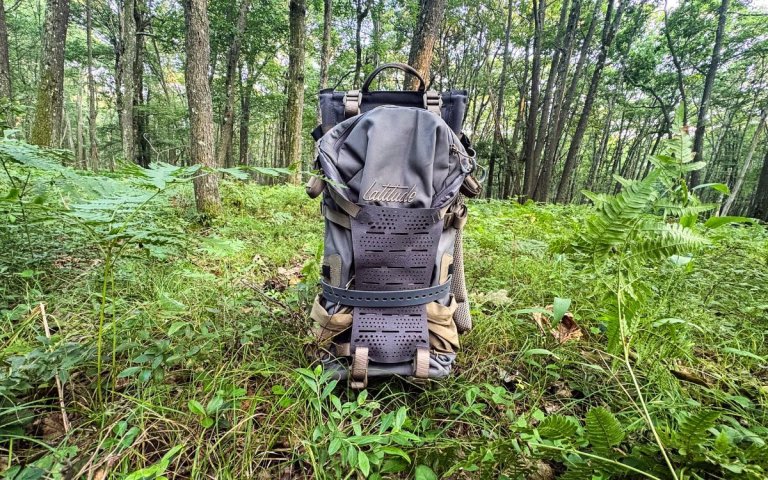
Best for Saddle Hunting: Latitude Praxis Pack
See It
Pros
- Modular design for versatility
- Frame can be used with or without the pack
- Bucket lid converts into a convenient in-tree gear shelf
- Torque straps and dog bone compression straps for securing gear
Cons
- Difficult to configure / almost too modular
Key Features
-
Capacity:
1,646 cubic inches (27 liters) -
Weight:
4 pounds, 8 ounces -
Carbon-fiber and 7075 aluminum frame -
75-pound recommended load rating -
Integrated load shelf and cargo panel -
Water-resistant liner and hydrophobic zippers -
Price:
$450
Latitude has some of the best saddle hunting equipment I’ve had the pleasure to use — from incredibly well-designed, lightweight sticks and platforms to two-panel saddles built with comfort and safety in mind. These products have let me become more mobile in the big woods and feel more secure hanging a setup in new terrain. But until recently, I’d always struggled to find the best way to pack gear in and out of the mountains.
Larger frame packs work, but they aren’t designed specifically with whitetail hunters in mind. Smaller packs can do the job too, but they leave you stranded if you fill a tag a few miles from the truck. Now, thanks to the Praxis pack, those limitations are a thing of the past.
The Latitude Praxis pack was designed specifically for saddle hunters who want to get off the beaten path to find secluded deer. With its modular design, you can configure the pack however you’d like to carry gear in — and, just as easily, pack out your gear and a big buck. The lightweight carbon fiber and 7075 aluminum frame is built to handle heavy loads and help you get your gear and deer out in one trip. The pack adjusts to fit your body shape, and the belt allows for micro-adjustments to ensure a good fit on the pack-out. — Derek Horner
See It
Pros
- Versatile backcountry hunting pack
- Frame compatible with all ICON 6 bags
- Load-hauling design makes it comfortable to pack out meat and gear
- Large capacity, but compresses down nicely
- Highly adjustable for a dialed-in fit
Key Features
-
Capacity:
4,500 cubic inches -
Weight:
5 pounds, 14 ounces -
3D carbon fiber frame -
Frame incorporates Flex-Forward Geometry -
330D double ripstop Cordura and waterproof Cordura fabrics -
High-volume waterproof-coated drop pocket for boned-out meat -
YKK zippers -
Price:
$649
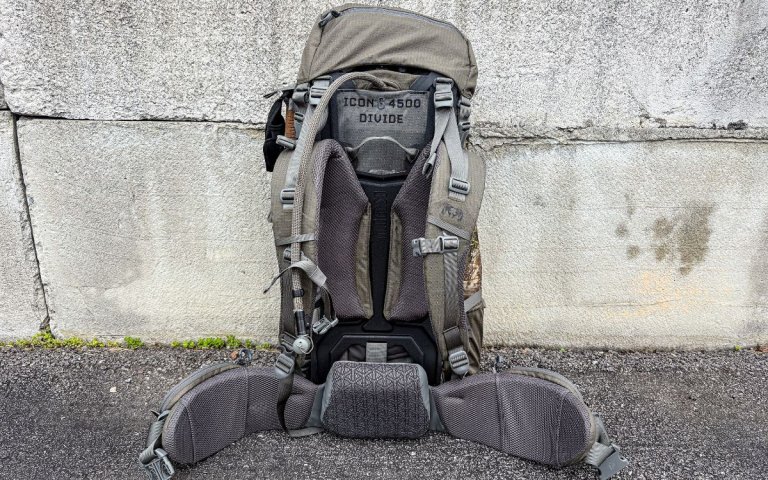
This probably isn’t the first KUIU frame pack you’ve laid eyes on — they’ve had several solid options over the years. But rather than resting on those past successes, KUIU’s team went back to the drawing board to address the shortcomings of their earlier packs and take another stab at the perfect backcountry frame pack system.
What they ended up with is the new ICON 6 pack system.* KUIU’s goal was to improve the frame’s weight-carrying capability while simplifying the overall system to be more intuitive in the field. To get there, they rebuilt the frame using a new type of carbon fiber engineered to be more impact-resistant and less prone to catastrophic failure.
This new 3D carbon fiber frame uses a corrugated architecture for stiffness, while letting any flex move toward your body instead of allowing the load to float backward and add strain to your back and hips. KUIU also designed the frame to narrow toward the bottom, shifting load volume up and toward the center of your back. Together, these changes make it easier to move heavy loads with less strain and pain on long hikes back to the trailhead.
Alongside the redesigned frame, the KUIU team also made changes to the zipper system and the pack’s general layout. Inside, you’ll find a high-volume waterproof-coated drop pocket with cinches capable of stowing heavy gear, up to 45 pounds of boned-out meat, and 3+ liter reservoirs.* It also includes a deep drop pocket and two zippered mesh pockets for gear organization, plus an external pocket with quick side access for must-have items that doesn’t require you to remove your rifle or bow.
Rather than randomly placed pockets, my takeaway from my time with the ICON 6 4500 Divide has been that this pack was clearly designed by hunters, not an engineer punching numbers into a software program. Every pocket, zipper location, and strap is purposefully placed to make the pack easier to use in the backcountry. It’s comfortable, adjustable, and impressively lightweight for the capacity it offers. With elk season right around the corner, I can’t wait to head out from the trailhead with the new ICON 6 4500 Divide on my back. — Derek Horner
Mystery Ranch Treehouse 20
See It
Pros
- Quiet material
- Smart features for whitetail hunting
- Semi-rigid bag is great for protecting items inside the bag while cinching down a stand on the exterior
Cons
- Not ideal for carrying heavy loads
Key Features
-
Bottom compression strap -
Internal cinch pockets with silent closures -
Front stretch-woven stash pocket -
Lid pocket -
Hydration reservoir compatible -
Bow or lightweight stand carry via compression straps -
Top haul loop for hanging from the tree -
Fuzzy polyester fabric exterior -
Nylon 210D laminate fabric backing -
YKK zippers -
Weight:
2.8 pounds -
Capacity:
1275 cu. in. -
Dimensions:
20.5 X 10.5X 11 inches
The first time I hunted with my friend Taylor Chamberlin I learned what it meant to have your gear fully dialed. His saddle system was completely quiet, easy to carry, and he was up the tree before I had my sticks untangled. Since then I’ve been on a quest to replicate the good habits he has and a big part of that is finding a pack that integrates well with my sticks and platform. The Mystery Ranch Treehouse 20 is that pack for me.
With it I can carry my hunting gear, a camera arm, camera, an extra layer, water, and strap my sticks and platform to the outside. It holds the sticks and platform securely and quietly.
The keys to strapping your platform and sticks to the pack are: Stealth Strip all metal-on-metal contact points. Tightly cinch your sticks to your platform — I use the rubber strap that came with my Latitude Outdoors Carbon SS sticks.
Once you’ve done that, attaching the sticks and platform to the Treehouse is really simple. I just use the two compression straps on the front of the pack to buckle everything down.
The Treehouse is designed to be user friendly 15 feet up. You can access the contents of the top lid with it open and it’s where I like to keep essentials like my release aid, wind checker, and grunt tube. The interior of the pack has good organization while allowing maximum room for the main compartment. That’s really nice when you’re cramming bulk layers into the pack.
I looked at the Treehouse 38 and almost went with it over the 20, but now that I’ve hunted a lot with the 20 I don’t think I’d use the extra space and I’d certainly notice the extra bulk of the 38. If you’re running a hang on and sticks or will pack out meat, the 38 is a better option.
Best Minimalist: Kuiu Stalker 500 Pro
See It
Pros
- Breathable mesh back
- Ultra lightweight
- Low profile
Key Features
-
Capacity:
500 cubic inches -
Materials:
160D Cordura ripstop -
Weight:
8.8 ounces -
Price:
$69
The Kuiu Stalker 500 Pro is a hyper-minimalist pack designed for final backcountry stalks. It conveniently clips inside Kuiu’s larger Pro and Pro LT bags and functions as a hydration holder packed with just the goodies you’ll need for that killing shot. The idea is to provide a convenient, lightweight pack with just the essentials so you can shed that hefty pack that tired you out after hiking for hours looking for a big bull, billy, or buck.
I’ve yet to use it for its intended purpose, but it also makes a fantastic standalone day pack for those days you want to travel light and need to stay hydrated. This is my favorite pack to take along for preseason scouting and when performing trail camera maintenance. In the southeast, preseason is hot, muggy, and miserable, and the idea of lugging around a full backpack sounds like projected torture. This pack allows me to avoid heat stroke by carrying plenty of water. It also has just enough room to tote a limb saw, shears, extra batteries, SD cards, trail tacks, a headlamp, and wet wipes. I’ve also used the Stalker 500 Pro as a grab-and-go bag for those late afternoon, last-minute hunts during deer season when you don’t need a ton of supplies and just need to get to your favorite treestand before the deer start moving.
See It
Pros
- Great storage
- Features for treestand hunters
Cons
- Not ideal for heavy loads (hang and hunt)
Key Features
-
Carries rifles, crossbows, or climbing sticks -
Hydration bladder compatible -
MOLLE attachment locations -
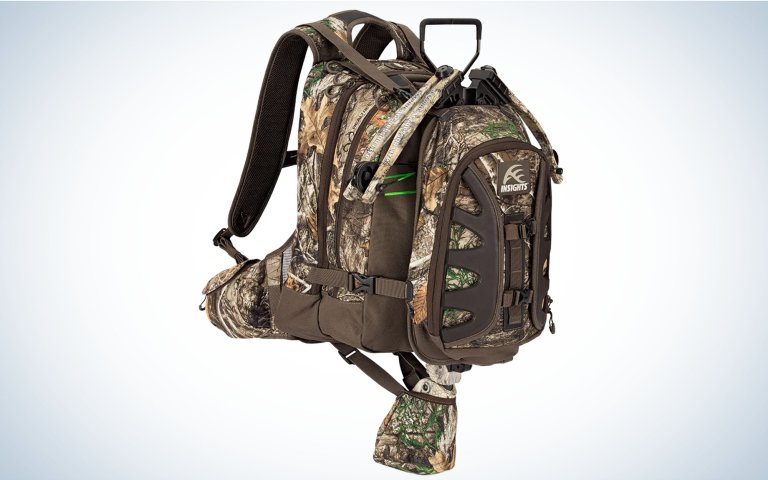
Tree stand shelf and basket system -
Price:
$220
This is my go-to pack for a preset stand. I can carry my food, water, bow hanger, camera gear, layers, and archery equipment in this pack. That load rides comfortably on the padded shoulder straps and waist belt. You could also use this pack for saddle hunting if you wore your saddle in and used the passthrough slot to carry your sticks. But, that passthrough is meant for carrying a rifle or crossbow. It works really well for compact crossbows, but large and heavy crossbows you’re better off carrying in your hand.
My favorite thing about this Shift is the gear organization. The front of the pack has a lid that flips out, for you to keep all the stuff you need in the stand. I use it for binos, an extra release aid, snacks, wind checker, and a grunt tube. The fold out panel makes it easy to have those items quick at hand so you don’t have to dig through the pack to find them. –Scott Einsmann
Best Daypack: Kifaru Shape Charge
See It
Pros
- Durable
- Comfortable
- Versatile
- The perfect amount of pockets
Key Features
-
Weight:
3 pounds, 15 ounces -
Volume:
1,960 cubic inches -
500d DWR coated fabric -
Made in the USA -
Large main compartment with mesh internal pockets. -
Two water bottle pockets -
Lid with two quick access pockets -
Molle panel for adding accessories and pouches -
Price:
$360
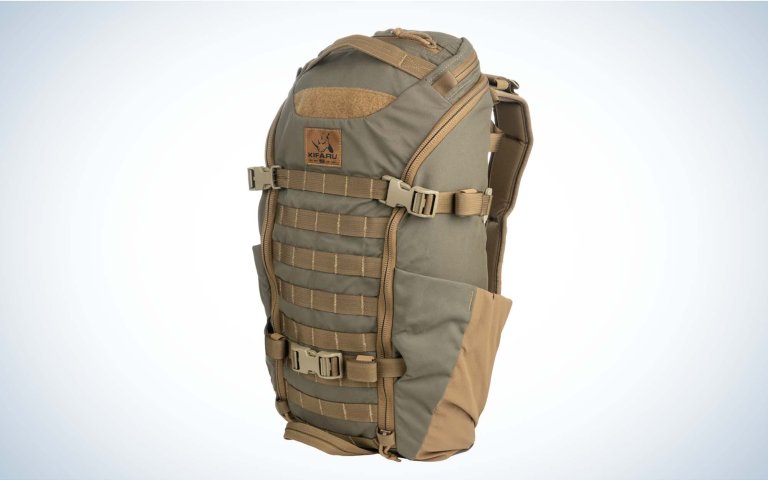
Most of my hunting requires a daypack for carrying layers, water, food, and gear. Within the daypack category you’ll find everything from tiny hip packs to backs around 2,500 cubic inches. I find myself reaching for packs around the 2,000 cubic inch range most often because they allow me to carry a day’s worth of gear. In my embarrassingly large collection of daypacks the Shape Charge is the clear winner and I use it almost excessively for nearly everything. Here are the roles it fills for me:
- Treestand pack
- Carry-on
- Camera bag
- Fishing backpack
- Range bag
The pack is easy to organize with just the right amount of pockets for quick access items and mesh internal pockets that make it easy for you to find what you need in the large main chamber. I’ve added exterior pouches to the molle for more storage when necessary as well as Kifaru’s Grab-IT for strapping down treestands and saddle platforms. The Grab-IT also works well as a meat shelf. As you can see, it’s easy to configure the Shape Charge from streamlined to a fully-kitted gear hauler.
The ultralight crowd will say 500d is overkill for a daypack, but I say this is daypack that will last a lifetime of hard use. Ultimately, it’s up to you decide if a 4-pound daypack is too heavy or if the heavy-duty construction is what you’re looking for. The main con is the price. It’s not a cheap pack, but if you are investing in it as a tool you’ll have for many seasons, rather than buying a cheaper bag every other year, the price becomes a little more reasonable. It’s also made in the USA from US-made materials, which adds to the price and the value. –Scott Einsmann
Best Day Pack for Women: Stone Glacier Avail 2200
See It
Pros
- Adjustment capacity
- Wide, cushioned straps and hip belt
- Feather-light but sturdy
Cons
- Stuffed interior pockets can take up lots of space
- Lower interior pocket is tough to access
Key Features
-
Capacity:
2,200 cubic-inch main bag -
Weight:
3 pounds, 0.8 ounces -
Cordura 500 and Xpac fabric -
Compatible with all Stone Glacier frames -
Hydration bladder compatible -
Made in the USA -
Price:
$299
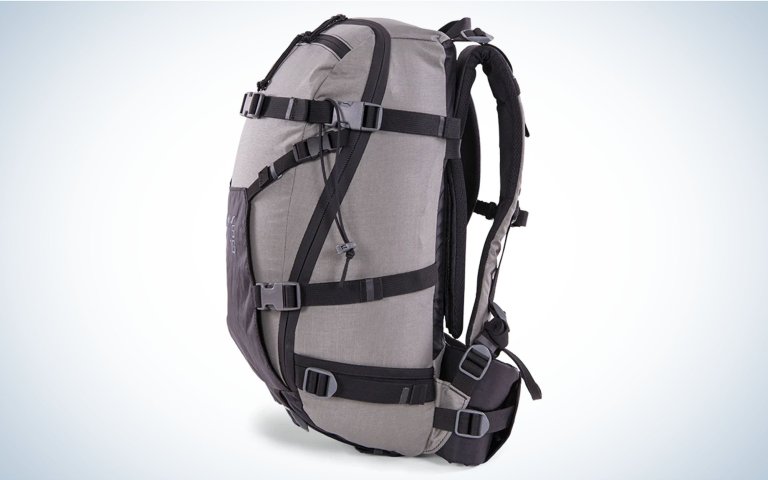
I tested the Avail 2200 on a Wyoming deer hunt where I stayed in a cabin and took a truck to my hunting spot, so all I needed was enough supplies for the day. I wasn’t carrying any camping gear or concerned about a long-distance packout, but extreme climate variations demanded a lot of extra layers. Pre-dawn temperatures started in the teens but by lunch it was 60 degrees. On the way out I carried a full 3-liter hydration bladder and I hiked back with most of my morning layers in my backpack.
Sometimes daypacks can be overwhelming with pockets and features that crowd the small carrying capacity. The Avail 2200 is not guilty of this. The internal pockets are simple and useful, if a little easy to overstuff. I loved the external compression panel for a jacket. The straps seem excessive at first, especially for a smaller pack, but once I was dialed with the pack, I found myself grateful for the ability to quietly lash down gear without having to open a zipper.
What stood out to me the most about the Avail 2200 is how easy it was to get a perfect fit. With other unisex packs, I end up with a little room between my shoulders and the straps, even after tightening them as much as possible. With the Avail, you can adjust the straps’ attachment points, so it properly accommodated for my short torso. This goes a long way once the bag is loaded up. Usually daypacks are built with a more standardized fit that lacks customization. After all, if you’re only carrying a single day’s worth of gear, does fit really matter? My answer is a resounding yes, and the Avail 2200 is the best hunting backpack for day trips that I’ve tried. –Katie Hill
Final Thoughts on Hunting Backpacks
A hunting backpack that doesn’t fit you, or is too small or too large, can ruin your hunt. A pack is a tool. It has to carry your hunting gear in a way that keeps it organized and lets you access it when you need it. Size is the next main consideration. Be sure to get a pack that holds all your gear with a weight to durability and features ratio that works for you. If you’re packing in a long way, and opt for useful features like gun or bow holders in the best hunting backpack for you.
Read the full article here