A Return to Market Hunting Would Be a Reckless Solution for Overpopulated Deer Herds


Outdoor Life Podcast Q&A: The Push to Sell Wild Venison
With very few exceptions, it’s a violation of both state and federal laws to buy, sell, or even barter wild game meat in the U.S. But there is a movement — one that pops up in different states every so often — to change this. These advocates see a problem across much of America that they think they can solve by commercializing native deer hunting and legalizing the sale of meat from wild whitetails.
That’s why this week on the Outdoor Life Podcast, I’m talking with Catherine Appling-Pooler, the senior director of government affairs for the National Deer Association. Catherine lives in Oklahoma and before she came to the NDA, she worked as the legislative liaison for the Oklahoma Department of Wildlife Conservation. (Disclosure: I serve as secretary on NDA’s board of directors.)
Catherine is a policy analyst by training and a deer hunter at heart. She’s going to explain why some people want to allow the sale of native venison, why that’s a big problem, and what the real solutions are.
Listen to this week’s episode on Apple, Spotify, or wherever you get your podcasts
Full Episode Transcript
Outdoor Life: Okay, Catherine, I wanna ask you about the resurgence of the movement to sell wild venison in the US. There is a push every now and then to legalize the sale of wild venison — deer in particular is what we’re talking about in this episode. So let’s just start out by asking: why? Why does this come up? What is the argument made by folks who are really sort of promoting this idea?
Catherine: It’s come back into conversation recently, in the last few years, and really it’s due to overpopulation of deer in certain areas. And I think the motivation behind it is trying to create an incentive to harvest more deer and get them off the landscape. If that’s the problem we’re having, sale of venison might not be the solution. So I think, especially in areas that are experiencing overabundance, people are kind of throwing everything at the wall and seeing what sticks. And then sale of venison comes around, and it’s just not sticking.
Outdoor Life: Sure. And I want to talk about all those reasons why in a little bit. Can you give us a few examples of places where this has been tried and has not succeeded?
Catherine: Yeah, absolutely. The most notable and recent would be in Indiana. It was the 2025 legislative session. There was a bill introduced to legalize the sale of venison. I believe that bill was introduced and referred to committee, but it did not make it out of committee. And I think they experienced quite a few calls about it, because what I know and understand is hunters are not for that.
New Jersey, I believe, in 2023 created a task force to explore the idea of a pilot program of legalizing the sale of venison. Again, nothing has come out of it. I think when you’re really starting to dig into it, it’s not popular and it’s not really feasible. deer are a conservation success story. Back in the day, we were experiencing almost extinction of the species because of over-commercialization, and I think that’s where a lot of the opposition comes from. We certainly want to learn from history, not repeat it. And so when these ideas come about, even if it’s simply a fact-finding mission, there is strong opposition against it.
And then also, I say nothing is new under the sun. We’ve had this conversation before, and the reasons are still there and they’re still valid. I completely understand the desire to manage abundant or overabundant populations, but there are different avenues that we can explore. The sale of venison shouldn’t be one of them. It’s a public trust resource, not something that we should profit off of.
Outdoor Life: Yeah. So let’s break that down a little bit. We had this almost extinction of whitetail deer. Can you give us a very brief history refresher — a primer on what happened — that the phrase “market hunting” is a trigger for a lot of modern-day deer hunters?
Catherine: Right. So back in the late 1800s, early 1900s, we didn’t have any regulations. We barely had any wildlife departments to oversee hunting. And it was legal to harvest deer. And so there was an over-commercialization, an over-harvest of deer for meat, hide, anything you can use it for. And we went from very high numbers of a native species to very, very low numbers, to the point of extinction. And so that’s when you had conservation hero Theodore Roosevelt come in and bring about different protections to preserve our wildlife. And in the last 125 years, we’ve seen a resurgence.
And so now the pendulum has swung: well, they were almost extinct, and now we’re experiencing overpopulations in certain areas, not throughout the entire country. And of course, when we’re talking about managing populations, I’m always like, well, it’s where it’s appropriate and needed. And now we’re kind of seeing, oh, there is a consequence to the success— now we’re experiencing an overpopulation.
Outdoor Life: Sure. And we are experiencing a backlash from deer hunters who do not like this idea of the sale of wild venison. Some of them are probably not so up to date on their North American hunting history, and they still think this is a bad idea. And I’m curious why that is. How do you account for that sort of visceral reaction, independent of history?
Catherine: Yeah. I think a lot of hunters still grew up — they can recall times where it was very rare to see a deer, maybe when they were younger, during their childhood and adolescence. And so they regard whitetail as a very sacred animal. And — same.
But we’re experiencing an overabundance, right? So I think deer hunters are kind of wrestling with that — hunting heritage, how they grew up, how they were taught to manage the resource. But now we’re dealing with different populations and different issues. So I think why hunters are opposed to it is the hunting ethics behind it. And also just opening up a slippery slope of, how will that impact hunting as a whole?
And then of course you have the North American Model of Wildlife Conservation, where you’re wanting to make sure that the meat isn’t wasted and that this is a public trust resource. And so if it belongs to the public and it belongs to the people, then should an individual be able to profit off of it? So I think that kind of all comes together, and people are very on their heels when you talk about it.
Outdoor Life: What is the slippery slope? Say suddenly, okay, it’s legal to sell venison — which of course would be a very complicated process, state-dependent, whatever. But in this theoretical world, what are the side effects? What does NDA worry could happen in this commercialized landscape? What are the risks?
Catherine: First and foremost, poaching. How do you regulate that? Poaching can be difficult to manage now, and then you’re putting a price associated with it and a financial gain associated with it. Will bad actors enter hunting and take advantage of that? So poaching will be an issue. That’s a concern there.
And then I think my question is, if these bad actors come in, they’re not going to be representing our community. They’re not going to have the same hunter education or hunter ethics that we may have, the same value and respect for the animal that we may have. So are they going to come in, and are they going to represent our community well? Are they going to represent it accurately? That’s a couple of the concerns we have.
And then also, is it actually going to take deer off the landscape, or is it actually going to put more on? Because if you’re now creating a business around it — if I’m walking through this and I’m like, oh, well, now I can make money off of this, well, I only have a certain amount of tags. So if I’m actually gonna turn a profit, wouldn’t I need more than the legal limit? And then I don’t want this business to be done in five years, when we fix the overabundant population. So are we gonna be releasing deer onto the landscape to continue supporting these businesses? And I think we would have more deer, not fewer. I mean, if you put a price tag on something, people will wanna keep it around.
I look at hog hunting. Yes, it is hard to manage and eradicate that species, but are we really putting all of our efforts toward it, when you can hog hunt in cool places or from a cool helicopter and things like that?
Outdoor Life: Yeah. Hog hunting has become big business in places like where you live, in Oklahoma and Texas, and that has led to people importing hogs, cross-state transportation of wild hogs. And to your point of releasing more deer — there’s already a complex world of managing wild whitetail populations and farm deer. And farm-raised deer all across the US is already just a can of worms. So I can see why this would be scary from a regulatory perspective.
Related: Feral Hogs Can Spread CWD. So Why Are These States Still Transporting and Importing Them?
Catherine: Right. And I think, even when you bring farmed deer into it, are farmed deer going to become more like livestock and a delicacy? Are we going to be seeing more farmed deer facilities pop up? And the marketing could be there. Why would you want a wild deer when we’ve bred this deer for consumption purposes? It tastes better, it’s X, Y, Z. So again, if you’re trying to create a market for venison, as a consumer, what would it be? Now, wild deer is a lean protein and it is healthy, yes. But we don’t know what can of worms we’re opening up with the sale of venison. And there are existing avenues to combat overpopulation already. Let’s use them. And let’s fund them properly.
Outdoor Life: Yeah. Okay. And I wanna take a quick side quest here to address the fact that some people might be listening to this and being like, well, I can order venison at a restaurant, or I walk into the grocery store and I see venison marketed to me. So first, let’s talk about the fact that there is venison for sale commercially in the US. What’s the deal with that?
Catherine: Yeah. And I think that’s a great point to bring up. I think it honestly creates a lot of the confusion around the issue. So if you are seeing venison in the grocery store or at a restaurant, it is likely imported from a different country, or a captive animal, or it is a non-native invasive species. So that’s kind of the key there. If you walk into a restaurant and you see venison, it’s not deer. It may be red deer or axis, a non-native species. And so then I think that also goes back to why hunters are against it. I mean, deer are a native species to North America, so are we opposed to that? But then, could it be used to control non-native invasive species? That’s another layer and can of worms to this discussion.
So yes, you can get it at your local grocery store or restaurant. Every time I go into the grocery store, I walk by it and I kind of chuckle to myself, because people actually don’t know what they’re buying. They might think, oh, this is a local wild animal, this is so much healthier for me, great. But actually it’s not — it was flown in from a different country. So it might not be as local as you think it is.
Outdoor Life: Yeah. And you and I talked about this a little bit — we previously did an episode about this on the OL podcast. But I tagged along with a legal market hunter who was USDA-regulated in Hawaii to cull axis deer that were then processed and sold to market. Wild, free-range venison, but again, non-native axis deer.
And the regulatory hoops that that business owner had to jump through to make sure he was compliant with state and federal law were wild. He had to hunt with a USDA regulator. He had to execute only clean head shots — no wounding shots. He had to recover all of the deer in the middle of the night. And then he had a certain amount of time to get those deer to a cooler and through processing. And I bring that up because imagine trying to regulate hunters who are just your average hunter, who’s like, oh, I can sell this venison.
Imagine the processing and the requirements, the health and safety aspect of trying to sell venison. The regulations put in place to allow the sale of wild whitetails to a larger market could be so onerous, it wouldn’t actually solve the problem that this whole legalization is trying to solve.
Before we get to solutions, I just want to talk about Vermont briefly, because the state of Vermont is an outlier in this landscape, and it is little known, I think because mostly people don’t take advantage of it. In the state of Vermont, you can sell wild venison within state lines. Can you talk about that a little bit?
Catherine: Yeah. That has been allowed since, I believe, the 1960s. And you can sell wild venison throughout hunting season specifically — and I believe it’s 20 days past hunting season. Also, it’s seasonal, so it’s not like you could sell it all year round, right? But no one really takes advantage of it. And I think they’ve had — and this is from my understanding of the situation — I think they’ve had more issues with poaching than hunters making a few extra dollars during hunting season by selling venison.
So yes, Vermont is an outlier in that sense, but I think, what you just said: okay, legalize it. Is it feasible? And will it actually happen? Case in point — I think Vermont’s a great case study in that. Okay, so if that law in Indiana had passed, would it actually solve anything? So I think that bill specifically was a knee-jerk reaction, and I think the sale of venison in general is kind of a knee-jerk reaction to the problem. And there are different opportunities to explore. But yeah, it’s very interesting to learn that about Vermont and then see, okay, if this has been around since the ’60s, nothing’s really happened about it. Are they hitting their harvest goals? Is there a market? No.
I believe you have to keep it within state lines, so it’s not like you can come from a different state, buy it, and then bring it back. So if that’s the case, and if it’s not being utilized, then let’s not do it. That’s kind of proven our point for us, right?
Outdoor Life: Totally.One of our past OL contributors wrote a really great in-depth piece about this for MeatEater. Pat Durkin talked to a bunch of game wardens in Vermont, talked to local hunters about it. And those very problems you cite — it was more of a poaching problem, where people were selling venison during the season but they hadn’t legally harvested that venison, and issues like that.
Okay, Catherine, let’s talk about solutions. Instead of commercializing the sale of wild venison to tackle localized overpopulation problems, what would you like to see happen?
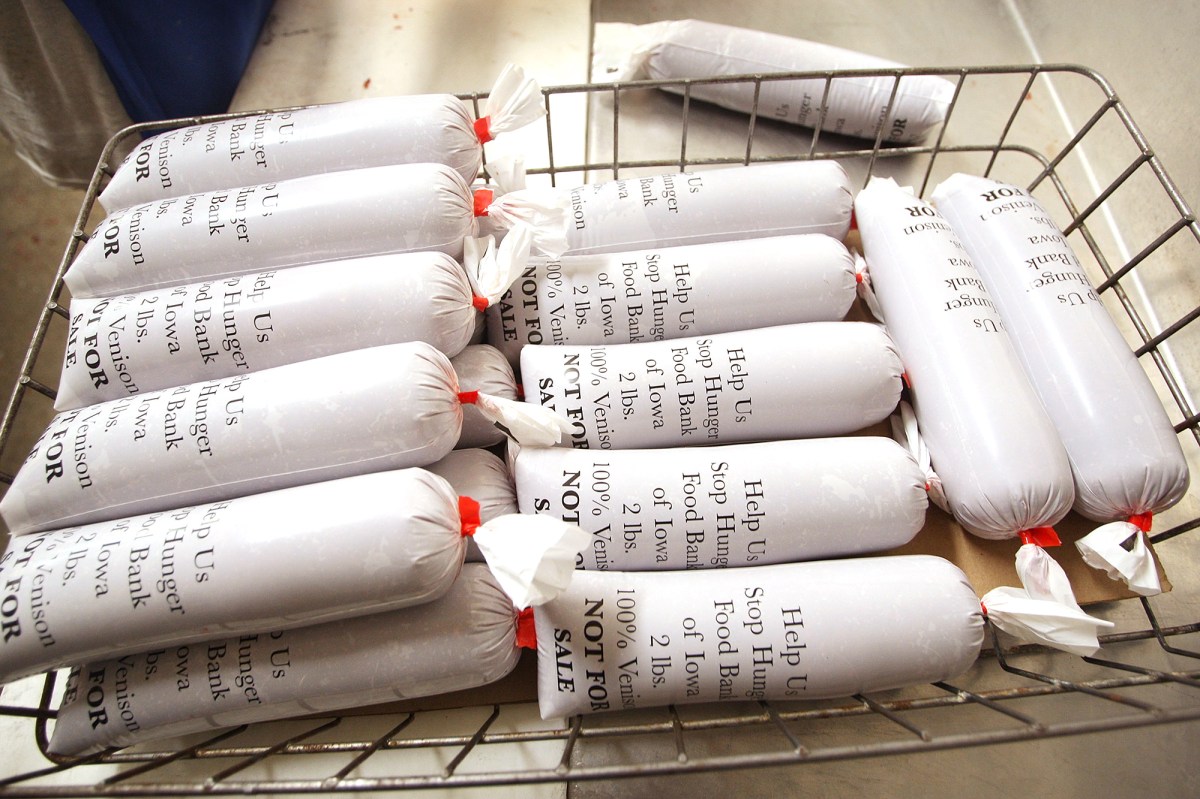
Catherine: If the problem people want to address is overpopulation, then the solution is venison donations, period. So, venison donations — I’m very close to the issue, so I’m very biased, because I oversee our legislative issues, but I also oversee our efforts on venison donations. So I work closely with state wildlife agencies and venison donation programs, such as Share the Harvest, Hunters Feeding the Hungry, Hunters Against Hunger. There’s a variety of names; they essentially all do the same thing. And it’s an established, existing infrastructure that can take donated deer and give it to food banks and food pantries, that way it’s being used by families in need. NDA got involved in this because we were seeing a decline in venison processors across the country, and we were getting contacted. And so we kind of got into this of, well, if processors are disappearing from the landscape, how could that impact hunting? How can that impact deer hunters? But then also, will that impact harvest goals—
Outdoor Life: Sorry to interrupt — just curious, why is that the case? Why are we seeing fewer processors on the landscape?
Catherine: Great question. Well, it’s a seasonal business, for a variety of reasons. So if the meat processor also does other commercial products like beef or pork, then they have to flip their shop because of USDA regulations. Beef is a lot different from wild game. So they have to flip their shop; there are barriers there. Or it’s a very small processor, like a mom-and-pop shop, and they are retiring and they don’t have anyone taking over the business. In that effort, we wanted to create a resource for hunters to find a processor near them.
Because if hunters’ freezers are full, but we’re not meeting harvest goals, right? We want them to continue hunting. And then we need them to have a place to drop that deer off, and that’s a commercial venison processor. So the process of donation is: the hunter harvests the deer, brings it to a participating venison processor, they process the deer and then coordinate with a local food bank or food pantry to get the meat to where it needs to go. And then it is given to needy families and utilized.
So I think when you’re looking at the sale of venison, a lot of people are saying it goes against the North American Model. But when you’re looking at venison donations, it adheres to and aligns with the North American Model, because no one’s personally profiting off of it and the meat is getting utilized. That’s our biggest thing — we never want the meat to go to waste. So it allows hunters to spend more time in the woods. And hunters are the best conservation tool we have. So we utilize this conservation tool, they help their community, we’re supporting local, usually rural businesses, venison processors, because they do get reimbursed for their labor and time.
But then we are also combating food insecurity in your community. So I always encourage hunters to participate in venison donations. There are very few hunters that tag out, right? So they still have opportunity to harvest an additional, preferably antlerless, deer. So I always encourage them: hey, you have the opportunity to go back out, take advantage of it. Even if your freezer is already full, there are other options, avenues to donate that deer. The barrier to that is hunters don’t know that they can donate a deer.
Outdoor Life: So what I’m hearing from you, which you’ve kind of said, but I wanna spell it out directly, is the National Deer Association would like to see more hunters shoot more does — existing hunters who already have our built-in code of ethics. They’re part of our culture. We want more hunters to shoot more does.
And whether or not you can keep and use that meat, or donate it to a program, or give it away within your own personal community — which is something that my family does every year. I can’t remember the last time we donated through a program, but we share our venison with our friends who don’t hunt.
So say we do get this great big influx of people who are shooting more does and they wanna donate to these programs. What are some potential problems there that NDA is trying to get ahead of?
Catherine: Yeah. So like I said, we have fewer processors on the landscape. So, one, it’s a workforce development issue — we need more processors. I’ve talked to processors across the country, and they are turning away clients even. So we need the processor infrastructure there. We need enough businesses on the landscape. That is, I think, one of the larger barriers that I talk about regularly.
So can they handle this influx? Do they have the cold storage facilities to handle this? And if they are participating in venison donations, are they being compensated fairly for their time and labor? So then it’s a funding thing. I have yet to talk to a food bank or a food pantry that has met their protein needs. So the food banks and food pantries that I talk to are always very appreciative of the donated venison that they get. Hunters understand how it’s healthy — talk about field to table, right? But it could be used in other ways to really benefit your community, not just in wildlife management but combating food insecurity. So I would say, if there was an influx of hunters donating this year, we need to make sure there are enough processors on the landscape.
NDA has been working on that. We actually partnered with the American Association of Meat Processors, or AAMP, to create an online educational course to help existing processors add venison to their portfolio, or to help new or emerging venison processors create a foundation to enter into the industry. So we’re working with partners that historically have not been in our circles, but it impacts all of us, right? So they have been a wonderful partner. We created that resource with them.
And then, because there are fewer on the landscape, we also created the National Venison Processor Map. And that was created to be a resource for hunters, to find a processor near them. You can go to our website, the map will pop up, and you can enter your zip code, even down to your address, and it will zoom in and show you the processors near you. We’ve also color-coded them. So if it is an orange dot, it is a processor that does not participate in venison donations — not the official program. And if it’s a green dot, it does.
So if you are looking for a processor near you specifically so you can donate a deer, you can use that map, find them, call them up, tell them you’re stopping by. And we have some notes there too — times, if they have an overnight cooler, things like that. So we’re trying to make that connection easier. Because if a hunter doesn’t know where to take it, will he go out for that additional doe? So we’re trying to make it as convenient as possible for the hunter, and then trying to make it as financially fair for the processor.
Outdoor Life: Yeah, totally. I would be remiss if I did not ask about chronic wasting disease and testing. Dealing with that on top of venison donation — is there any guidance or any resources around that?
Catherine: Yeah. So it is state by state, county by county. On our processor webpage, if you scroll below our map, you will find more information about your venison donation program. And programs are either through the wildlife agency — some states, their agency runs it — and then some are independent NGOs. So you can find more information about your state-specific programs. You can also submit a processor to the map, but then right underneath that, we also have a link to state CWD guidelines. We try to keep those as up to date as possible. We have that as a resource, that way it’s just all on one page for a hunter. Like I said, this map is so it can be as convenient as possible for hunters.
So we’re trying to kind of do a one-stop shop for y’all. The most up-to-date would be your state wildlife agency website, so make sure you are up to date on that, because that does impact most, if not all, venison donation programs. But most donation programs do test for CWD, because that’s a human health and safety concern, and it’s going into a public population — that’s not just your individual consumption, right? So that is a layer to venison donations that we’re working on as well.
Outdoor Life: And as we wrap this up, one thing that occurred to me around the whole “we need to fund donation programs, venison donation programs” — this seems like something I see whenever I’m buying my hunting license. In any state, the state agency always asks you if you wanna fund X, Y, and Z, and one of them is often venison donation programs in your state. So say you do not fill your extra doe tags and all you do is check that “donate $1” box when you check out for your hunting license, if you’re feeling so inclined. That’s a small thing hunters can do.
To wrap this up. I’ve been wanting to talk to you about venison sales for a long time, just because I think it’s a really interesting and intriguing topic. But this week, NDA is launching a fall program to encourage this whole message that we’re talking about. Can you talk about that briefly?
Catherine: Yeah, absolutely. So NDA is launching the #DonateADoeChallenge this fall, and it’ll run October 1 through February 1, that way we can try to capture as many hunting seasons as possible, since they all vary, of course. But if you want to participate in this challenge, you simply have to harvest a legal antlerless deer and donate it — but it’s also just, show us how you share your harvest. Like you said, it doesn’t have to be through an official program; it can be sharing with your neighbor, things like that. Show us how you share your harvest, use the #DonateADoeChallenge, and then you challenge a few of your friends to participate as well.
So it’s a tool, hopefully, to encourage and actually increase antlerless deer harvest, especially in areas of the country that need it the most. If your state is experiencing overpopulation, I highly encourage you to participate and harvest that additional doe. But then also, just raising awareness — some hunters don’t know that you can donate a deer — so how can we educate and communicate about this program, and also highlight what hunters do for their community? We need more positive stories about hunters, right? I don’t think we could ever have enough.
Outdoor Life: Yeah, it’s great PR for the hunting community — for all the folks who are not hunters, seeing this on their social media feeds. Well, Catherine, thank you so much for explaining this all to us. This was fascinating.
Catherine: Yeah, thanks for having me.
Read the full article here