There’s a difference between panic buying and smart buying. Panic buying is what happens in the first 48 hours of a crisis – empty shelves, fistfights over toilet paper, people loading carts with things they’ll never use.
Smart buying is what you do right now, before the news cycle triggers the herd. The items on this list aren’t random. They’re things that have historically vanished from store shelves fast, that are difficult or impossible to substitute once they’re gone, and that have real, practical value whether you’re riding out a short disruption or something that lasts months.
If even a few of these are missing from your stockpile, that’s worth fixing today.
11. Potassium Iodide

 Potassium iodide is something you on’t think as being important for survival, until a nuclear strike or an EMP. At that point, it’s already too late.
KI tablets sell out within hours of any radiological scare. It’s actually what happened in 2011, after the Fukushima disaster, when pharmacies across the U.S. West Coast ran dry in less than a day.
The tablets work by saturating your thyroid gland with stable iodine, so it can’t absorb radioactive iodine-131, which is one of the most dangerous byproducts of nuclear fallout.
They don’t protect against all radiation, though, but for this specific threat, they’re highly effective when taken correctly and at the right time.
The FDA has approved specific dosages by age group. A family pack costs under $20. This is one of those items where you either have it before you need it, or you don’t have it at all.
10. Canning Lids and Rings
During 2020 and 2021, canning lids became one of the hardest items to find anywhere in America. Ball and Kerr lids, the standard wide-mouth and regular-mouth flat lids, were backordered for months. Gardeners who had full harvests couldn’t preserve them because they had no lids.
The rings are reusable, but the flat sealing lids are single-use, which means every canning season burns through your supply. If you can, you go through lids constantly. Stock a full case minimum for each jar size you use.
Tattler reusable lids are worth having too, even though they require slightly different technique, because they’re not dependent on a supply chain that tends to collapse right when everyone needs it most.
9. Antibiotics (Fish and Livestock Formulations)
This is a topic worth understanding clearly before you act on it. Certain antibiotics sold for aquarium fish, such as amoxicillin, doxycycline, ciprofloxacin, are the same pharmaceutical compounds sold for human use, just without a prescription requirement.
The availability of these products has been shrinking as regulations tighten. Some formulations have already moved behind the prescription counter.
So, if you’re going to include antibiotics in your medical prepping plan, do the research now, and stock what’s still accessible. Also, you should learn proper dosing from medical reference materials like the Merck Manual, and understand that antibiotics treat bacterial infections, not viral illness, which is how a lot of people misuse them.
8. Axes, Hatchets, and Draw Knives

 Quality hand tools are made in a narrowing number of places. A lot of what’s on the shelf at big-box stores today is stamped steel from overseas with handles that won’t survive real work.
The brands that still make tools worth having – Gransfors Bruks, Hults Bruk, Council Tool, Snow & Nealley – run lean production and their products go out of stock quickly whenever demand spikes.
In a blackout, for example, hand tools become the backbone of daily work: splitting wood, building, repairing, processing game.
An axe that holds an edge and a handle that won’t crack on a cold morning is worth buying now at full price rather than scrambling for a worse option later. Add a quality draw knife and a froe if you work with wood at all.
7. Bulk Propane and Propane Adapters
The one-pound green propane canisters you find at camping stores are convenient but not a serious storage strategy – they’re expensive per BTU, and they run out fast, especially in a crisis.
A much better approach is a set of 20-pound tanks (the standard grill size), filled and rotated regularly, along with a propane hose adapter that lets you run a camp stove or lantern off the larger tank instead of the small canisters.
One 20-pound tank holds roughly the equivalent of 17 one-pound canisters. Beyond that, if you have the space and are serious about propane as a primary backup fuel, 100-pound cylinders are worth considering.
Even if they require more upfront investment, they will significantly make your life easier in a crisis.
6. Grain, Salt, and Cooking Fats in Bulk
White rice, hard red wheat berries, rolled oats, dried pasta, and dried beans form the caloric foundation of any serious food stockpile. They store for years when sealed properly in Mylar bags with oxygen absorbers inside food-grade buckets.
Salt is often overlooked, but it’s essential for electrolyte balance and meat curing. A 50-pound bag of iodized salt is inexpensive, takes up minimal space, and lasts indefinitely. Cooking fats are the most commonly underestimated item: coconut oil and ghee have some of the longest shelf lives of any cooking fat and stay solid at room temperature, making them practical for long-term storage.
Crisco shortening in sealed cans also stores well. Without adequate fat in your food supply, even a high-calorie diet leaves the body running poorly.
The best fats to store are saturated fats, such as coconut oil, ghee, lard, and shortening, because their chemical structure resists oxidation. Also, let’s not forget about rendered tallow, which can last 5+ years and outlasts any other type of fat. I made a traditional recipe that I found HERE and I was impressed – now that’s how I cook my meals.
5. Gasoline With Stabilizer

 Gas stations fail in two scenarios: power outages (the pumps don’t work) and panicked buying (lines stretch for blocks and supplies run dry within 24 hours). Either way, the people who didn’t store fuel are stuck.
Ethanol-blended gasoline degrades faster than pure gasoline – within 3 months you can start seeing phase separation, where the ethanol absorbs water and the fuel mixture becomes unusable.
The fix is PRI-G or STA-BIL fuel stabilizer and rotation on a schedule. Non-ethanol gasoline, where you can find it, stores significantly longer and is worth the extra cost for long-term storage.
Keep fuel in approved metal or HDPE containers, out of living areas, and away from ignition sources.
4. Cast Iron Cookware
A 10-inch skillet, a 12-inch skillet, and a Dutch oven cover most cooking tasks over an open fire, a wood stove, a propane burner, or a regular kitchen range. It doesn’t require anything to maintain except heat and a little oil. It lasts multiple generations with basic care and no one knows better than the Amish.
You can find solid cast iron at reasonable prices, and quality pre-seasoned pieces from the Amish Store in your area – find out more here. They are either made locally or are solid American-made, such as Finex, Stargazer, or vintage Griswold and Wagner.
Cheap thin-walled cast iron from off-brand importers warps and cracks – the weight of a piece is a rough but reliable indicator of quality. Get what you’ll actually use, and use it now so you’re comfortable with it before you need it under pressure.
3. Water Filtration and Purification
Your Berkey filter is only as good as the water source you’re pulling from, and when that’s gone, the filter is just an expensive paperweight sitting on your counter.
A gravity filter as your primary, iodine tablets as a backup, and the knowledge of how to build a basic sand-and-charcoal filter as a last resort gives you three independent layers that don’t depend on each other. Also, make sure you stock replacement ceramic elements, membranes, and purification tablets now, because they make your life easier in a crisis.
But filtration only solves half the problem, because the other half is sourcing, and that’s where most people’s plans quietly fall apart.
That’s when I started looking into Atmospheric Water Generators or AWGs, which, as most of you already know, are devices that pull moisture directly from the air and convert it into drinking water. I tried a few and most weren’t worth the shelf space, but two stood out.
One is the Home Water Generator, which you can build yourself for around $100 in hardware store parts and produces up to 10 gallons of drinking water a day. The other one I’m genuinely glad I bought is the Smart Water Box – a portable unit, small enough to throw in your bug-out bag or take camping, and honestly a pretty fun project to try this summer.
2. Over-the-Counter Pain and Fever Medication
During COVID, ibuprofen and acetaminophen were gone from shelves nationally for weeks, and children’s formulations were the first to disappear. Most people were caught off guard because they assumed these were always available – and they were, until they weren’t.
Stock both adult and pediatric formulations of acetaminophen and ibuprofen, since they treat different pathways and you’ll often need to alternate them for fever management. Keep aspirin too, because 325mg aspirin has a specific role in cardiac event response that neither of the other two cover. Check expiration dates twice a year and rotate.
Here’s a list of the most sought-after medicines and supplements based on what people actually ran out of in Venezuela and active war zones.
1. Open-Pollinated Garden Seeds
Bee colonies across the US have been collapsing for over a decade. Some regions have already lost more than a third of their population. Most people shrug at that statistic until they realize that roughly one third of everything on their plate exists because a bee landed on a flower first.
The seeds worth stacking are open-pollinated and heirloom varieties, not the hybrid packets at your local garden center. Hybrids give you one season, while open-pollinated seeds give you every season after that, because you can harvest and replant them indefinitely.
The US government took this seriously enough to contribute to the Seed Vault in Norway – a bunker built into an Arctic mountain to preserve the world’s most critical plant varieties in the event of a global catastrophe.
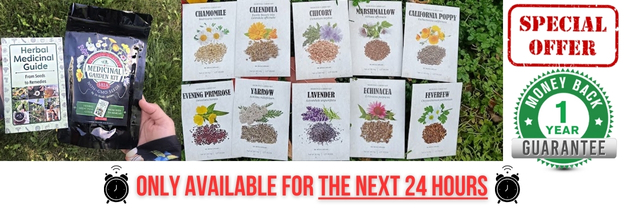
I was curious to see what kind of seeds the US Government decided were the most important. While doing my research, I found a seed kit that carries 10 of those same varieties. So, if there’s one thing on this list worth buying before anything else disappears, it’s this medicinal seed kit.

The Window Closes Fast
Every item on this list has disappeared from shelves at least once in recent memory – not in some hypothetical future scenario, but in events most of us lived through. The common thread is that by the time a shortage is obvious, it’s already too late to prepare for it.
That means when demand spikes, the gap between full shelves and empty ones is measured in hours, not days. Going through this list and filling in whatever’s missing from your stockpile is worth doing this week, not after the next news cycle.
I know it goes without saying, but I will leave you with this: the prep you didn’t buy is the one you’ll regret.
You may also like:
 Hoarding These Items Might Get You Arrested
Bizarre Experiment Uncovers Faulty Brain Wire as Root Cause of Ear Ringing (VIDEO)
How To Build Your Own Panic Room
Why You Should Have Iodine Pills in Your Stockpile Right Now
How To Make Your Own Salt For SHTF
Read the full article here