AI companies have a responsibility to safeguard models against exploitation, Pentagon chief technology officer says

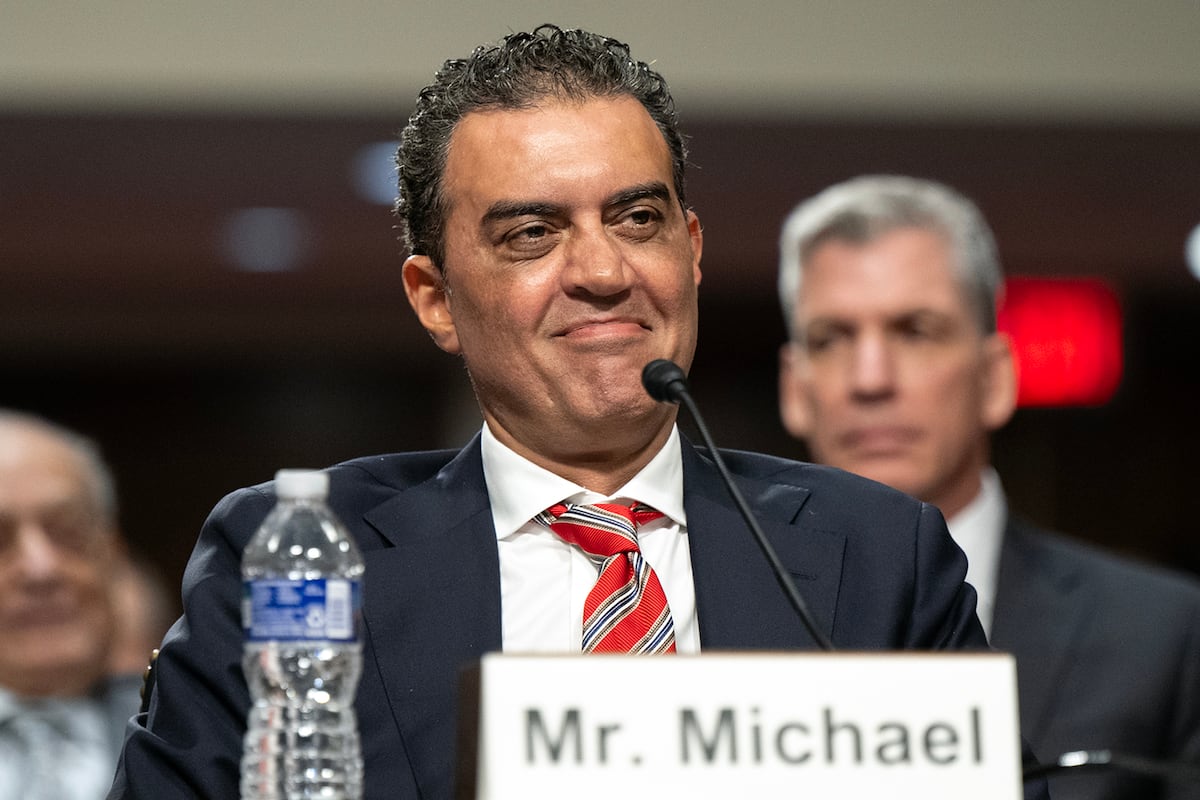

As artificial intelligence companies developed models with weaponization potential, they have an obligation to be considerate of their systems, the Department of Defense chief technology officer said.
On the heels of President Donald Trump’s recent executive order on AI innovation, Emil Michael, the undersecretary of defense for research and engineering, said that he’s concerned about the category of “cyber weapons” that companies are releasing, such as Anthropic’s Mythos.
“These companies have a responsibility to ensure that their weapons, what they call weaponization potential of these models, to be careful and thoughtful about what they’re doing,” Michael said Thursday at The Washington Post’s inaugural Building America Summit.
Lawmakers have increasingly warned against the weaponization of AI models by U.S. adversaries against citizens, businesses and government agencies, calling for their crafting to include resilient security measures to safeguard against hacks.
On Tuesday, the White House released an executive order that establishes an “AI cybersecurity clearinghouse,” through which AI industry partners can volunteer to have the Defense Department scan their systems for software vulnerabilities before their release.
Michael said that companies that have models with a “weaponization capability” could allow the federal government to spend 30 days examining their systems. The government could potentially identify vulnerabilities across the country in systems with IP that could be susceptible to hacks, such as electricity grids or public hospitals.
“I think they’ve all agreed and think it’s a good idea to do that. That’s been a good constructive process,” Michael said. “I give all the companies, Open AI, even Anthropic, and Google credit for sort of agreeing that was a smart thing to do.”
Anthropic has been left out of deals with the Pentagon after the firm refused to allow unrestricted access to its Claude models for fully autonomous weapons and mass domestic surveillance.
The company sued the Trump administration over the federal government labeling the firm as a supply chain risk over its decision to restrict the military’s use of its technology.
Mythos, Anthropic’s new model, has drawn criticism as skeptics of the program point out that it could pose a danger with its hacking and cybersecurity capabilities. Anthropic previewed the model and announced that it was capable of finding ways to exploit vulnerabilities in software.
Meanwhile, the DoD has integrated AI throughout the department.
When posed a question at the summit about the government’s usage of AI, Michael said that six months ago, only about 80,000 federal employees were AI users each month. But now, there are 1.5 million, he stated, saying that the government has “raced” to ramp up usage among workers for efficiency, intelligence and warfighting.
“I think by the end of this year, I’d be shocked if three quarters of the department isn’t using AI in some way,” Michael said. “We’ve integrated all the biggest AI companies over the last few months, so, we’re, in one year, going to make progress more than the five years before it.”
Cristina Stassis is a reporter covering stories surrounding the defense industry, national security, military/veteran affairs and more. She previously worked as an editorial fellow for Defense News in 2024 where she assisted the newsroom in breaking news across Sightline Media Group.
Read the full article here