
There’s a gut punch hiding in the latest numbers, and if you’ve been feeling the squeeze at the grocery store, you’re not the only one.
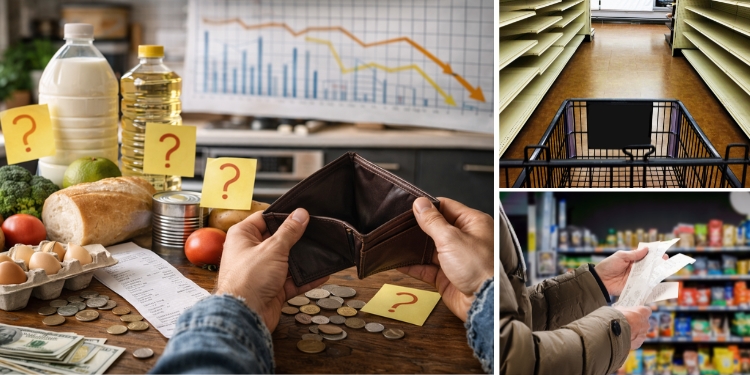
You’re living through something that a February 2026 LendingTree analysis just put a number on: 49% of American adults say it is at least somewhat difficult to afford food right now, and 52% are spending more on groceries this year than last year.
That’s nearly half the country – in the richest nation in the history of the world – struggling to keep their kitchens stocked.
You already knew it, though. You’ve watched the receipt totals climb while the bags got lighter, switched from name brand to store brand, then from store brand to whatever’s cheapest, and it’s still not enough.
So let’s talk about how we got here and, most importantly, what you can do about it right now.
A Decade of Slow-Motion Collapse
Nobody woke up one morning to a broken economy. This was a slow bleed over ten years – a series of decisions, events, and consequences that stacked on top of each other until working people couldn’t keep up anymore.
Here’s the timeline:
- 2015–2019: On paper, things looked good – unemployment dropped, the stock market climbed, and the news kept saying the economy was strong. But wages for working people barely moved while housing costs and medical bills kept creeping up year after year. The “good economy” was mostly good for those who already had money.
- 2020: COVID shut the world down and millions lost jobs in a matter of weeks. The government responded by printing trillions of dollars and sending out stimulus checks to keep people afloat, but supply chains broke down. The money supply exploded while the amount of goods you could actually buy with that money shrank.
- 2021: Everything reopened, but the damage was already baked in. Too much money was now chasing too few goods, and prices started climbing fast on lumber, used cars, housing, and groceries. Regular people felt it immediately at the register, even though the official numbers lagged months behind.
- 2022: Inflation hit 9.1% in June, the highest in over 40 years. The Federal Reserve started jacking up interest rates to cool things down, which made credit cards, car loans, and mortgages all more expensive overnight. Therefore, groceries jumped 13% in a single year – eggs doubled, ground beef went through the roof, and families started making hard choices at the checkout line.
- 2023: Inflation slowed down on paper, but prices didn’t actually come back down. A slower rate of increase still means things cost more than they did before. Grocery prices, rent, energy, all of it stayed elevated. Meanwhile, credit card debt in America crossed $1 trillion for the first time in history because people were borrowing just to keep up.
- 2024–2025: Grocery prices have risen roughly 25–30% compared to where they were in 2020. Wages went up too, but not nearly enough to close that gap, especially for hourly workers, tradespeople, and service jobs. The average family is spending significantly more on food, energy, and housing than they were five years ago.
According to economists, this situation won’t change soon. The trends show us that this gap is going to deepen and it might be no way of going back. Inflation may slow, but that just means things get more expensive at a slower pace – the damage is already locked in.
The Federal Reserve projects inflation will hover around 2–3% going forward, but that’s on top of prices that are already 25–30% higher than 2020. The America of 2020 prices is gone. What we’re living in now is the new baseline.
Click here to see what economists predict is coming next and what you can do about it!
What the Study Found
 The LendingTree analysis, conducted in early February 2026, surveyed thousands of American adults between the ages of 18 and 80. The findings paint a clear picture of a country that is adapting to survive.
According to the report, 49% of Americans said it is at least somewhat difficult to afford food right now. And we are not talking about luxuries or steak dinners. This study is about basic groceries, and 52% said they’re spending more on food this year than last year.
Moreover, grocery shopping has become a strategic operation for most families. Nearly 90% of people now say they are more mindful of what they buy – creating lists, clipping coupons, hunting for sales, and planning around what’s discounted that week. About 16% are making trips to multiple stores just to save a few bucks across different items.
And if you think that’s normal budgeting, you’re dead wrong. That’s survival.
The Part That Should Worry Everyone
Here’s where the LendingTree data gets darker. Lower-income households aren’t changing their habits much, because they have nothing left to change. They were already stretching every dollar before inflation hit. They were already buying store brand, already skipping meals, already clipping every coupon. So what are they doing now? Buying less food – fewer items in the cart, smaller meals, less leisure time.
LendingTree put it plainly: “Many low-income households may already be using common cost-cutting strategies – and are now reducing food purchases because they can’t trim costs further.”
How to Stockpile Food for Free
The study also revealed big shifts in how Americans eat outside the home. A majority are cutting back on dining out and delivery. About 39% are eating out less often, and 16% have stopped getting food delivered entirely. When people do go out, they’re choosing cheaper restaurants or fast food over sit-down places. Some have even started eating at home before going out.
Tipping habits have shifted, too. Sixty-six percent of Americans say inflation has changed how they tip. The generational split is telling: 64% of Boomers say their habits haven’t changed, while 26% of the younger generation don’t tip at all for takeout or delivery and 29% tip less at restaurants than they used to.
What This Means for You
 Here’s the hard truth most of us already feel but don’t want to say out loud: nobody is coming to fix this.
Nothing is going to bring your grocery bill back to where it was.
And that’s not meant as a dig at anyone – it’s just the situation we’re all dealing with now.
The good news is, once you stop waiting on outside help, you can start making real moves on your own terms.
So what do these numbers actually mean for your household? Here’s a breakdown:
- Your food budget is under pressure, and it’s probably staying that way. Prices are not coming back down to where they were in 2019 – that world is behind us. They might stabilize or slow their climb, but the new floor is already set. Whatever strategy you’re using to feed your family, it’s worth thinking of it as the new normal rather than a temporary fix until things “get better.”
- A lot of us are closer to the edge than we’d like to admit. If you’re pulling in a middle-class income and feeling like you’re holding it together, that’s great, but it’s worth taking a harder look at the math. One job loss, one busted transmission, one trip to the ER, and suddenly you’re standing in the same 49% as everyone else in this study. The gap between “we’re fine” and “we’re in trouble” has never been thinner, and that’s true for most working families right now.
- Every meal you depend on the grocery store for is a vulnerability you can chip away at. When half the country is struggling to buy food, the system is telling us something. Every tomato you grow, every jar you put up, every pound of meat you stock in the freezer from an animal you raised or hunted – that’s money you never have to earn and a kind of security that no paycheck can match.
What You Can Do Right Now
You don’t need a hundred acres and a trust fund to start insulating yourself. You need a plan and the willingness to work at it.
Here’s where to start:
- Grow something. Anything. A raised bed of tomatoes, peppers, beans, and squash can produce hundreds of dollars’ worth of food in a single season. Container gardens work on porches and patios. If you’re looking for a solution, we’ve got one for you – click here to find out more. Start small, but start.
- Learn to preserve food. Canning, dehydrating, vacuum sealing, and fermentation – these skills turn a seasonal harvest into year-round food security. A $30 dehydrator, some mason jars and the awesome projects presented in this book can stretch your food supply dramatically.
- Buy in bulk when prices dip. Rice, beans, oats, flour, sugar, salt; these are cheap now relative to what they may cost later. A deep pantry is not hoarding, but common sense. Your grandparents did it without thinking twice. 👉 Here’s what long-lasting food you can buy from Walmart under $1.
- Cut the middleman where you can. Farmers’ markets at closing time, direct-from-farm meat purchases, buying a quarter or half cow, or joining a co-op. All of these cut costs and get you better food.
- Get your debt under control. Every dollar you’re paying in credit card interest is a dollar that could be feeding your family. Attack the highest-interest debt first, then cut subscriptions and sell what you don’t need. Free up cash flow so food isn’t competing with interest payments. Also, make sure you invest in other things that can be valuable when SHTF – here’s a list of what’s worth buying right now.
- Build community. Trade skills for food and start bartering labor for eggs. The lone wolf fantasy sounds good online, but in hard times, connected communities survive and isolated individuals struggle. Just look at the Amish and how they’ve been thriving for over 300 years. Learn more about their lifestyle here.
- Stock a 90-day food supply as a baseline. You shouldn’t do that thinking that the apocalypse is coming, but because of layoffs, supply chains hiccups, and high grocery prices. We made the perfect 90-days food plan, so you can ride out a rough patch without panic. 👉 Take me to the plan
The Uncomfortable Truth
Here’s what nobody on TV wants to say: the American economy has been restructured over the last decade in a way that benefits asset holders and punishes wage earners. If you own stocks, real estate, and investments, you’ve done well. If you trade your time for a paycheck, you’ve fallen behind.
Inflation transferred wealth from savers to borrowers, specifically the biggest borrower of all, which is the federal government. The money printing that kept things afloat during COVID didn’t create new wealth. It diluted existing wealth – your dollars bought less, while your savings lost value sitting in the bank.
This is why self-reliance isn’t a hobby. It’s not a lifestyle brand.
You don’t control the Federal Reserve. You don’t control trade policy. You don’t control the price of eggs. But you control your garden, your pantry, your skills, your debt, and your community.
And if you’re serious about that, look into My Survival Farm. It goes way beyond basic gardening. We’re talking techniques that even experienced preppers and gardeners have never seen – methods for growing a fully self-sustaining food source that stays hidden, off the radar, and out of sight from anyone who doesn’t need to know about it.
Click here to see what My Survival Farm can teach you, before the next price hike decides for you!
Nearly half of America is struggling to afford food. The question isn’t whether this is a crisis (it already is), but whether you’ll be ready when that number keeps climbing.
You may also like:
 Foods You’ve Been Storing Wrong Your Whole Life
A Food Crisis Could Kill Millions of Americans. Are We on the Verge of it? (VIDEO)
Survival Techniques Are Not Enough! You Also Need THIS!
SHTF Risk Based on Your State
If You Grow This in Your Garden, You Will Never Starve
Read the full article here