
The Trump administration on Tuesday finalized a sweeping overhaul of how the U.S. Department of Agriculture applies a bedrock conservation law. The changes rescind many National Environmental Policy Act regulations and imposes limits on the length of environmental reviews.
Some of the policy changes to NEPA are bipartisan. Many may have real-world impacts on the lands and waters that matter most to hunters and anglers, says Kevin Hood, executive director of Forest Service Employees for Environmental Ethics. (The U.S. Forest Service is housed within the USDA.)
Tuesday’s announcement was expected — it was first released in draft form in July — and follows a similar rule change by the Department of Interior in February.
While some critics have decried these changes as administrative overreach at the expense of our natural spaces, Hood points out that some of the timing stipulations are in response to the Fiscal Responsibility Act passed by both Democratic and Republican members of Congress in 2023.
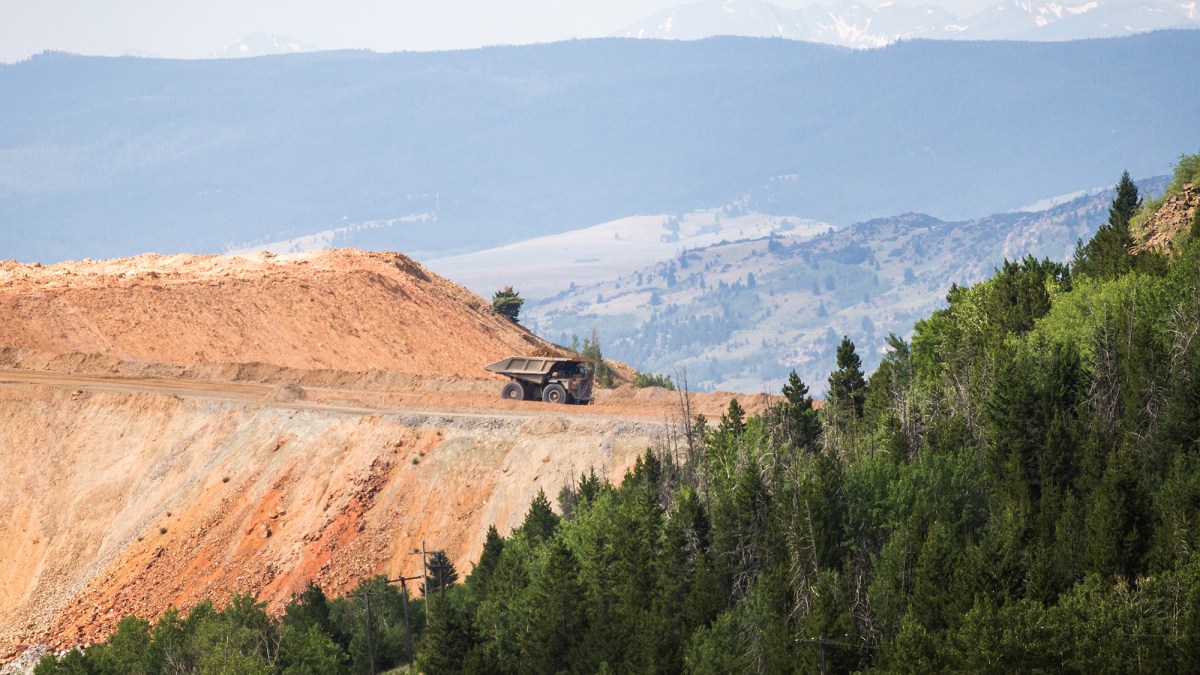
The rules cap environmental assessments — the initial reviews for projects such as mining or logging — at one year for completion and in a document no more than 75 pages. More detailed environmental impact statements, where significant effects are expected, would be limited to two years and 150 pages. The most complex projects like massive clearcuts or ecosystem-changing hard rock mines, cannot exceed 300 pages.
The USDA says the rule change is not only in response to Congress’s law but also a U.S. Supreme Court ruling that said the NEPA process, which was intended to “inform agency decision making,” had turned into a “substantive roadblock.”
“I can appreciate the need for an environmental review to have a focus and parameters and not be open-ended,” Hood says. “Where I get concerned is when agencies start to treat public input as a burdensome checkbox rather than an informative opportunity for an environmental review.”
Hood spent decades with the U.S. Forest Service in offices across the West and worries about the application of these rules in light of how departments like the USFS within the USDA are already examining projects.
Take a logging project currently proposed for the Ottawa National Forest in Michigan’s Upper Peninsula. The project would allow tens of thousands of acres of logging through areas with endangered wolves and long-eared bats, including 25,000 acres of clearcut and 13 miles of roads over the next 30 years. The USDA determined under a recent environmental assessment was that there would be “no significant impacts,” thus did not require a more in-depth environmental impact statement.
“I think of the gall, honestly,” he says. “I’m not saying this is a bad project, but when you’re going to build up to thirteen miles of roads and clearcut twenty five thousand acres, I can’t think of a universe where there are no significant impacts.”
Hood and others see this as not just an attempt to right-size environmental rules that had become unnecessarily burdensome, but a massive chipping away at environmental safeguards that kept our public lands and waters relatively intact.
After Tuesday’s announcement, Hood anticipates the Forest Service will finalize its own set of individual rules that could shorten public comment periods to as little as 10 days. The Bureau of Land Management has recently acted similarly, offering a seven-day “scoping period” to reverse a Biden-era oil and gas leasing withdrawal around Chaco Culture National Historical Park.
Those sorts of rule changes, Hood says, will only lead to more lawsuits by organizations who say they weren’t given enough time to analyze the proposed changes and comment, and more inefficiencies as logging, mining and other projects are tied up in court.
Read Next: National Park Service Announces New Hunting Opportunities to Control Invasive Species. Volunteers Could Save Taxpayers Millions
The bottom line, says Hood, is that these changes make it even more important for hunters, anglers, and anyone else who cares about public lands and waters to pay attention to upcoming development projects. Many are being proposed for longer durations, sometimes 30 or even 40 years.
“These projects are spanning multiple human generations,” he says. Such projects call on the hunting and fishing community to become more — not less – involved in providing feedback for those projects.
Read the full article here