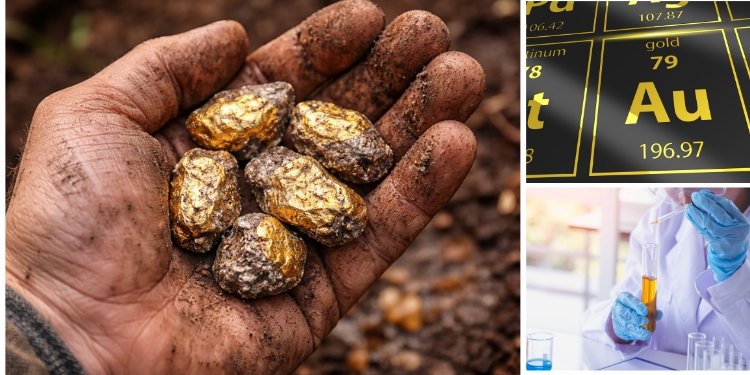

This might be the discovery of the century.
A few years ago, researchers at CERN managed to do something that looks like an alchemy experiment. They turned lead into gold.
The process involved particle accelerators and extreme energy, but the amount of gold produced was so small it barely registered. Most scientists saw it as an insignificant discovery and moved on.
But luckily, there is a small group of researchers who didn’t give up.
What caught their attention was not the scale of the experiment, but the principle behind it. If lead atoms can be pushed into becoming gold under extreme conditions, the obvious question was whether a version of that process could happen in a stable environment. Instead of forcing the reaction with massive energy, they started looking at certain chemical conditions that could gradually destabilize lead at the atomic level over time.
That line of thinking led to a series of experiments that are only now starting to circulate outside academic circles.
What The Experiment Was About
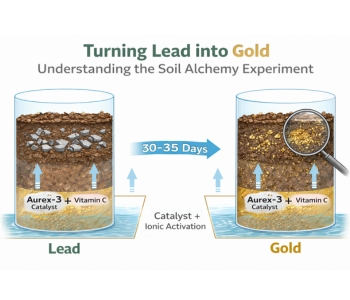 What drew my attention when I was researching about this experiment is that the setup that is tested now is surprisingly simple.
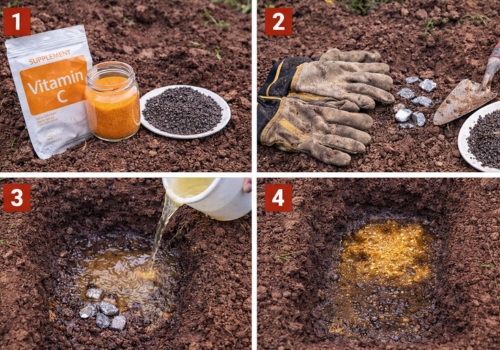
It revolves around three components: lead, ascorbic acid, and a catalytic mineral compound known as Aurex-3.
The idea is not to “convert” lead in the same way particle accelerators do, but to create a chemical environment, where the outer structure of the material begins to shift slowly, starting at the surface.
In controlled soil tests, small lead fragments were buried in slightly acidic ground and treated with diluted ascorbic acid. The catalyst was introduced in low concentrations and reapplied periodically over time. After several months, something unexpected started to appear.
A Discovery That Might Change the World
The lead pieces were no longer just lead. Samples taken from these fragments showed a thin metallic coating forming on the surface. At first, researchers suspected contamination or mineral buildup from the surrounding soil. That possibility was ruled out after repeated testing.
The outer layer was 22k gold, with a purity of 91.6%.
The process does not affect the entire piece at once. It begins at the surface and gradually works inward, which explains why time is such a critical factor. Most of the documented results appeared after five to six months under stable conditions.
How Much Gold Can It Produce?
 In controlled soil tests, the reaction cycle appears to stabilize within 30 to 35 days, which is when the first measurable gold layer begins to form.
On average, one pound of lead produced around 0.8 to 1.5 grams of gold within the first month under controlled conditions.
That may sound small, but the process continues as long as the environment remains active. Over multiple cycles, the layer thickens and recovery becomes more efficient.
Even small backyard setups can begin producing visible results within weeks, which is why this method is starting to draw attention.
Why Ascorbic Acid Plays a Key Role
One of the more surprising elements in this process is the use of ascorbic acid, commonly known as vitamin C. It does not act as a fertilizer in the traditional sense. Instead, it appears to stabilize the chemical environment in the soil, allowing slow electron exchange to continue over extended periods.
The Strange Reason Preppers Are Putting Empty Bottles on Their Apple Trees
Without it, the reaction tends to stop early. With it, the conditions remain active long enough for gradual structural changes to take place on the surface of the lead. Different sources have been tested, including citrus extracts and powdered forms, with similar results.
What Is Aurex-3
 The catalyst is the least understood part of the process, but it is also the most important. Aurex-3 has not been officially released to the public, and its exact composition is still being kept private.
From what has been shared on private forums, it is a mineral-based compound designed to create a steady, low-level ionic activity in the soil.
That activity is what keeps the reaction going over time. Without it, nothing happens.
Now here’s where it gets interesting. While Aurex-3 itself is not being sold openly, similar formulations are already circulating in small batches. A few agricultural suppliers in Eastern Europe and parts of Germany have been testing comparable mineral blends, usually marketed as advanced soil activators or trace-element fertilizers.
That’s what I used. It wasn’t labeled “Aurex-3,” but the composition matched closely with what researchers described – high trace minerals, reactive salts, and compounds known to influence ionic exchange in soil.
It’s not something you’ll see at a regular garden store, but you can find it here.
Best Soil Conditions
Scientists say that environmental conditions play a major role in whether the process works at all. The most successful results so far have come from slightly acidic soils with good drainage and consistent moisture levels.
THEY Tried to Hide This: How to Grow 4,000 Lbs of Organic Vegetables in 1/10th the Space
Warmer temperatures appear to help maintain the reaction, while colder soil slows it down significantly. Most test samples were placed within the top 10 to 12 inches of soil, where these conditions are easier to manage and monitor.
How to Grow Gold in Your Own Backyard (My Experiment)
When I first read about this experiment, I was fascinated. I am not exaggerating when I am saying I’ve been reading about it for 3 days, almost non-stop. Then, after finding out where to procure the ingredients, I decided to test this on a small scale in my own home.
A few days ago, I set up a basic experiment in a pot using the same principles described in the research. I dug a shallow trench, about 10 inches deep, and placed several small pieces of clean lead inside.
👉 This Invention Has Been Banned in 7 Countries – But You Can Still Build It in Your Backyard
I mixed water with powdered vitamin C and poured it evenly into the soil before covering everything back up. For the catalyst, I used that mineral fertilizer blend similar to Aurex-3, focusing on trace minerals and ionic activity.
It is still too early for visible results, and this is not something that happens overnight. Because I am being so impatient, I monitored its evolution almost daily.
What I have noticed so far is a slight change in the soil itself. It retains moisture longer and feels denser than the surrounding ground, which may or may not be related to the process.
I will keep monitoring it over the coming weeks to see if anything develops beneath the surface.
Could This Change Gold Production Forever?
If these findings hold up under wider testing, the implications are life changing.
Gold has always been valuable because it is difficult to extract and limited in supply. A slow, soil-based production method would not replace mining overnight, but it could introduce a new way to produce gold.
For now, the research remains in early stages and mostly out of public view. Still, it leaves one question hanging.
Is this the beginning of a new kind of alchemy or something else entirely?
REMEMBER WHAT DAY IT IS TODAY? Send or Share this article and make an April Fool’s Day prank to your prepper friends!
Editor’s Note: This April Fool’s Day prank is actually based on a real experiment. Scientists at CERN have technically transformed lead into gold, though on a scale and through a process that’s worlds apart from anything we presented in the article. To find out more about the real discovery, you can read this article on CERN’s official website.
You may also like:
 We Have a New WhatsApp Channel – Click Here to Join Our Community!
Do You Have This Tree in Your Backyard? Here’s Why It Might Get You Arrested (VIDEO)
Simple Home Tests to Determine Whether Your Gold Is Real or Fake
Start Replacing Cash with THIS Right Now!
Read the full article here