
Vacuum sealing has become one of the most popular food preservation methods in recent years. Walk into almost any prepping forum or hunting community, and you will find people recommending vacuum sealers as a way to make meat last longer in the freezer. The idea sounds simple enough: remove the air, seal the bag, and the food stays fresh far longer than it would with traditional storage methods.
And to a certain extent, that idea is correct. Removing oxygen slows down the growth of many microorganisms that cause food to spoil. Because of this, vacuum sealing can extend the shelf life of meat in the refrigerator or freezer by weeks or even months.
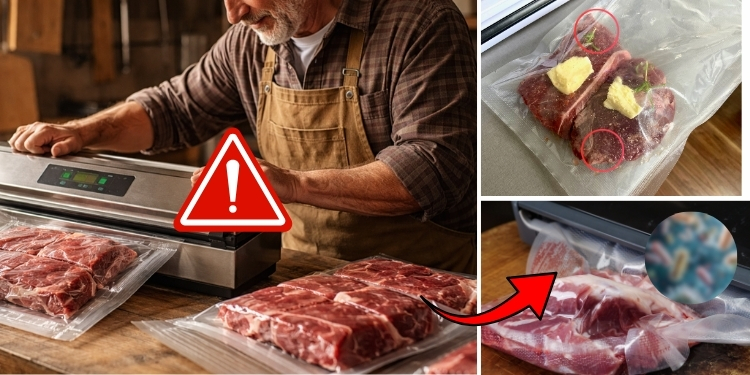
However, what many people do not realize is that vacuum sealing changes the environment around the meat in ways that can introduce different risks instead of eliminating them. Certain bacteria thrive in low-oxygen conditions, and when meat is sealed improperly or stored at the wrong temperature, those microbes can multiply without obvious warning signs.
In other words, vacuum sealing can extend freshness, but it can also hide problems that would normally be easy to detect.
Why Vacuum Sealing Is Popular
To understand the risks, it helps to first understand why vacuum sealing is so popular among preppers.
Most food spoilage occurs because bacteria, yeast, and mold break down proteins and fats. Many of these microorganisms need oxygen to grow. When meat is exposed to air, these microbes multiply quickly, which leads to the familiar signs of spoilage: bad smells, slimy textures, and discoloration.
If You Notice This Strange Symptom, Don’t Wait – Do This Immediately!
Vacuum sealing removes most of that oxygen from the package. Without oxygen, many spoilage organisms slow down dramatically. As a result, meat stored in a vacuum bag often lasts three to five times longer than meat wrapped in standard packaging.
Hunters and farmers discovered this advantage years ago. Instead of losing meat to freezer burn or rapid spoilage, they could vacuum seal their harvest and store it for months without noticeable quality loss.
Yet the absence of oxygen also changes the type of bacteria that dominate the environment. Some microorganisms do not need oxygen at all and those are the ones that create the biggest concerns.
The Low-Oxygen Problem Most Preppers Don’t Think About
 One of the less known facts about food safety is that certain bacteria actually prefer low-oxygen environments. These microorganisms are called anaerobic bacteria.
Among them is one of the most dangerous foodborne pathogens known to science: Clostridium botulinum, the bacteria responsible for botulism.
Botulism is rare, but when it occurs it can be devastating The bacteria produce a toxin that attacks the nervous system, potentially causing paralysis and respiratory failure.
The key point here is that Clostridium botulinum grows best in exactly the kind of environment vacuum sealing creates: low oxygen, moisture, and protein-rich food such as meat.
This does not mean that vacuum-sealed meat automatically becomes dangerous. Temperature still plays the most important role in controlling bacterial growth. If the meat is stored properly in a freezer or refrigerator, the risk remains extremely low.
The danger appears when sealed meat is kept too warm for too long. Because the bag contains almost no oxygen, the bacteria can grow without producing many of the obvious signs of spoilage people normally rely on. The meat may still look perfectly normal to the unexperienced eye.
Why Spoilage Is Harder to Detect in Vacuum Bags
When meat goes bad in normal packaging, the signs are usually obvious. First of all, it develops a sour smell, which is followed by changes in the color. Also, the surface becomes sticky or slimy. These changes happen because oxygen-loving bacteria break down proteins and release gases.
As we said before, vacuum sealing removes oxygen from the equation. Without oxygen, those particular microbes grow more slowly, which means the usual warning signals may not appear as quickly. Meanwhile, anaerobic bacteria can continue multiplying without any obvious signs.
Must-Have Canned Foods You Didn’t Know Existed
This creates a strange situation where vacuum-sealed meat may look and smell acceptable even when bacterial growth has already begun. That is why food safety experts often stress that vacuum sealing should never be used as a substitute for proper refrigeration or freezing.
In short, the absence of air does not stop spoilage entirely. It simply changes how it happens.
The Temperature Mistake That Causes Most Problems
 One of the biggest misunderstandings about vacuum sealing is the belief that removing air makes meat shelf stable. It does not. In fact, vacuum-sealed raw meat must still be refrigerated or frozen immediately after packaging.
The reason lies in what food safety experts call the temperature danger zone, which ranges from 40°F to 140°F (4°C to 60°C). Within this range, bacteria can grow rapidly.
So, if vacuum-sealed meat sits in this temperature range for several hours, bacterial populations can increase rapidly. This situation sometimes happens even during common household routines.
For example, you may vacuum seal fresh meat and leave it on the counter while preparing other foods. Another person might thaw vacuum-sealed meat at room temperature for convenience. Both scenarios create ideal conditions for bacterial growth.
The Freezer Myth
Another common misconception is that vacuum sealing guarantees meat will remain good indefinitely in the freezer. While vacuum sealing does reduce freezer burn and oxidation, it does not stop time completely.
Most vacuum-sealed meats stored at 0°F (-18°C) maintain their best quality for six months to two years, depending on the type of meat. After that point the texture and flavor begin to decline.
Burger and Gravy in a Bag (5+ years shelf life) – Click Here for the Recipe!
Freezer burn can still occur if the bag is not sealed perfectly. Even a small pocket of trapped air allows moisture to escape from the meat over time. That moisture loss leads to dry, grayish patches that affect taste and texture.
Eve if the meat may still be technically safe to eat, the quality is often far lower than expected.
Cross-Contamination Before Sealing
 Another hidden danger appears long before the bag is even sealed. If bacteria are introduced during handling, vacuum sealing can trap them inside the bag along with the meat.
Contamination can even happen through cutting boards, knives, hands, or even countertops that were not properly cleaned. Once sealed, those bacteria remain in contact with the meat during storage.
Because vacuum sealing slows down competing microbes that rely on oxygen, certain bacteria may have fewer competitors in that environment.
This is why food safety guidelines always emphasize the importance of cleaning preparation surfaces and using fresh meat before sealing.
Another Issue Few People Mention
Vacuum sealers remove air by creating strong suction inside the bag. In some cases, this pressure can actually affect the structure of the meat. Soft meats like fish, ground meat, or delicate cuts can become compressed or distorted during the process.
While this does not create a safety hazard, it can affect texture once the meat is thawed. That is why some experienced preppers partially freeze softer meats before vacuum sealing them – the firmer structure prevents excessive compression during the sealing process.
What You Should Do Differently
 Preppers who store large amounts of food rarely depend on a single preservation method. Vacuum sealing plays an important role, yet experienced preppers treat it as one part of a broader system designed to keep meat safe for the long term. Several simple habits help make vacuum sealing far more reliable:
- Start with the freshest meat possible. Meat that has already spent days in a refrigerator or display case may already contain higher levels of bacteria.
- Seal the meat quickly and move it into cold storage right away. Fast handling reduces the time bacteria have to grow.
- Label every package with the sealing date. This simple habit helps track storage time and prevents forgotten food from sitting too long in the freezer.
- Maintain backup power options for freezers. A modular generator, a 3D solar backup, or another cold storage plan, such as the Amish buried fridge, are excellent (and low-cost) ideas to keep your meat safe in a blackout.
Also consider other smart ways to preserve meat that can last longer than vacuum sealing. One forgotten method is traditional cold smoking. It works with almost any type of meat and, when done properly, the meat can last for years.
To make it, you need to learn how to build an Amish smokehouse. The meat is first cured with salt, then slowly exposed to cool smoke for many hours or even days. The smoke and slow drying help protect the meat and extend its shelf life. Once the smoker is built, the process mostly runs on its own. But, before you start, make sure you are aware of this important detail when you smoke your meat!
Freeze-drying is another powerful preservation method, especially for vegetables and fruits. The food is first frozen, then the ice inside it turns directly into vapor and leaves the food almost completely dry. Without moisture, bacteria and mold cannot grow. Properly freeze-dried meat stored in Mylar bags with oxygen absorbers can last 20–25 years.
If you found this interesting, check out other preservation methods here.
A Useful Tool When Used Correctly
Vacuum sealers are popular because they make food storage easier, especially after hunting season, livestock processing, or bulk shopping. Still, vacuum sealing should be just one tool in your food preservation plan.
You can extend shelf life even further when you also use methods like curing, smoking, drying, or freeze-drying. When you learn several preservation techniques, you give yourself more flexibility and build a more reliable long-term food supply.
You may also like:
 Join The AskAPrepper WhatsApp Channel
A Food Crisis Could Kill Millions of Americans. Are We on the Verge of It? (VIDEO)
I Ate Only Canned Meat for 6 Months and This Happened
Canning $5 Amish Stew
This Is How One Pig Can Feed Your Family for 3 Whole Months
Read the full article here