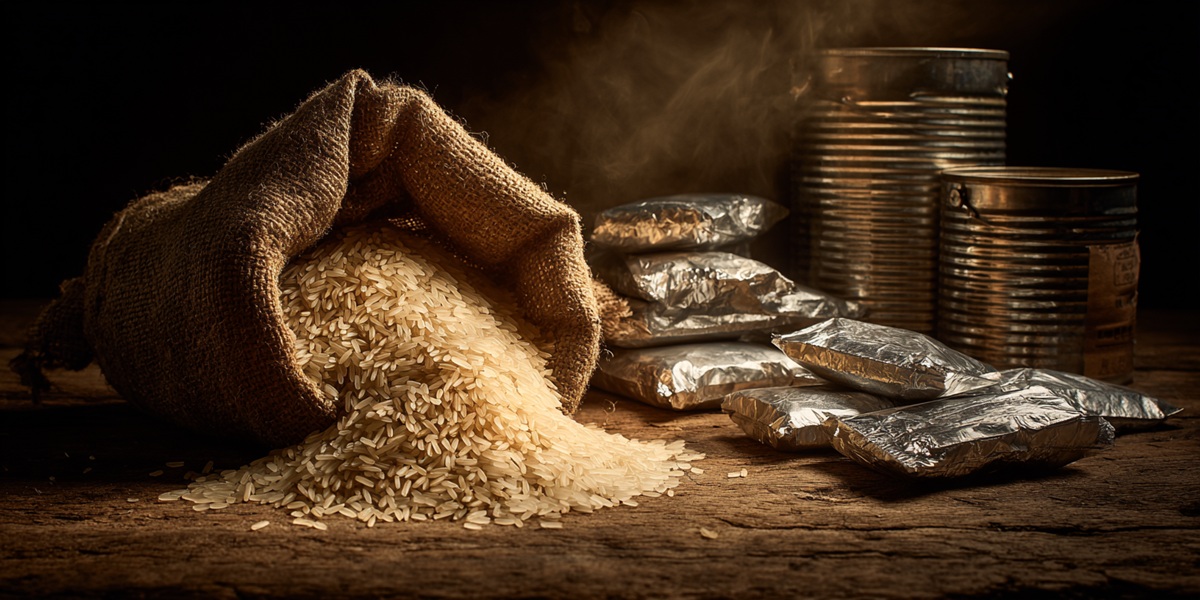

Most preppers stock white rice without giving it a second thought. It’s cheap, it stores for decades, and it fills bellies. But there’s a version of rice sitting on grocery store shelves right now that is strictly better in almost every survival scenario, and the majority of preppers have never seriously considered it.
It’s called parboiled rice. And if you’re building a long-term food stockpile, this article could change the way you shop forever.
What Is Parboiled Rice?
Parboiled rice, also called converted rice, is rice that has been partially boiled while still in its husk before it’s milled and sold. The process was developed thousands of years ago in Asia and the Middle East and has been used ever since as a way to preserve nutrition and extend shelf stability.
The word “parboiled” is short for partially boiled, but don’t let that fool you into thinking it’s pre-cooked or somehow inferior. If anything, the opposite is true. The parboiling process actually drives nutrients from the outer bran layer into the grain itself, locking them in place before the husk is removed. What you end up with is a grain that cooks like white rice but feeds you more like brown rice.
It’s worth noting that Uncle Ben’s, one of the most widely recognized rice brands in the U.S., has always been parboiled rice. Most people have eaten it without ever knowing what it was.
How Parboiled Rice Is Made
The parboiling process involves three steps:
- Soaking. The raw, unhusked rice paddy is soaked in water until it’s fully saturated.
- Steaming under pressure. The soaked rice is steamed, typically under pressure, which drives the water-soluble nutrients (B vitamins, minerals) from the bran layer into the starchy interior of the grain.
- Drying. The rice is dried before milling, which causes the grain to harden. This is what gives parboiled rice its characteristic golden or slightly tan color and its firm, separate texture after cooking.
Once milled (husk removed), it looks similar to white rice but with a slightly yellow or golden tint. That color is a byproduct of the heat process, not a sign of age or spoilage.
According to research published by the USDA Agricultural Research Service, the parboiling process significantly increases the retention of B vitamins compared to standard milled white rice, which is a critical advantage when nutritional variety is limited during a crisis.
Parboiled Rice vs. White Rice vs. Brown Rice
Understanding how parboiled rice stacks up against your other options is key to making smart stockpiling decisions.
| Feature | White Rice | Brown Rice | Parboiled Rice |
| Shelf Life (sealed) | 25-30 years | 6-12 months | 25-30 years |
| Nutritional Value | Low (stripped) | High | Medium-High |
| Cook Time | ~18 min | ~45 min | ~20-25 min |
| Fuel Required | Low | High | Low-Medium |
| Texture After Cooking | Soft/sticky | Chewy | Firm/separate |
| Resistant to Overcooking | No | No | Yes |
| Glycemic Index | High (72) | Medium (50-55) | Lower (38-47) |
The takeaway here is significant: parboiled rice has nearly the same shelf life as white rice but a dramatically better nutritional profile and a far lower glycemic index. For anyone managing blood sugar, or anyone who simply can’t afford to eat nutrient-depleted meals during a long-term crisis, this matters.
Brown rice, despite its superior nutritional value, is a poor long-term storage food. Its natural oils cause it to go rancid within months, even in sealed containers. Parboiled rice eliminates this problem entirely.
Why Parboiled Rice Is a Superior Survival Food
Let’s get specific about why parboiled rice deserves a central place in your stockpile.
1. It Has a Lower Glycemic Index Than White Rice
When calories are limited and stress is high, blood sugar stability matters more than most people realize. The Harvard T.H. Chan School of Public Health notes that the glycemic index of parboiled rice is significantly lower than white rice, meaning it releases glucose more slowly into the bloodstream, keeping you fuller longer and providing more sustained energy. That’s a meaningful advantage when you’re doing hard physical work with limited food.
2. It Retains More B Vitamins
White rice is nutritionally hollow. The milling process strips away most of its B vitamins along with the bran. Parboiled rice retains significantly more thiamine (B1), niacin (B3), and B6 because those nutrients were driven into the grain interior before milling. Thiamine deficiency (beriberi) was a real problem in historical food shortage scenarios, and it could be again in a long-term SHTF situation where diet variety is limited.
3. It’s Nearly Impossible to Overcook
In a grid-down scenario, you’re not cooking on a precision electric stove. You’re managing a fire, a camp stove with limited fuel, or a rocket stove you built yourself. Parboiled rice stays firm and separate even when slightly overcooked, making it far more forgiving under imprecise cooking conditions. White rice turns to mush the moment you lose control of your cook time. Parboiled rice doesn’t.
4. It Cooks Faster Than Brown Rice
Brown rice takes 40-50 minutes to cook fully. That’s 40-50 minutes of fuel consumption. In a crisis where every piece of wood, every ounce of propane, and every fuel tablet is a finite resource, that’s a real cost. Parboiled rice cooks in 20-25 minutes, roughly the same as white rice, while delivering a much better nutritional outcome.
5. It Stores Just as Long as White Rice
Properly sealed in Mylar bags with oxygen absorbers, parboiled rice will last 25-30 years, identical to white rice. You’re not making any storage sacrifice for the nutritional upgrade.
Shelf Life and Long-Term Storage
Under ideal conditions, parboiled rice sealed in airtight packaging with oxygen absorbers can last 25-30 years. The key variables are:
- Moisture – the number one enemy of stored rice. Moisture invites mold, bacteria, and insect activity.
- Oxygen – oxygen absorbers prevent oxidation and kill insect eggs already in the grain.
- Light – UV exposure degrades nutritional content over time.
- Temperature – for every 10°F decrease in storage temperature, shelf life roughly doubles. Ideal is below 70°F.
The USDA Food Safety and Inspection Service recommends storing dry goods in cool, dark locations with stable temperatures for maximum shelf life.
How to Store Parboiled Rice for Maximum Shelf Life
Here’s the method used by serious preppers for long-term rice storage:
What you need:
Step-by-step:
- Fill Mylar bags with parboiled rice, leaving about 3-4 inches at the top.
- Drop in the appropriate oxygen absorbers (2,000cc per 5-gallon bag).
- Seal the Mylar bag with a clothes iron along the top edge. Press firmly and run in a single straight line.
- Place sealed Mylar bags into 5-gallon buckets and seal with a gamma lid.
- Label each bucket with contents and date.
- Store in a cool, dark, stable-temperature location.
Avoid storing in:
- Garages with temperature swings
- Areas prone to flooding or humidity
- Anywhere near chemicals or fuels (rice can absorb odors through plastic)
Related: 50 Ways Mylar Bags Will Save Your Life Post-SHTF
How to Cook Parboiled Rice Off-Grid
Parboiled rice is slightly more forgiving than white rice but does require adequate water and time to cook properly. In a grid-down situation, here are your main options:
Standard Method (Any Heat Source)
- Ratio: 2.5 cups water per 1 cup parboiled rice
- Bring water to a boil, add rice, reduce heat, cover, and simmer 20-25 minutes
- Remove from heat, let stand 5 minutes, then fluff with a fork
Retained Heat / Fireless Cooking Method
This is ideal when fuel is scarce:
- Bring rice and water to a full boil (5 minutes).
- Transfer the covered pot to an insulated container (a sleeping bag, a wool blanket, or a commercial thermal cooker).
- Leave undisturbed for 45-60 minutes.
- Rice will be fully cooked using retained heat alone, with no additional fuel required.
Solar Cooker Method
On a clear day, a simple parabolic or box-style solar cooker can bring water to a sufficient temperature to cook parboiled rice in 45-90 minutes depending on sunlight intensity. This uses zero fuel and is a highly sustainable option for long-term off-grid cooking.
Nutritional Value: What You’re Actually Getting
Per 1 cup (cooked) of parboiled rice:
| Nutrient | Amount |
| Calories | ~194 |
| Carbohydrates | ~41g |
| Protein | ~4.5g |
| Fat | ~0.5g |
| Thiamine (B1) | ~22% DV |
| Niacin (B3) | ~15% DV |
| Iron | ~8% DV |
| Magnesium | ~6% DV |
Data sourced from the USDA FoodData Central database.
The thiamine content is particularly notable. White rice typically retains only 6-8% of its original thiamine after milling. Parboiled rice retains significantly more, which is an important distinction when B-vitamin deficiency is a real risk in a long-term crisis scenario.
How Much Parboiled Rice Do You Need Per Person?
Rice is calorie-dense but not calorie-complete. It needs to be paired with proteins and fats for a sustainable diet. As part of a broader food storage plan, a common guideline is:
- Minimum: 25 lbs per person per 3 months
- Recommended: 100 lbs per person per year (as a core calorie base)
According to FEMA’s emergency food planning guidance, a minimum 72-hour supply of non-perishable food should be maintained at all times, but serious preppers plan for 3 months to 1 year minimum.
At roughly $0.80-$1.20 per pound in bulk, parboiled rice is one of the most cost-effective calories you can stockpile.
Where to Buy and What to Look For
Bulk sources:
- Restaurant supply stores (Costco Business, Sam’s Club) often sell 25-50 lb bags at significant savings
- Online bulk retailers (Walmart Grocery, Azure Standard, Augason Farms)
- Local ethnic grocery stores (parboiled rice is widely used in South Asian and West African cooking and often sold in large bags)
What to look for on the label:
- “Parboiled” or “Converted” rice (both terms mean the same thing)
- Country of origin: U.S.-grown rice is subject to stricter safety standards
Brands worth noting:
FAQ
- Is parboiled rice the same as pre-cooked or instant rice? Parboiled rice is not pre-cooked. It is partially processed before milling to preserve nutrients. It still requires full cooking before eating. Instant rice is a completely different product that has been fully cooked and dehydrated; it has a much shorter shelf life and inferior nutritional profile.
- Does parboiled rice taste different from white rice? Parboiled rice has a firmer, more separate texture and a very mild nutty flavor. Most people find it indistinguishable from white rice once it’s mixed with other ingredients in a meal. It’s less sticky, which can actually be an advantage in survival cooking.
- Can I store parboiled rice the same way I store white rice? Mylar bags with oxygen absorbers in food-grade buckets work identically for both. The shelf life is comparable at 25-30 years under proper conditions.
- Will parboiled rice work in a rice cooker? Yes, but use slightly more water and a slightly longer cook time than your rice cooker’s default white rice setting. A ratio of 2.5:1 (water to rice) instead of the standard 2:1 is the right starting point.
- Is parboiled rice good for diabetics or people managing blood sugar? It is better than white rice for blood sugar management due to its significantly lower glycemic index (38-47 vs. 72 for white rice). According to the American Diabetes Association, lower-GI foods are generally preferred for blood sugar stability. However, rice of any kind should be eaten in moderation as part of a balanced diet.
- Why don’t more preppers talk about parboiled rice? Mostly habit and marketing. White rice became the default survival staple because it was cheap, widely available, and well-known. Parboiled rice is equally cheap and available but never got the same spotlight in prepper communities. Now you know.
Final Thoughts
Parboiled rice isn’t a trendy superfood. It isn’t expensive or hard to find. It’s a quiet upgrade sitting right next to the white rice on every grocery store shelf, and it outperforms white rice in nearly every metric that matters for survival: nutrition, glycemic stability, resistance to overcooking, and B-vitamin retention.
If you’re building or refining a long-term food stockpile, there’s no compelling reason to choose regular white rice over parboiled. The shelf life is the same. The cost is the same. The storage method is the same. But what you put into your body when things go wrong, and how long it keeps you going, is meaningfully better.
Stock it. Store it right. And make sure the people depending on you are eating food that actually fuels them.
Don’t Stop at Rice – Discover the Survival Foods Our Ancestors Relied On
Parboiled rice is a perfect example of something modern preppers often overlook. It sits quietly on store shelves, better in many ways than the more popular option, yet most people walk right past it.
And rice isn’t the only forgotten survival food hiding in plain sight.
For thousands of years, people around the world relied on foods that could last for years, sometimes decades, without refrigeration or modern preservation methods. Foods that could feed families through droughts, wars, crop failures, and long winters.
Many of these foods were incredibly calorie-dense, nutritionally powerful, and easy to store for the long term.
But today, most of them have been completely forgotten.
That’s exactly what the Lost Superfoods guide set out to rediscover.
Inside it, you’ll learn about dozens of traditional survival foods that helped entire civilizations survive when modern supply chains didn’t exist. Foods that store well, provide real nutrition, and can be made right in your own kitchen or backyard.
Some examples include:
- Pemmican – a Native American survival food that can last for decades while providing enormous calories and energy
- Hardtack – a nearly indestructible bread that fed explorers, sailors, and soldiers for centuries
- Traditional root cellaring methods that keep food edible through entire winters without electricity
- Long-lasting preserved meats and grains that can sit in storage for years
- Forgotten preservation techniques that dramatically extend shelf life
Many of these foods were the backbone of survival long before modern prepping existed.
And the truth is, they may become important again.
When grocery store shelves empty, when supply chains fail, or when a crisis lasts longer than expected, the people who know how to prepare and store real long-term foods will always have the advantage.
If learning about parboiled rice surprised you, you’ll probably be even more surprised by what’s inside this guide.
👉 Take a look at the Lost Superfoods here and see which of these forgotten foods deserve a place in your survival pantry!
Because sometimes the best survival solutions aren’t new at all.
They’re the ones our ancestors already figured out.
You may also like:
 Rice And Bean Casserole – An American Pantry Staple
10 Things to Do on the Day the Economy Collapses (Video)
Why You Shouldn’t Stockpile Beans and Rice
Instant Eggs: The Survival Protein They Don’t Want You to Have
Where to Buy Natto – The Japanese Fermented Superfood
Read the full article here